
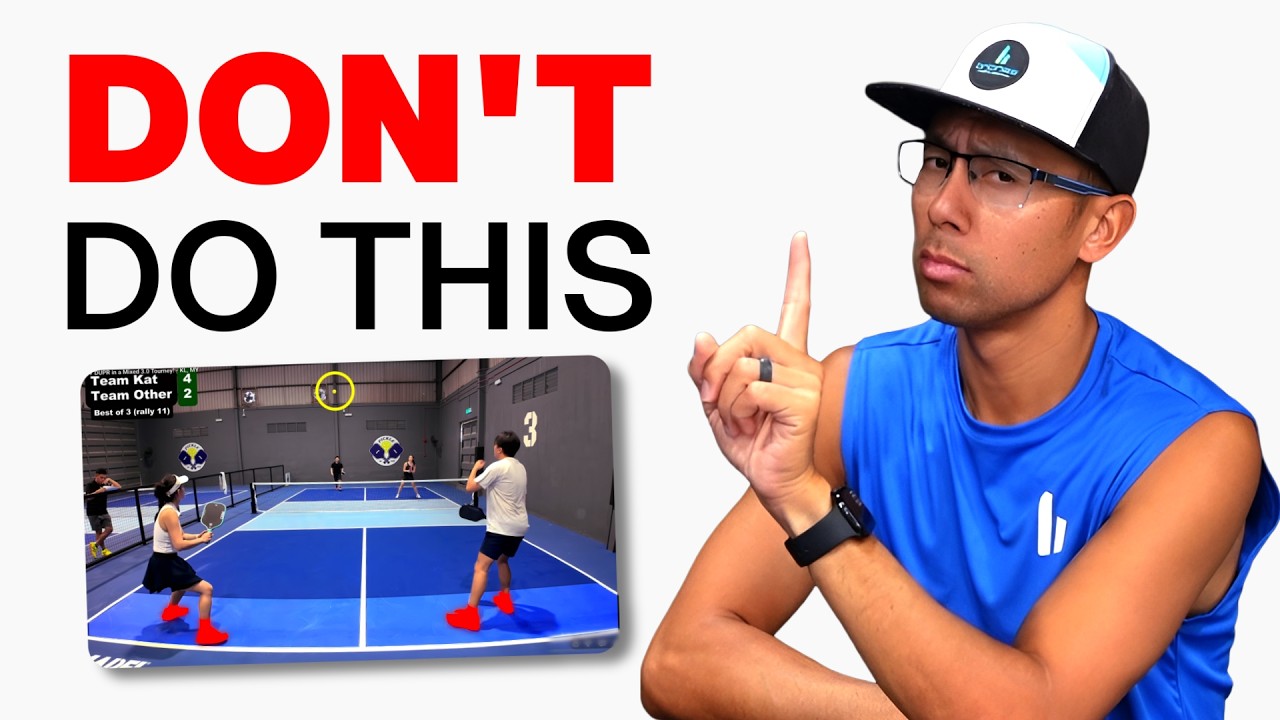
One small step after your serve is putting you on defense before your third shot drop even leaves your paddle. Here is the fix that pro players use every single time.
You hit a great serve, feel confident, and then something goes wrong on your third shot drop.
The ball comes back deep, you scramble, your weight falls backward, and the shot floats up for an easy put-away.
This is one of the most common points where recreational players bleed unnecessary errors.
The frustrating part is that the mistake happens before you even hit the third shot.
Coach Jordan from Briones Pickleball Breakdown on YouTube breaks down this exact problem using real match footage, and the fix is simpler than you might think.
This article walks you through everything he covers so you can stop giving away free points at the baseline.
Love pickleball? Then you'll love our free newsletter. We send the latest news, tips, and highlights for free each week.
The Mistake Nobody Talks About After the Serve
Most players obsess over serve depth and spin. Almost nobody talks about what your feet do after the serve leaves your paddle.
Here is the problem: after you serve, many players instinctively drift forward. It feels natural, because you want to close ground toward the kitchen.
But the serve must bounce before you hit your third, and a good returner is going to push that ball deep.
When you have already crept into the transition zone and a deep return comes back, you are suddenly backpedaling.
Backpedaling is one of the worst positions in pickleball, according to research on backward locomotion and balance loss, because your weight moves away from the ball instead of through it.
The result is a weak, high pickleball third shot that the other team attacks immediately. You are on defense before the rally has even started.
What Does This Actually Look Like in a Real Match?
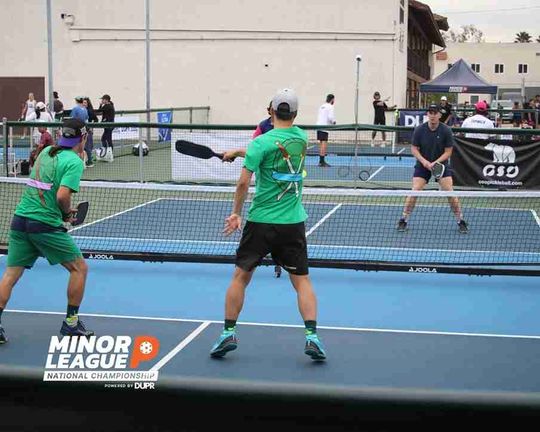
Coach Jordan shows three separate points where the serving team loses because of this exact habit.
In the first, one player drifts a foot or so inside the baseline after serving. It looks minor.
But when a deep return comes back, he has to retreat, and his third shot leans backward.
In the second, the server takes a small step in and the return lands right on the baseline. She scrambles back with all her weight moving away from the target.
Even well-practiced third shot drop placement falls apart when your body is retreating.
In the third, both partners creep in together. Two people backpedaling at the same time is a recipe for a lost point.
Why Does Stepping In Feel So Natural?
Your brain is trying to help you. Getting to the kitchen line faster gives you a real positional advantage, and your instincts push you to gain that ground.
The problem is that the two-bounce rule erases that advantage.
You cannot volley the return, so the court pushes you back no matter what if the return is deep enough.
When you step in and then get pushed back, you are worse off than if you had simply stayed.
You have disrupted your balance and your footwork, and now you are hitting one of the hardest shots in pickleball from a compromised position.
Understanding the serve mistakes costing you points starts here, not at the point of contact.
 The Dink Media Team
How Do Pro Players Handle This?
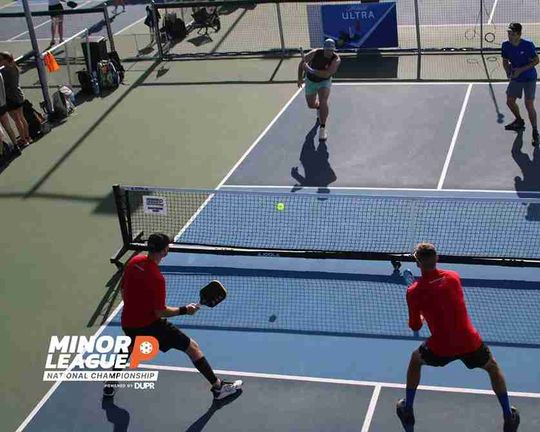
Coach Jordan contrasts the habit with footage of Riley Newman and Elliot Titmus. The difference is immediately visible.
After serving, both pros stay comfortably behind the baseline.
When the return comes back deep, they do not retreat, because they are already where the ball needs them to be.
Elliot hits a controlled two-handed drop because he is balanced and the ball is coming to him.
From that stable base, both players can read the flight of the ball and move forward together in sync.
That is the sequence you want:
- Serve from the baseline
- Stay back and watch the return
- Let the ball come to you rather than backing into it
- Hit your pickleball third shot with your weight moving forward
- Read the shot and close toward the kitchen together with your partner
Notice step five. When your partner knows you are staying back, they can time their own advance off your third shot.
That coordination disappears the moment one of you is scrambling backward.
 The Dink Media Team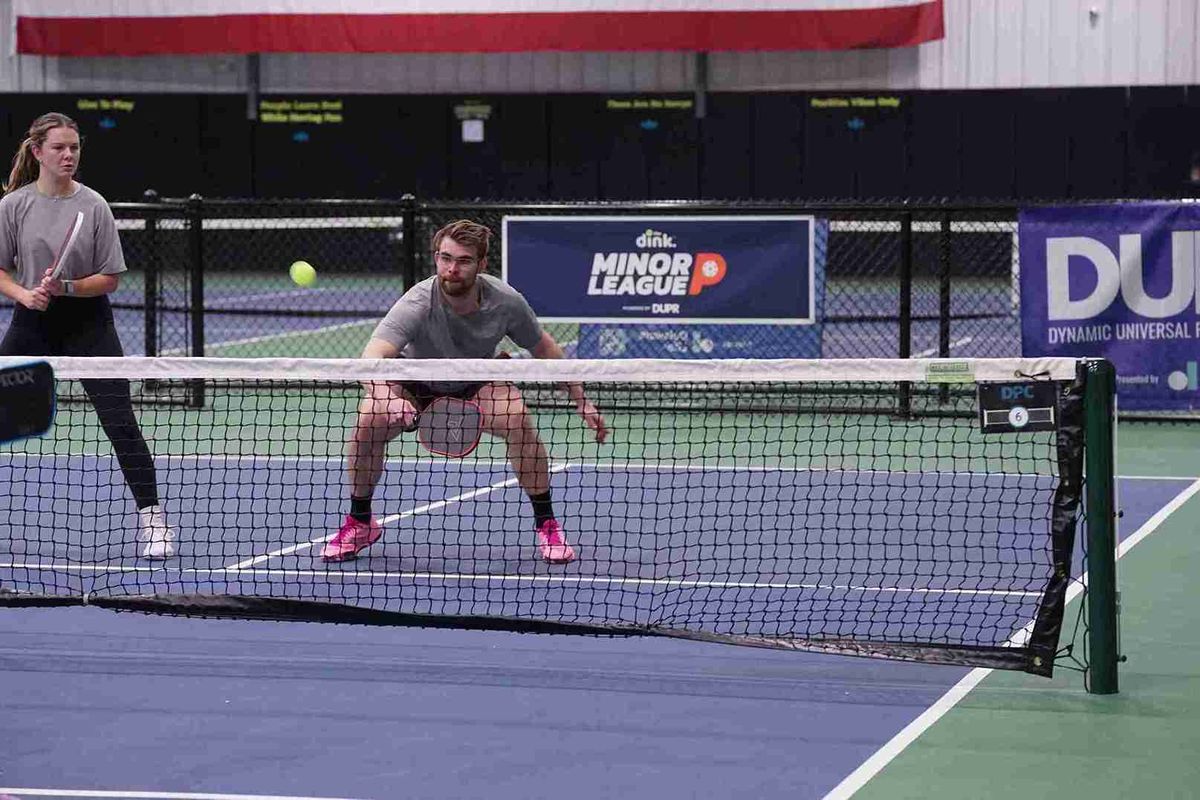
What If You Hit a Short Serve? Does This Still Apply?
Yes, and it matters even more. A short serve gives the returner a better angle and more time to load up an aggressive, deep return.
If you have already drifted forward and a punishing return lands at your feet, the point is nearly over.
Third shot drop techniques only work when you have the space and balance to execute them.
A short serve is the moment to stay back more deliberately. Give yourself a wider margin behind the baseline so you have room to handle whatever comes back.
 The Dink Media Team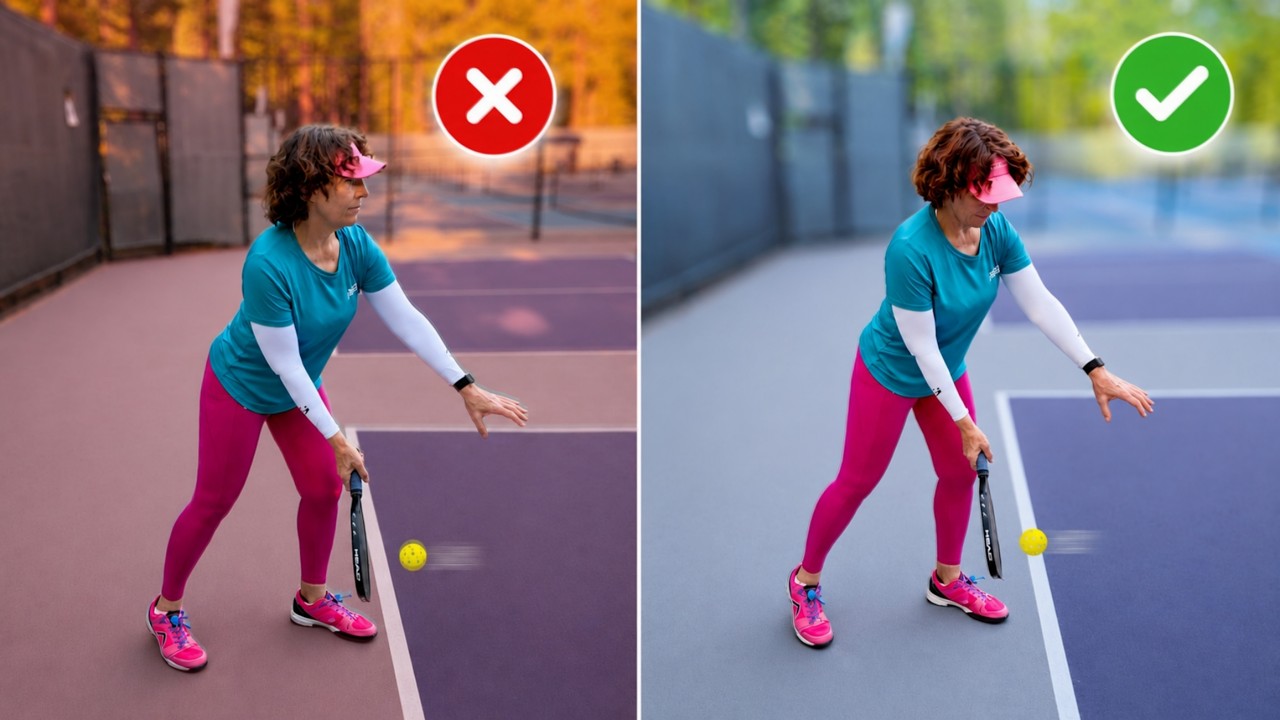
3 Specific Fixes to Stop the Drift
Changing a deeply ingrained habit requires specific cues, not general awareness.
Here are three things you can practice immediately.
- Plant your feet after the serve. The moment your serve leaves your paddle, make a conscious decision to root your feet where they are. Do not drift. Watch the return before you move at all.
- Watch the returner's contact point. If the returner is loading up and swinging full, expect a deep ball. That visual cue tells you to hold your position or even take a small step back.
- Use the baseline as your anchor. Think of the baseline as your home base until you have hit your third shot. You can close ground on the fourth and fifth shots, but your third shot needs to come from behind that line.
 The Dink Media Team
How Does This Connect to Your Third Shot Selection?
Whether you are driving or dropping your third shot, balance is the foundation of both options. A drive hit while leaning backward loses pace and topspin.
A drop hit while retreating floats up instead of dipping down.
Stay back properly and you get to choose your pickleball third shot based on the quality of the return rather than scrambling to survive.
You go from reactive to intentional.
A third shot drop with the right apex becomes far more achievable when your feet are set and your weight is moving forward through contact.
The shot did not get harder. Your position got better.
This is also why backhand third shot drops feel so uncomfortable.
Players are already off-balance from creeping in, then they try to execute a technically demanding shot on top of it.
Fix the feet first and the shot becomes dramatically easier.
 The Dink Media Team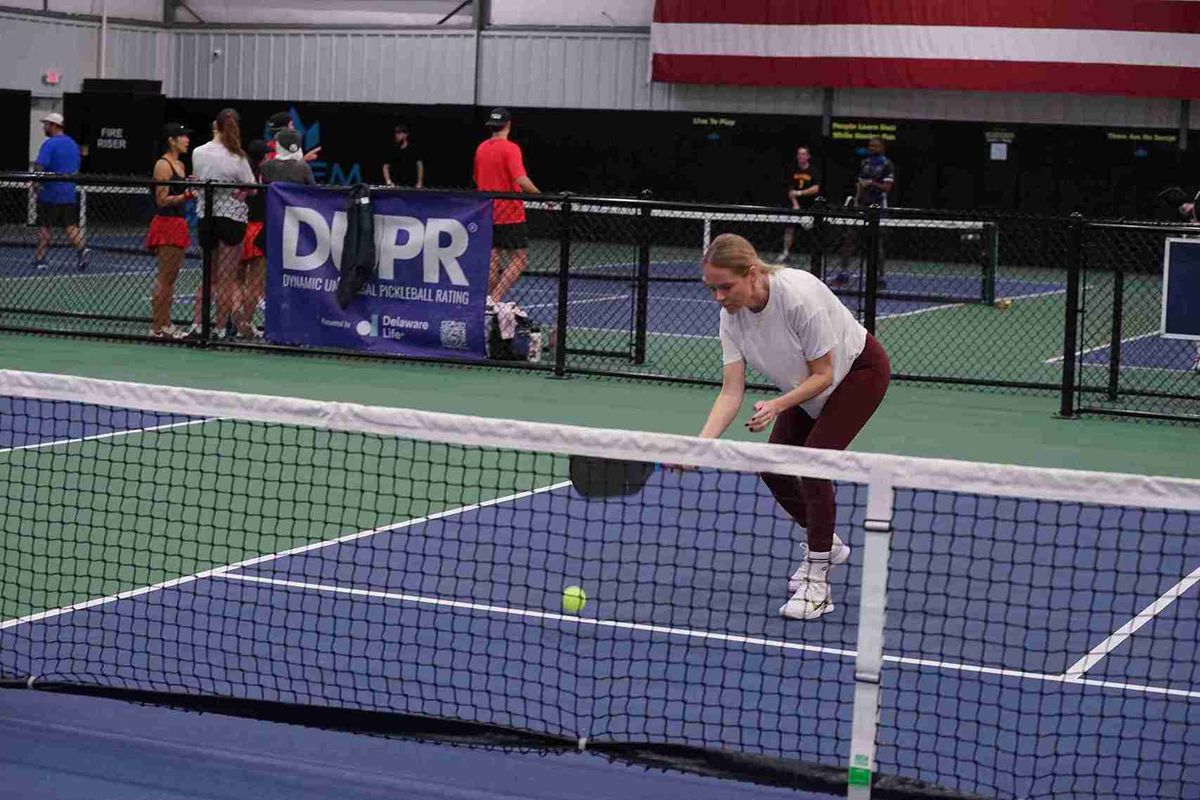
What About Serving Deep? Does That Change Anything?
A deep serve helps, because it gives the returner less time to set up. But a deep serve is not a cure for bad positioning.
Even the best pickleball serve can come back deep against a skilled returner.
A well-executed slice return can stay low and land near the baseline regardless of how good your serve was.
Think of serve depth and post-serve positioning as two separate tools. Neglecting one does not cancel out the other.
 The Dink Media Team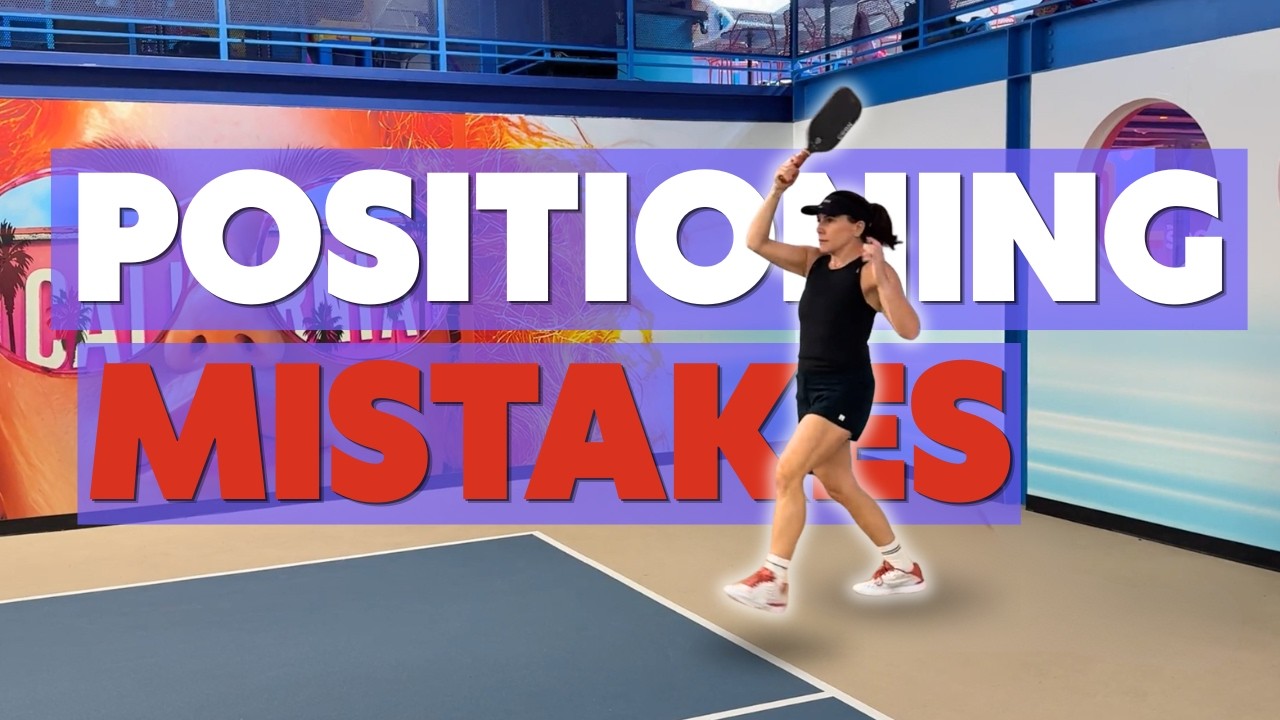
Partnering and Communication After the Serve
This becomes a doubles problem fast.
When one partner drifts in and the other stays back, your positioning is uneven and communication breaks down on who takes the third.
If both of you commit to staying back, you move as a unit and advance together off the third shot.
Serve and return positioning secrets usually come down to this kind of coordination that most teams never practice explicitly.
Talk to your partner before the match. Agree that after every serve, you both hold position until the third shot is struck.
 The Dink Media Team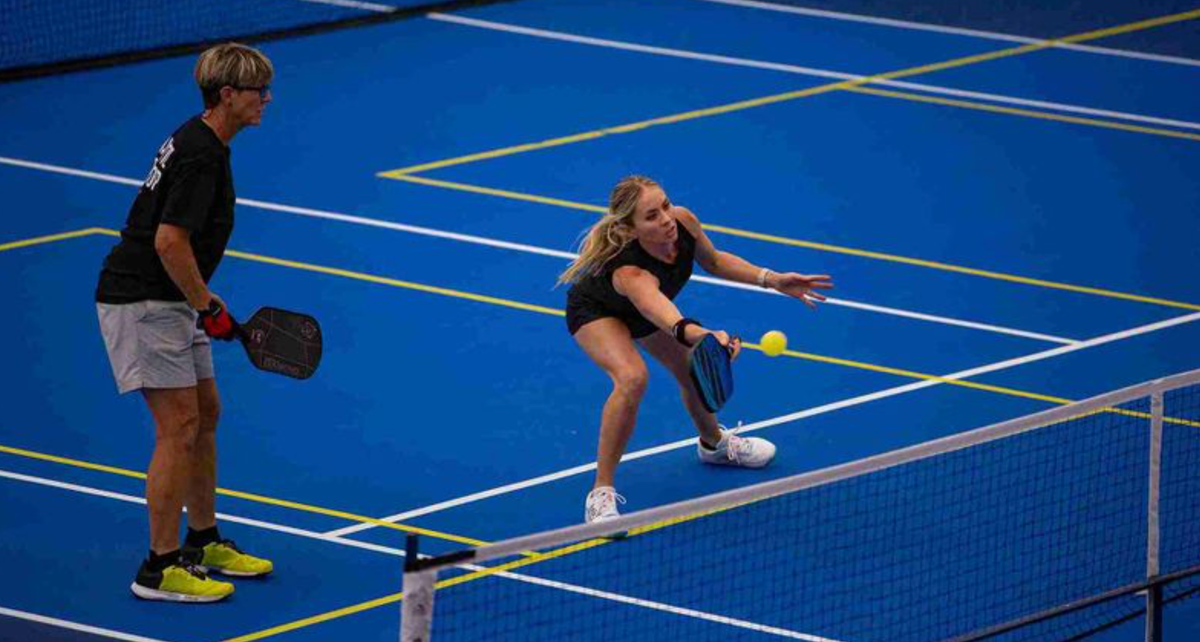
Putting It Into Practice
Next time you play, pick one game where your only focus is your feet after the serve. Forget everything else. Just stay back.
You will notice immediately how often you were drifting without realizing it.
Your kitchen arrival percentage will improve because your third shots will be better, giving you cleaner opportunities to advance.
This fix does not require more athletic ability or a better paddle. It just requires awareness and discipline.
Frequently Asked Questions
Why do I keep falling backward when I hit my third shot?
You are most likely creeping into the court after your serve before the return lands. When a deep return comes back, your body has to retreat to let the ball bounce, and your weight ends up moving away from the shot instead of into it. Stay behind the baseline after your serve and let the ball come to you.
How far behind the baseline should I stand after I serve?
Stay right at the baseline or just slightly behind it after your serve. You do not need a dramatic gap, but you do need enough room to step forward into your third shot rather than backing up into it. A foot or two of margin behind the line is usually enough.
Does this apply to both the server and the server's partner?
Yes, both players should hold their position after the serve. When one partner drifts and the other stays, your positioning becomes uneven and you lose coordination on who takes the third shot and when to advance together.
What is the two-bounce rule and why does it matter here?
The two-bounce rule in pickleball requires that the serve and the return both bounce before either team can volley. This means the serving team must let the return hit the ground, so moving toward the kitchen before that bounce does not help you and often puts you in a worse position when the return is deep.
Should I drive or drop my third shot if I am stuck back at the baseline?
A drop is generally the safer choice when you are at or behind the baseline because it reduces pace and brings the ball down into the kitchen, making it harder to attack. Driving from deep requires precise timing and balance. If your positioning is right and you are balanced, then your shot selection can be based on the return quality rather than just survival.

Love Pickleball? Join 100k+ readers for free weekly tips, news & gear deals.
Subscribe to The Dink