
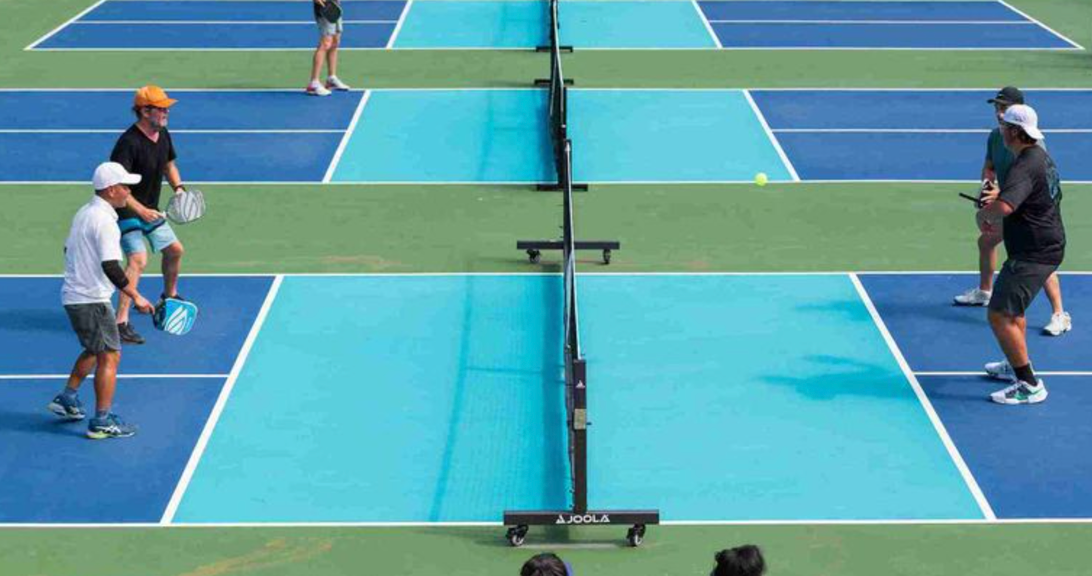
Pickleball Doubles Strategy for Beginners: The 5 Things to Get Right
Get these five things right and your doubles game will look completely different in no time.
Pickleball doubles strategy for beginners sounds complicated, but it comes down to five things that most new players never stop to think about.
Get all five right and you won't just stop losing games you should win. You'll start winning ones you probably shouldn't.
Here's the catch: most new players focus entirely on their shots. They drill their dinks, tighten up their serve, spend hours on the third shot drop.
Those are great habits. But doubles isn't just about individual shot-making. It's a team sport with positioning, communication, and tactical awareness built in.
Ignore that layer and even clean shotmaking can't save you.
Love pickleball? Then you'll love our free newsletter. We send the latest news, tips, and highlights for free each week.
Why Pickleball Doubles Strategy for Beginners Starts at the Kitchen Line
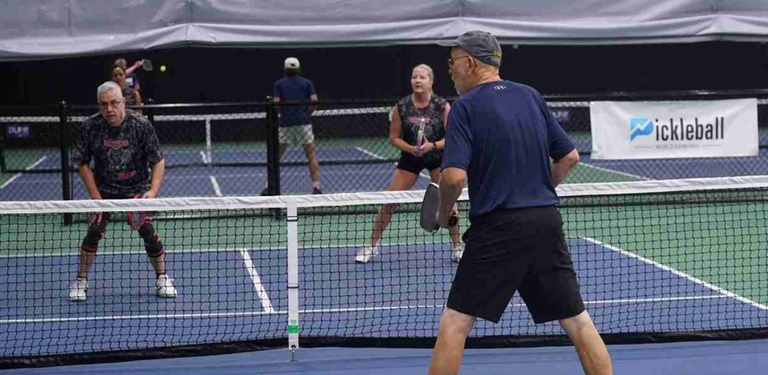
The kitchen line is where points are won. Full stop. In doubles pickleball, the team that gets both players to the non-volley zone line first, and stays there, controls the pace, the angle, and the pressure.
New players constantly give this away. They hang back near the baseline.
They drift into no man's land (that deadly stretch between the service line and the kitchen).
They rush the net at the wrong moment and then retreat when things get tough. All of it hands the advantage directly to the other team.
The non-volley zone line (that 7-foot zone in front of the net, commonly called "the kitchen") is the most valuable real estate in pickleball.
When you're planted there, you force opponents into difficult upward shots.
When you're stuck at the baseline, you're hitting every ball from below the net with nowhere comfortable to send it.
The rule is simple: get to the kitchen line, together, as fast as the game allows. Here's how to position yourself at the kitchen once you're there.
What Is the Third Shot Drop (And Why You Need It)?
The third shot drop is the most important concept in pickleball doubles strategy for beginners.
It's the shot that transitions the serving team from the baseline into a net-forward position. Without it, you're just rallying from disadvantage forever.
Here's how it works. After the serve (shot one) and the return of serve (shot two), the serving team hits shot three.
Most beginners do what feels natural: they drive the ball hard. That's almost always wrong.
A hard third shot gives the receiving team an easy ball to attack from the kitchen line, which puts the serving team right back on their heels.
The third shot drop is a soft, arcing shot that lands in the kitchen. It neutralizes the receiving team's advantage.
When executed well, it floats low over the net, forces an upward dink, and gives the serving team time to move toward the kitchen line during the exchange.
Don't confuse the third shot drop with a lob. A lob goes high and deep. A third shot drop goes soft and short, landing in the non-volley zone.
It's about patience and touch, not power. Learn how to move to the kitchen line after the third shot drop to complete the full transition sequence.
How Should Beginners Handle the Return of Serve?
The return of serve is one of the most underrated parts of pickleball doubles strategy for beginners.
It's the one shot where the returning team has a built-in advantage, and most beginners waste it.
According to USA Pickleball's official rules, the two-bounce rule requires the serving team to let the return bounce before they can play it.
That means the receiving team has time. Use it.
Hit the return deep. Deep returns push the serving team back and make the third shot drop much harder to execute.
A return that lands near the service line gives the server a comfortable, upward strike zone.
A return that lands near the baseline forces a difficult, low-to-high swing from 22 feet away.
Where you place the return of serve matters enormously: aim for the feet of the weaker opponent and land it deep.
After the return, move toward the kitchen line immediately. Don't hover at the baseline watching to see where the ball lands.
Your partner is already at the kitchen line (they should be, after the serve). You're responsible for closing the gap and presenting a unified front.
Here's how to make the most of your return of serve in terms of both placement and positioning.
 The Dink Media Team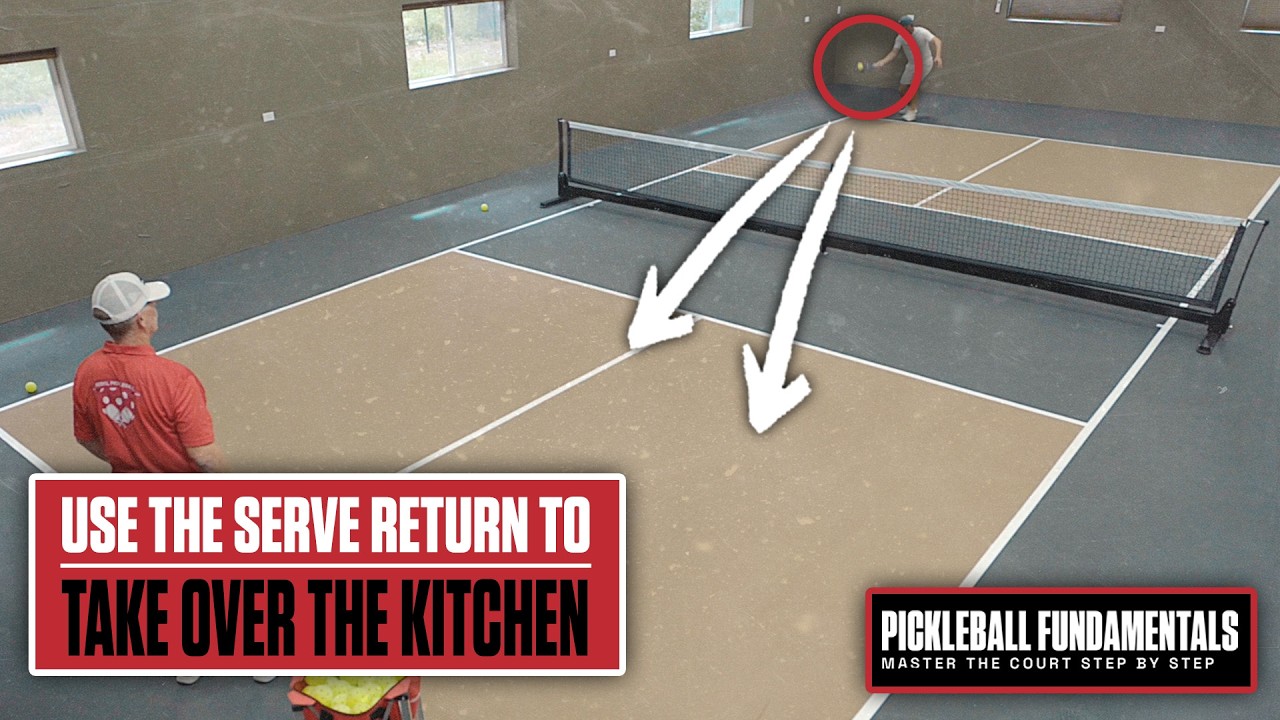
Why Does Middle Ball Coverage Decide So Many Points?
Shared responsibility sounds collaborative. In doubles pickleball, it creates chaos.
Balls hit down the middle of the court are the single biggest source of confusion for new teams.
Both players see it coming, both hesitate, and the ball drops between them untouched.
Or worse, both players swing at once. Middle court coverage in pickleball doubles is a settled question at higher levels.
For beginners, it needs to be agreed on before the match starts.
The standard rule: the player with the forehand in the middle takes it.
If both players are right-handed, the player on the left covers middle balls with a forehand. If you're stacked or have a mixed-hand setup, talk about it in advance.
This matters more than most beginners expect.
Research published in the Journal of Sport and Exercise Psychology (2025) shows that pre-task communication in team sports reduces decision latency and unforced errors.
Translation: teams that establish roles before the point starts make fewer mistakes during it.
Set the middle ball rule before game one. Understand doubles positioning at a deeper level and the middle question becomes even easier to answer.
 The Dink Media Team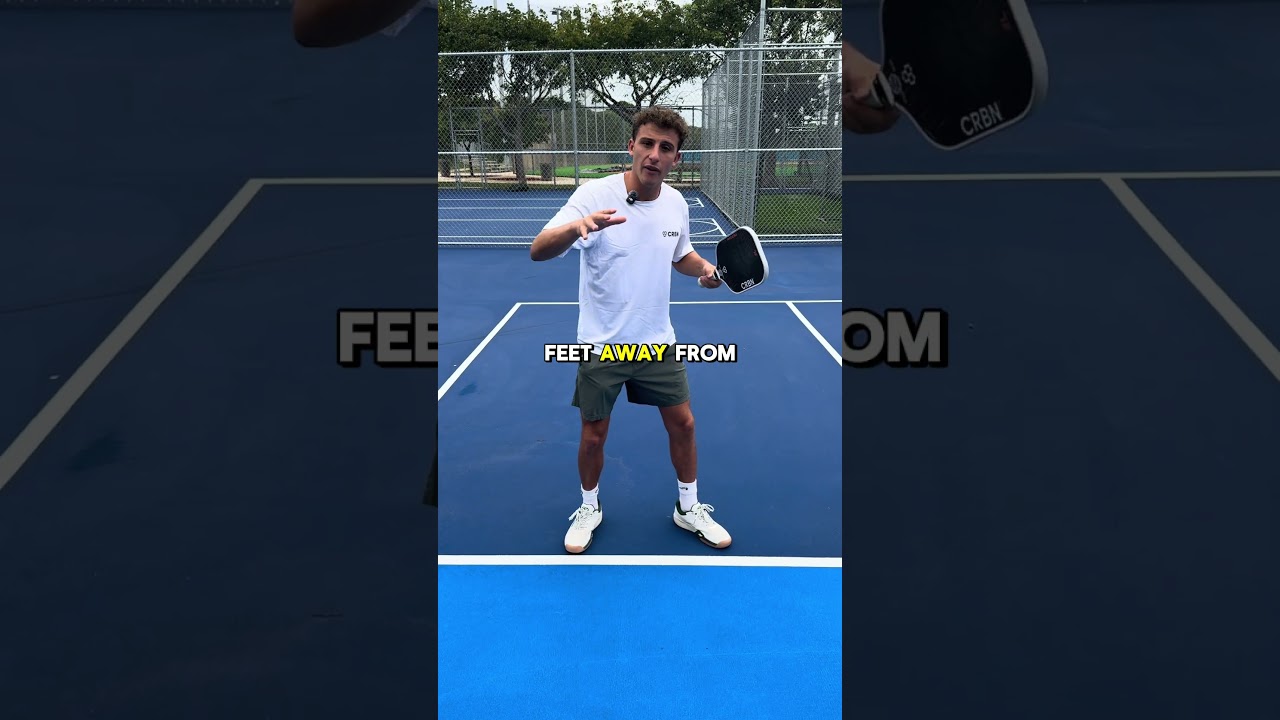
How Does Communication Change Your Doubles Game?
Most beginners are silent partners. That's one of the biggest beginner mistakes in pickleball and it costs points you can't get back.
Three words do more work than any tactical adjustment: "mine," "yours," and "out." Call "mine" when you're taking the ball.
Call "yours" when your partner needs to move. Call "out" before the ball lands if you read it going wide or long.
These aren't complicated signals. They're game-changers.
Here's what else communication buys you: confidence. When your partner knows you're talking, they don't have to guess.
They trust the system, which means they play looser, move faster, and make better decisions under pressure. Quiet doubles teams are anxious doubles teams.
Beyond those three words, talk between points. Where is the opposing team's weak shot? Is their backhand breaking down?
Is one player camped at the baseline while the other rushes?
Even at the recreational level, pattern recognition between partners creates meaningful tactical edges.
And if a ball hits the boundary line? USA Pickleball's 2025 official rulebook confirms that a ball contacting the non-volley zone line on a serve is a fault.
Know the rules together so neither partner is guessing in a crucial moment.
 The Dink Media Team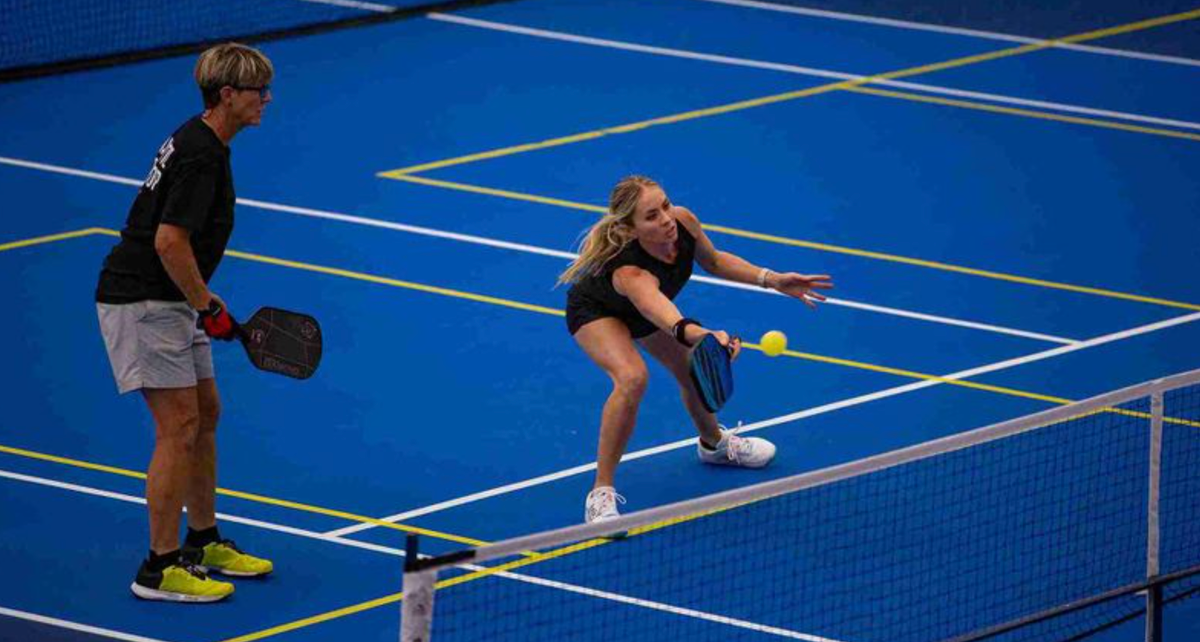
Pickleball Doubles Strategy for Beginners: The Serving Team's Job
Serving in pickleball doubles is trickier than it looks.
The serving team starts at a structural disadvantage: both players have to let the return bounce before they can approach the net.
That's the two-bounce rule in action, and it pushes the serving team back while the receiving team rushes forward.
The goal as the serving team: survive the transition.
Hit a reliable serve, execute a strong third shot drop, and use the dink exchange to creep toward the kitchen.
Don't try to end the point from the baseline with a hero drive. That's exactly what the receiving team wants.
Beginners should prioritize a consistent serve over a powerful one. A fault serve hands the point over before it starts.
A deep, reliable serve forces a harder return and gives you a fighting chance at a clean third shot.
The 4th shot is equally important for court coverage in doubles. Once the serving team hits the third shot drop, the receiving team responds with shot four.
Understanding what to expect on that fourth shot helps you position correctly and gives you a full picture of how early rallies unfold.
 The Dink Media Team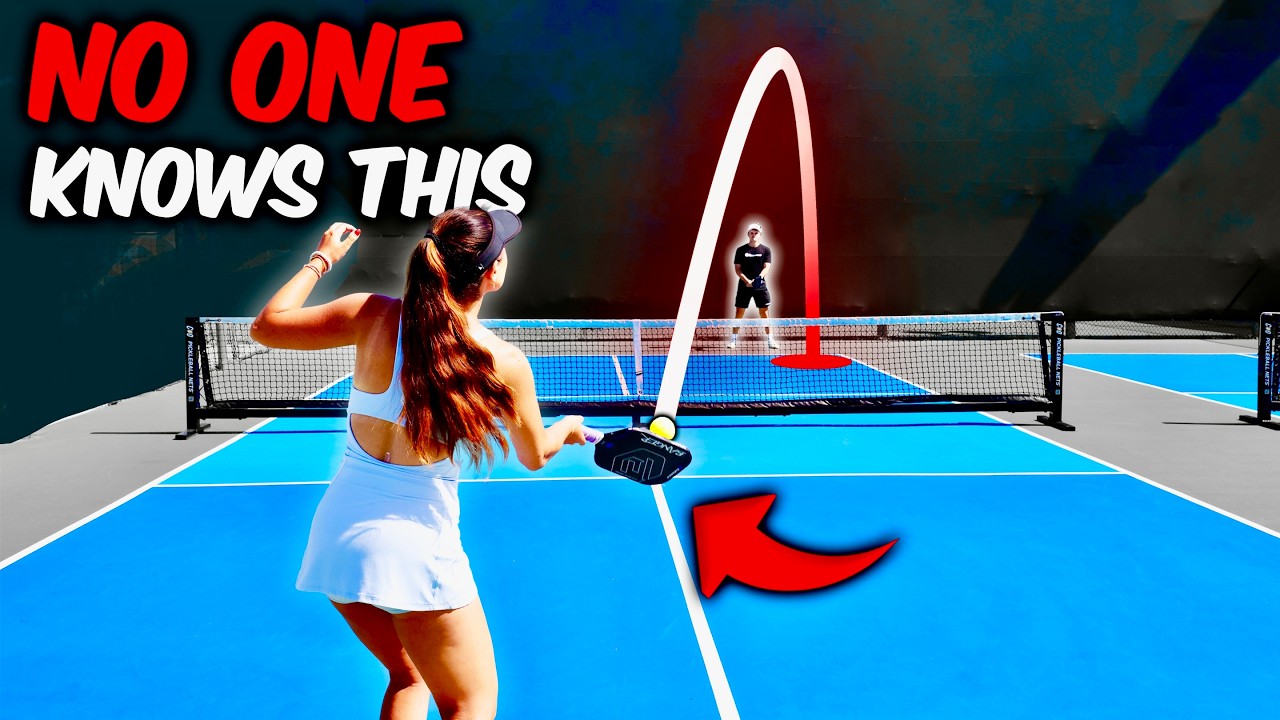
What Pickleball Doubles Strategy Actually Looks Like in Practice
Put it all together and a well-executed doubles point looks like this:
- Server hits a deep, controlled serve to the opponent's backhand corner
- The serving team's partner holds position near the baseline, ready to move
- The returner hits a deep return crosscourt and advances toward the kitchen
- The server hits a soft third shot drop into the kitchen
- Both players on the serving team begin moving toward the kitchen line together
- The rally continues with both teams dinking from the kitchen until one team creates an attackable ball
That sequence is the backbone of doubles pickleball strategy. It doesn't require perfect shot-making.
It requires patience, positioning, and a shared understanding between partners.
Start with the beginner fundamentals and layer in the tactical stuff as your court feel develops.
The singles player mentality that many beginners carry in ("I just need to hit better shots") is the thing holding most of them back.
Doubles rewards the team that thinks together.
 Alex E. Weaver
Key Takeaways
- Get to the kitchen line together: side-by-side positioning controls the court
- The third shot drop is non-negotiable: it's the transition move that gets you to the net
- Middle balls go to the forehand player: establish the rule before the match starts
- Return of serve deep, then move: don't stand at the baseline watching
- Talk to your partner: "mine," "yours," and "out" prevent half the errors beginners make
Frequently Asked Questions
What is the most important pickleball doubles strategy for beginners?
The single most important pickleball doubles strategy for beginners is getting to the kitchen line together. Both players need to advance to the non-volley zone as quickly as the rally allows. Teams that control the kitchen control the point. Everything else, shot selection, placement, communication, is easier once you've established that position.
How does scoring work in pickleball doubles?
Pickleball doubles uses a three-number scoring system. The format is serving team score, receiving team score, server number (either 1 or 2). According to USA Pickleball's official rules, games are typically played to 11 points and you must win by 2. Only the serving team can score. At the start of each game, the first server is designated server 2, so the serving team only gets one service turn before the other team serves.
Who should take balls hit down the middle in doubles pickleball?
The player with the forehand in the middle of the court should take middle balls. If both players are right-handed and positioned correctly, the left-side player covers middle shots with a forehand. Establish this rule with your partner before the match. Calling "mine" or "yours" during the point helps, but having the rule agreed on in advance eliminates the hesitation that causes most middle-ball errors.
What is the two-bounce rule in pickleball doubles?
The two-bounce rule requires that after the serve, both teams must let the ball bounce once before volleying. The serve must bounce on the returner's side, and then the return must bounce before the serving team can volley it. This rule gives the returning team time to advance to the kitchen while forcing the serving team to stay back until ball three. It's why the third shot drop exists as a transition tool.
How can beginners improve their pickleball doubles communication?
Start with three calls: "mine," "yours," and "out." Call them loudly and early, before the ball gets to you, not after. Between points, talk about what the opposing team is doing. Are they attacking one side consistently? Is the middle open? Are they struggling with lobs? Brief conversations between points compound quickly over the course of a game. Teams that communicate consistently make fewer unforced errors and execute better under pressure, which is the foundation of recreational doubles improvement.

Love Pickleball? Join 100k+ readers for free weekly tips, news & gear deals.
Subscribe to The Dink