
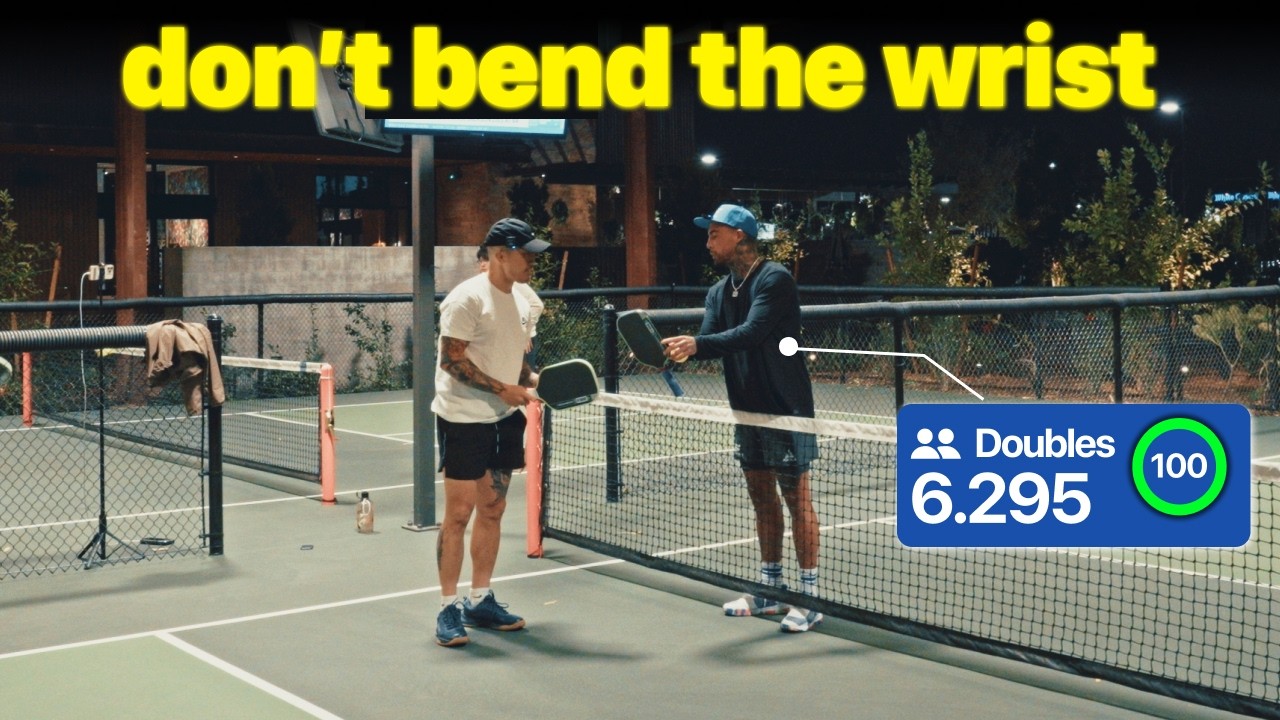
Learning the Tip-Down Defensive Dinking Technique With Tyson McGuffin
The tip down technique is one of the most overlooked defensive tools in pickleball. Tyson McGuffin swears by it, and once you understand why, you'll never defend the same way again.
If your dinks keep popping up when you get jammed or caught in transition, the tip down technique is the fix you have been missing.
Most players instinctively raise the paddle head when they feel rushed. That instinct is costing you points every single session.
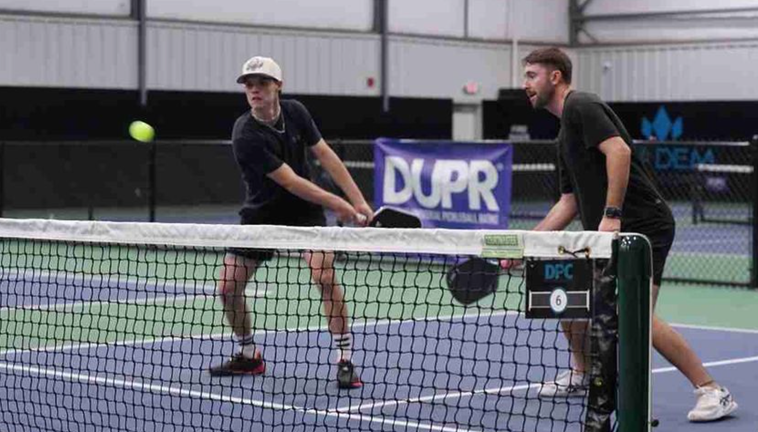
This breakdown comes straight from a kitchen session with Tyson McGuffin, one of the top defenders and dinkers in pro pickleball history, featured on Building Pickleball on YouTube.
What McGuffin shares is not just a tip. It is a complete rethinking of how you position and move your paddle under pressure.
Love pickleball? Then you'll love our free newsletter. We send the latest news, tips, and highlights for free each week.
What Is the Tip Down Technique?
The tip down technique means pointing your paddle tip toward the court surface instead of holding it parallel to the ground or angled upward.
McGuffin traces the concept back to his wrestling background, where his father coached low, grounded body posture.
He adapted that same idea into his paddle work and now teaches it at every camp he runs.
The payoff is simple.
Tip down gives you more natural shape on the ball, a cleaner contact point, and an easier path to lifting the ball safely back over the net.
It is the foundation under every other pickleball shot you must master before 2026.
Why Do So Many Players Get This Wrong?
When a fast ball comes at your feet or you get caught in the transition zone, your natural reaction is to get handsy.
You flick the wrist, you guide the ball, or you try to add spin at the worst possible moment.
McGuffin is direct about this: if you don't have time, never add spin.
Adding spin under pressure requires extra mechanics your body does not have time to execute cleanly.
The result is a popped-up dink, a net error, or a weak reply that sets your opponent up for an easy attack.
Tip down removes most of those variables by simplifying your contact.
If this pattern sounds familiar, you are likely also making mistakes with why your dink fails in games that go beyond just paddle angle.
How to Actually Use Tip Down in Your Game
Here is the core execution broken into clear steps:
- Drop the paddle tip toward the court before the ball arrives, not after. Reactive tip-down rarely works. Proactive positioning does.
- Keep your wrist like a statue. McGuffin repeated this multiple times. The wrist does not flex. It does not flick. It holds.
- Think lift, not push. The motion is a simple upward guide. You are not driving through the ball. You are letting the paddle angle do the work.
- Go shallow with your target. When defending, aim for a shallow landing zone near the kitchen line rather than going for a deep or aggressive placement.
- Let the ball come to you. McGuffin kept coaching "less, less, less" during live drilling. Reaching for the ball breaks your structure. Wait, then meet it.
This is especially important in the transition zone, that awkward no-man's-land between the baseline and the kitchen where most defensive breakdowns happen.
For more on surviving that zone, read about the three keys to mastering the transition zone in pickleball.
 The Dink Media Team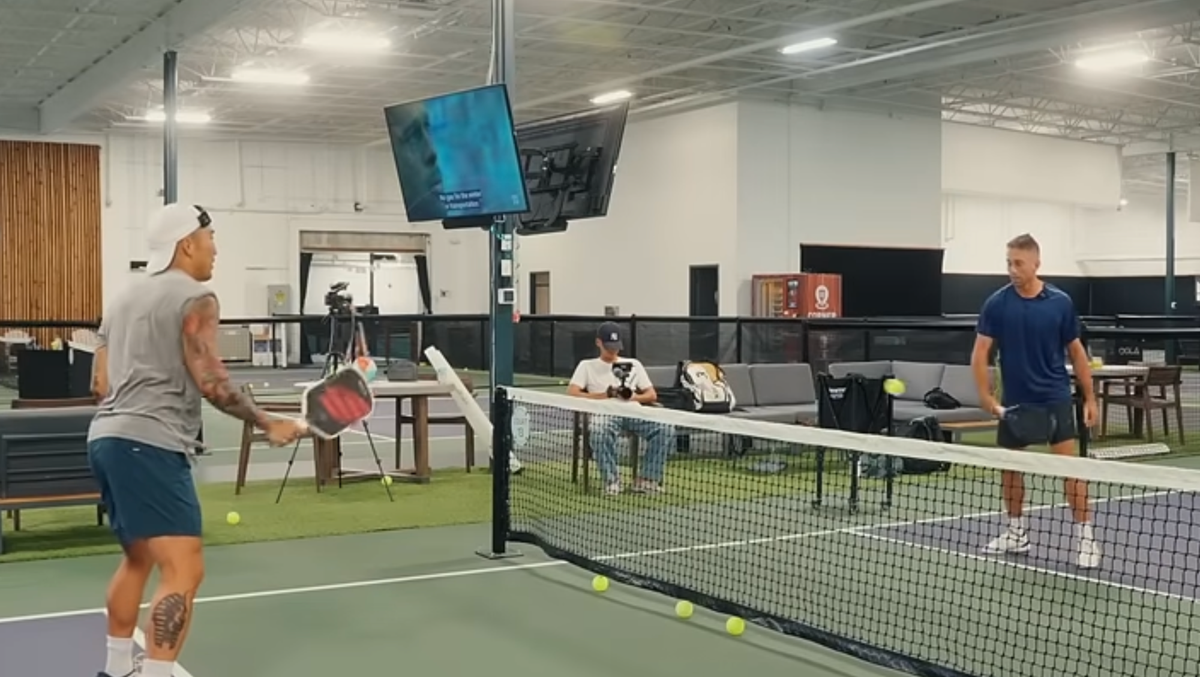
What Does Tip Down Do for Your Backhand Dink?
This is where the technique gets really interesting.
McGuffin talked at length about how his new paddle's lower balance point finally allowed him to fully commit to the backhand roll with tip down positioning.
With a head-heavy paddle, getting the tip around on the backhand side requires extra effort.
Most players compensate by guiding or steering the shot instead of actually rotating through it.
When the balance point is lower and the tip is already angled down, you can "crank the tip" and attack the outside edge of the ball with real intention.
McGuffin described being able to "abuse the outside edge" for the first time in his career because of this combination.
The three backhand dink drills for real consistency pair perfectly with this concept if you want structured practice reps.
 The Dink Media Team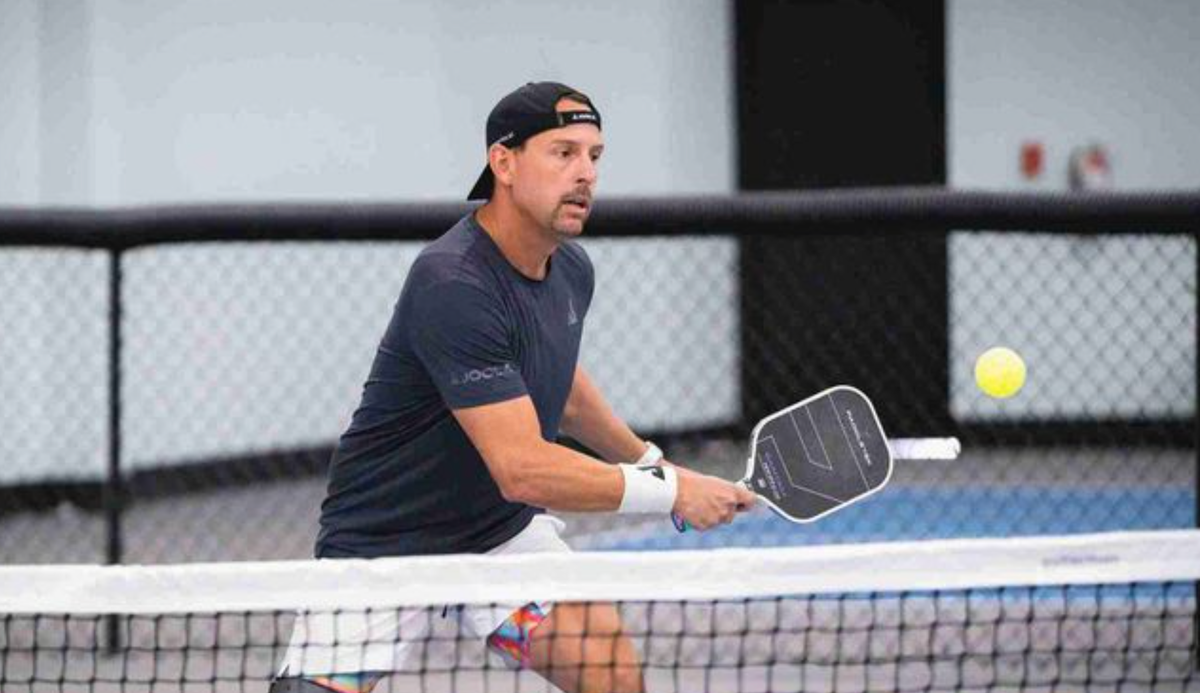
Does Tip Down Work on the Forehand Side Too?
Yes, and McGuffin demonstrates exactly that during the session.
On the forehand, tip down creates a subtle deception that top players exploit constantly.
When your paddle tip is low and your swing path starts from that position, it becomes very hard for your opponent to read whether you are dinking or speeding the ball up.
McGuffin showed a specific combo: show a tip-down dink shape, then yank the ball cross-court or at the hip.
The setup looks identical until the last moment.
That kind of deception is what separates players who win with soft hands from players who just push the ball around.
If you want more on this, check out three techniques for disguising your pickleball shots.
 The Dink Media Team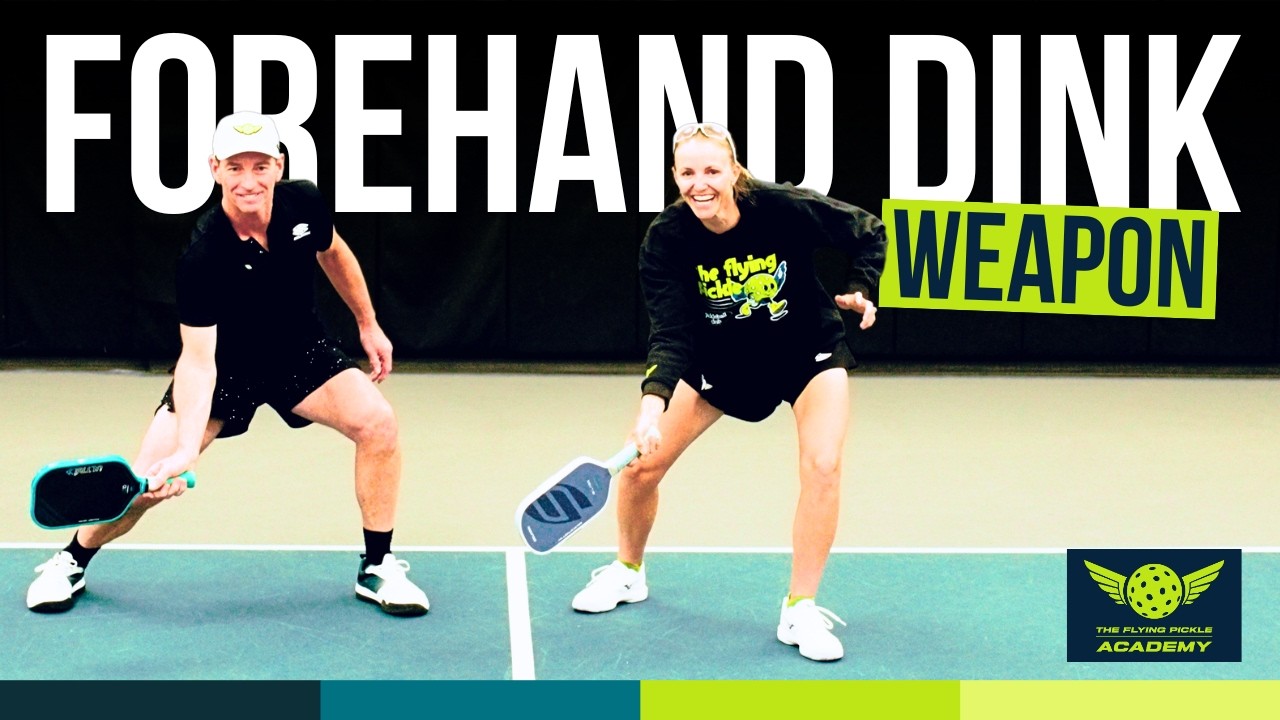
How Do the Best Defenders in the World Use This?
McGuffin called out several elite players who rely on tip down as their defensive foundation.
He specifically mentioned Ben Johns, Anna Leigh Waters, and Anna Bright as examples of players who defend with tip down positioning as a base.
Watch any extended rally featuring these players and you will notice the paddle tip rarely points to the sky when the ball is low or fast.
That is not a coincidence. That is a trained default.
If you want to study how Anna Bright specifically makes smart decisions under pressure, this breakdown of five pickleball IQ decisions pros make every point goes deep on her approach.
 Alex E. Weaver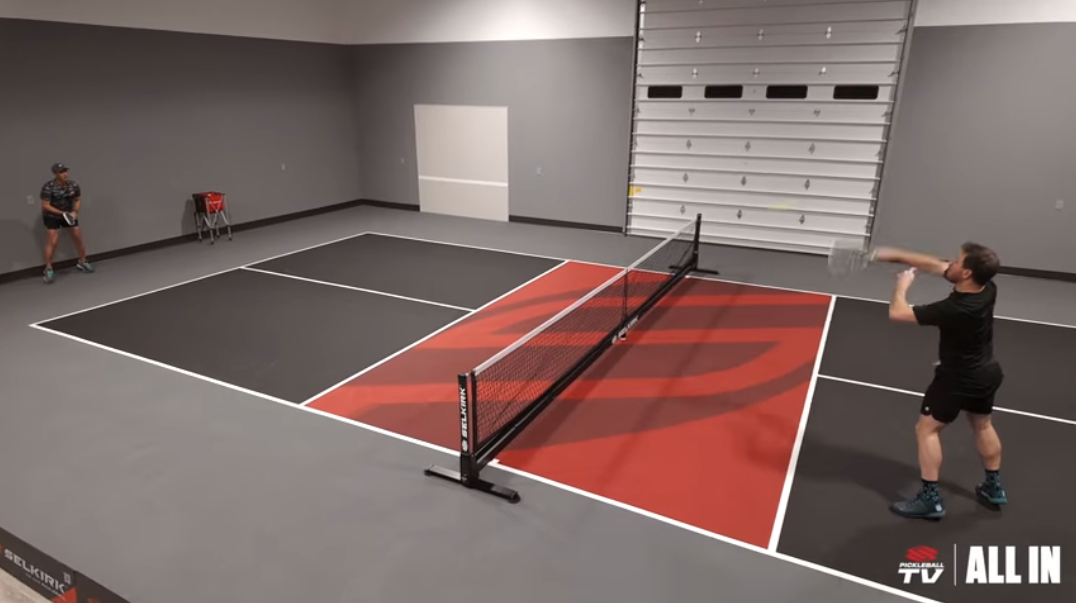
What Happens When You Get Jammed?
Getting jammed is one of the most uncomfortable situations in pickleball.
The ball arrives at your body before you can reset your position, and the tendency is to react with your hand rather than your structure.
McGuffin's fix is simple. Remove the wrist entirely from the equation.
Here is his exact framework for handling a jammed ball:
- Freeze the wrist. Do not flex it. Do not bend it. Treat it as a fixed unit.
- Drop the tip. Even in the jammed position, getting the tip down gives you a path to lift the ball safely.
- Add lift, not spin. A simple upward motion gets the ball back. Spin requires time and mechanics you do not have.
- Accept the reset. The goal when jammed is survival, not offense. Go shallow and reset the rally.
This connects directly to what McGuffin calls the core defensive mindset: less is more.
The more you try to do with a jammed or rushed ball, the worse the result will be.
If you regularly get caught out of position and struggle to recover, read about how to stop getting jammed by shots at your feet.
 The Dink Media Team
How Do You Train Tip Down Until It's Automatic?
This is not a technique you learn in one session. The problem is that your default paddle position under pressure is deeply ingrained.
Changing it requires deliberate repetition, not just awareness.
McGuffin recommends building it through live drilling where someone is actively targeting your feet and the transition zone.
Controlled cross-court dinking does not stress-test the technique enough.
You need reps where you are actually uncomfortable, actually rushed, actually tempted to get handsy.
That is when tip down either holds or breaks, and that is when the real training happens.
For structured drilling sessions that build this kind of pressure tolerance, the two dinking drills a senior pro swears by offer a strong starting framework.
And if you want to understand the broader shot selection context that tip down fits into, this guide on the 1-to-10 scale for every shot is worth your time.
The bottom line is this: tip down is not a trick shot or an advanced flourish.
It is a defensive standard. The players who use it consistently are the ones who rarely crack under pressure.
The players who ignore it are the ones popping the ball up at exactly the wrong moment.
If you want to stop giving away free points when the rally gets hard, this is where you start.
For more on building smart defensive habits that hold up in tight spots, this piece on three fixes to reset every speed-up covers the next layer of defensive skill you need.
Frequently Asked Questions
What is the tip down technique in pickleball?
The tip down technique means positioning your paddle so the tip points toward the court surface rather than staying parallel to the ground or angling upward. It gives you better shape on the ball, a simpler contact point, and an easier upward lift path when defending or dinking under pressure. Tyson McGuffin teaches it as a core defensive default at his camps.
When should I use tip down during a rally?
Use tip down any time you are in transition, getting jammed, or playing defense against a fast ball. It is especially valuable when you do not have time to set up cleanly, because it removes the need to add spin or guide the ball with your wrist. The more rushed the situation, the more important tip down positioning becomes.
Does tip down work on both the forehand and backhand?
Yes. On the backhand, tip down lets you get the paddle tip around the ball and generate a real roll instead of just steering. On the forehand, it creates deception because the same paddle position can produce either a soft dink or a sharp speed-up, making it hard for your opponent to read your shot early.
Why do players pop up dinks when they get jammed?
The most common cause is getting handsy, meaning players flex or flick the wrist when the ball arrives unexpectedly close to the body. This adds unnecessary mechanics and changes the paddle face angle at contact. Tip down with a frozen wrist eliminates that flaw by keeping the contact structure consistent.
Which pros use the tip down technique?
Tyson McGuffin specifically called out Ben Johns, Anna Leigh Waters, and Anna Bright as players who default to tip down positioning when defending. Watch their paddle position during fast exchanges at the kitchen line and you will consistently see the tip angled toward the court rather than elevated.
Love Pickleball? Join 100k+ readers for free weekly tips, news & gear deals.
Subscribe to The Dink