The 1-to-10 Shot Selection Scale Every Pickleball Player Needs to Know
Poor pickleball shot selection is one of the biggest reasons players lose matches they should win. Here is the 1-to-10 scale that tells you exactly which shots to take and which to leave alone.
Bad pickleball shot selection is quietly destroying your game, and most players have no idea it's happening.
You miss a ball and blame your mechanics. You lose a game and blame your partner.
But the real problem is often the choice you made before the swing even started.
The good news is that this is fixable with a simple framework.
Once you understand how to grade your shot opportunities, you stop making the same mental mistakes that are costing you points at the biggest moments.
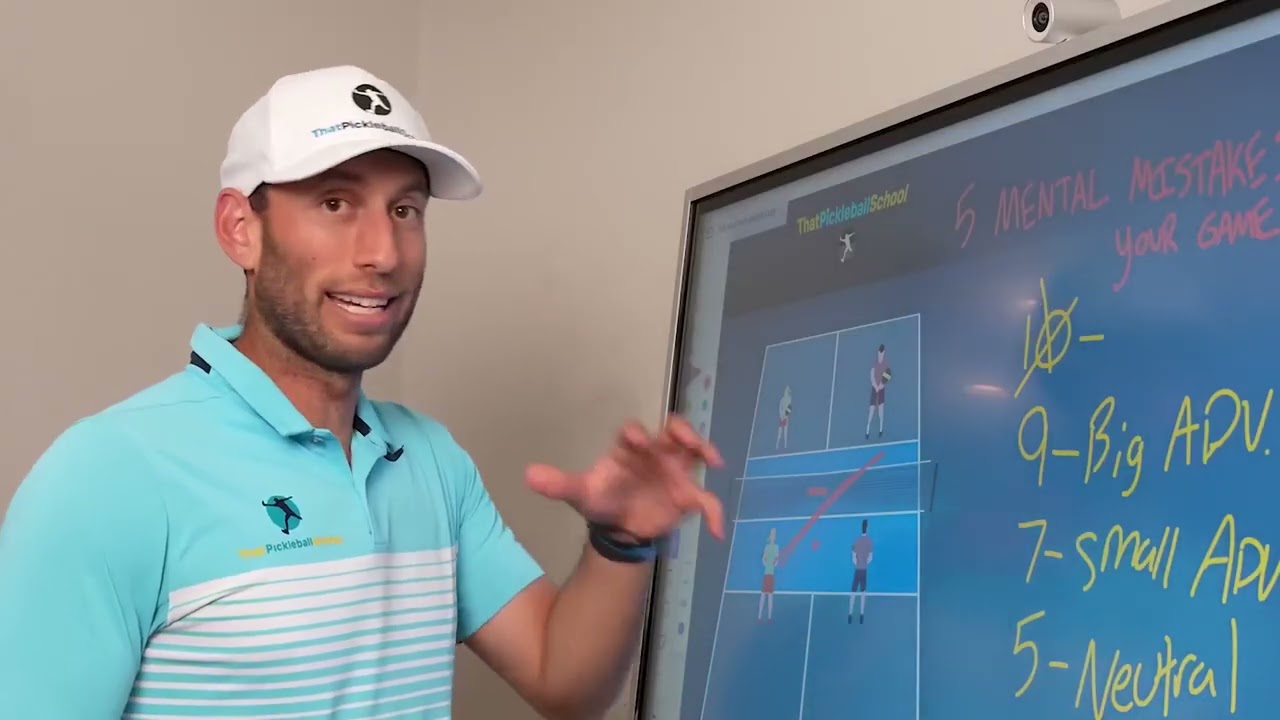
This breakdown comes from Kyle Koszuta of ThatPickleballGuy Daily on YouTube, where the host walks through a 1-to-10 shot selection scale designed to give players a common language for smarter decisions on the court.
Love pickleball? Then you'll love our free newsletter. We send the latest news, tips, and highlights for free each week.
Why Shot Selection Is a Mental Problem, Not a Technique Problem
Most players frame missed shots as a mechanics issue. They think they need a better swing, more spin, or a faster hand.
Pickleball shot selection is a decision problem, not a swing problem.
You chose the wrong shot for the situation. It had nothing to do with how you hit it.
The mental error is treating every shot as either good or bad.
In reality there is a full spectrum of opportunity, and where a ball lands on that spectrum should decide whether you take it.
The players winning consistently are not hitting better shots. They are making better decisions about which shots to take in the first place.
If you want to know why you keep stalling at your current level, this is usually a big part of the answer.
You are taking shots that do not give you a real advantage, and you are paying for it in lost games.
What Does the 1-to-10 Scale Actually Mean?
Here is the full breakdown of the scale you need to internalize.
- 10: Does not exist. There is no shot you will make perfectly every time. Even a ball sitting at shoulder height over the net can end up in the tape.
- 9: A big advantage shot. Both opponents are out of position, the ball is high, and you are balanced and in control. You should make this shot around 90% of the time.
- 7: A small advantage shot. You are at the kitchen line, the ball is about a foot above the net, and you can apply spin or angle to keep your opponent back. You can also create a seven when your opponent pops the ball up to net height after being taken off balance.
- 5: A neutral, 50/50 shot. All four players are at the kitchen, nobody has an edge, and you decide to speed up a ball sitting below net height. You might win it. You might not.
- 3: A disadvantaged attack. You are off balance, out of position, or reaching wide of your body, and you still try to do something aggressive. This works maybe three out of ten times, and usually fewer.
The key insight is that sevens lead to nines. You are not trying to go from neutral to a winner in one swing.
You are stacking small advantages until a real opportunity opens.
 The Dink Media Team
What Is a Three, and Why Do Players Keep Hitting Them?
The three is where most recreational players bleed points. It is the off-balance, running, reaching swing that occasionally looks spectacular.
And that is exactly the problem. When a three works, it creates an emotional rush, and you want that feeling again.
So you keep taking the shot even though it fails seven or more times out of ten.
Stop chasing that feeling if you want to win.
The three is the shot you take when you have no business attacking: the ball is wide, you are running, and your only real play is to reset.
Instead, you try the home run swing. Sound familiar?
As explained in this breakdown of the shot selection rules players keep getting wrong, the most damaging shots in your game are not the ones you miss badly.
They are the ones you had no business taking.
 Eric Roddy
How Does This Scale Change at Different Skill Levels?
At 3.5 and 4.0, the problem is almost always too many threes.
Players attack from bad positions, chase balls they should let go, and swing hard at shots that call for a soft reset.
The fix at this level is simple: cut the threes out completely.
The moment you stop giving away points on bad-decision attacks, you start winning more games.
You do not need a new shot. You need fewer bad choices.
As you move up, the challenge shifts. Yur opponents are now good enough to neutralize your nines, digging out quality attacks and dragging the point back to neutral.
Nines become harder to convert, and fives become more common in every rally.
That is why higher-level pickleball shot selection is about hunting sevens instead of swinging for winners.
The seven is the shot that earns you the nine. You work it through patience, court position, and pressure. You do not skip straight from neutral to a putaway.
Watch how top players construct points and you will rarely see wild swings.
You will see high-IQ decisions that force opponents into worse and worse positions until a true opportunity appears.
Even the growth numbers back up the need for smarter decision-making over raw power, with participation data from SFIA showing how many new players are entering the sport every year and learning bad habits fast.
 The Dink Media Team
Why Do Players Try to Go from Neutral to a Winner in One Shot?
This is one of the biggest mental mistakes in recreational pickleball.
You are in a neutral five, nothing special is happening, and suddenly you try to end the point with one aggressive swing.
That is not strategy. That is impatience.
The point is not yours to win yet because you have not created the opportunity.
Going from a five directly to a winner attempt skips the entire middle of the point, the part where you would have built a real advantage.
Instead, you hand the point back to your opponent by attacking before the situation calls for it.
Think about how this connects to the dinking game. When the ball is sitting at net height, that is not a nine. It is not even a seven yet.
Let the height of the ball guide your decision, not your desire to finish the point fast.
How to Apply the Scale in a Real Match
Here is a practical process for using this framework during live play.
- Before you swing, ask yourself: what number is this shot? It takes a split second once the scale is internalized. Is this a nine, a seven, a five, or a three?
- If it is a three, do not attack. Reset the ball into the kitchen and live to play another shot. Protect the point rather than gambling on a low-percentage swing.
- If it is a five, look to create a seven. Use spin, angle, or placement to move your opponent and generate a better look. Do not try to end it now.
- If it is a seven, take controlled aggression. You are not crushing the ball. You are applying enough pressure to push the point toward a nine.
- If it is a nine, be decisive. Take the high-percentage shot, execute the attack, and trust your preparation.
This process pairs well with the three momentum states that let you control points. Pickleball shot selection and point momentum are directly connected.
Smarter choices keep you in control of the rally more often.
 The Dink Media Team
Real Match Proof: How Switching to Sevens Won a Game
In the match referenced in the video, the team got blasted in game one, 11-2.
The reason was simple: they were taking too many fives and even threes, attacking from neutral positions and losing those exchanges.
In game two, they made one adjustment. They stopped attacking early and committed to hunting sevens.
The result was a dominant game two win. Sevens turned into nines, nines turned into put-aways, and the points started stacking up.
This is not a coincidence. It is what happens when you apply discipline to your shot selection instead of relying on emotion and impulse.
If you want to understand more about specific ball position rules for shot selection, that framework fits perfectly alongside this scale.
For players who are also working on their attacking mechanics, understanding how to improve your putaway shots will make your nines even more effective once you earn them.
 The Dink Media Team
What Happens When You Eliminate the Three from Your Game
The results are almost immediate. You stop giving away easy points on unforced errors, and your opponents have to work harder to win rallies.
And real opportunities start opening up because you are patient enough to create them.
This matters most for players stuck at a rating ceiling.
If your game is not improving despite practice, the problem is almost always pickleball shot selection, not technique.
You are reinforcing bad habits by rewarding yourself emotionally every time a three accidentally works.
Even the official skill rating guidelines published by USA Pickleball separate levels by decision-making and consistency, not by how hard you can swing.
For players who want to go further, understanding why your speed-ups fail will help you convert fives into sevens more consistently.
And if discipline breaks down in fast exchanges, these dink and attack combinations show you how to set up high-percentage shots with intention.
The scale is simple. The discipline is the hard part.
Once you commit to it, your results will shift faster than any technical drill could produce.
Frequently Asked Questions
What is pickleball shot selection and why does it matter?
Pickleball shot selection is the decision about which shot to hit based on the situation, your court position, and the ball's height and location. Poor shot selection, especially attacking from a disadvantaged position, is one of the top reasons recreational players lose matches. Better decisions lead directly to more wins, even without changing your technique.
What is a "seven" shot in the 1-to-10 pickleball scale?
A seven is a small advantage shot where you have a slightly favorable position, the ball is around a foot above the net, and you can apply spin or angle to keep your opponent under pressure. It is not a finisher. The goal of a seven is to create a nine, which is a true high-percentage attack opportunity.
When should I attack in pickleball?
Attack when the situation rates as a seven or higher on the shot selection scale. If the ball is below net height, you are off balance, or your opponents are in good position, that is a five or a three and you should reset instead. Patience creates better attack opportunities than forcing the issue from a neutral position.
Why do players hit bad shots even when they know better?
The emotional reward of a successful risky shot is very powerful. When a low-percentage attack works, it creates a feeling that players want to repeat, so they keep taking that shot even though it fails most of the time. Recognizing this pattern is the first step to breaking it.
How does shot selection change as you get better at pickleball?
At lower levels, eliminating threes is the biggest improvement you can make. As you face stronger opponents, they start neutralizing your nines, which means you spend more rallies working through fives and sevens before a real opportunity opens. Better players earn their nines through discipline and patience rather than creating them with one aggressive swing.

Love Pickleball? Join 100k+ readers for free weekly tips, news & gear deals.
Subscribe to The Dink