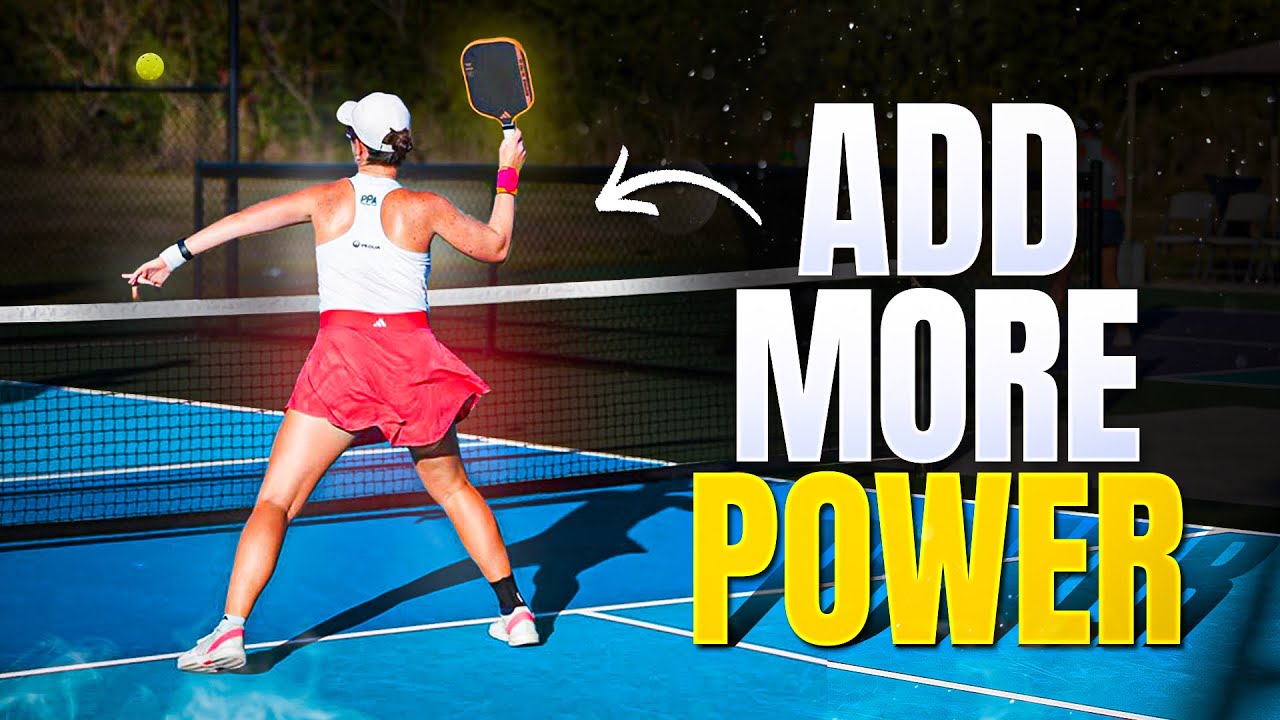
Most players arm their pickleball putaway and wonder why it lacks pace. These three fixes will add real power without sacrificing consistency.
You get the ball you have been waiting for. It floats up right around belly button height.
You swing hard and it either drifts wide, clips the tape, or comes back at your feet off a clean block.
The problem is almost never what you think it is. Most players assume they need to swing harder with their arm. That is exactly backwards.
This breakdown covers what a pickleball putaway actually is, where the power really comes from, how to aim based on where your opponents are standing, and how to build the consistency to trust it under pressure.
The coaching session comes from Mari Humberg on YouTube, working with player AB through a focused putaway session that revealed the exact mistakes most recreational players make.
Love pickleball? Then you'll love our free newsletter. We send the latest news, tips, and highlights for free each week.
What Is a Pickleball Putaway?
A pickleball putaway is any ball you receive at belly button height or higher that lets you hit down on it instead of up. That is the key distinction.
If you are around 5'5" to 5'6", belly button and above is your window. Taller players get a slightly lower window. Shorter players get a slightly higher one.
The logic does not change: you need the ball above the net so you can generate a downward angle instead of clearing the tape with a lifting swing.
When you can hit down, two things work for you at once. Gravity assists the shot, and your opponents have far less time to react.
That is why knowing when to attack matters as much as the swing itself.
Not every fast swing is a putaway, and this is one of the 5 pickleball shots you must master before you break into the next rating tier.
A true pickleball putaway is one where the geometry is already in your favor.
Why Does Your Putaway Lack Power?
The answer is simple: you are using your arm.
Almost every recreational player who lacks pace on their putaways is arming the ball.
They swing fast with their elbow and wrist, but there is no real force behind it because the biggest muscles in the body are not involved at all.
Real power comes from two places: the legs and the core. The legs create a stable base and load the kinetic chain.
The core rotation is what transfers that energy into the paddle.
Your arm is the last link in that chain, not the engine.
Here is what that looks like wrong versus right:
- Wrong: Standing tall, back arching to get low, arm swinging independently
- Wrong: Bending from the waist instead of the knees
- Wrong: Feet staying flat and square with no rotation
- Right: Knees bent, steady base, core turning through the shot, arm extending as a follow-through
If you are wondering why your shots feel inconsistent even when you feel like you are swinging hard, check your feet first.
If they are not rotating, your core is not either. And knee bend is not the same as back bend. Get low through your legs, not by leaning over.
How Do You Actually Generate Power on a Putaway?
Follow this sequence on every putaway, forehand or backhand:
- Split step as the ball leaves your opponent's paddle, not after it bounces
- Bend your knees to drop your center of gravity and create a stable platform
- Turn your feet toward the shot, not just your shoulders
- Rotate your core fully through the contact point
- Extend your arm toward the target as a follow-through, not as the primary driver
On the forehand side, your non-dominant hand should point toward the ball before contact, similar to what you do on an overhead.
This primes your shoulder rotation and keeps your swing path clean.
On the backhand side, you can go one-handed or two-handed. Either works. What cannot change is the core rotation and the shoulder turn.
If your upper body stays square and only your arm moves, you will arm the shot every time.
The extension tip is worth repeating. One of the most common corrections in the video was telling AB to extend further toward the target on deep shots.
Extension adds depth without requiring extra swing speed.
It is a free source of power most players ignore completely.
 The Dink Media Team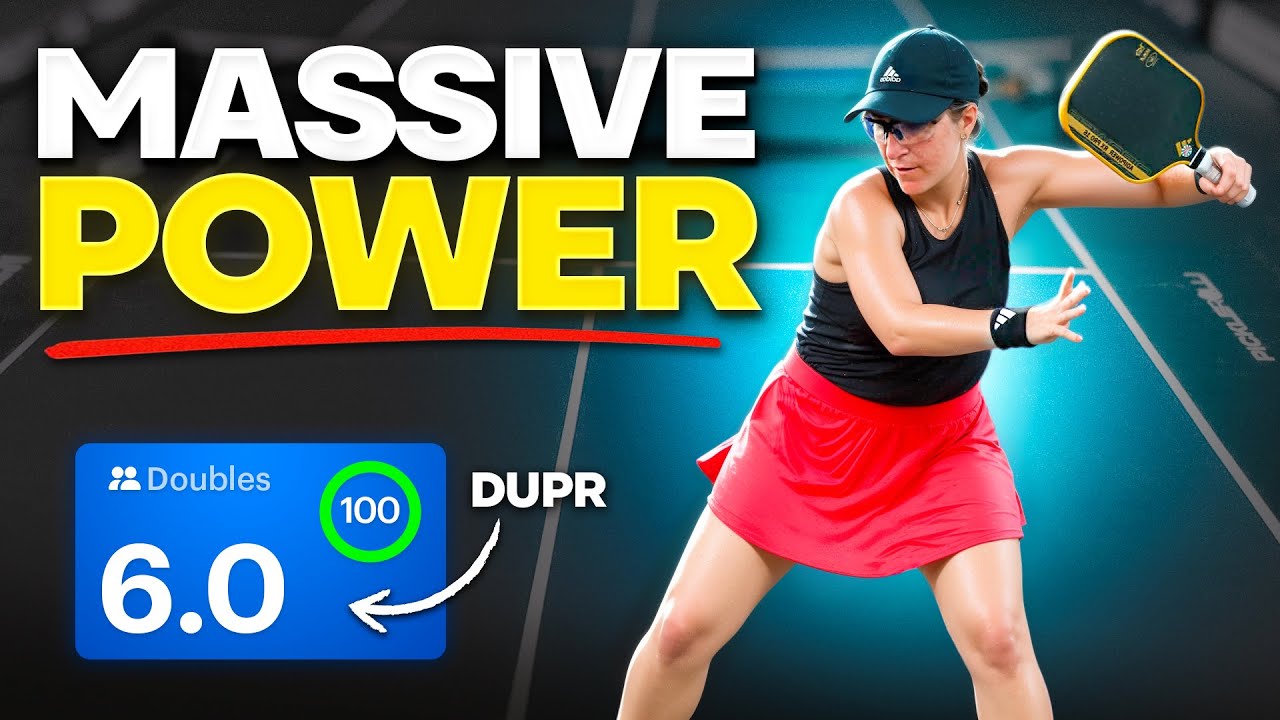
Where Should You Aim Your Putaway?
Your target changes based on where your opponents are standing. This is not optional. The right swing with the wrong target still loses you the point.
Here is how to think about it:
- Opponents at the kitchen line: Hit hard and hit down. Aim at their feet or at open court. The angle is steep enough that placement matters less than pace and direction.
- Opponents in midcourt: Aim at their feet. They are already in a transition position and a shot at their feet forces a very difficult low block.
- Opponents at the baseline: Prioritize depth. A deep shot to the baseline is harder to defend than a hard shot that lands mid-court. If the ball is very high and you can hit a short angle, take it. But if there is any doubt, go deep.
A key principle that comes up in the session is this: objective number one is to make the ball. Objective two is to make your opponent struggle.
Objective three is to not give them an easy ball back.
When opponents are at the baseline and you are unsure, the middle of the court is your friend.
It creates confusion about who takes the ball and forces at least one player to move. It is not glamorous, but it works.
If you want to think more about attack combinations that set up winners, middle placement fits naturally into that sequence.
Do not aim close to the sidelines until you are hitting that shot at full confidence consistently.
Aiming for wide winners and missing them is one of the fastest ways to give away points you should be winning.
 The Dink Media Team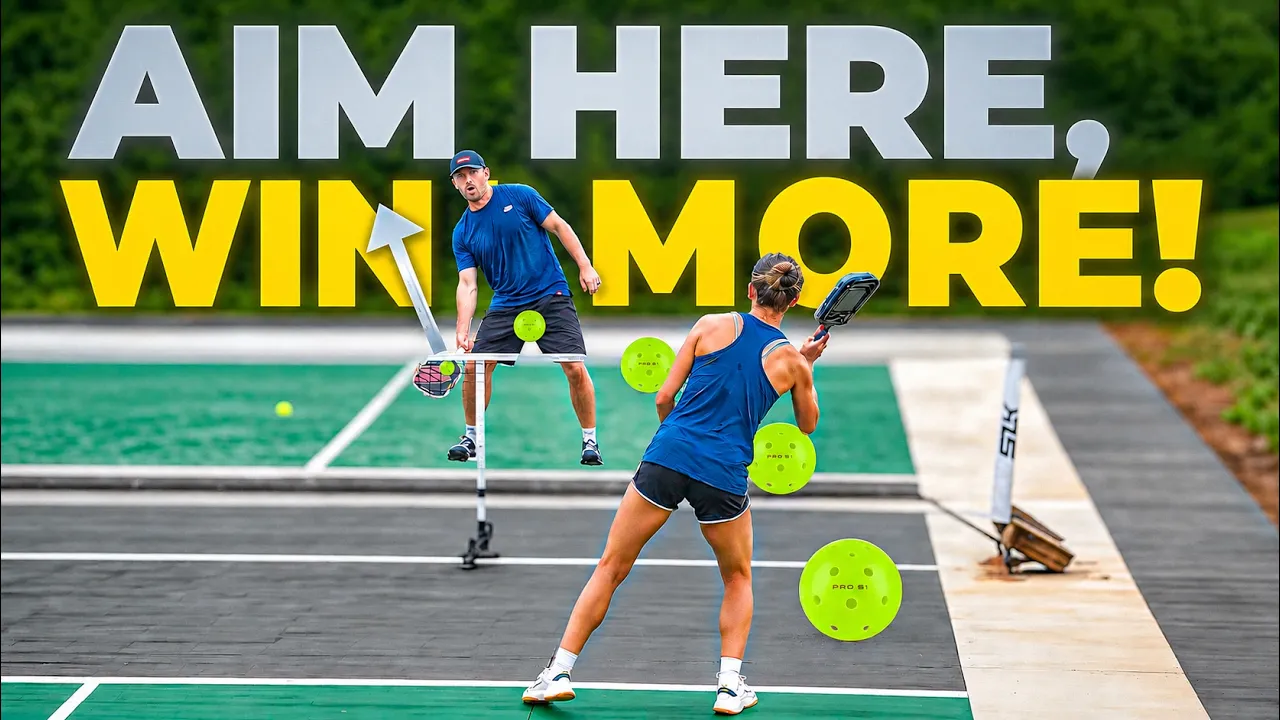
Why Are You Playing at 75% When You Should Be at 100%?
This is where most players plateau. Even experienced players get comfortable hitting putaways at 75% of their capacity because those shots feel reliable.
The problem is those shots do not finish points.
AB is a strong player. She was hitting putaways well. But during the session, it became clear she was not hitting anywhere near her top speed.
The moment she focused on full rotation through her feet and core, the pace jumped noticeably without any extra arm effort.
The putaway is the one shot in pickleball where you should be swinging at full pace. This is not true of third shot drops, dinks, or resets.
Those shots require restraint. Shot selection rules exist for a reason, and the putaway is the exception where going all out is correct.
The way to build that trust is through repetition at full speed. Not 75%. Not comfortable.
Full rotation, full extension, full swing.
If you want to verify you are rotating enough, watch your feet during drilling. If your back foot has not turned at all after contact, you stopped your rotation early.
That is leaving pace on the table every single time.
Understanding split step timing will also make a measurable difference here.
Players who are not split stepping are late to load, which means they are forced to arm the shot because they never got into position to use their legs.
 The Dink Media Team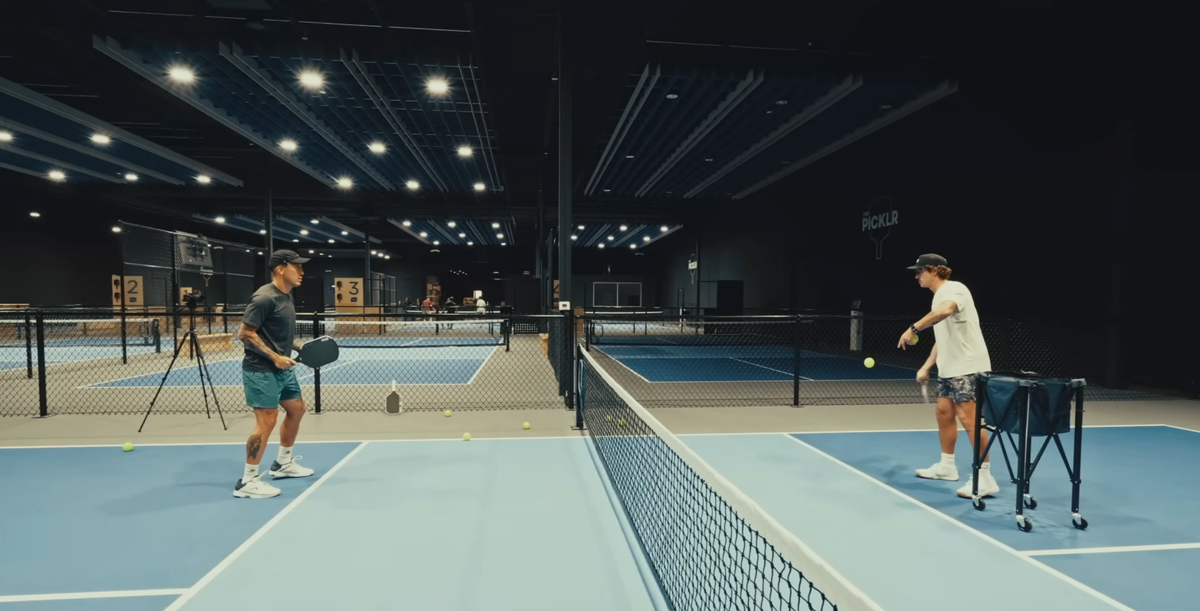
How to Practice This So It Holds Up in a Real Game
Drilling putaways at reduced speed builds the wrong habit. You need to practice at full pace so that full pace feels normal.
A few ways to structure this:
- Five in a row at full pace: Have a partner feed you balls at belly button height or above. Your only goal is five consecutive full-rotation, full-extension putaways. Not five winners. Five technically sound, full-effort swings.
- Down the line drill: Hit exclusively down the line to start. This removes the angle variable and lets you focus purely on mechanics. Rotate your feet, turn your core, extend toward the target.
- Target-based feeding: Once mechanics feel solid, add in the placement component. Have your partner feed from different positions on the court so you practice switching between the kitchen line target, midcourt target, and baseline target.
These progressive drills build the kind of muscle memory that holds up under match pressure.
Drilling casually never builds match confidence. Drilling at match intensity does.
If you find that your shots are mechanically fine but your timing is off, look at your preparation.
Are you watching the ball come off your opponent's paddle and splitting? Or are you watching it bounce and reacting late?
Late preparation collapses your mechanics because you are rushing into contact instead of setting up for it. Check out how to handle high balls on the backhand side as a companion skill to what we covered on the forehand.
One more thing: do not confuse a well-placed shot with a putaway. A soft, well-placed dink to the kitchen corner is a great shot. It is not a putaway.
A putaway is a ball you can actually finish with pace and a downward angle. Pickleball IQ is knowing the difference in real time and swinging accordingly.
Frequently Asked Questions
What counts as a putaway in pickleball?
A putaway is any ball received at belly button height or above that allows you to hit down on it rather than having to lift it over the net. The exact height threshold shifts slightly based on your height. Taller players can attack from a slightly lower position because they stand higher above the net.
Why do my putaways keep going wide or into the net?
The most common cause is arming the shot without core rotation, which makes your swing path inconsistent. When you swing with just your arm, you lose control of the paddle face angle at contact. Add a knee bend, rotate your core, and extend toward your target to fix the path.
How hard should I swing on a putaway?
The putaway is the one shot where you should swing at your full capacity, not 75%. Most players unconsciously hold back to protect consistency, but that is exactly why their putaways do not end rallies. Practice at full pace so full pace becomes your normal.
Where should I aim a putaway when my opponents are at the baseline?
Prioritize depth over angles when opponents are at the baseline. A deep shot forces them to stay back and gives them a harder defensive position than a hard shot that lands mid-court. If you have a very high ball and are confident in a short angle, take it.
When in doubt, go deep and go middle to cause confusion.
Does the split step really make a difference on putaways?
Yes, and it is one of the most overlooked parts of the shot. If you are not split stepping as the ball leaves your opponent's paddle, you are late to load your legs and core. That forces you to arm the shot because your lower body never got into the right position to help.

Love Pickleball? Join 100k+ readers for free weekly tips, news & gear deals.
Subscribe to The Dink