The midcourt is where most amateur pickleball players lose points. Learn the 3 essential steps to master the midcourt transition and dominate the kitchen line.
The midcourt transition is where amateur pickleball players go to die.
This is where the vast majority of points are lost, and it's also where the game gets decided.
If you can't move through the transition zone with confidence and consistency, you're leaving points on the table every single rally.
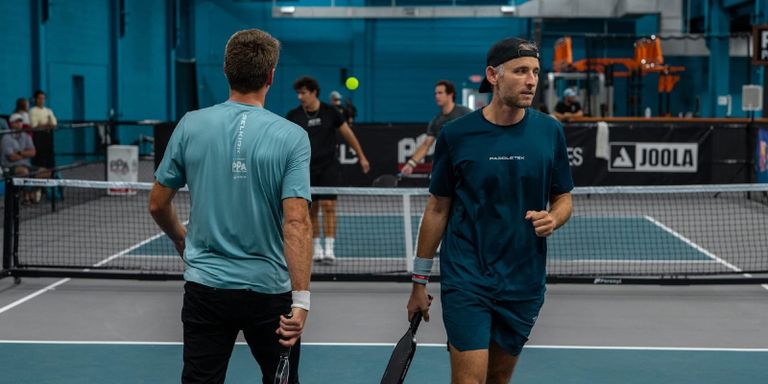
That's why Austin Hardy, a PPR certified coach and 5.5-rated player, teamed up with Minnie Wilkins, a 5.6-rated pro with over 20 years of coaching experience, to break down exactly how to own the midcourt.
Their approach is simple, systematic, and immediately applicable to your game.
Love pickleball? Then you'll love our free newsletter. We send the latest news, tips, and highlights for free each week.
The Three-Step Framework for Midcourt Mastery
Here's what separates the pros from the amateurs: Pros move with intention, while amateurs move with hesitation.
The difference comes down to three specific steps that, when executed properly, make your transition to the kitchen line feel natural and unstoppable.
Step 1: Move with Confidence (Monitor, Watch, Crash)
The first step to mastering the midcourt transition is understanding when you're actually invited to move forward.
Your opponents won't give you a formal invitation, but there's a specific framework you can follow: Monitor, Watch, Crash (MWC).
- Monitor starts right after you serve. You're watching your opponent's third shot. Are they backing up as they hit it? If so, stay back. Are they moving forward through contact? Then you can slowly creep forward.
- Watch is the next phase. You're observing what your opponents do with the next ball. Are they loading up for an overhead? Are they bending down to get a shot at their feet? This tells you whether to move forward or retreat.
- Crash happens the moment you see the ball is low. That's your signal to attack the net aggressively.
The beauty of this framework is that it removes guesswork from your movement. You're not just wandering forward hoping for the best.
You're reading the court, reading your opponent, and moving with a clear purpose. Understanding the pickleball transition zone will sharpen that read even further.
Step 2: Always Be One Zone Ahead During the Midcourt Transition
Here's a visual trick that makes the midcourt transition click: split the backcourt into three zones.
If the return goes to your partner, you should be one zone ahead of them at all times.
This means you're constantly watching your partner's ball and anticipating where it's going. If it drops to your opponent, you crash in.
If your partner leaves it high, you come back. You repeat this process until you reach the kitchen line.
The key insight here is that most players stay back one shot too long.
They miss opportunities to get to the net because they're not being aggressive enough with their zone positioning.
By committing to being one zone ahead, you're forcing yourself to move forward with purpose. The traffic light trick for conquering the pickleball transition zone is another framework that clicks with this same logic.
 The Dink Media Team
Step 3: Only Attack If You Have Time
This is where decision-making separates good players from great ones.
The midcourt transition isn't just about moving forward; it's about knowing when to attack and when to reset.
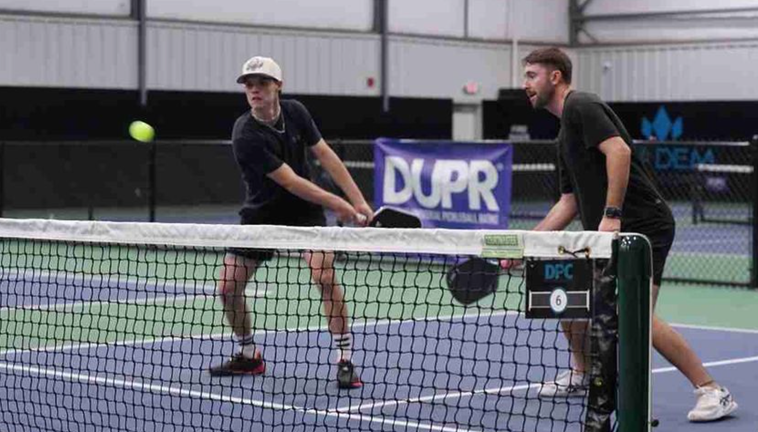
Here's the rule: if your opponent is still at midcourt, you have time to attack. Even if the ball is low, you can still speed it up because you have time to get the ball at their feet before they reach the kitchen line.
But if your opponent has already moved forward and is approaching the net, attacking doesn't make sense. They're already in a dominant position.
In that scenario, resetting the ball is the smarter play.
This decision hinges on two factors: the height of the ball and the time you have. Height alone doesn't determine whether you should attack. Time does.
A low ball is attackable if you have time. A high ball is unreturnable if you don't.
The Dink Media Team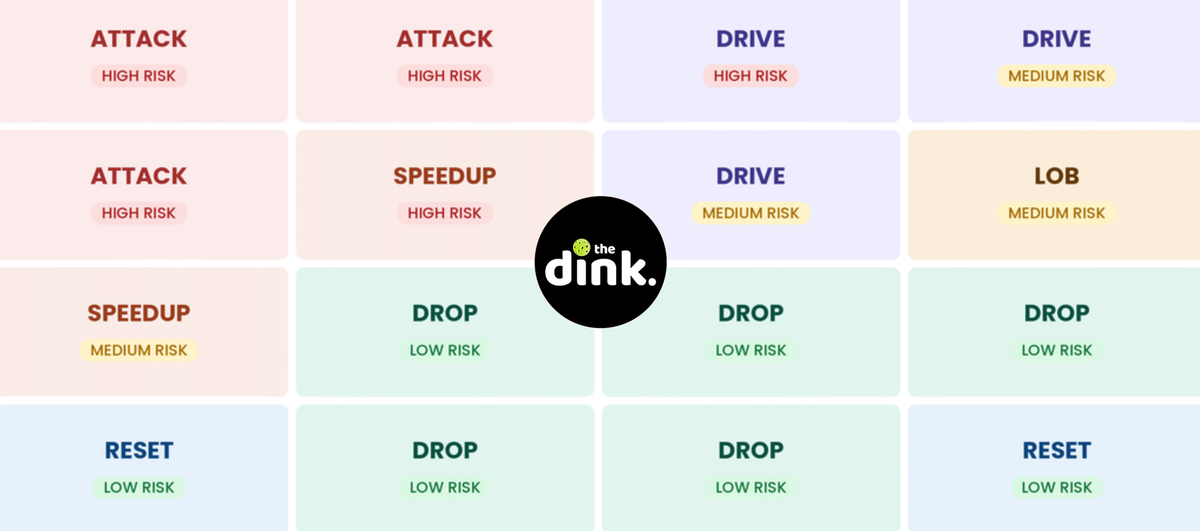
The Foundation of Every Midcourt Transition: Feet Position and Base
You can have perfect timing and perfect reads, but if your feet are in the wrong position, you'll still lose the point.
Minnie Wilkins emphasizes that every good shot starts with a good base. Getting your footwork right during the midcourt transition is non-negotiable.
The rule is simple: keep everything within the frame of your body. Don't reach for the ball without moving your feet.
Move your feet to the ball, not the other way around.
A wide base is essential. When your feet are shoulder-width apart or wider, you're stable and consistent. When your feet are together, you're vulnerable.
If someone pushes you, you fall over. But with a wide base, you're immovable.
One more detail: it's okay to take one step back if the ball comes at your toes. Give yourself enough space to hit the ball in front of you. Maintain that wide base. You're not retreating. You're adjusting.
For a deeper breakdown of this, the pickleball technique that transforms your transition game is worth bookmarking.
The Dink Media Team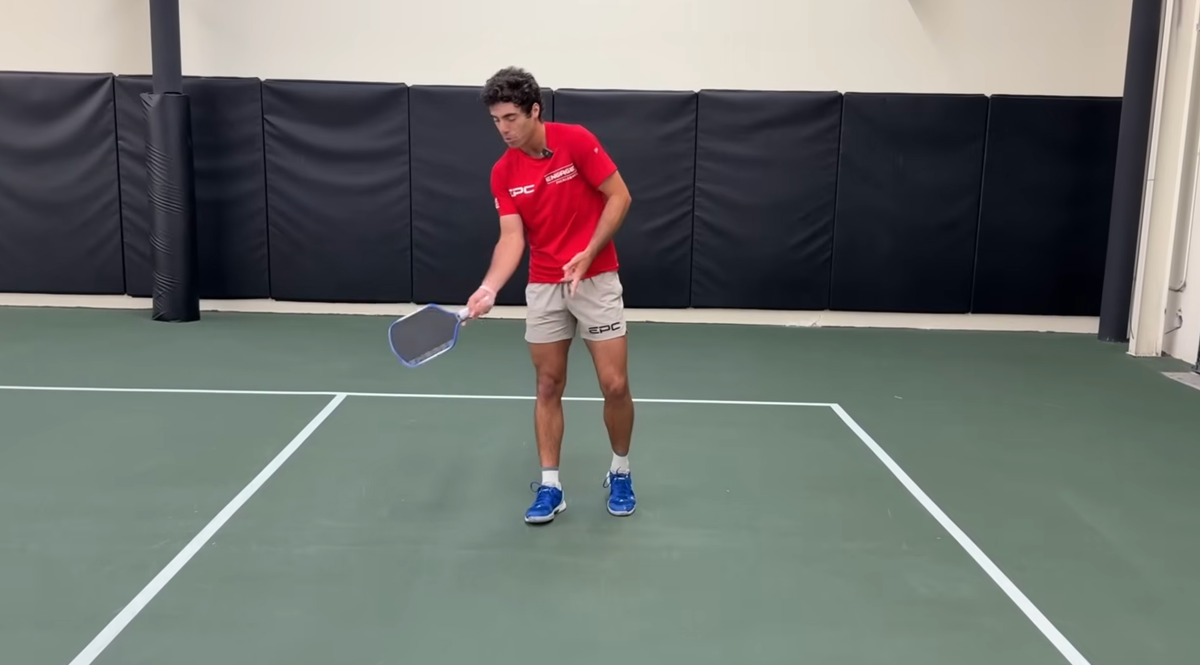
The Bonus Step: Keep Your Swing Compact in the Transition Zone
There's a bonus technique that separates the elite from everyone else: keeping your swing compact.
Many players take their paddle head back beyond their peripheral vision, which slows down their reaction time.
The rule is this: always keep your paddle head where you can see it in your peripheral vision.
This applies even when you're going for a bigger shot to attack. A compact swing means you're ready for the ball to come back fast.
One technique that works is "the sandwich." On the forehand side, sandwich your hands together when speeding up or countering the ball.
This limits your follow-through and keeps you ready for the next shot.
On the backhand side, bring the inside edge of your paddle to your shoulder. Never let it go beyond.
With a one-handed backhand, make sure your paddle never goes beyond your peripheral vision.
The counterintuitive truth: power doesn't come from a big backswing. Power comes from getting back to your ready position faster than your opponent.
The pros have lightning-fast hands not because they swing hard, but because they swing small and recover quickly. Mastering faster hands in pickleball starts with exactly this principle.
The Dink Media Team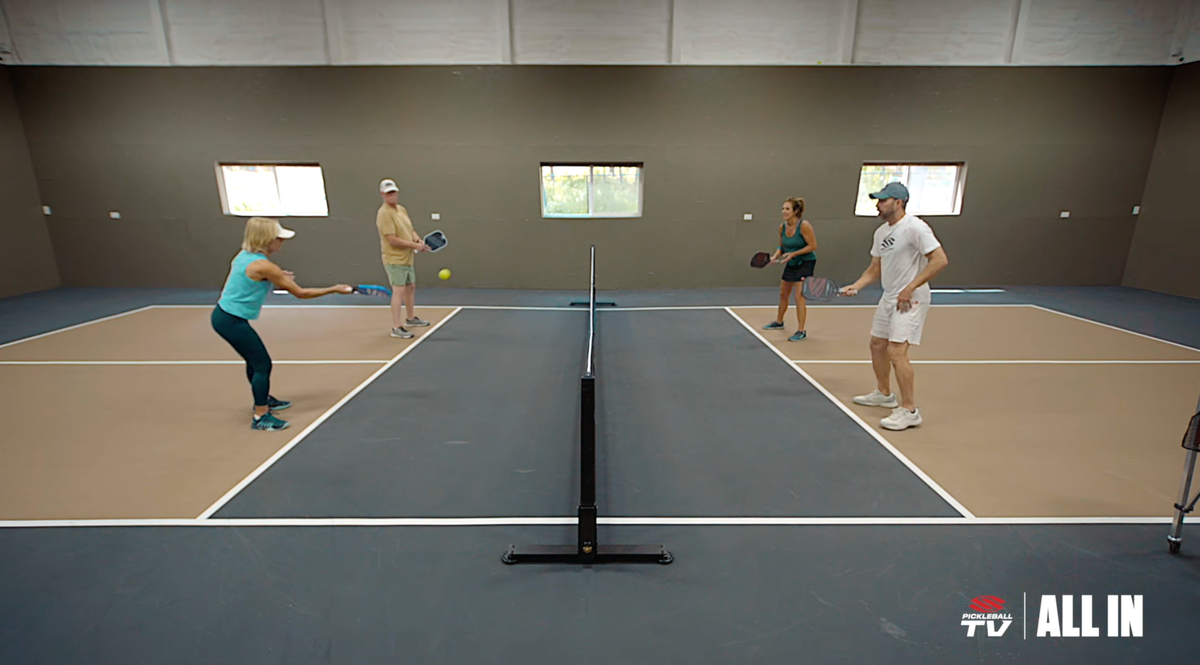
Drills to Lock In Your Midcourt Transition
Understanding the theory is one thing. Executing it under pressure is another.
Here are two drills that Austin Hardy and Minnie Wilkins recommend to build the muscle memory you need.
Drill 1: The Target Progression
Set up targets at three spots: the baseline, the midcourt and the kitchen line.
- Start at the baseline and hit a third shot drive.
- Move to the first target, plant your feet, and hit whatever ball comes to you.
- Move to the second target, plant, and hit again.
- Finally, move to the kitchen line, plant, and finish the point.
The key is to plant your feet at each spot and maintain a wide base. As you move forward, your shots should get softer.
Once your opponent passes the second target, it doesn't make sense to speed up the ball. Concede the kitchen and reset.
Drill 2: The Compact Swing Test
Tuck a soft ball (or pool noodle) under your arm and practice hitting volleys at the net.
If you can keep the ball locked in your armpit throughout every shot, you know your swing is compact enough.
This drill builds the muscle memory for keeping your paddle in front of you. Pair it with simple wall drills to take your pickleball skills to the next level for a complete practice session.
The Dink Media Team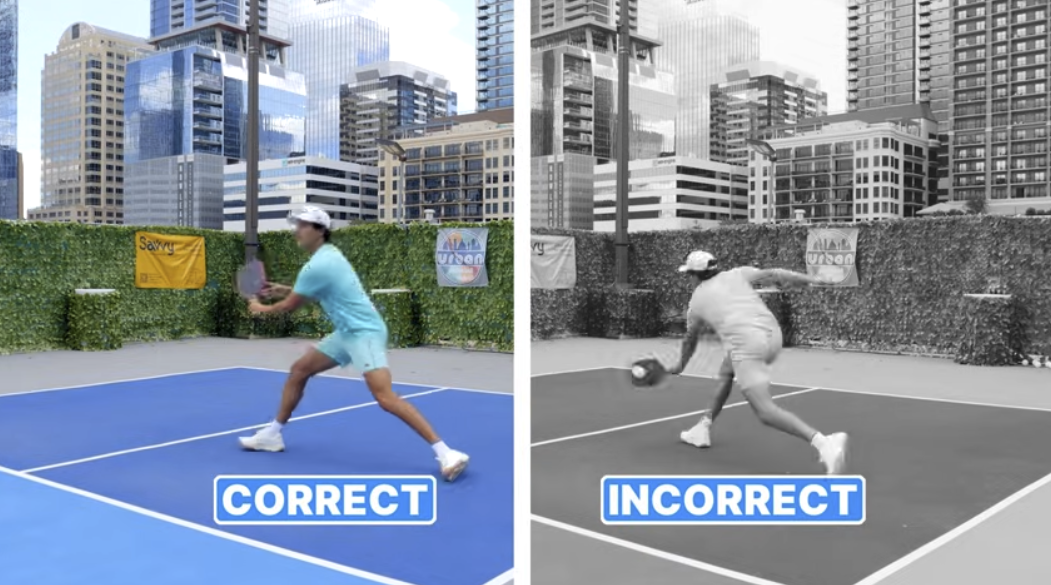
Why the Midcourt Transition Matters More Than You Think
The midcourt transition is the most critical phase of the rally. It's where amateurs and pros diverge most dramatically.
Pros move with confidence and purpose. Amateurs hesitate and second-guess themselves.
According to CBS Sports coverage of pickleball's rapid growth and elite competition, top athletes crossing over into pickleball cite court movement and transition mechanics as the steepest part of the learning curve. And at the recreational level, the gap is even wider.
When you master this transition, everything else gets easier. Your net game improves.
And most importantly, you start winning more points. Players who commit to advancing their pickleball strategy by getting to the kitchen see results faster than any other area of improvement.
Understanding exactly when to play safe vs. when to attack in the transition zone is the final piece of the puzzle. That's where the framework pays off.
Frequently Asked Questions
What is the midcourt transition in pickleball?
The midcourt transition is the movement phase where players advance from the baseline toward the kitchen line (the no-volley zone) during a rally. It is considered the most critical and most mismanaged phase of play, because hesitation or poor positioning here leads directly to lost points.
How do I know when to attack versus reset during the midcourt transition?
Attack when your opponent is still at midcourt and you have enough time to get the ball at their feet before they reach the kitchen line. Reset when your opponent has already advanced to the net, because time, not just ball height, is the determining factor in that decision.
What does "one zone ahead" mean in pickleball transition play?
"One zone ahead" means splitting the backcourt into three distinct zones and positioning yourself one zone ahead of your partner whenever they are hitting the ball. This keeps you aggressive and ready to crash or reset based on what the next shot demands.
Why is a wide base so important during the midcourt transition?
A wide base, feet shoulder-width apart or wider, gives you the stability to hit with control and absorb pressure without getting pushed off balance. Feet together means you're one hard shot away from losing your footing and the point along with it.
How can I keep my swing compact in the transition zone?
Tuck a soft ball under your arm and practice hitting volleys, keeping the ball locked in your armpit on every shot to confirm your swing stays within range. On the backhand, bring the inside edge of your paddle to your shoulder and never let it travel beyond your peripheral vision.

Love Pickleball? Join 100k+ readers for free weekly tips, news & gear deals.
Subscribe to The Dink