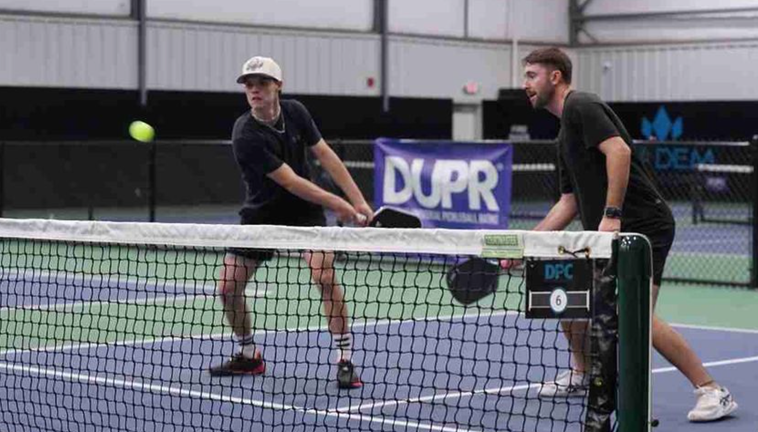


Master Impulse Control in Pickleball: The 7 Worst Mistakes Costing You Matches
Impulse control in pickleball isn't about mechanics—it's about decision-making. Coach Jess reveals the seven worst impulses that feel justified in the moment but are quietly costing you matches
You know the feeling. You make an error, and immediately you think, "I'm never doing that again. That was so dumb."
The problem? You already knew the right play. You just didn't execute it. That's not a mechanics problem. That's an impulse control in pickleball problem, and it's the single biggest thing separating elite players from everyone else. Pickleball decision making: master your shot selection is the companion framework that puts these 7 impulses into a structured decision system.
Here's the thing: the best players aren't the most aggressive. They're the ones who can resist the urge to force the point one shot sooner than everyone else. Impulse control in pickleball is what separates a 3.5 player from a 4.5 player. It's all about knowing when to attack and when to stay patient.
Most players don't realize that their biggest mistakes aren't technical failures. They're decision-making failures. Your brain is constantly lying to you on the court, telling you to finish the point sooner, be more aggressive, or do something fancy. Learning to recognize those impulses and shut them down is the fastest way to improve.
Love pickleball? Then you'll love our free newsletter. We send the latest news, tips, and highlights for free each week.
1. Playing the Hero (The Most Common Impulse Control Problem in Pickleball)
We've all been there. You see a ball that looks like an easy putaway, and suddenly you're going for an angle that's way too tight. Or you're hitting a line when a safe shot would do the job. The hero shot feels amazing when it works, but most people remember the one you flubbed, not the one you nailed.
Playing hero shots is really just going for too much in a moment that doesn't warrant it. The issue isn't that you can't hit the shot. It's that your ego is making the decision instead of your strategy. High-percentage pickleball isn't always glamorous, but it's what wins matches. Smart shot decisions beat power in advanced pickleball is the tactical framework that replaces hero shot impulses with repeatable winning decisions.
The fix is simple: before you swing, ask yourself whether you're making that shot choice because it's actually going to net something positive or because you want to impress your partner. It's a hard distinction to make in a split second, but it's what separates high-level players from ones still acting on raw impulse.
2. Speeding Up Off the Bounce Too Soon
This is one of the biggest impulse control in pickleball issues Coach Jess sees at every level. When you get a short, dead dink, the urge to attack is almost irresistible. But here's the problem: just because a ball looks juicy doesn't mean it actually is.
Real attackability comes from three things: your spacing from the net, your stability, and the height of the ball. Ball height and court positioning: your 1-2 checklist for pro-level shot selection gives you the concrete benchmark for that third variable so your impulse control in pickleball has a clear trigger point. If any of those aren't right, you're forcing it. The patience to wait for the right speed-up is one of the biggest differentiators between intermediate and advanced players.
Coach Jess asks her students, "How many dinks before you should speed up?" The correct answer is always: as many as it takes. But in practice, most players speed up after one or two dinks, even when it's not a good choice. Dead and attackable are not the same thing.
 The Dink Media Team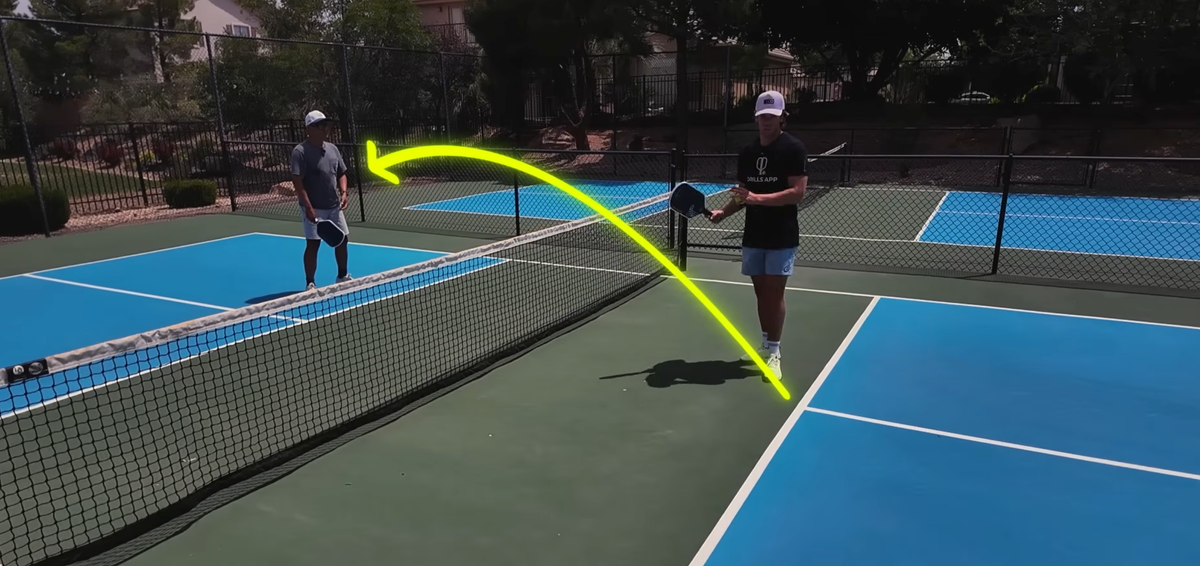
3. Attacking with Too Much Momentum in Transition
When you're moving fast toward the net on a low ball, your natural instinct is to hit it hard. But that's exactly backwards. From a low position in transition, the ball has to go up, which means one of two things happens:
- Either your opponent gets out of the way and your momentum sends the ball out
- Or you pop it up and get attacked while you're off balance
The paradox here is learning how to move forward with all that momentum while simultaneously keeping your hand soft.
This keeps you neutral in the point and lets you get up to the kitchen line where you can maintain an actual deliberate offense. 2 tactics to escape trouble in the pickleball transition zone gives you the exact footwork and shot choices that override this impulse control in pickleball failure before it happens.
We all want to be Anna Leigh Waters tearing up to the kitchen line on a drop volley and tagging our opponents, but the odds of that happening are pretty slim. Play the high-percentage shot instead.
 Alex E. Weaver
4. Speeding Up Let Cord Balls
Here's a fun tip that a lot of players don't know: when the ball tips off the net, resist the urge to speed it up right at your opponent.
Those balls that come off the net frequently have a lot of spin on them and take a low bounce. What looks like an easy speed-up is actually pretty hard to control.
The disciplined play is to treat it like any other ball that needs to be neutralized. Get yourself back in play by hitting a smart aggressive dink that keeps you in the point and maybe even sets you up for a ball you can actually attack on the next shot. Reset that let cord, regain control, and then continue your offense.
 The Dink Media Team
5. Attacking Too Soon After a Scramble
You've just fought your way out of a crazy scramble. You got lobbed, ran back to the baseline, and clawed your way back into the point. Now you're almost there, and you blow it by attacking too soon. This might look like trying to hit a winner that goes two feet out, or hitting a speed-up into the tape off the kitchen line.
The key is recognizing where you are in a point before you go from defense mode to offense mode. Getting back to neutral is where you're trying to get when you find yourself in those scrambles. The power of patience, pressure, and grit to win points is the mindset breakdown that makes this impulse control in pickleball principle stick under real match pressure. It's really common for players to jump the gun on feeling like they've neutralized the point when they really haven't.
And here's the thing: this applies to your partner too. You might feel on balance and ready to attack, but your partner might still be recovering from the last ball they hit. Have you actually gotten back to a neutral position before you start getting into attack mode? Prematurely attacking after a scramble is an impulsive decision that usually leads to heartbreak.
100s of thousands of pickleballers read The Dink Newsletter, including pros, business owners, beginners & (probably) your grandma. Click here to subscribe, it's free.
6. Panic Jabbing in Front of Your Partner
This is something Coach Jess sees at the rec level all the time. There are two scenarios where this happens.
- The first is when both of you are at the kitchen line and your partner gets pulled out wide. While she's out there, you're afraid the middle is open, so when she hits her dink back, you're stabbing in front of her with your backhand.
Here's what you need to understand: when your partner gets pulled wide and brings the ball back toward the middle of the court, it's their responsibility to still cover balls through the middle. You need to trust that your partner is going to come back and cover that space. If you're the partner who got pulled wide, you need to understand that when you bring the ball back in that direction, you need to cover that space so your partner can remain on their side of the court.
- The second scenario is when you're both off the line in a defensive position. You're a little bit ahead of your partner to create a funnel toward her. When that ball comes crosscourt, you need to trust that she's going to have more time to handle it. If you lean down and stab at it, you're making a much tougher ball to hit. Your partner, with plenty of time, is going to scoop it up from behind you just fine.
Trust your partner, trust how you're moving forward and back on the court, and shade toward the ball without panic stabbing at it. Who covers the middle ball at the pickleball kitchen and off-ball positioning in pickleball: stop ball watching together eliminate both panic jab scenarios by giving both partners a pre-committed answer to middle ball coverage. That'll make a huge difference in continuing rallies in a more controlled manner.
7. Doing the Same Thing Over and Over Again
This might be the most insane impulse of all. Coach Jess shares a perfect example: she was playing a game and kept lobbing over her opponent even though he wasn't falling for it. He kept finding the overhead and winning the points. Yet somehow, she kept lobbing.
You have to assess when you're playing whether the thing you do that usually works is actually working. Sometimes it's just not a good choice generally. Sometimes it has to do with the specific opponents you're playing. Either way, when you recognize after maybe two times that something isn't working, you need to change it up.
This applies to everything. Maybe you've been able to speed up balls through the middle, but your opponents adapt and you keep getting dunked on. Pay attention to the decisions you're making and whether they're effective. Then adjust.
The players who improve the fastest aren't necessarily the ones with the most power or the fastest hands. They're the ones who really understand decision-making and impulse control in pickleball. Advanced pickleball shot selection and creation drills give you the deliberate practice system that builds this adaptability. Resets and shot selection: 2 choices that define your level is the framework for recognizing which adjustment to make mid-match.
Heads up: hundreds of thousands of pickleballers read our free newsletter. Subscribe here for cutting edge strategy, insider news, pro analysis, the latest product innovations and more.
Frequently Asked Questions
What is impulse control in pickleball?
Impulse control in pickleball refers to your ability to resist the urge to make aggressive or unnecessary shots when a more conservative play would be better. It's about making strategic decisions based on the point situation rather than acting on instinct or emotion. Most mistakes in pickleball aren't mechanical failures—they're impulse control failures.
How do I know when to speed up in pickleball?
Real attackability comes from three things: your spacing from the net, your stability, and the height of the ball. If all three are in your favor, you can speed up. If any of them aren't right, you're forcing it. The correct answer to "how many dinks before you should speed up?" is always: as many as it takes.
Why do I keep making the same mistakes in pickleball?
You're likely acting on impulse rather than assessing whether your strategy is actually working. After you try something twice and it doesn't work, you need to change it up. Pay attention to whether your decisions are effective, then adjust accordingly.
How can I improve my decision-making in pickleball?
Focus on getting back to neutral in points rather than forcing offense. Trust your partner, resist hero shots, and be patient with your speed-ups. The fastest way to improve isn't through technique work—it's through better shot selection and impulse control.
What's the difference between a 3.5 and 4.5 player?
The patience to wait for the right speed-up is one of the biggest differentiators. Higher-level players understand that dead and attackable are not the same thing. They also have better impulse control and make smarter decisions about when to attack versus when to stay neutral.

Love Pickleball? Join 100k+ readers for free weekly tips, news & gear deals.
Subscribe to The Dink