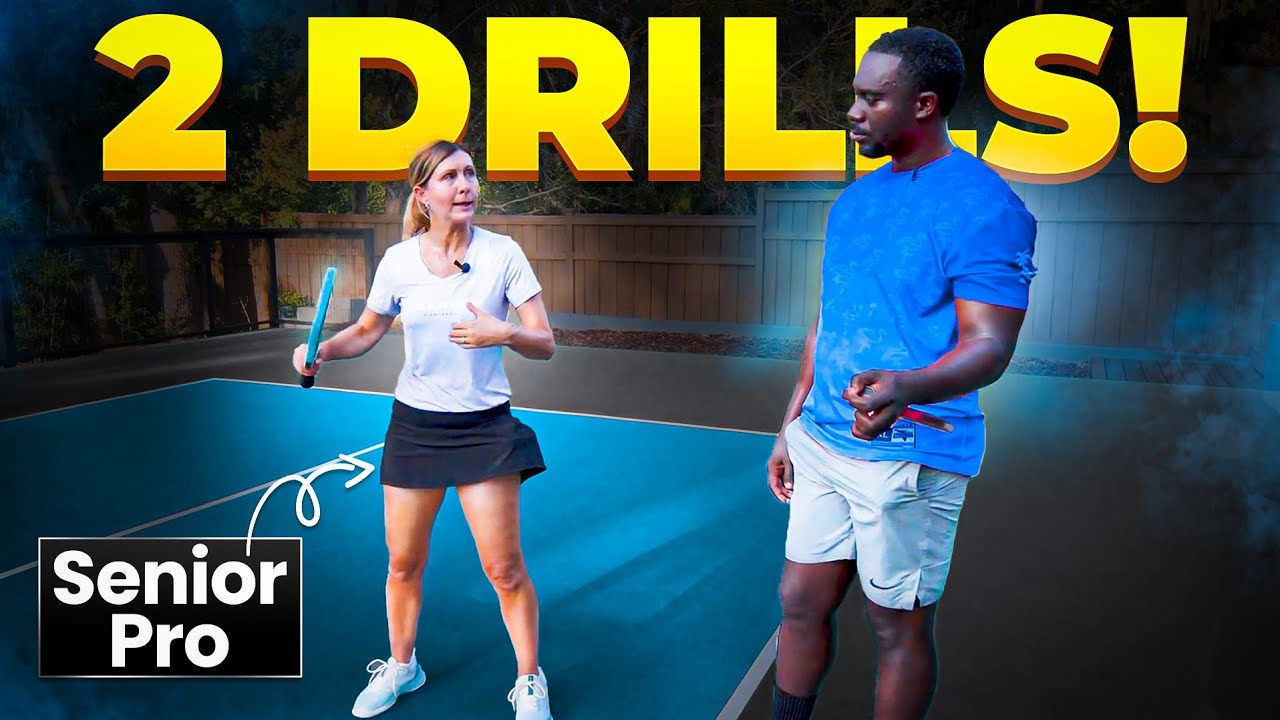
2 Dinking Drills a Senior Pro Uses to Control the Kitchen Line
Most players struggle at the kitchen line because they practice dinking without pressure or purpose. These two pickleball dinking drills from senior pro Heather Lovett fix that fast.
Your pickleball dinking drill routine might be the reason your kitchen game falls apart in real matches.
Most players practice dinking in a comfortable, predictable pattern with no movement, no decisions, and no pressure.
That is not a drill. That is just hitting.
These two drills come from Cliff Pickleball on YouTube, recorded during a session with Heather Lovett, one of the top senior players in the country.
Lovett holds a DUPR of 5.4 and won the 2023 APP Female Singles Championship in the senior pro division.
She brought two drills she actually uses to build movement, targeting, and control at the kitchen line.
Love pickleball? Then you'll love our free newsletter. We send the latest news, tips, and highlights for free each week.
Why Most Dinking Practice Does Not Transfer to Games
The problem with most dinking practice is simple: it is too easy. You and a partner stand at the kitchen line, hit cross court, and call it training.
But a real pickleball dinking drill puts you under pressure.
Balls bounce at your feet, and you have to decide in a split second whether to take the ball out of the air or let it bounce.
You have to move laterally and still produce a controlled, targeted dink.
That is exactly what these two pickleball dinking drills are designed to simulate.
Each one layers in a specific challenge that mirrors what you will face in a competitive match.
Drill 1: Movement and Targeting Across the Kitchen Line
This first pickleball dinking drill is built around one of the most uncomfortable spots on the court: the backhand side at the kitchen line when your opponent is targeting your left foot.
Here is how the drill is set up:
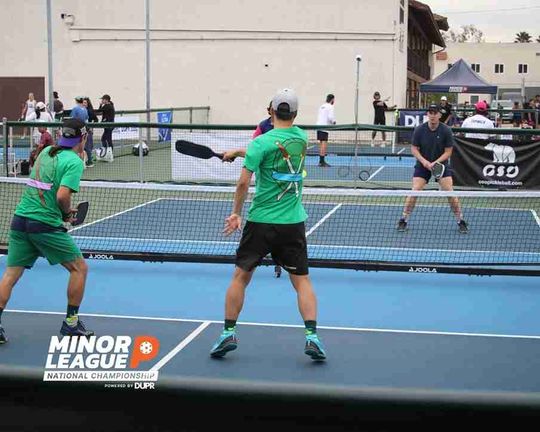
- One player stands on the right side of the court at the kitchen line. Their job is to dink consistently to the left foot of the player on the other side, using a targeting pattern that moves that player around.
- The other player covers three target zones on their side of the court. They practice moving to each zone, recovering to neutral, and returning the ball back to the right side player's backhand.
- The player on the right side focuses on keeping every dink deep and directed at the left foot, including push dinks designed to force the opponent back off the kitchen line.
The goal for the player doing the moving is to take every ball out of the air when possible.
Lovett is direct about why: if you let those dinks bounce at your feet, you are almost certainly going to pop them up.
That is a pattern you see constantly at the 3.5 and 4.0 level. Players back up, the ball bounces at their feet, and the result is a floater right into the attack zone.
Learning to short hop at the net like a pro is one of the fastest ways to stop that from happening.
What Makes the Dink So Hard to Handle?
The placement is the whole point.
Lovett explains that the balls are intentionally aimed to create a decision: take it out of the air, or back up and let it bounce.
That moment of hesitation is where points are lost.
When you think you can take it out of the air and wait too long, you end up reaching for it close to your body and pushing it up.
The drill trains you to commit to a decision faster and execute it under pressure.
The right side player's job sounds simpler, but it is not.
Consistently hitting a backhand dink to a specific target from one fixed position takes real precision, and if the ball is too high or too wide, it becomes attackable.
If you want to sharpen that shot specifically, these backhand dink drills for real consistency are worth adding to your routine.
After working the cross court angle, switch the target to the other side of the court. The cross court dink is the higher percentage shot, and Lovett acknowledges that.
But the real skill is being able to put the ball anywhere on the opponent's side, not just where it is comfortable to go.
 The Dink Media Team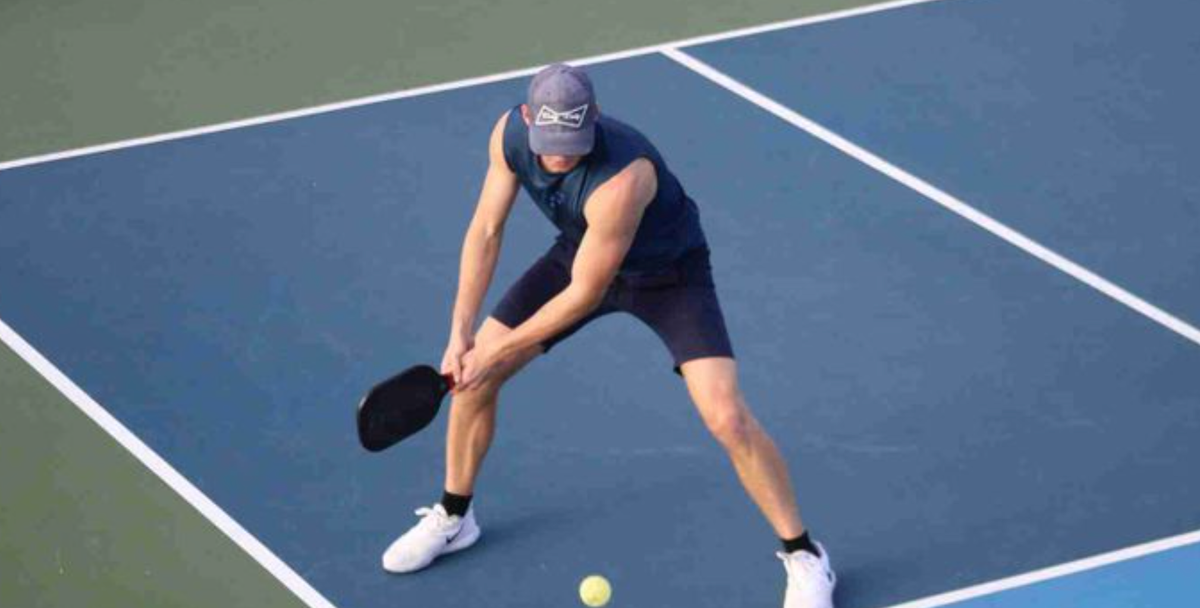
How Do You Know If Your Dinks Are Actually Good?
A useful test: if your dinking partner can take the ball out of the air comfortably and counter attack, your dink is not deep or targeted enough.
Good dinks force a decision. They bounce near the feet.
They push the opponent back or force them to reach.
If your dinks are landing in the middle of the kitchen and sitting up, you are not making the opponent work. You are just keeping the ball in play.
Here is why your pickleball dink fails in games and how to actually fix it, which connects directly to what this drill is training.
 The Dink Media Team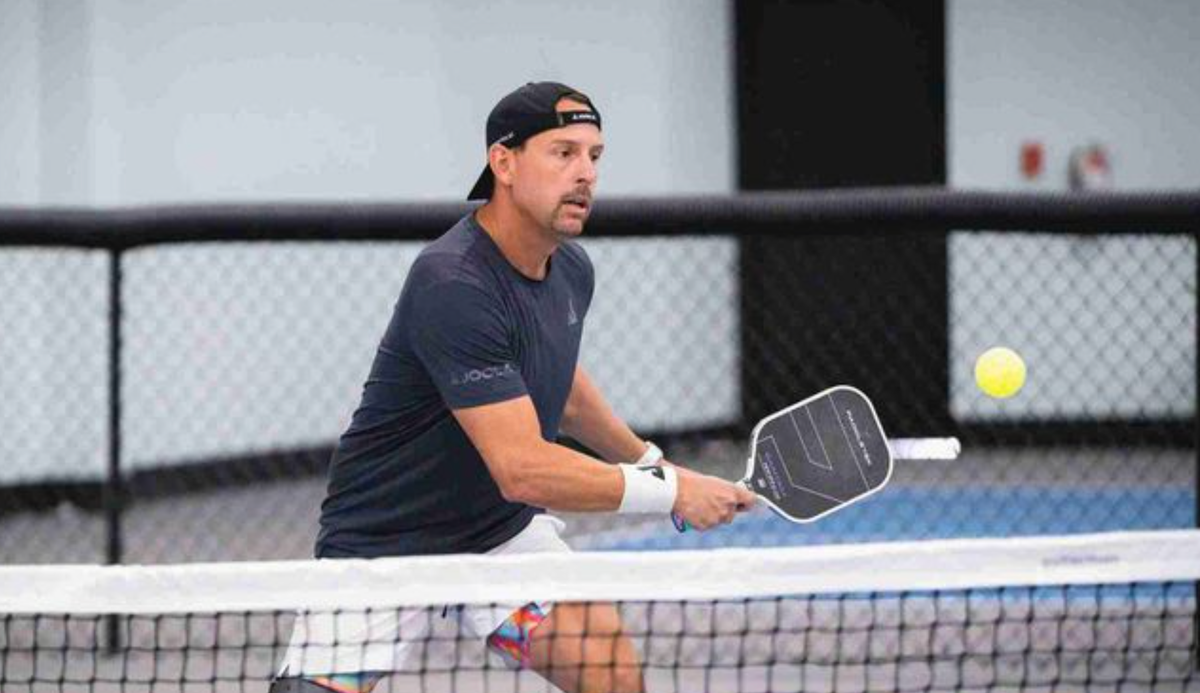
Drill 2: Controlled Counters Behind the Kitchen Line
This second drill comes from Alex Shoulder, a PPA pro player.
Lovett uses it specifically because she sees a pattern in women's doubles and mixed doubles: players are habitually standing behind the kitchen line instead of right at it.
The fix is not just to move up. You have to learn what to do when you are behind the line, and this drill trains exactly that.
Here is how it works:
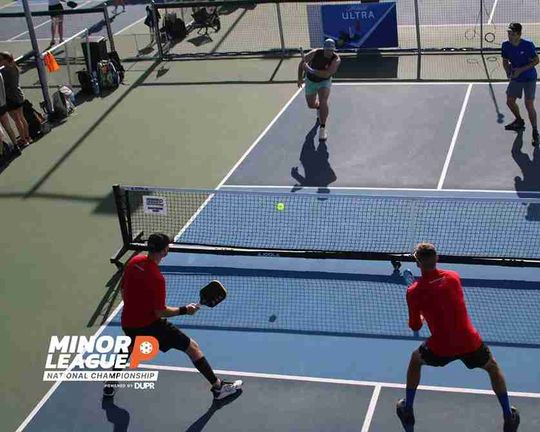
- Both players stand 1 to 3 feet behind the kitchen line, not at it.
- Instead of attacking aggressively, both players work on controlled, competitive pace counters with short strokes.
- The focus is on maintaining balance, keeping the ball in front of the body, staying tight through the core, and getting back to a neutral ready position between every shot.
- Players can work this drill both straight ahead and cross court.
The purpose is not to win the exchange.
The purpose is to stay in the rally, keep every ball low and controlled, and build the muscle memory for compact strokes under pressure.
 The Dink Media Team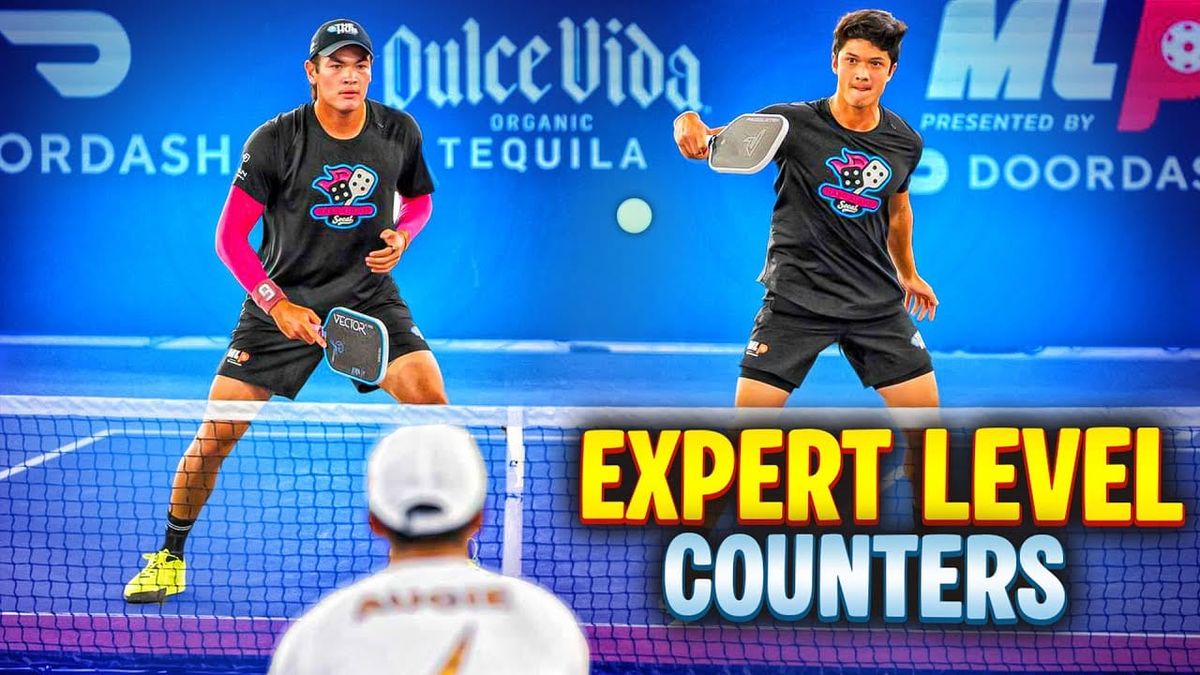
Why Being Behind the Line Is Not Always a Disadvantage
Most players treat being off the kitchen line as a mistake to correct immediately. Lovett reframes it. When you are 1 to 3 feet back, you have more time to react.
Better decisions become possible. You can set up properly instead of jamming yourself.
The catch is that you have to stay low and lift the ball when it comes in low.
That brush up on low balls is the key technical piece. If you go flat on a low ball from behind the line, you are going to dump it in the net.
This drill also puts a spotlight on one of the most overlooked problems in pickleball: balls hit directly at your body.
When the ball comes straight at you, you have to decide instantly whether to take it on your forehand or backhand. That decision requires movement.
Most players freeze instead.
Understanding how to stop getting jammed by shots at your feet is directly related to what this drill is building.
You also get a real cardio workout from this drill.
Staying in an athletic stance, moving back to neutral, and producing controlled strokes repeatedly is physically demanding.
That is not a side effect. That is part of the point. Your lateral movement training improves every time you go through a full set of this drill.
 The Dink Media Team
The Coaching Principle Behind Both Drills
One of the most valuable things Lovett shares is something coaches know but rarely say out loud: the same skill can be taught multiple ways, and different players respond to different approaches.
If you have been struggling with a specific part of your dinking game and the explanations you have heard so far have not clicked, that does not mean you cannot learn it.
It may just mean you have not heard the right cue for your game yet. Here is why YouTube alone won't fix your coaching gap and what to do about it.
Both of these drills share a common thread: they make you uncomfortable in a controlled way.
Movement, decisions, fatigue, pressure. That is how practice becomes preparation.
If you want to go deeper on the targeting piece, these wide dink mistakes and fixes cover exactly what happens when placement breaks down under pressure.
And for the footwork side of staying at the line, these footwork tips for senior players will help you cover ground without wearing out your joints.
If your dinking game is going to hold up in a real match, it has to be trained under conditions that look like a real match.
These two drills from Heather Lovett do exactly that.
For senior players specifically looking to build on this foundation, these five dinking tips for senior players are a natural next step.
And if you want to see how the best players in the world structure their kitchen play, here are five drills a PPA pro still uses every practice.
Get on the court, set up these drills, and actually practice being uncomfortable. That is where the real improvement happens.
Frequently Asked Questions
What is the best pickleball dinking drill for improving kitchen line control?
The movement and targeting drill Heather Lovett uses is one of the most effective options because it combines placement pressure with lateral movement and decision making. One player dinks to the opponent's left foot repeatedly while the other practices moving and countering. This creates real game pressure rather than comfortable, predictable exchange.
Why do my dinks keep popping up when I'm pulled off the kitchen line?
When you let a deep dink bounce at your feet instead of taking it out of the air, you end up hitting the ball close to your body with no room to control the angle. The result is almost always a ball that rises into the attack zone. The fix is to commit earlier: either step in and volley it, or get low and brush up on it before it gets past you.
How far behind the kitchen line should I stand when doing counter drills?
Lovett recommends staying 1 to 3 feet behind the kitchen line for the controlled counter drill. That distance gives you enough time to react and set up properly while still keeping you in a competitive position. Standing much farther back changes the shot geometry and defeats the purpose of the drill.
Why is the backhand dink so much harder than the forehand dink?
The backhand dink requires more precise wrist and forearm control, especially when the ball is targeted at your left foot. Most players naturally lean toward an inside out backhand in that position, which tends to produce a weaker, floaty result. Training the backhand specifically to target spots on the other side of the court is what separates consistent dinking from unreliable dinking.
Do these dinking drills work for senior players specifically?
Yes, and that is exactly who Lovett designed them for. The controlled counter drill in particular was recommended because senior women's doubles players tend to play off the line more than the men's game demands. Both drills are adaptable to any fitness level and can be run at a pace that builds consistency without overloading your joints.

Love Pickleball? Join 100k+ readers for free weekly tips, news & gear deals.
Subscribe to The Dink