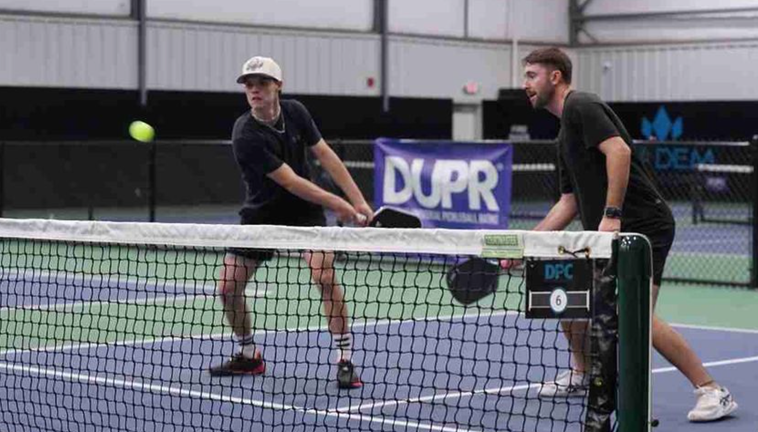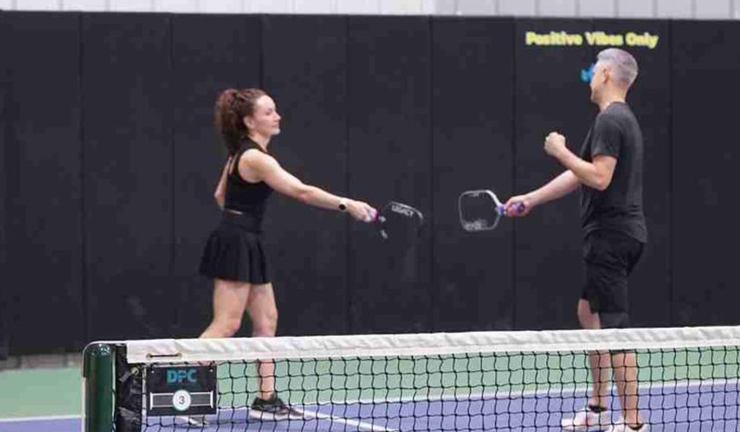

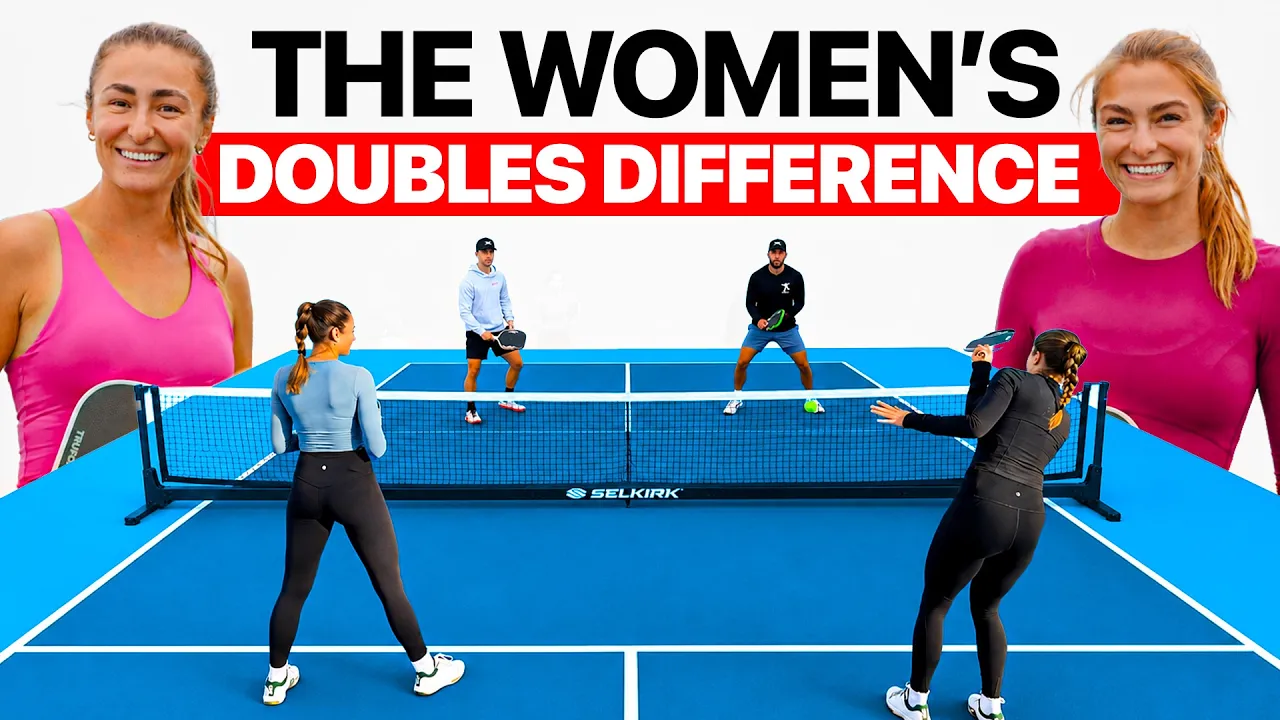
Elite players Angie and Alex Walker break down the positioning, dinking styles, and counterattack approaches that define the women's game.
If you've watched pickleball long enough, you've probably noticed something: women's doubles pickleball looks completely different from men's doubles.
- The positioning is different.
- The dinking patterns are different.
- Even the way players attack is different.
But here's what most recreational players don't realize: these differences aren't random. They're strategic choices rooted in biomechanics, court positioning, and tactical awareness.
To understand why women's doubles pickleball has evolved this way, we turned to two of the sport's best: Angie Walker and Alex Walker. The Dink's top 20 women's doubles power rankings gives you the current landscape of who's doing this at the highest level.
Their insights reveal a sport that's far more nuanced than casual viewers realize.
Love pickleball? Then you'll love our free newsletter. We send the latest news, tips, and highlights for free each week. Sign up for our free newsletter
Why Women Stand Farther Off the Kitchen Line in Doubles Pickleball
The first thing you notice when comparing women's doubles pickleball to men's doubles is the distance from the net. Women tend to stand noticeably farther back from the kitchen line, and this isn't a weakness or a lack of aggression. It's actually a deliberate positioning choice.
Alex Walker explains the reasoning: "When you're talking about dinking for the women's game, you see a lot more aggressive top spin dinks that are kind of pushing deeper off the line because the women tend to stand a little bit further off the line so there's more space to work with."
The key difference comes down to swing mechanics.
- Men can counter with one arm and keep the ball in front of them because of upper body strength.
- Women, by contrast, rely on two-handed swings to generate power and control. That two-handed swing requires more space and more time to execute properly.
That two-handed swing requires more space and more time to execute properly. The two-handed backhand volley: how to master the shot breaks down exactly why two-handed mechanics demand that women's doubles pickleball positioning looks so different from the men's game.
Angie Walker adds another layer: "If I see a speed up coming, I'm also going to slide into a side. If you're coming at me this way, I'm probably going to take my step back and to the side to try to give myself that full swing counter."
This positioning strategy has a cascading effect on the entire game. Because women have more space to work with, the dinking exchanges become faster and more aggressive. Men, meanwhile, sit tight at the line and wait for the perfect setup. The result is that women's points tend to move quicker overall.
The Dinking Game in Women's Doubles Pickleball: Aggressive vs. Patient
Here's something that surprises a lot of people: women's dinking is more aggressive than men's dinking. This isn't about being more competitive. It's about strategy.
In men's doubles pickleball, players favor slice dinks and dead dinks. These are soft, controlled shots designed to keep the ball low and force the opponent into a mistake. Men can afford to be patient because they're already up at the net with good positioning.
Women, starting from farther back, need to be more aggressive with their dinking. Alex Walker describes it this way: "Guys will sit at the line for as long as it takes to get kind of that perfect setup, whereas girls will kind of just go for it and want to get into that hands battle exchange fast."
The aggressive topspin dink is the signature shot of women's doubles pickleball. How to hit a crosscourt dink in pickleball and mastering topspin in pickleball: the complete 3-step progression guide are the two technical reads that make this aggressive dinking approach executable.
It pushes the ball deeper into the court and forces opponents to react faster. This aggressive approach actually speeds up the entire point, which plays to the strengths of players who are comfortable with quick exchanges and hand battles at the net.
Think of it this way: men's dinking is like a chess match where patience wins. Women's dinking is like a speed chess match where aggression and quick decision-making win.
 The Dink Media Team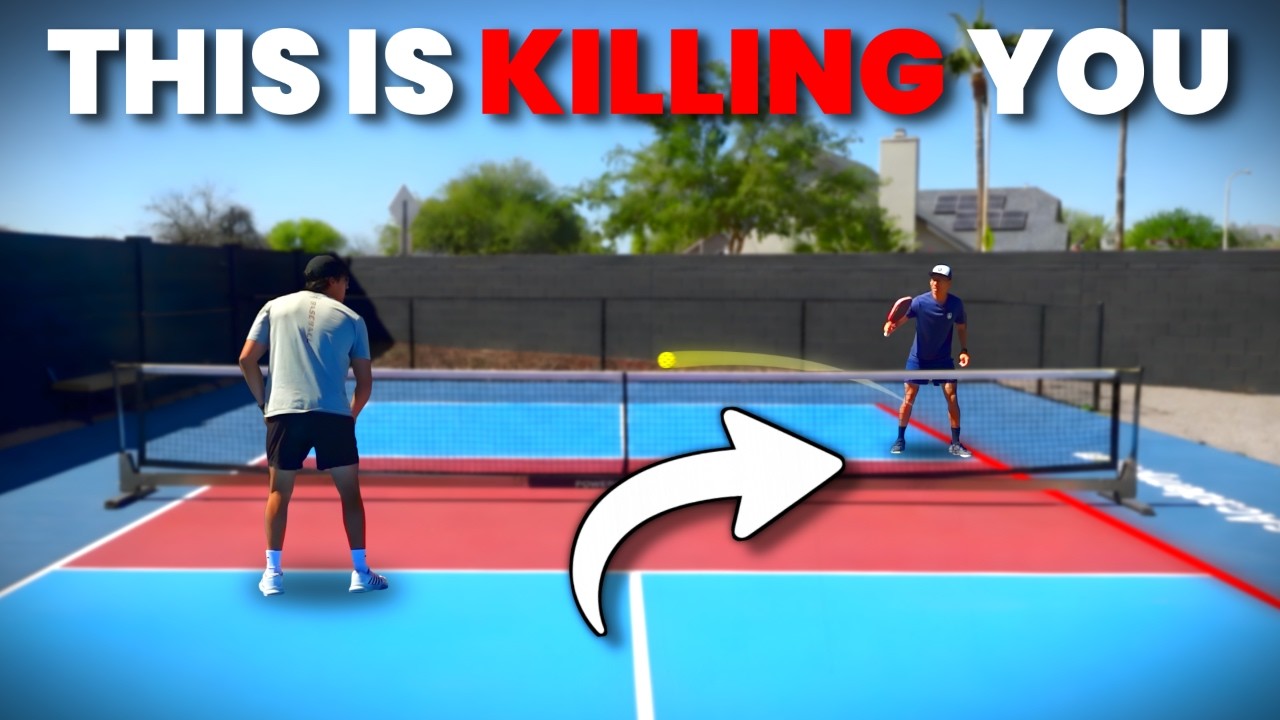
Where Women Attack in Doubles Pickleball: The Body, Not the Baseline
One of the most striking differences between men's and women's doubles pickleball is where players choose to attack. In men's doubles, the baseline is the target. In women's doubles, it's the body.
Angie Walker explains the tactical reasoning: "In women's, if I was playing against Kyle, I'm not going to attack right at his body because he's hitting it straight down. But, if I'm playing Angie and Angie's on the other side of the net, I'm aiming right for Angie's stomach, right for her belly button, because she's going to be sliding backhand away, trying to get out of it, and I'm hoping to jam her."
This is a crucial insight. Because women take bigger swings and rely on two-handed shots, attacking the body forces them into uncomfortable positions. Six spots to attack your opponents in pickleball maps out exactly where to aim for the highest-percentage results in women's doubles pickleball exchanges.
A ball aimed at the stomach forces a backhand slide, which limits the attacker's options for the next shot. It's a way of controlling the rally by controlling your opponent's movement.
Alex Walker adds another layer of sophistication: "And if a girl is sliding really heavily one way, I might not even go right where her stomach is. I want to go where I know she's going. So if I'm playing Angie and I know that she's sliding really hard this way, I might go even further that way so that she slides into it rather than into her power trying to do this."
This is predictive positioning. Elite players in women's doubles pickleball aren't just reacting to what's happening. They're anticipating movement patterns and attacking into the space where their opponent is already moving. How to anticipate every shot like a pickleball pro is the full breakdown of how this pattern recognition is built. It's a level of tactical sophistication that separates good players from great ones.
The Dink Media Team
Counterattacking in Mixed Doubles Pickleball: A Different Mindset
Mixed doubles introduces a new dynamic, and women's approach to counterattacking shifts accordingly. When a man is attacking a woman at the net, the woman can't rely on the same aggressive two-handed counter that works in women's doubles.
The solution? Give yourself more time and space. Angie Walker describes her approach: "If we're playing mixed doubles and the guy's attacking me, I mean, your whole job is to try to attack me, put pressure on me. And so I might back up, give myself more time so that when the attack comes, I have more time to put it down at your feet or to maybe even just reset it crosscourt."
This is a defensive strategy that's actually offensive in nature. 5 mixed doubles pickleball tips to win more matches goes deeper on exactly the kind of defensive-becomes-offensive thinking that defines elite mixed doubles play. By backing up and creating space, a woman can reset the ball or put it at the man's feet, which neutralizes the attack and puts her team back in control. The key is recognizing the attack early and responding with patience rather than trying to match the aggression.
Angie Walker also emphasizes the importance of ready position in mixed doubles: "I would feel so lost if I didn't have my left hand down at my hip or like just not involved because where's my power? Like if especially on like a wide ball, again in women's doubles, we're being pulled out with wide dinks a lot."
The ready position matters because it determines how quickly you can generate power on your next shot. A compact, tucked-in ready position allows for faster reactions and more explosive counterattacks.
The Dink Media Team
What Anna Leigh Waters and Anna Bright Do Better in Women's Doubles Pickleball
When the conversation turned to the number one women's doubles team in the world, Angie Walker and Alex Walker had clear insights into why Anna Leigh Waters and Anna Bright dominate the sport.
"I think that they look to be aggressive from the first ball," Alex Walker says.
The key difference is consistency. Most players have moments where they're aggressive and moments where they're passive. Anna Leigh Waters and Anna Bright are aggressive from the opening serve through the final point. There's never a moment where they're not trying to put pressure on their opponents.
Angie Walker adds: "There's just never a time where she's not trying to be aggressive. She's always trying to be aggressive. She's always taking it to you and you feel that that pressure from the moment the point starts."
This relentless aggression, combined with confidence in their shot selection and court positioning, is what separates the elite from everyone else. They're not just playing better pickleball. They're playing a different game entirely. The Dink's top 20 women's doubles power rankings tracks exactly how dominant this partnership has been at the top of the sport.
Alex E. Weaver
The One Mistake Every Recreational Player Makes in Women's Doubles Pickleball
If you're a recreational player looking to improve your women's doubles pickleball game, Angie Walker has one piece of advice that applies to almost everyone: get the ball down.
This is the fundamental principle of hand battles at the net. The player who gets the ball down first wins the exchange. It's not about hitting harder or faster. It's about controlling the height of the ball.
Angie Walker emphasizes this point again: "The first person to get the ball down is going to be the one that's ahead in the hands battle."
This applies whether you're in the transition zone or already at the net. The moment you feel a speed up coming, your instinct should be to get the ball down, not to hit it through your opponent. The pickleball reset: the one skill that takes you from 3.5 to 5.0 is the mechanical foundation that makes "getting the ball down" a repeatable habit in women's doubles pickleball.
Heads up: hundreds of thousands of pickleballers read our free newsletter. Subscribe here for cutting edge strategy, insider news, pro analysis, the latest product innovations and more.
Frequently Asked Questions
Why do women stand farther back in doubles pickleball?
Women stand farther from the kitchen line because they rely on two-handed swings to generate power and control. This positioning gives them the space they need to execute full swings without being jammed at the net. Men, who can counter with one arm, don't need as much space.
What's the difference between men's and women's dinking in pickleball?
Men favor slice and dead dinks, which are soft and controlled. Women use more aggressive top spin dinks that push the ball deeper into the court. This difference stems from their starting positions and the need to move the point forward faster in women's doubles.
Where should you attack in women's doubles pickleball?
Attack the body, not the baseline. Targeting the stomach or midsection forces opponents into uncomfortable backhand slides and limits their options for the next shot. Elite players even anticipate where their opponent is moving and attack into that space.
How do you counter an aggressive attack in mixed doubles?
Give yourself more time and space by backing up slightly. This allows you to reset the ball or put it at your opponent's feet, which neutralizes the attack. A compact ready position with both hands engaged also helps you react faster to incoming attacks.
What's the most important skill to develop in women's doubles pickleball?
Getting the ball down during hand battles is the most critical skill. The player who controls the height of the ball first wins the exchange. Focus on resetting and countering with the ball below net height rather than swinging through your opponent.

Love Pickleball? Join 100k+ readers for free weekly tips, news & gear deals.
Subscribe to The Dink