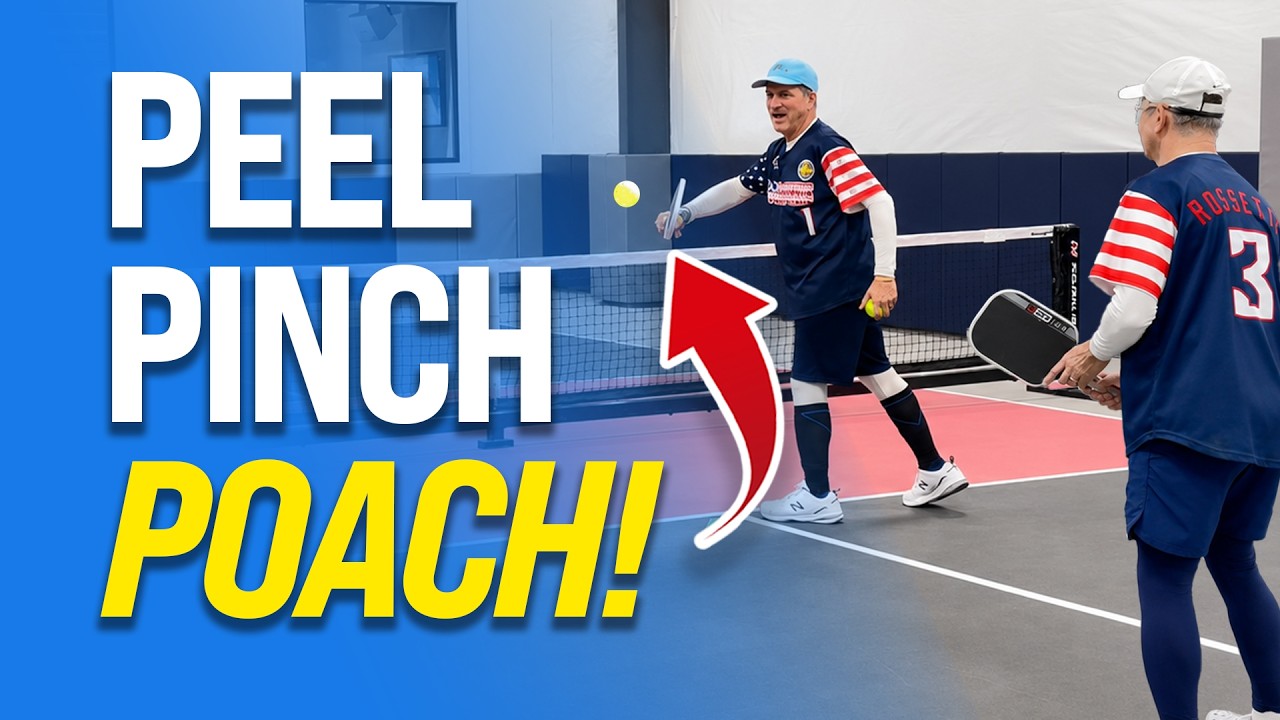
Peel, Pinch, Poach: The 3-Step Method for Smarter Doubles Transitions
Most doubles teams move to the kitchen at the wrong time and in the wrong order. The staggered transition in pickleball fixes that with a simple three-step system called Peel, Pinch, Poach.
If you play doubles, the staggered transition in pickleball is one of the most important movement concepts you need to understand.
Moving to the kitchen together sounds logical, but it consistently leaves gaps and breaks down under pressure.
Most recreational players treat the transition zone like a race where both partners sprint forward at the same time.
That creates chaos in the middle and puts your partner in a terrible position to play the next ball.
This three-step framework, called Peel, Pinch, Poach, solves that problem with a clear sequence of movement and communication that you can start using today.
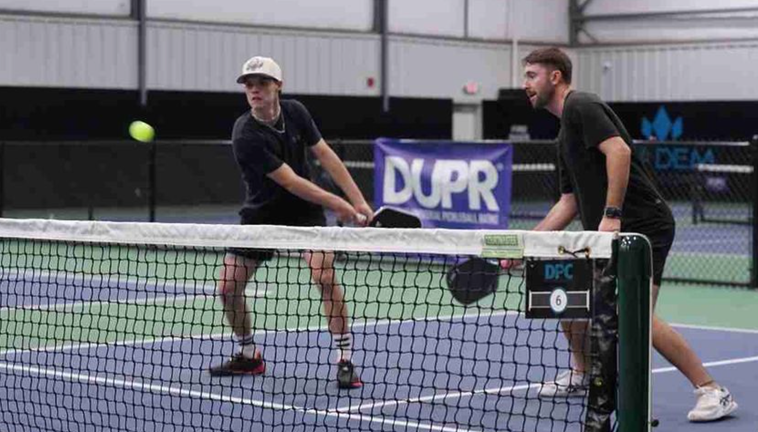
The method comes from DUPR Pickleball on YouTube, featuring instructor Angela Rosetti breaking down the system with practical on-court demonstration.
Love pickleball? Then you'll love our free newsletter. We send the latest news, tips, and highlights for free each week.
Why Moving Together Is Hurting Your Doubles Game
Here is the core problem: when both players move to the kitchen at the exact same time, neither one is fully committed to the ball in transition.
You are both in motion, which means you are both vulnerable.
The player hitting the ball from the transition zone needs their partner to be stable and positioned, not also scrambling forward.
Most pickleball mistakes happen in the transition zone for exactly this reason. Moving together creates confusion, not coordination.
The staggered approach fixes this by giving each player a defined role in the sequence.
One player moves first, one player waits, and then they switch. It sounds simple because it is.
What Is the Peel, Pinch, Poach System?
Peel, Pinch, Poach is a three-phase movement framework for doubles transitions.
Each phase has a specific trigger, a specific movement, and a specific purpose.
Here is how each phase works:
- Peel: When the ball goes up the middle, the non-hitting partner peels toward the center. This is a nonverbal signal to your partner that you are taking ownership of that side, which tells them to commit fully to the forehand in the middle. The peeling player moves halfway between the point of contact and the kitchen line.
- Pinch: After the hitting partner makes contact and begins their own transition forward, the peeling player pinches toward the center line. This is not a sideways drift. It is a deliberate move along the center of the court, creating coverage while the other player advances.
- Poach: Once both players are in position near the kitchen, the player who pinched into the center lurks and looks to steal the ball. This creates direct pressure on opponents because they are now facing a player who is already loaded and positioned to attack the middle.
This sequence creates a natural, staggered flow where one player is always stable while the other is moving.
Covering your partner without leaving gaps is the exact skill this system trains.
How Does the Peel Actually Work in Practice?
The peel is not just a physical movement. It is a communication tool.
When your partner sees you peel toward the center, they immediately know two things: you have that side covered, and they need to go all-in on the forehand in the middle.
There is no verbal call needed. The movement does the talking.
The key detail is where you stop. You go halfway between the point of contact and the kitchen line, not all the way to the kitchen.
This keeps you in a position to handle the next ball without over-committing before your partner has hit.
Think of it as creating a temporary anchor point while your partner is in the most vulnerable part of their shot.
If you cannot reach the kitchen line in time, this halfway position is actually where you want to be anyway.
 The Dink Media Team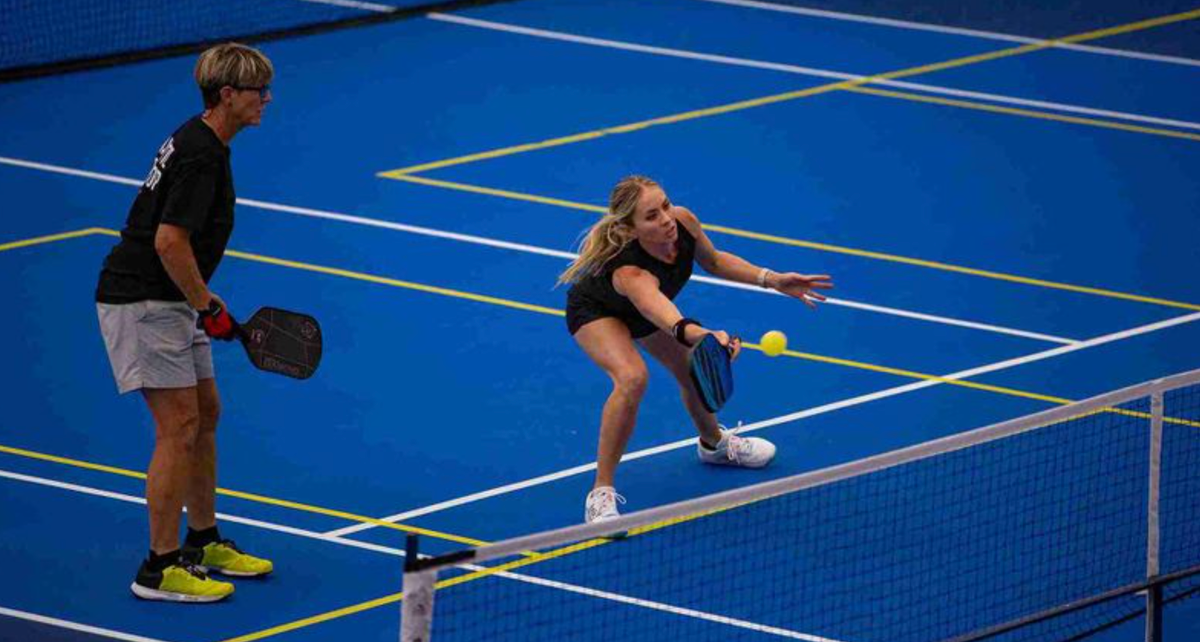
What Makes the Pinch Different From Just Moving Forward?
This is where most players get it wrong when they first try this system. The pinch is not just walking toward the kitchen.
It is a directional move toward the center line.
Angela Rosetti uses a green tape line on the court to illustrate this. You follow that center line forward. You do not drift wide.
You do not stay on your side of the court and inch up. You move along the spine of the court toward the non-volley zone.
This matters because the center of the court is where middle balls are won and lost at the kitchen.
By pinching to center as your partner transitions, you are already positioned to handle any ball that splits the two of you.
It also creates a visual pressure on opponents. A player hugging the center line with a paddle ready forces opponents to pick a side, and neither option is easy.
 The Dink Media Team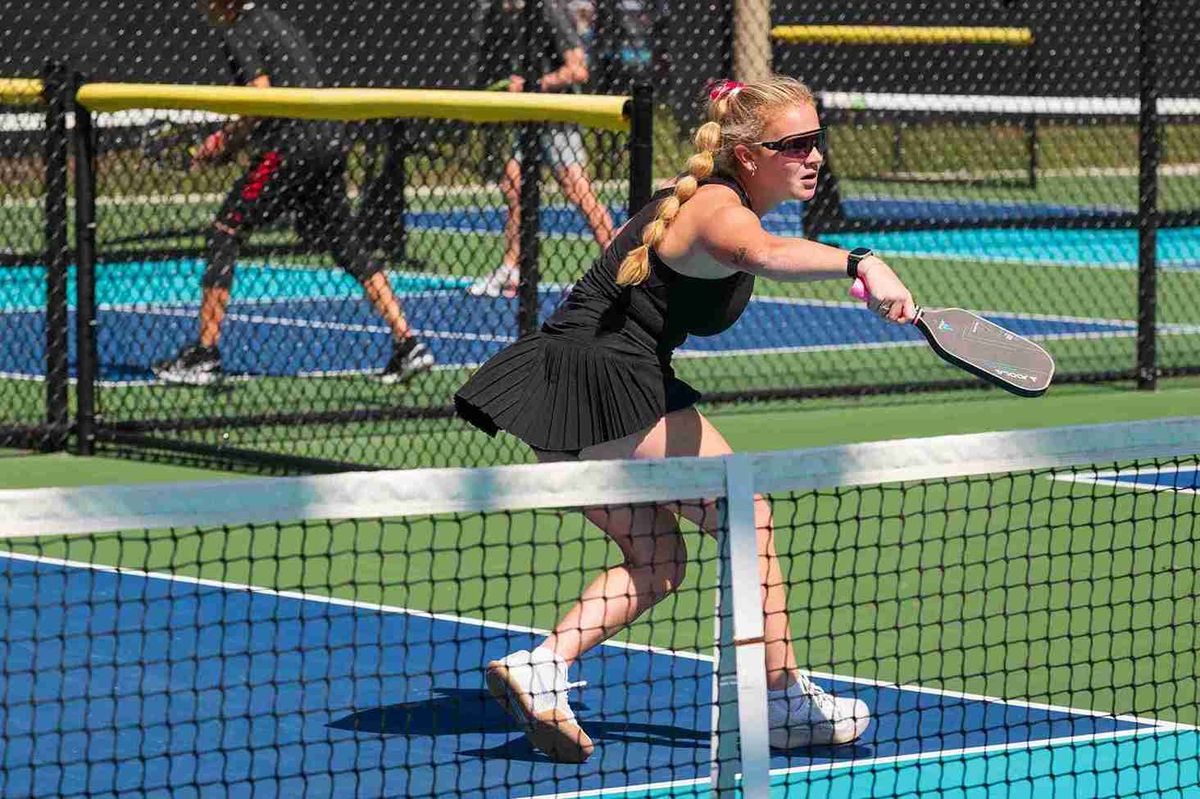
How Do You Turn the Pinch Into a Poach?
The poach comes from the lurk. Once you have pinched to center and your partner has arrived at the kitchen, you do not immediately retreat to your half of the court.
You linger in the middle and wait for an attackable ball.
This is intentional pressure. You are in a position to steal any ball that the opponent tries to play into the middle or toward your partner's side.
Knowing when poaching is appropriate is the skill that makes this third phase work without frustrating your partner.
The poach works here because it is earned. You set it up through the peel and the pinch. You did not just randomly jump across the court.
You are in the right spot at the right time because of the sequence you followed.
 The Dink Media Team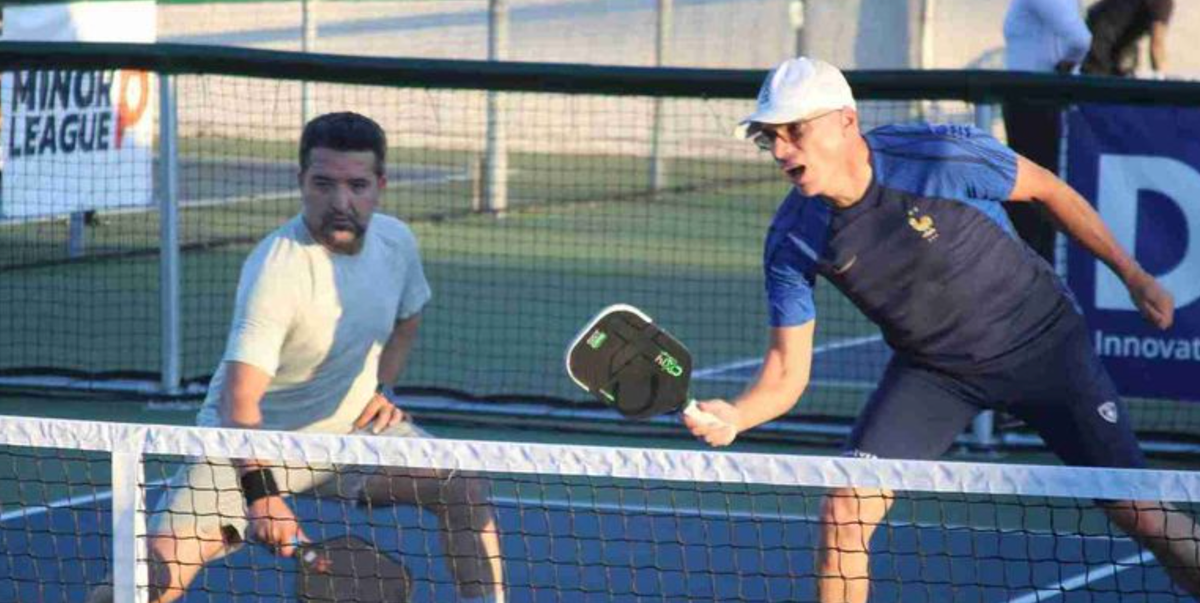
The Nonverbal Communication Layer Most Teams Ignore
One of the most overlooked elements of this system is how much communication happens without a single word.
The peel is the signal. When your partner sees it, they know exactly what their job is.
Most doubles teams spend rallies guessing. They wonder who has the middle ball, who should move first, who should hold their ground.
That uncertainty is what causes collisions, missed balls, and misread positioning.
Communicating with your partner in pickleball does not always require calling the ball out loud.
With this system, the movement is the language. Your body position tells your partner everything they need to know about what you are about to do.
 The Dink Media Team
Common Mistakes When Trying This System
Here are the most frequent errors players make when first applying Peel, Pinch, Poach:
- Peeling too late: The peel needs to happen as the ball goes up the middle, not after your partner has already committed to hitting it. Timing is everything here.
- Pinching wide instead of center: If you drift to your own side of the court instead of moving along the center line, you defeat the whole purpose. The pinch is always toward the middle.
- Over-committing on the poach: Lurking does not mean lunging. You are waiting for the right ball, not chasing every shot your opponent hits. Patience here is what separates smart poaching from selfish poaching.
- Both players moving at the same time: This is the whole problem the system solves. If you catch yourself moving forward while your partner is still hitting, you have broken the stagger. Reset and slow down.
- Skipping the halfway mark on the peel: Going all the way to the kitchen before your partner hits leaves your half of the court exposed. The halfway point exists for a reason. Respect it.
Avoiding no-man's land in pickleball is directly tied to how well you execute this sequence.
The halfway point in the peel keeps you out of that dead zone while still advancing forward.
 The Dink Media Team
Why This Works Better Than Splitting the Court Evenly
The traditional doubles advice is to split the court in half and each player covers their side. That works fine at the kitchen. It falls apart in transition.
When one player is hitting a third shot drop or a transition drive, they cannot simultaneously cover their half of the court and execute a quality shot.
They need their partner to compensate. There are doubles strategies most players never discuss, and temporary court compression during transition is one of them.
The stagger creates a dynamic coverage system instead of a static one.
Your court positions shift based on who is hitting and who is moving, which is how the court actually plays out during live rallies.
 The Dink Media Team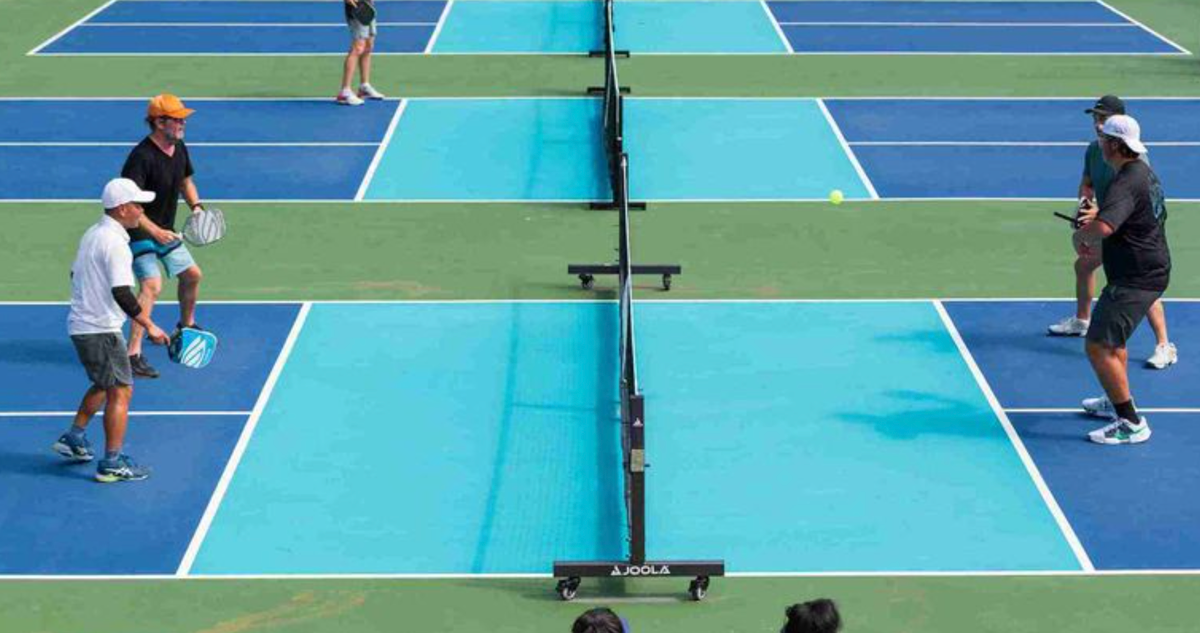
How to Practice This With a Partner
You do not need a full game to work on this. Set up a simple drilling scenario where one player feeds from the baseline and the other starts at the kitchen.
The baseline player hits a ball up the middle. The kitchen player peels, the baseline player commits to the forehand, then pinches after hitting.
Then both reset and repeat. Training like a pro through pattern drilling is how you make this sequence feel automatic instead of calculated.
Do at least 20 repetitions before playing it out in live points. The movement needs to become a reflex, not a decision.
 The Dink Media Team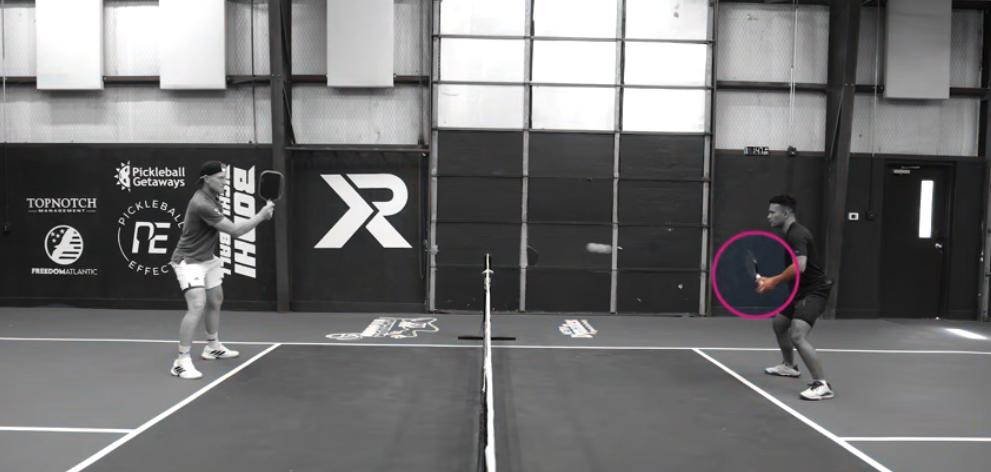
Where Does the Kitchen Come Into This?
The whole goal of this system is to get both players to the non-volley zone in a controlled, coordinated way.
The kitchen line is where doubles points are won. Understanding the kitchen in pickleball is the foundation this transition system is built on.
The peel, pinch, and poach are just the mechanics of how you get there safely and with pressure already built.
Once you are at the kitchen, you shift into dinking and hands-battle mode.
But arriving there in a staggered, coordinated sequence means you arrive with an advantage, not a scramble.
Your opponents have less time to reset, less space to work with, and a player already threatening the middle.
That is the compounding effect of executing the system correctly. Your positioning at the kitchen line matters more than almost any other factor in doubles.
 The Dink Media Team
Putting It All Together
The staggered transition in pickleball is not complicated.
It just requires you to stop doing the natural thing, which is moving together, and start doing the smarter thing, which is moving in sequence.
Peel when the ball goes middle. Pinch along the center line after your partner hits. Poach from the lurk when the opportunity comes.
Covering the middle in pickleball becomes far less confusing when you have a clear system for who moves when.
Run this in your next session and pay attention to how much calmer the transition zone feels. Your partner knows their job. You know yours.
The ball does not get to the kitchen before you do.
Frequently Asked Questions
What is a staggered transition in pickleball doubles?
A staggered transition means both partners do not move toward the kitchen at the same time. Instead, one player moves first while the other stays stable, creating a relay-style advance that keeps coverage intact throughout the transition.
Why should you not move to the kitchen together in doubles?
Moving together leaves both players in motion at the same time, which means neither one is stable enough to handle the next incoming ball. The stagger ensures one player is always in a ready position while the other is advancing or hitting.
What does it mean to pinch in pickleball doubles?
Pinching means moving toward the center line of the court as you advance to the kitchen, rather than staying wide on your side. It compresses the middle of the court, threatens the opponent's center, and sets up the poach opportunity.
When should you poach in pickleball doubles?
You should poach when you are already positioned near the center after pinching and the opponent hits a ball toward the middle or your partner's side. Stop apologizing for poaching when you have set it up correctly through the sequence. It is a planned move, not a random steal.
How do you practice the Peel, Pinch, Poach transition?
Set up a drilling scenario where one player feeds a ball to the middle from the baseline, then execute each phase of the sequence repeatedly before playing it live. Focus on the timing of the peel first, since the rest of the system depends on that initial movement happening at the right moment. Aim for at least 20 clean reps before adding live rally pressure.

Love Pickleball? Join 100k+ readers for free weekly tips, news & gear deals.
Subscribe to The Dink