
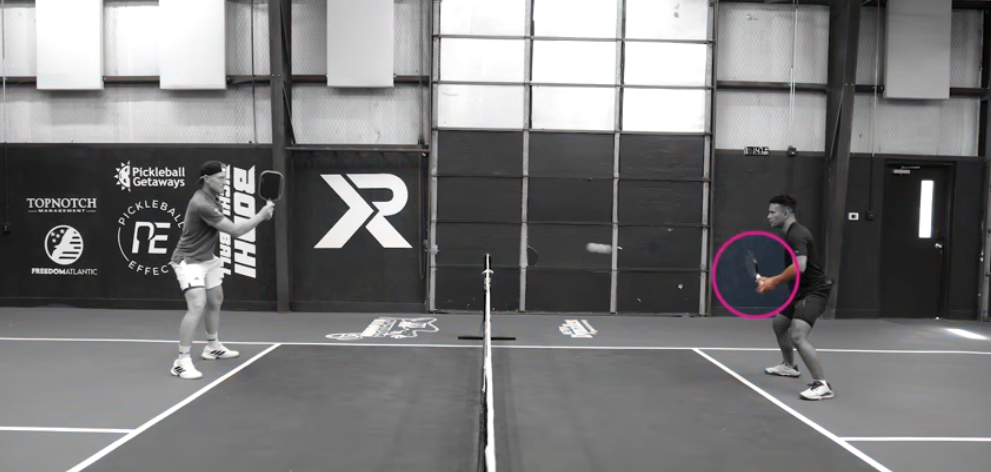
Professional pickleball player John Cincola shares the exact pickleball practice plan he uses to train touring pros and beginners alike.
Here's the thing about most pickleball players: they show up to the court, hit some random shots, and hope they get better.
That's not a pickleball practice plan. That's just hitting balls.
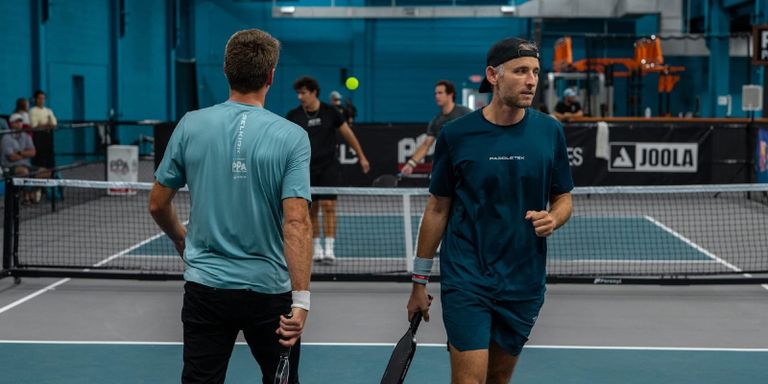
John Cincola, a professional player on the PPA Tour and coach to everyone from beginners to touring pros, has a different philosophy.
He believes that intention is everything.
Just like you wouldn't get in your car and start driving around hoping to end up somewhere, you shouldn't practice pickleball without a clear roadmap.
Cincola recently shared his exact 60-minute pickleball practice plan that he uses to help players break through plateaus and start winning matches they should be winning.
This isn't theory. This is what works at the highest levels of the sport.
Love pickleball? Then you'll love our free newsletter. We send the latest news, tips, and highlights for free each week.
Why Intention Changes Everything in Your Pickleball Practice Plan
The foundation of Cincola's pickleball practice plan is a single word: intention.
Every shot you hit should have a purpose.
You should know where you're trying to hit the ball, why you're hitting it there, what kind of spin you want, and what height and shape you're aiming for.
Without intention, you're just going through the motions. With it, every touch of the paddle becomes a learning opportunity.
This mindset shift is what separates players who improve and players who plateau.
When you practice with intention, you're not just accumulating hours on the court.
You're building muscle memory, court awareness, and decision-making skills that transfer directly to match play.
1. The First 10 Minutes: Dink Warm-Up
Your pickleball practice plan starts soft. The first 10 minutes are dedicated to dinking, and Cincola recommends a specific progression.
Begin with straight-ahead dinks for about three to four minutes. Get your hands warm, feel the ball, and settle into a rhythm with your partner.
Then move to crosscourt dinks in one direction, followed by crosscourt dinks in the other direction.
But here's where intention comes in: don't just dink mindlessly. During this warm-up, focus on the shots you're least comfortable with.
If your two-handed crosscourt backhand isn't feeling great, hit more of those. Don't waste time on shots that are already locked in.
Cincola also recommends adding pressure to this segment. Challenge yourself and your partner to hit 50 balls in a row without missing.
If either of you misses, you reset and start over. This creates stakes and forces you to focus on every single shot rather than just going through the motions.
 Alex E. Weaver
2. Minutes 10-20: Fast Hands and Volley Drills
Once your dinks are warmed up, it's time to work on fast hands at the kitchen line. This is where technique and reaction time come together.
Cincola splits this into two distinct phases. First, use the pattern volley drill. Pick a spot and keep the ball going in that pattern.
Start with forehand-to-forehand for six to eight minutes, then switch to backhand-to-backhand.
The advantage here is that you know exactly where the ball is going, so you can focus purely on execution without worrying about reaction.
After you've dialed in your technique, add the reaction piece. Now the ball can go anywhere.
Your partner hits it back unpredictably, and you have to read it and react.
Because you've already worked out the technical flaws, you'll see much more success when you're just focusing on reacting.
One critical tip: stay relaxed. Don't "flinch," which means tightening up and letting your paddle come up.
Your reaction times and movements are significantly faster when your shoulders and arms stay loose.
The Dink Media Team
3. Minutes 20-30: Dink Games in the Skinny Court
Now it's time to put those warmed-up skills into play scenarios. This is where dink games come in.
Play on what's called the "skinny court," which means you and your partner are playing in half the court.
Start with a game to 11 straight ahead, then play crosscourt one direction and then the other.
The beauty of this segment is that you're taking all the skills you just warmed up and testing them in a more realistic, real-time scenario.
Be creative here. You could play dinks-only (no attacks allowed), or you could let anything go. You could make a rule that you're only attacking out of the air.
The key is having intention about what you're working on during these games.
The Dink Media Team
4. Minutes 30-45: The Roll and Reset Drill
This is one of Cincola's favorite drills because both players are working on critical skills simultaneously.
One player positions themselves in the transition area (between the baseline and the kitchen line), while the other stays at the kitchen line.
The player at the kitchen line feeds a high ball to the transition player, who attacks it.
The transition player's job is to dig and reset that attack, putting the ball softly back in the kitchen.
Spend about five minutes here focusing purely on resetting anything that comes at you.
Meanwhile, your partner at the kitchen line is working on pressure.
They're trying to reach in and take the ball out of the air, or step back off the bounce, constantly delivering high-pressure shots to make your life difficult.
This drill builds court IQ and teaches you how to handle aggressive play.
Getting lots of touches in the transition area is invaluable. This is where matches are won and lost.
The Dink Media Team
5. Minutes 45-55: Drops and Drives from the Baseline
Next, move back to the baseline and work on your third shot.
One player stays at the kitchen line while the other works from the baseline, practicing drops and drives.
Tell your partner where you want them positioned based on what you're working on.
If you want to practice a crosscourt drop, position them accordingly. If you want to work on down-the-line drives, do the same.
The goal is to get lots of touches on both shots while being intentional about which variation you're hitting.
Work your roll drop for a while, then switch to a push drop. Don't just go through the motion.
Be very intentional about what shot you're hitting, what you want that ball to look like, and where you want it to land.
Also think situationally. If your partner hits a good ball and you're fading back, do you prefer to drive or drop?
If you're stepping into the ball, which shot feels better? This is your time to figure out which shots work best in different situations.
Alex E. Weaver
6. Minutes 55-60: Point Play and Full Integration
The final segment brings everything together. If you want to warm up your serve and return, do that quickly.
Then play some point play, ideally in skinny singles format but working the full court.
You could play down the line, straight ahead, or switch sides with the score. The goal is to take all the skills you've practiced and integrate them into one cohesive sequence:
- Serve
- Transition game
- get to the kitchen line
- Execute under pressure
This is where you stack all those skills one on top of the other.
The Dink Media Team
Why This Pickleball Practice Plan Actually Works
The reason this pickleball practice plan is so effective is that it mirrors how points actually play out in matches.
You start soft, work your way to the net, handle pressure in the transition, and finish with aggressive play.
It's also progressive. You're not asking your body and mind to do everything at once.
You're building skills in isolation, then combining them in increasingly complex scenarios.
Most importantly, every segment has a clear purpose. There's no wasted time, no random drills, no hoping you'll get better.
You're being intentional about every touch of the paddle.
The Dink Media Team
How to Adapt This Plan to Your Level
While Cincola designed this for players of all levels, you can adjust the intensity and focus based where you are in your pickleball journey.
Beginners should focus on clean execution during the dink warm-up and pattern volley drills. Don't worry about speed.
Intermediate players can add more pressure and complexity to the dink games and transition drills.
Advanced players should use this as a baseline and add variations that target their specific weaknesses.
The structure stays the same. The intention stays the same. Only the difficulty adjusts.
Frequently Asked Questions
How often should I do this 60-minute practice plan?
Ideally, three to four times per week. This gives you enough volume to see improvement while allowing time for recovery and match play. Quality matters more than quantity, so one intentional 60-minute session beats three unfocused two-hour sessions.
Can I do this practice plan alone?
No, you need a partner for most of these drills. The good news is that your partner doesn't need to be at your skill level. In fact, practicing with players of different levels helps you develop different skills.
What if I don't have a full hour?
You can scale this down. A 30-minute version might be 5 minutes of dink warm-up, 5 minutes of fast hands, 10 minutes of dink games, and 10 minutes of transition work. The structure and intention remain the same.
Should I do this every practice session?
Not necessarily. This is a great foundational practice, but you should also dedicate sessions to specific weaknesses. If your third shot drop is struggling, spend an entire session on that. If your transition game needs work, focus there. Use this 60-minute plan as your baseline, then customize based on what you need to improve.
How long before I see improvement?
Most players notice improvement within two to three weeks of consistent, intentional practice. You'll feel it in your shot consistency and your ability to handle pressure. Match results usually follow within four to six weeks.


Love Pickleball? Join 100k+ readers for free weekly tips, news & gear deals.
Subscribe to The Dink