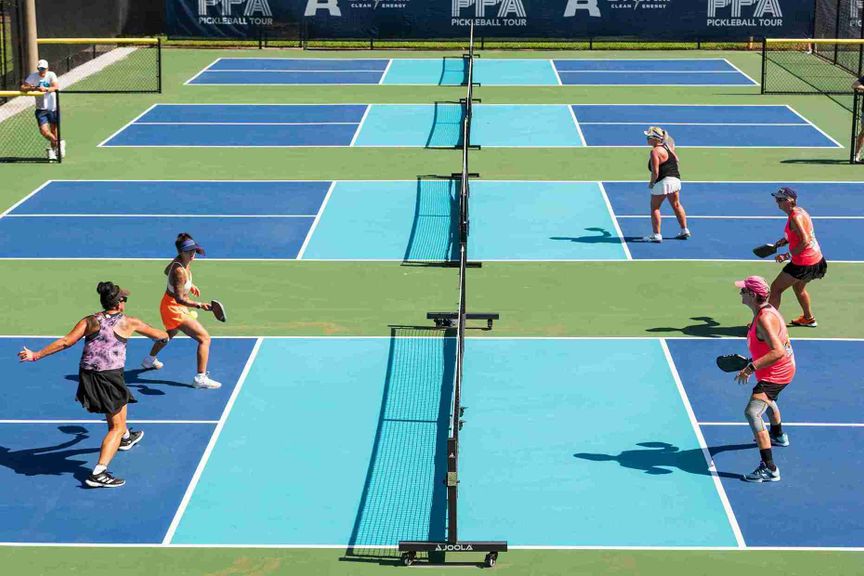
How to Build Stamina for Pickleball: 4-Week Cardio and Practice Plan
Building stamina for pickleball requires more than just logging extra court hours, it takes a structured cardio and movement plan. This 4-week guide gives you the exact training framework to outlast your opponents and play stronger in every game.
The fastest way to build stamina for pickleball isn't running laps around your neighborhood, it's training the way the game actually moves.
Short bursts. Lateral cuts. Quick resets. Repeat for two hours.
If you've ever felt your legs get heavy in the third game, your reaction time slow down late in a match, or your breathing get ragged during a long rally, that's not just age or fitness level.
That's a training gap. And it's fixable in about four weeks.
Love pickleball? Then you'll love our free newsletter. We send the latest news, tips, and highlights for free each week.
Why Pickleball Fitness Is Different From General Cardio
Here's the thing most players get wrong: they think more running equals better court stamina. It doesn't. Not directly.
Pickleball is an intermittent sport. That means the physical demands look less like a 5K and more like 500 mini-sprints interrupted by brief pauses.
Research published in the Journal of Aging and Physical Activity confirms that pickleball involves repeated short-burst efforts averaging 4 to 8 seconds in duration, with rest intervals of 5 to 15 seconds between points.
Your aerobic base matters, but your ability to recover between points is what actually determines how you hold up in game three.
This is why a solo pickleball drill session done with intention beats 30 minutes on the elliptical every single time. Specificity wins.
The physical demands that matter most:
- Lateral agility and split-step reactivity
- Short explosive acceleration (2 to 4 steps)
- Aerobic recovery between rallies
- Core stability during overhead and reach shots
Training to build stamina for pickleball means hitting all four of these, not just your VO2 max.
What Is Aerobic Base Training (And Why You Still Need It)?
Before getting into the weekly plan, a quick vocabulary check.
Aerobic base training means working at a moderate, sustained effort, typically 60 to 75% of your max heart rate, for longer durations.
Think a brisk 30-minute walk/jog, a cycling session, or an easy swim.
This matters for pickleball because your aerobic system is your recovery engine.
The stronger it is, the faster your heart rate drops between points, and the fresher you feel at the start of the next rally.
Studies from the National Institutes of Health show that improved aerobic capacity directly enhances recovery speed in stop-and-go sports, which is exactly what pickleball is.
But aerobic base alone won't cut it. That's why the plan below layers in court-specific conditioning on top of your off-court cardio. You need both.
 The Dink Media Team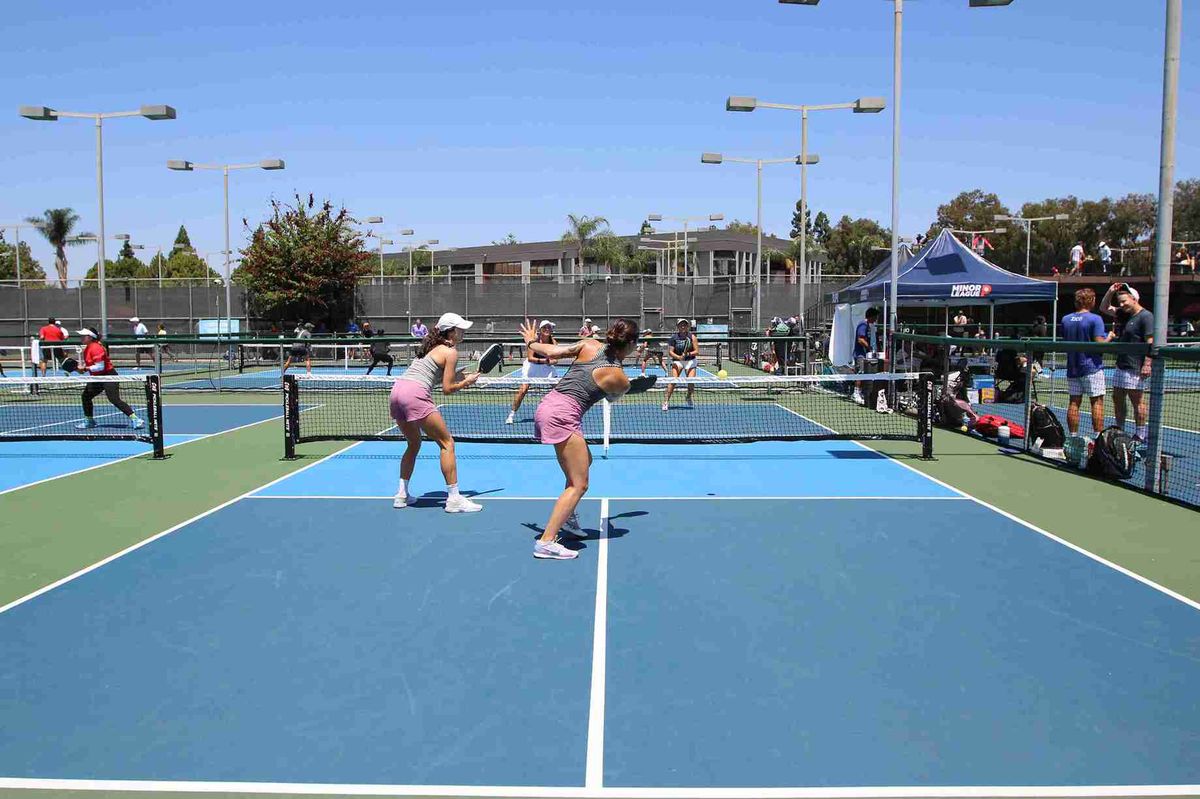
The 4-Week Plan to Build Stamina for Pickleball
This plan assumes you're already playing some pickleball and have a baseline level of fitness. It's structured around three types of sessions each week:
- Aerobic base sessions (off-court, moderate effort)
- Court conditioning drills (on-court, high intensity)
- Active recovery (mobility, light movement, rest)
Week 1: Build the Base
Goal: Establish your aerobic foundation and introduce court movement patterns.
- Monday: 25-minute easy jog or brisk walk. Keep your heart rate around 60 to 65% of max.
- Tuesday: Court drill session, lateral shuffle baseline-to-kitchen sprints, 10 reps, 20 seconds work / 20 seconds rest.
- Wednesday: Active recovery, 20 minutes of light stretching and mobility work.
- Thursday: 30-minute cycling or rowing at moderate effort.
- Friday: Court drill session, dinking rallies for consistency, followed by crosscourt reset drills for 30 minutes.
- Saturday: Open play, with intention. Focus on staying low and moving efficiently, not just winning points.
- Sunday: Full rest.
Week 1 principle: Don't go hard every day. You're building the engine, not redlining it.
Week 2: Introduce Interval Work
Goal: Layer in short, high-intensity intervals that mirror actual rally demands.
- Monday: 20-minute jog with 6 x 30-second pickups (faster effort, then back to easy pace).
- Tuesday: Court conditioning, shadow footwork drill. Set a timer for 10 minutes. Move through a court split-step pattern continuously: center, left, right, kitchen, back, repeat. No ball needed.
- Wednesday: Rest or mobility.
- Thursday: Full pickleball training session focused on resets and third-shot drops, high repetition, competitive pressure.
- Friday: 25-minute bike ride at steady state.
- Saturday: Open play, try to play at least three full games without sitting out.
- Sunday: Rest.
Week 2 principle: The interval work on Monday and the shadow drill on Tuesday are where the stamina gains happen. Don't skip them.
The Dink Media Team
Week 3: Court-Specific Conditioning Peaks
Goal: Simulate game-intensity effort for longer stretches.
- Monday: Interval run, 5 x 1-minute hard efforts with 90-second walk recovery between.
- Tuesday: Basket drill conditioning. Have a partner or feeder hit you 15 balls in a row to alternating sides of the court. Reset to center between each shot. Do 4 rounds with 60 seconds rest. Track your nutrition on high-output days, what you eat before a hard session matters.
- Wednesday: Mobility and foam rolling. Hips, ankles, thoracic spine.
- Thursday: 30-minute moderate cardio, followed by 15 minutes of footwork-only court movement (no hitting).
- Friday: Rest.
- Saturday: Tournament simulation, play 5 games back-to-back if possible. Treat it like a real bracket.
- Sunday: Light walk, stretch, done.
Week 3 principle: This is the hardest week on purpose. Your body is adapting. Trust it.
The Dink Media Team
How to Build Stamina for Pickleball Without Burning Out
Week 4 is where most people make the mistake of pushing harder. Don't.
Week 4 is a structured deload that lets the adaptations from weeks 1 to 3 actually lock in.
- Monday: 20-minute easy jog. Conversational pace only.
- Tuesday: Light court session, dinking and serving practice, no conditioning drills.
- Wednesday: Rest.
- Thursday: 20-minute bike or walk.
- Friday: Optional short drill session. Keep it fun.
- Saturday: Play pickleball and notice how much better you feel.
- Sunday: Rest and reflect.
By the end of week 4, most players report significantly more energy in their third game, faster recovery between points, and better late-rally decision-making.
That last one isn't a coincidence.
Research from the Journal of Sports Sciences shows that cognitive performance under physical fatigue declines sharply in players with poor cardiovascular conditioning. In other words: get fit, play smarter.
The Dink Media Team
Does Playing More Pickleball Build Stamina on Its Own?
Sort of. Playing frequently helps, but it's not a complete conditioning plan.
Most recreational games involve too much standing around, too many natural rest breaks, and not enough sustained intensity to drive meaningful aerobic adaptation.
Playing more pickleball will build pickleball-specific movement efficiency over time.
You'll get better at conserving energy, reading the game, and not wasting effort.
But to actually raise your cardiovascular ceiling, you need off-court cardio and purposeful on-court conditioning like the plan above.
Think of open play as the test. The plan is the training.
Alex E. Weaver
Fueling the Work: What to Eat and When
You can't out-train a bad fueling strategy. If you're doing a hard conditioning session, try eating a light carbohydrate-based snack 60 to 90 minutes before.
During long play sessions, sip water every 15 minutes. After your session, get protein in within 30 to 45 minutes to support muscle recovery.
A quick suggested framework:
- Pre-session: Banana, toast with peanut butter, or a small bowl of oatmeal
- During: Water + electrolytes if playing more than 60 minutes
- Post-session: 20 to 30g of protein (eggs, Greek yogurt, protein shake)
The Dink has covered pickleball-specific nutrition in more depth, worth reading if you want to get the fueling side dialed in alongside the training plan.
The Dink Media Team
Key Takeaways
- Build stamina for pickleball by training the way the game moves, short burst, recover, repeat.
- Aerobic base work (off-court cardio) plus court-specific drills are both required.
- The 4-week plan progresses from base building (week 1) to peak intensity (week 3) to deload (week 4).
- Fueling and recovery matter as much as the sessions themselves.
- Open play is the test. Structured training is how you actually improve.
Frequently Asked Questions
How long does it take to build stamina for pickleball?
Most players notice real improvement in 3 to 4 weeks of structured training. The changes that matter most, faster heart rate recovery between points and better energy in the third game, often show up by week 3. Consistent training over 8 to 12 weeks produces lasting cardiovascular gains.
What type of cardio is best for pickleball fitness?
Interval-based cardio that mimics stop-and-go effort is the most effective. Short hard efforts (20 to 60 seconds) with brief recovery periods train your body exactly like a pickleball match does. Cycling, rowing, and shuttle runs all work well. Steady-state jogging supports your aerobic base but shouldn't be your only tool.
Can older players use this plan to build stamina for pickleball?
Yes, with modifications. Reduce the intensity of the interval sessions and extend recovery windows. A 60-year-old might do 20 seconds of work followed by 40 seconds of rest instead of equal intervals. Research consistently shows that older adults respond well to structured cardiovascular training, the adaptation timelines are similar, just with more recovery built in.
How many days per week should I train to build pickleball stamina?
Four to five days per week is the target for this plan. That includes two hard days, one to two moderate sessions, and one to two rest or active recovery days. More is not better, the rest days are where your body actually gets stronger.
Should I strength train alongside this plan?
Yes, and it pairs well. Lower body strength work (squats, lateral lunges, single-leg exercises) improves court movement efficiency and reduces injury risk. Two days per week of 20 to 30 minutes of strength training complements this cardio plan without overloading your recovery. Footwork-focused training becomes significantly more effective when you have the leg strength to support it.

Love Pickleball? Join 100k+ readers for free weekly tips, news & gear deals.
Subscribe to The Dink