

Fighting Pace with Pace: The Two-Handed Backhand Counter in Pickleball
The two-handed backhand counter is one of the most reliable weapons at the kitchen line in pickleball. Pro player Ava Ignatowich breaks down the exact grip, footwork, and stroke mechanics you need to master this shot.
When your opponent attacks your backhand at the kitchen line, you have a choice: reset the ball or take it on.
The two-handed backhand pickleball counter gives you a third option that most recreational players never develop.
It's the shot that lets you stay aggressive when you're under pressure, and it's the difference between surviving a fast-hands battle and actually winning it.
Ava Ignatowich, a professional pickleball player on the PPA Tour, recently released a comprehensive breakdown of this essential shot.
Her video walks through everything from grip fundamentals to the subtle wrist action that keeps the ball in the court.
If you've been struggling with backhand volleys or getting pushed around at the net, this is the weapon you've been missing.
Love pickleball? Then you'll love our free newsletter. We send the latest news, tips, and highlights for free each week.
Why the Two-Handed Backhand Counter Changes Everything
Here's the thing about pickleball at the kitchen line:
Pace is currency.
When someone hits a hard speed-up at your backhand, a one-handed counter gives you limited options. The two-handed backhand pickleball counter is the shot that changes that equation entirely. 3 technical tips for winning kitchen line hands battles shows exactly how this shot fits into the bigger picture of net exchanges.
You're fighting the ball's momentum with one arm, and the margin for error shrinks fast.
A two-handed backhand counter, by contrast, lets you absorb that pace and redirect it with control and confidence.
The shot isn't just about power. It's about stability.
When you use both hands, you're distributing the force across your entire upper body.
When you use both hands, you're distributing the force across your entire upper body.
Your shoulders, arms, and core all work together to keep the paddle face stable through contact.
That stability is what separates a clean pickleball backhand technique from a ball that sails long or dips into the net.
Ignatowich emphasizes that this shot is particularly valuable when you're on the right side of the court and a ball comes high past your inside hip.
Instead of resetting, you can take it as a two-handed counter and put pressure back on your opponent immediately. It's a momentum shifter.
Getting the Grip Right (It's Simpler Than You Think)
The grip intimidates most players because it looks complicated.
You're stacking two hands on one paddle, and if you've only ever hit one-handed backhands, the positioning feels foreign.
But Ignatowich breaks it down into two simple steps.
- First, use a continental grip on your right hand.
- Find the U-shaped groove between your thumb and index finger, place it on the edge guard, and slide it down.
- Then, stack your left hand directly on top, placing the U of your left hand over the grip flat.
- Close your fingers and shift up until it feels comfortable.
 The Dink Media Team
The beauty of this grip is that it's personal. Some players choke up on the paddle for more control. Others hold it at the bottom for more reach.
Ignatowich has been experimenting with placing her index finger at the back of the paddle, which she says gives her more control lately.
The point is: find what works for your hands and stick with it.
One thing to avoid: don't overthink the grip. If you're spending more time adjusting your hands than practicing the stroke, you're missing the point.
Get it close, then move on to footwork and the swing itself. Continental vs. eastern pickleball grips explained is worth a quick read if the continental grip still feels unfamiliar before you layer on the two-handed setup.
Footwork: Stay Square and Stay Still
A lot of players assume that hitting a two-handed backhand counter requires fancy footwork. It doesn't. In fact, the opposite is true.
Ignatowich keeps it simple:
Stay square to the net and keep your feet still while you hit.
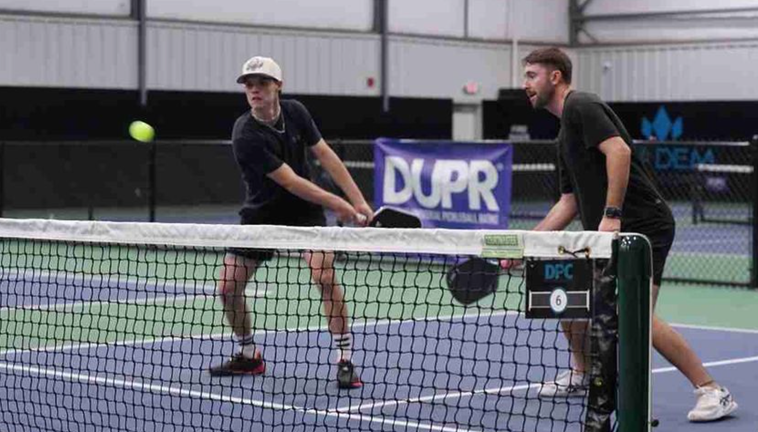
At the kitchen line, you're never sideways. Your body should be open toward the net, which means your shoulders and hips face the court.
When a ball comes at you, your first instinct might be to move, but resist it. A split step to prepare is fine.
Heads up: hundreds of thousands of pickleballers read our free newsletter. Subscribe here for cutting edge strategy, insider news, pro analysis, the latest product innovations and more.
Occasionally, you'll take a lateral step toward the middle if the ball pulls you wide. But most of the time, your feet should be planted.
Why? Balance. When your feet are still, your entire body is stable. You can focus on the stroke itself rather than managing your movement.
Ignatowich catches balls late probably 50 percent of the time, but she gets away with it because her feet are set and her backswing is compact. You can't do that if you're moving around. This is the same principle behind how to hit a harder backhand volley in advanced pickleball: stillness at contact is what gives you power and control simultaneously.
You can't do that if you're moving around.
The Dink Media Team
The Stroke: Compact Backswing, Wristy Finish
This is where the two-handed backhand counter separates from other shots.
The backswing needs to be short. Not medium. Not "pretty compact." Short.
Why? Timing. If you take the paddle all the way back and the ball catches you mid-swing, it's going straight into the net.
A compact backswing gives you a safety net. Even if you're late, you can still roll over the ball with spin and keep it in the court.
Ignatowich describes the motion as a tiny baby loop, similar to the Nike swoosh she mentions in her drive video.
You're taking the ball out in front and to the side with minimal backswing, then driving through with your shoulders and arms.
Here's where the left hand becomes critical. Ignatowich says she wants 90 percent of the feeling in her left hand on every two-handed backhand pickleball counter.
That's where the spin comes from. Your left hand closes the paddle face and rolls over the ball at contact, which keeps it down and in the court.
If you're just using your arm without that wristy action, the ball floats up and out.
The power comes from your shoulders, but the control comes from your left hand. It's a partnership, not a solo act. From weak to weapon: how to wreck a two-handed backhand drive in pickleball takes this exact wrist-and-shoulder combination into drive territory once you have the counter locked in.
It's a partnership, not a solo act.
The Dink Media Team
When to Use the Two-Handed Backhand Counter (And When to Reset Instead)
Not every ball deserves a two-handed backhand counter. Ignatowich is clear about this: if the ball is dipping below your waist, don't hit a counter.
Reset it instead. Swinging up on a low ball is a recipe for disaster, no matter how good your technique is.
The sweet spot for this shot is a ball that's coming high past your inside hip. That's when you take it as two hands and attack.
The ball needs to be at a height where you can hit down on it or at least hit through it level. Anything lower, and you're fighting physics.
This distinction matters because it keeps you from developing bad habits.
If you're constantly trying to counter balls that are too low, you'll ingrain an upward swing path. That's the opposite of what you want. The 5 essential two-handed backhand shots with pro Connor Garnett is the natural next read once you understand how ball height determines which shot to reach for.
The Dink Media Team
How to Practice This Two-Handed Backhand Counter (Fed Ball Work First)
Most players try to learn the two-handed backhand counter in live play, which is a mistake. You need reps with controlled conditions first.
Ignatowich recommends starting with simple ball work. Get a coach or a friend to feed you balls at a consistent height and pace.
This lets you focus on the grip, footwork, and stroke without worrying about where the ball is coming from. Film yourself doing it too.
Video feedback is invaluable because you can see if your backswing is too big, if you're taking the ball out in front, or if you're rotating too much with your shoulders.
Once you've dialed in the feeling with fed balls from the baseline, move to counters at the net. The progression matters.
You're building muscle memory in stages, not trying to master everything at once. 3 pro strategies to stop losing pickleball hands battles is a good live-play companion once your fed ball reps start to feel solid.
The Dink Media Team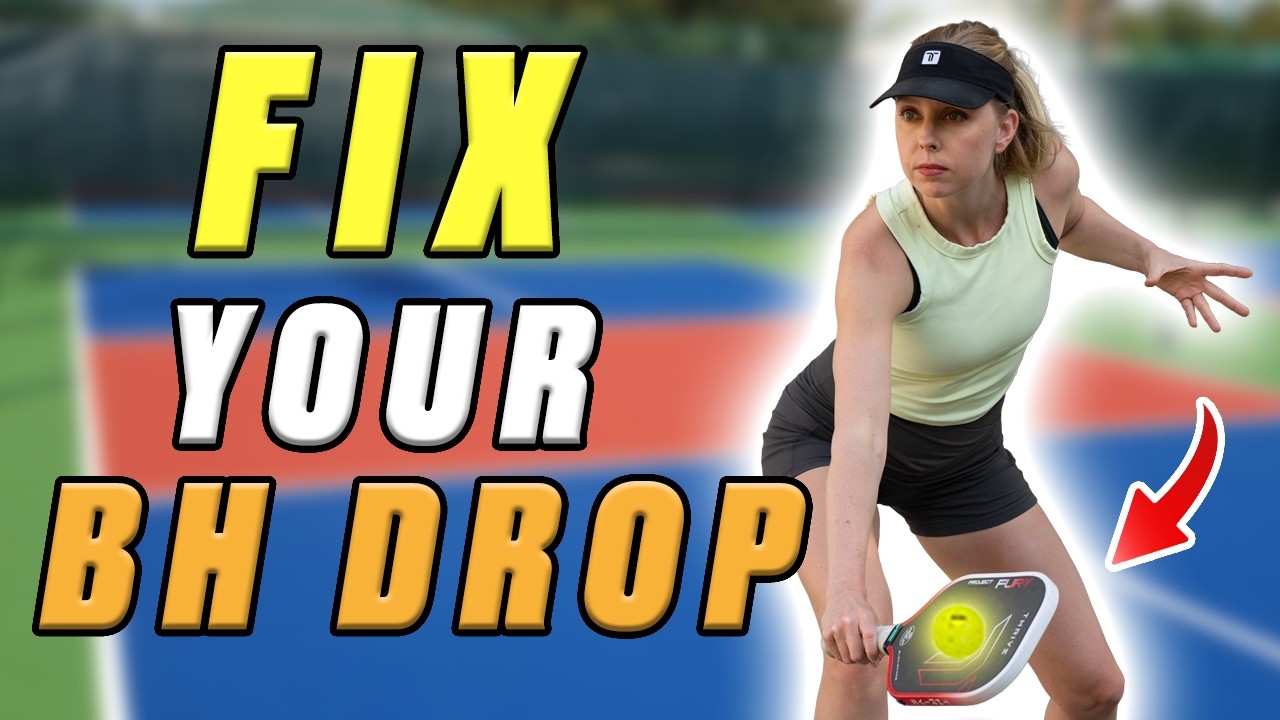
The Difference Between a Counter and an Attack
Before you hit the court, understand the distinction.
- A two-handed backhand counter is hit on a lower ball and requires a quicker backswing because you're more rushed.
- A two-handed backhand attack is hit on a higher ball and allows you to hit down on it more aggressively.
Both use the same grip and footwork. The difference is ball height and how much you can load up on the shot.
If you're confused about which one to use, let the ball height decide for you. High ball? Attack. Lower ball? Counter.
The Dink Media Team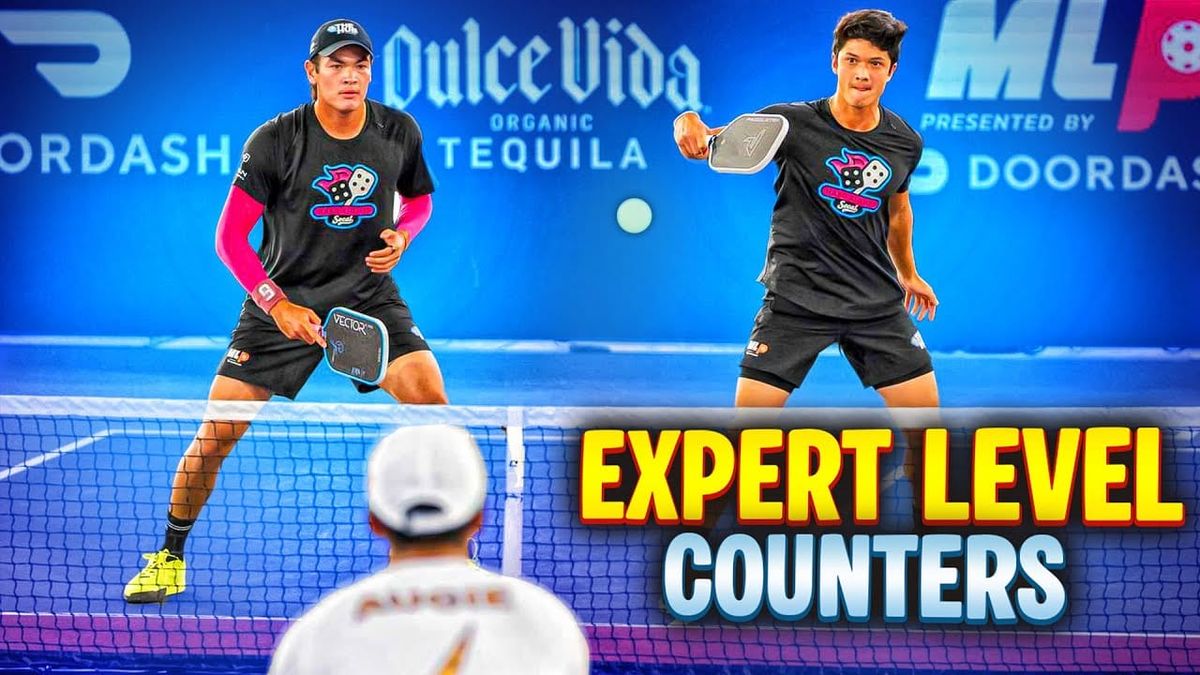
Why This Shot Matters for Your Pickleball Game
Here's what separates good pickleball players from great ones: they have weapons.
A two-handed backhand counter is a weapon that most recreational players don't have.
Once you develop it, you'll notice something shift in your matches. You'll stop getting pushed around at the net.
You'll start dictating points instead of just reacting to them.
Ignatowich notes that you'll never get as much pace on a one-handed counter as you will with a two-handed counter once you get it down.
That pace is what makes opponents uncomfortable. It's what turns defense into offense.
As ESPN has reported in their pickleball coverage, the two-handed backhand pickleball shot has become a defining skill at the professional level, with players who master it gaining a measurable edge in net exchanges. Once you develop your two-handed backhand shots across different situations, the kitchen line starts to feel like your territory, not your opponent's.
The shot takes time to develop. It won't feel natural for a while.
But if you commit to the progression—fed ball work, baseline practice, then net play—you'll have a shot that changes how you compete at the kitchen line.
Frequently Asked Questions
What is a two-handed backhand counter in pickleball?
A two-handed backhand counter is an aggressive net shot where you use both hands on the paddle to absorb pace and redirect the ball back at your opponent. It's especially effective when you're under pressure at the kitchen line and the ball is coming high to your backhand side.
What grip should I use for a two-handed backhand counter in pickleball?
Use a continental grip on your dominant hand, then stack your non-dominant hand directly on top with the same U-shaped placement. The grip is adjustable: some players choke up for control, others hold lower for reach, so experiment until it feels locked in.
When should I use a two-handed backhand counter instead of resetting?
Use the two-handed backhand counter when the ball is coming high, at or above your inside hip. If the ball is dipping below your waist, reset it instead: trying to counter a low ball forces an upward swing that usually ends badly.
How long does it take to learn the two-handed backhand counter?
With consistent fed ball work, most players can build a functional two-handed backhand counter within a few weeks. Getting it reliable enough to use under pressure in real matches typically takes several months of structured practice.
What's the most common mistake players make with the two-handed backhand counter?
Taking the backswing too far back. A big backswing kills your timing and forces you to rush through the contact point. Keep the backswing compact, focus the spin through your non-dominant hand, and your consistency will improve fast.

Love Pickleball? Join 100k+ readers for free weekly tips, news & gear deals.
Subscribe to The Dink