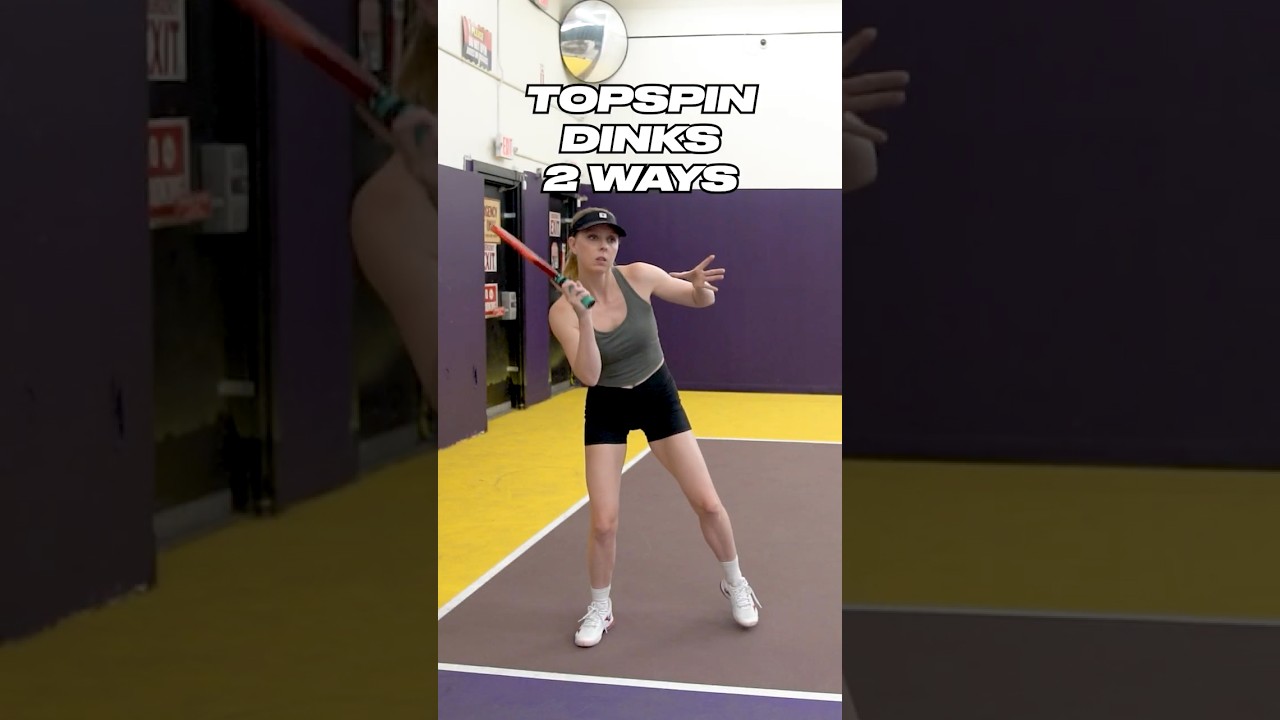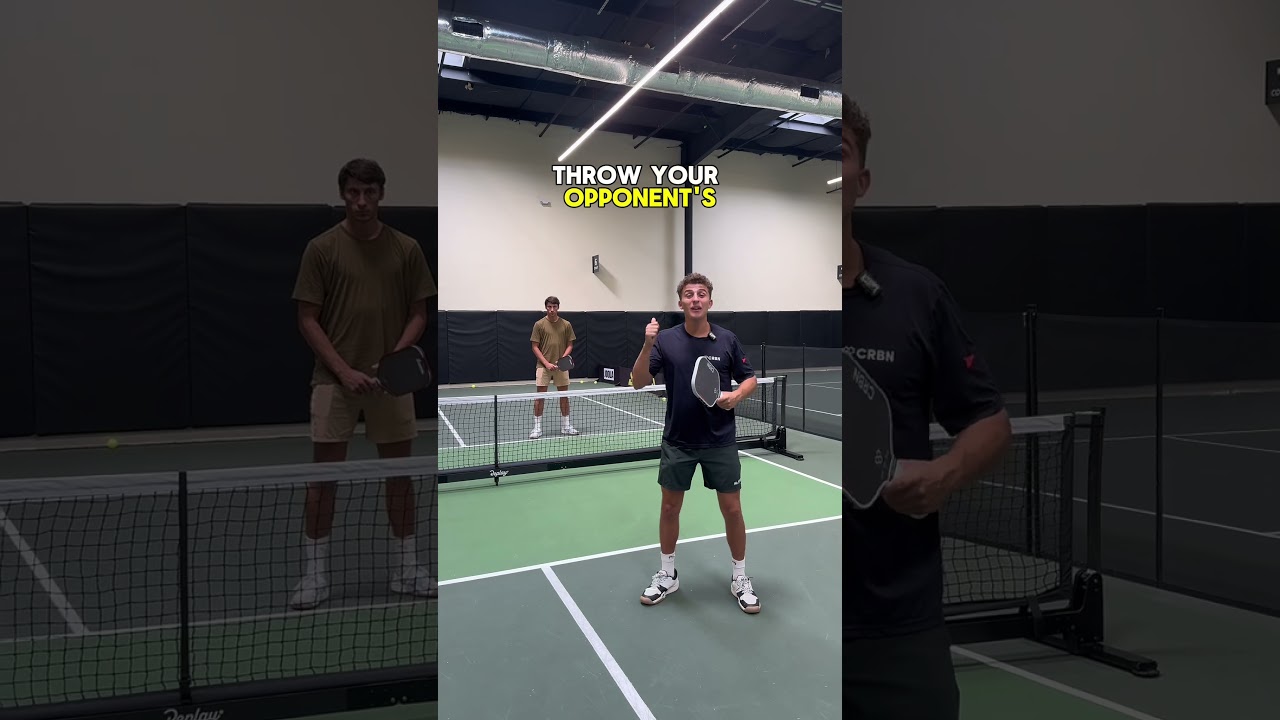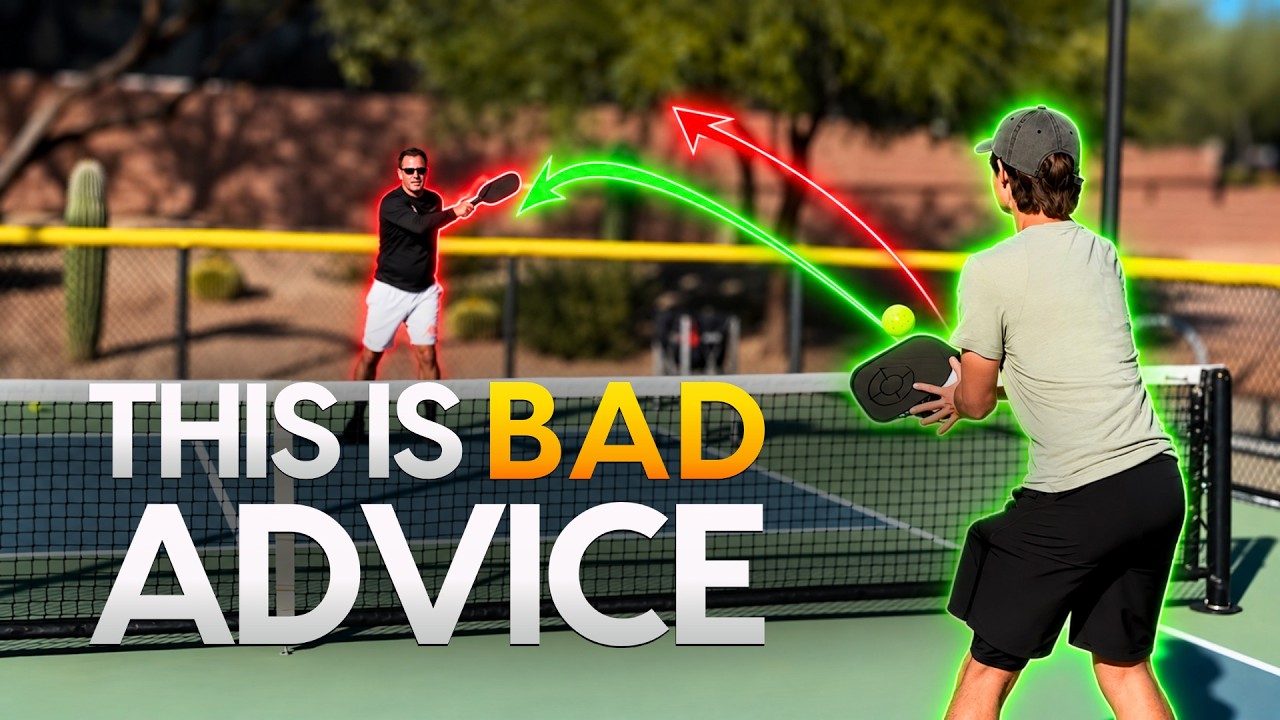

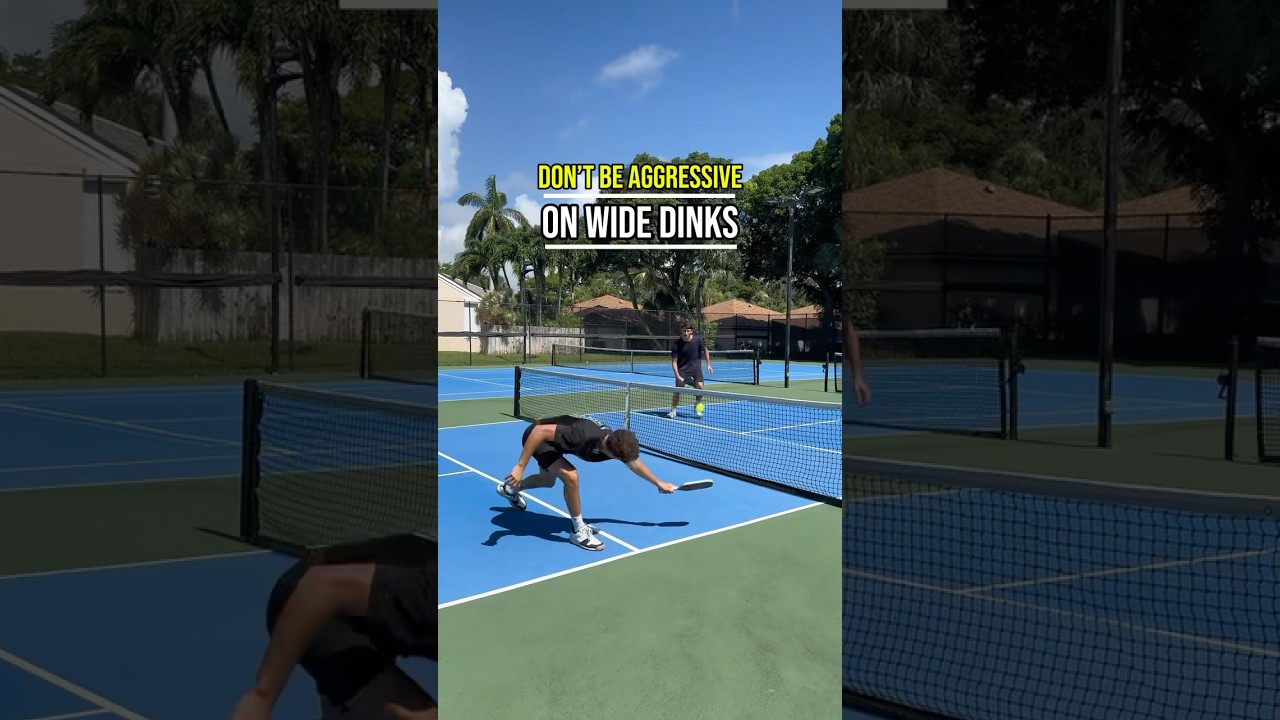
Fix your footwork and shot selection and you will neutralize the rally instead of handing your opponent a free point.
When a wide dink comes screaming toward the sideline, most players panic and make the same two mistakes, and those mistakes hand the point right back to the opponent who put you in trouble.
The footwork is wrong. The shot selection is wrong. And ironically, trying to be aggressive in that moment is what gets you burned.
This breakdown comes from Tanner Tomassi on YouTube, who laid out a simple, repeatable system for handling sharp wide balls without losing kitchen control.
Here is exactly what to do instead.
Love pickleball? Then you'll love our free newsletter. We send the latest news, tips, and highlights for free each week.
What Actually Happens When a Wide Dink Comes at You
A sharp, wide ball is designed to pull you off the kitchen line and open up the court.
When your opponent sends that ball wide, they are not just testing your reach. They are testing your decision-making.
Most amateur players respond by stepping out sideways with the wrong foot and then trying to redirect the ball crosscourt, which is the exact response the opponent was hoping for.
That crosscourt attempt usually does one of two things. It either floats high and gets attacked, or it sails wide because you are reaching and off-balance.
Either way, you lose the exchange.
Why Do Amateurs Try to Go Crosscourt on Wide Balls?
It feels natural. The ball came from the crosscourt direction, so the instinct is to send it back that way.
The problem is that a wide dink has already stretched you to the edge of your court.
Your body position, your paddle angle, and your balance are all compromised.
Trying to generate a precise crosscourt pickleball dink from that position is asking too much from a shot that needs to clear the net, land in the kitchen, and stay low enough not to get attacked.
This is exactly the kind of bad pickleball habit that feels like effort but actually makes things worse. You are overcomplicating a moment that calls for simplicity.
The better players, including pros with elite kitchen arrival percentages, do not try to win the point from a compromised position.
They neutralize it and reset the rally.
The Right Footwork for a Wide Dink
Use your inside foot to cross-step toward the ball. That is the core fix, and it changes everything about how you arrive at the contact point.
Here is the breakdown of exactly what the correct movement looks like:
- Read the ball early. The moment you see the dink going wide, commit to moving. Hesitation is what leaves you reaching.
- Cross-step with your inside foot. If the ball is going to your right, your left foot crosses over toward the ball. This cuts off the angle and gets your body behind the shot.
- Short hop the ball. Take the ball early, right off the bounce, before it gets past you or forces you further off the court.
- Direct it to the middle. Send the ball down the middle of the court, not crosscourt. This neutralizes the dink rally and puts pressure back on both opponents.
The cross-step footwork is the piece most players skip entirely. They shuffle sideways, which is slower and leaves them further from the ball at contact.
When you cross-step, you actually cut the angle of the ball. You meet it earlier, which gives you more control and less distance to cover after the shot.
 The Dink Media Team
What Is a Short Hop and Why Does It Matter?
A short hop means taking the ball immediately after it bounces, before it rises to its peak or drops low.
It is a technique borrowed directly from tennis, where players use it to neutralize pace and keep their position at the baseline.
In pickleball, short hopping a wide dink at the kitchen line serves the same purpose.
You cut off the time your opponent has to set up, and you avoid getting pulled further back from the kitchen.
You can read more about how to short hop at the net like a pickleball pro to practice this specific skill.
Soft Hands Beat Fast Hands on a Wide Dink
The key with the short hop is keeping your grip pressure soft. A tight grip at contact kills the touch you need to place the ball accurately.
Soft hands absorb the pace and redirect cleanly.
If you have struggled with pickleball grip pressure, this is exactly the situation where that skill pays off most.
 The Dink Media Team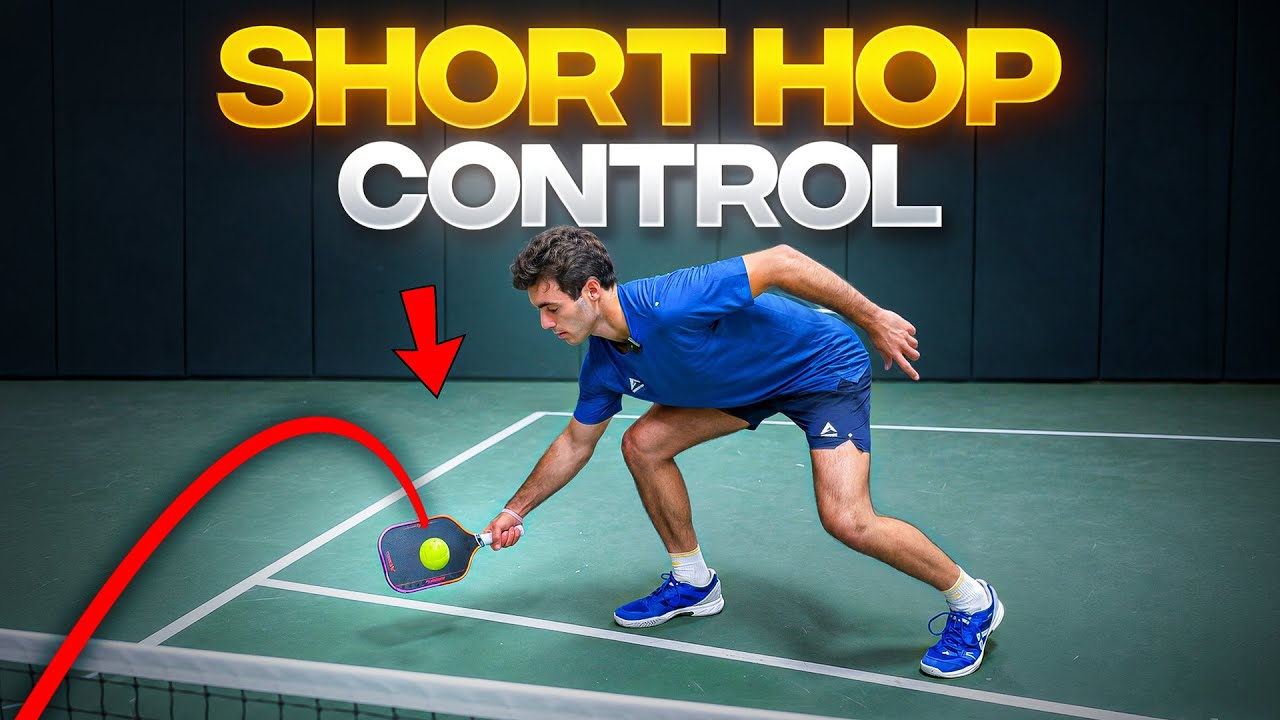
Why the Middle Is the Right Target
Sending the ball to the middle after a wide dink is not a passive move. It is a smart one.
When you redirect to the middle, you accomplish three things at once:
- You give the ball the lowest possible net clearance angle, which reduces your error margin.
- You force a decision between your two opponents about who takes the next ball.
- You give yourself time to recover back to your kitchen line position.
That last point matters more than most players realize. If you go crosscourt from a wide position, you are still off-balance and out of position.
Going to the middle buys you the split second you need to reset your feet.
Top players like Ben Johns consistently redirect to the middle when pulled wide, precisely because it removes the risk of a precision angle shot from a bad position.
The middle is always on.
 The Dink Media Team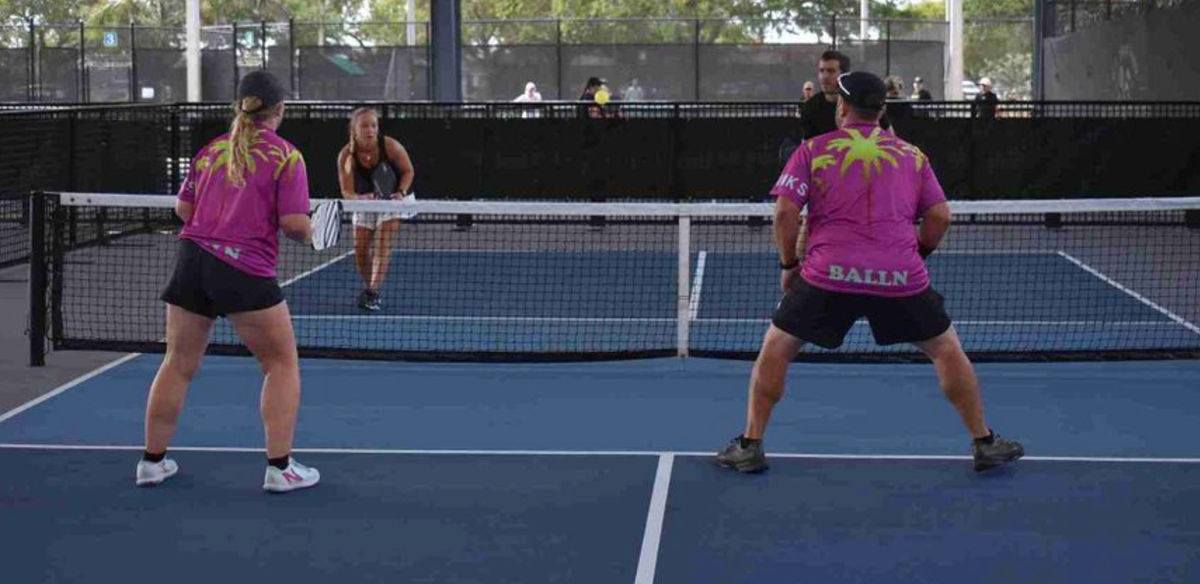
How Does This Change Your Kitchen Control?
Kitchen control in doubles is about staying at the line together, and wide balls are specifically designed to break that structure.
When you get pulled off the kitchen line by a wide dink and you respond by going crosscourt, your recovery time increases.
You are further from your spot, your partner has a bigger gap to cover, and the opponents can attack the open court while you scramble back.
The cross-step plus short hop plus middle redirect keeps the point neutral. You are not winning the rally on that shot. You are refusing to lose it.
That distinction is exactly what separates higher-level players.
They know when a shot calls for aggression and when it calls for resetting the pickleball rally to regain control.
Getting wide on a dink is a reset situation, every single time.
If you want to see how this fits into the broader picture of kitchen line strategy, it helps to study what makes Tyra Black so dominant at the kitchen line.
Her composure under pressure is a direct result of knowing exactly when not to go for too much.
 The Dink Media Team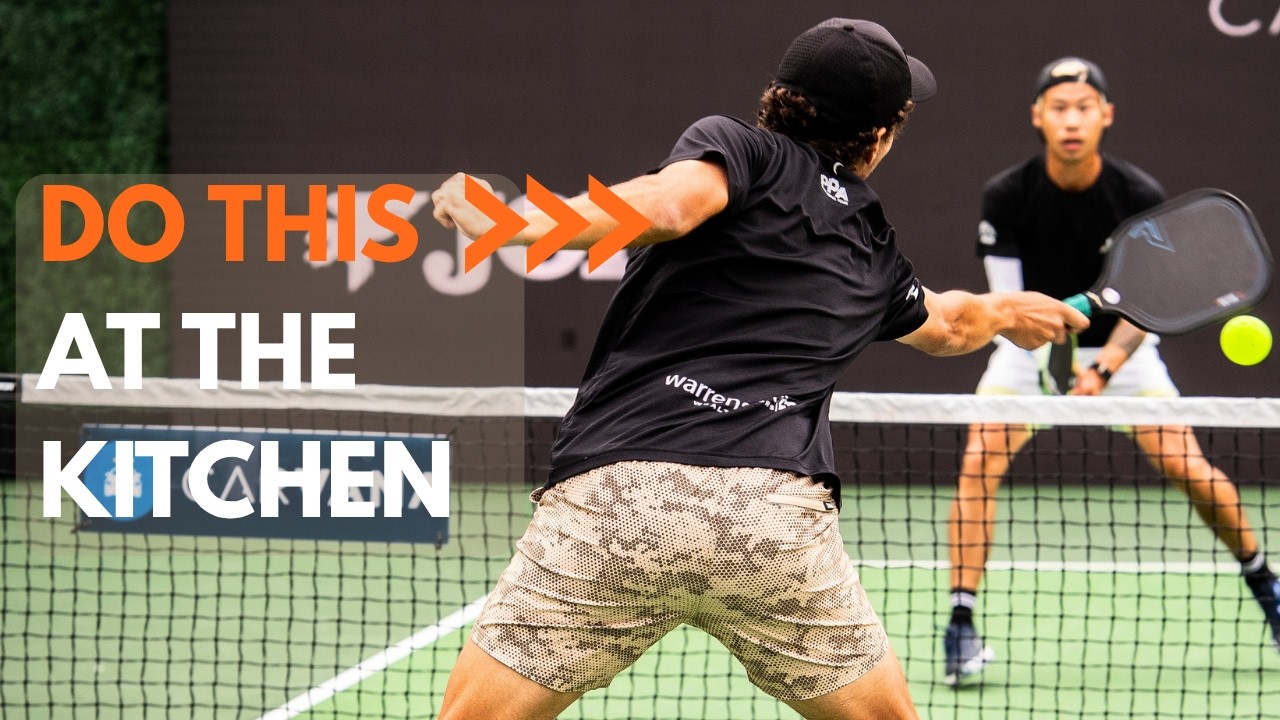
What About Your Footwork on the Other Side of the Court?
The same principle applies whether the wide ball comes to your forehand or backhand side. The inside foot always leads the cross-step.
If the ball is wide to your backhand, your forehand-side foot crosses over.
This keeps your core facing the court instead of opening up your back to the net, which would destroy your ability to redirect accurately.
Lateral movement at the kitchen line is a skill that takes focused repetition.
If your footwork on this shot is breaking down, pickleball lateral movement training designed to be easy on your knees can help you build the pattern without risking injury.
The footwork is the foundation. You can have perfect shot selection, but if your feet are wrong, you will never make clean contact on a wide ball.
 The Dink Media Team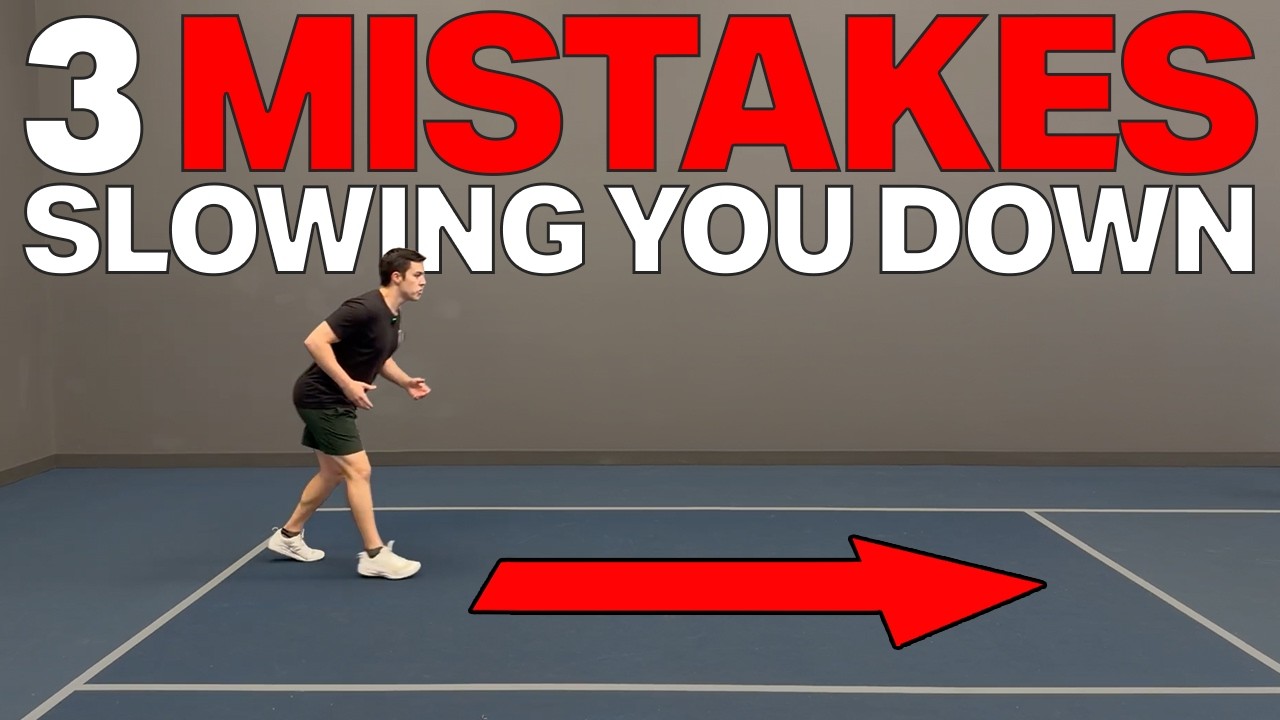
Drilling This So It Becomes Automatic
Reading about this fix helps, but the cross-step will not show up in a real game unless you have drilled it until it is automatic.
Here is a simple way to practice it:
- Partner feed drill. Stand at the kitchen line and have a partner feed alternating wide balls to each side. Focus only on the cross-step and middle redirect, no other shots.
- Shadow footwork reps. Without a ball, stand at the kitchen and practice the cross-step movement on command. Do it in both directions, 20 times each side.
- Live dinking with a constraint. During your next dinking session, agree that any wide ball must be redirected to the middle. No crosscourt attempts on wide balls allowed. Play an entire session with that rule.
Constrained drilling like this forces the habit into your muscle memory faster than just playing games and hoping the pattern emerges.
You can find more structured approaches in this guide to drills a PPA pro still uses every practice.
The goal is to make the cross-step feel like your default reaction, not a choice you have to consciously make in the middle of a dink rally.
 The Dink Media Team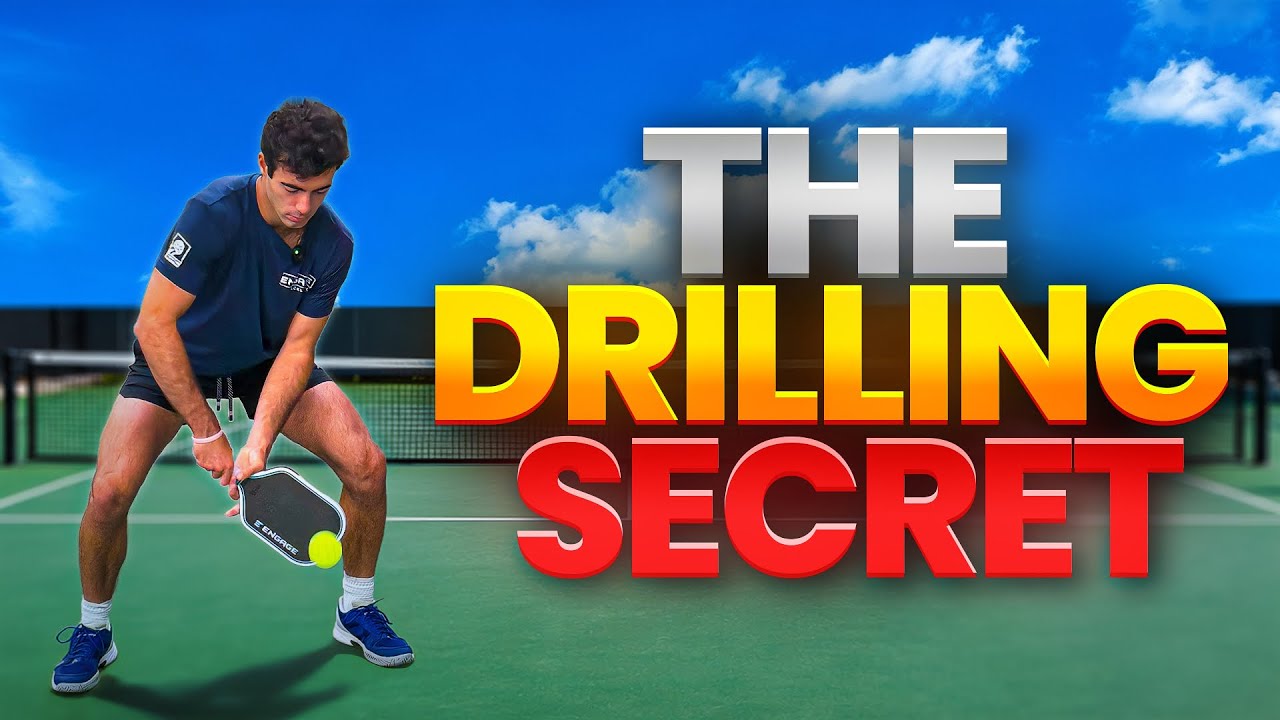
One More Thing Most Players Get Wrong
Even players who learn the correct footwork often revert to the crosscourt shot because they feel like they are leaving a scoring opportunity on the table.
They are not. A wide ball from your opponent is not a setup for you to attack. It is a defensive moment disguised as an opportunity.
Respecting that is what keeps your team in position and in control of the kitchen.
If you also struggle with popping up dinks under pressure, the same principle applies.
Trying to do too much from a tough position is almost always the wrong call.
The players who win the most dink rallies are not the ones who go for the most. They are the ones who make the fewest mistakes and stay at the line longest.
This fix is how you become one of those players.
Pair this with a sharper understanding of forehand dink fundamentals and your overall kitchen game will tighten up faster than you expect.
And if you want to go deeper on how to handle the full range of pressure shots at the kitchen, study the tips that fix your dink, drop, and reset all at once.
Wide balls are just one piece of a complete kitchen game.
Frequently Asked Questions
What is the correct footwork for a wide dink in pickleball?
Use a cross-step with your inside foot to cut off the angle of the ball and arrive at contact in a balanced position. This is faster and more controlled than a sideways shuffle, and it sets you up to short hop the ball cleanly before redirecting to the middle.
Why should I hit the ball to the middle instead of crosscourt on a wide dink?
A wide dink already has you stretched and off-balance, so a crosscourt attempt requires too much precision from a compromised position. The middle is the safest target because it uses less net clearance angle and gives you time to recover back to the kitchen line.
What does short hopping a wide ball mean in pickleball?
Short hopping means taking the ball immediately after it bounces, before it rises to its peak height. It cuts off time for your opponent and keeps you from getting pushed further back from the kitchen line, which protects your court position.
How do I stop trying to go crosscourt on every wide dink?
Drill the middle redirect specifically during practice sessions by creating a rule that any wide ball must go to the middle, no exceptions. After enough repetitions, the correct shot selection becomes automatic and you stop defaulting to the crosscourt out of habit.
Does this footwork fix work on both the forehand and backhand side?
Yes. The inside foot always leads the cross-step regardless of which side the wide ball is going to. On the backhand side, your forehand-side foot crosses over, which keeps your core facing the court and allows for a clean redirected contact.

Love Pickleball? Join 100k+ readers for free weekly tips, news & gear deals.
Subscribe to The Dink