
Pickleball Ankle Injuries: Non-Surgical Treatments That Restore Stability
A pickleball ankle injury can feel minor at first, but ignoring it can lead to chronic instability and long-term damage.
An ankle sprain is a tear or stretch in the ligaments on the outside of the ankle, usually from rolling it on a quick side step or pivot. If it isn’t treated properly, the ankle can stay unstable and strain your knees, hips, and lower back.
A pickleball ankle injury has ended more seasons than bad technique ever will. You roll it on a quick lateral move, limp off for a few minutes, and convince yourself it's fine. Then three weeks later, it gives out again.
The problem isn't just the pain. It's the instability that follows if you treat it wrong or don't treat it at all. That instability is what eventually puts you on the sideline for good.
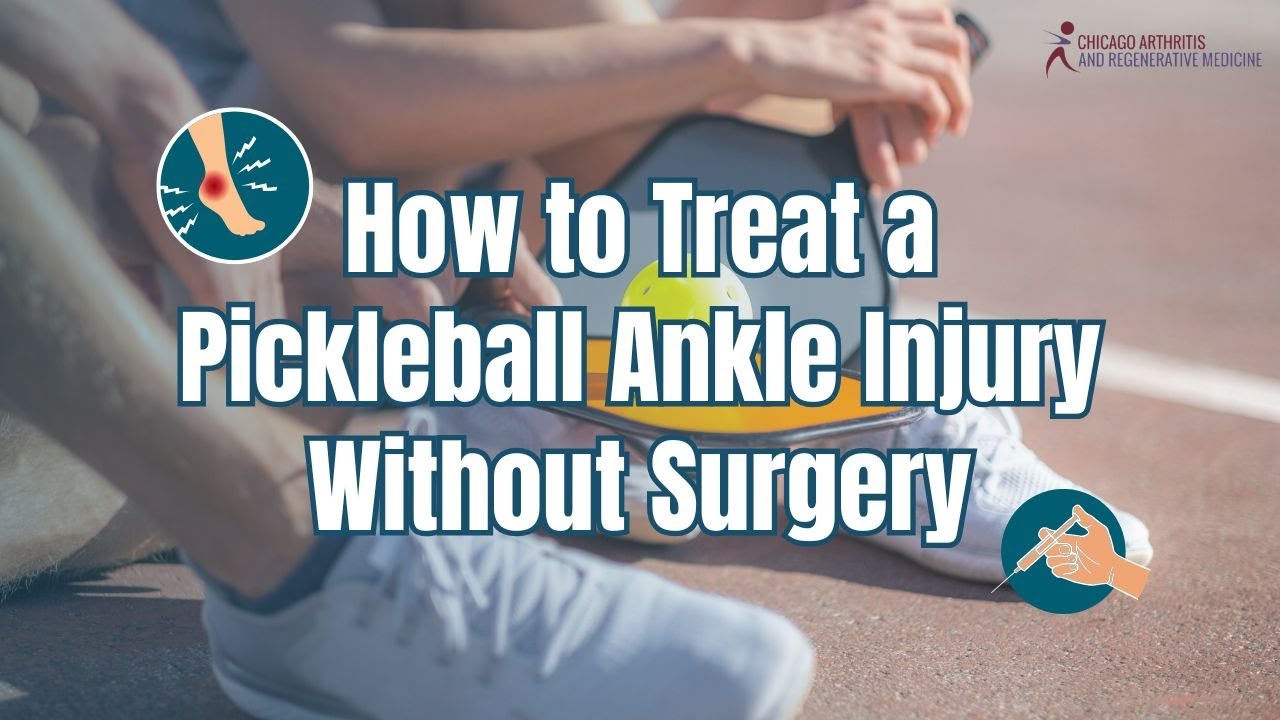
This breakdown comes from Chicago Arthritis and Regenerative Medicine on YouTube, where Dr. Siddharth Tambar walks through exactly what happens during an ankle sprain, why so many players never fully recover, and how to fix it without going under the knife.
Love pickleball? Then you'll love our free newsletter. We send the latest news, tips, and highlights for free each week.
Key Takeaways from Dr. Tambar:
- Rolling an ankle often overstretches or tears the outer ligaments, and pain fading doesn’t mean the ligament has healed.
- X-rays show bone, not ligaments. Ultrasound or MRI are the right tools for soft tissue damage.
- Most ankle sprains can be managed without surgery through physical therapy focused on strength, balance, and a gradual return to play.
- Court shoes, balance training, the split step, and a brace during recovery all help prevent repeat sprains.
What Actually Happens When You Roll Your Ankle
When you roll your ankle, the ligaments on the outer side of the joint stretch beyond their limit and may partially or fully tear. Most players think this is a minor soft tissue issue that rest and ice will fix.
That thinking is wrong, and it costs people months of court time.
A torn or overstretched ligament weakens the structural support of your entire ankle. The real danger isn't the pain you feel in the first few days. It's the instability that develops after the swelling goes down and you think you're healed.
 The Dink Media Team
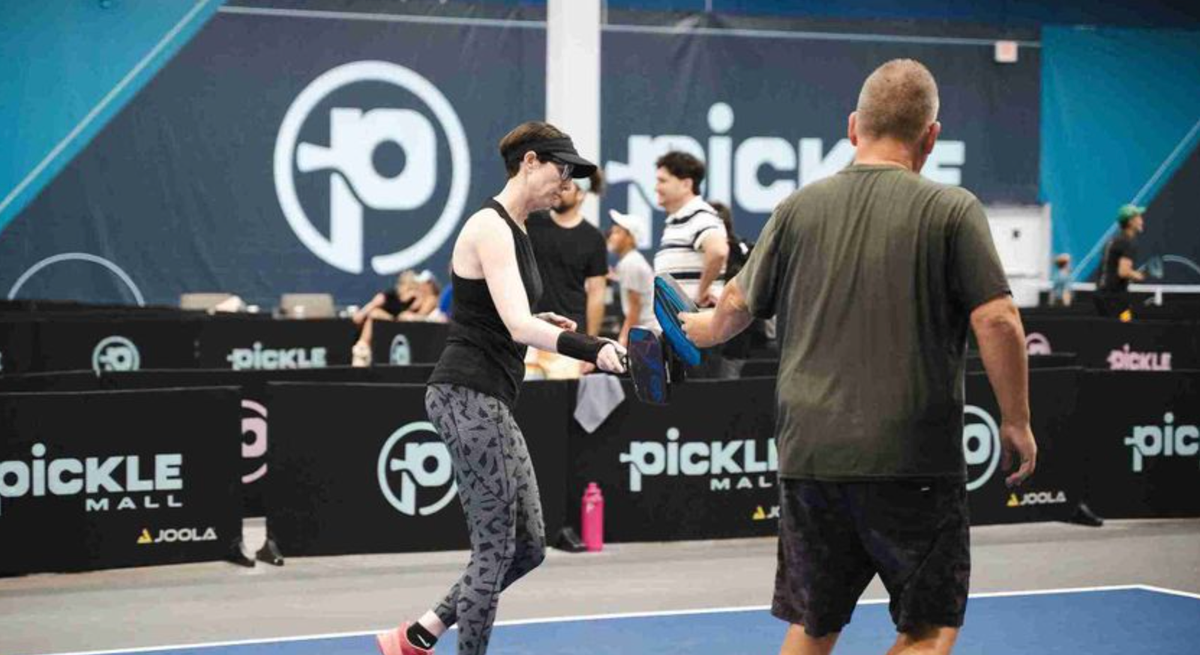
Why Does Ankle Instability Travel Up Your Body?
This is where according to Dr. Tambar, the concept of Biotensegrity becomes important to understand. Think of your body like a tent. The poles are your bones, and the ropes are your ligaments and muscles.
If one rope goes loose, the whole tent wobbles. That's what happens when a ligament is overstretched and never fully repaired.
The instability doesn't stay in your ankle. It travels upward, creating compensation patterns that show up as new pain in your knee, hip, or lower back. If your back has been nagging you since that ankle sprain six months ago, this is probably why.
Signs your ankle instability is getting out of hand include:
- The ankle gives out during lateral movement or pivots
- Stiffness and fatigue appear faster than they used to during play
- You're developing new pain in joints above the ankle
- You've sprained the same ankle more than once in a short window
If any of those sound familiar, you're past the "rest and ice" stage.
Heads up: hundreds of thousands of pickleballers read our free newsletter. Subscribe here for cutting edge strategy, insider news, pro analysis, the latest product innovations and more.
Brace Technology Has Come a Long Way
Today's pickleball ankle support can provide protection without locking the joint in place. Brands like Zamst design braces that balance stability with the mobility pickleball demands, so you can move freely while protecting your ankle.
Here's what modern braces bring to the court:
- Targeted protection: Zamst offers ankle braces for pickleball that limit the side-to-side rolling behind many sprains while still letting your foot flex up and down.
- Adjustable fit: Straps and anatomically contoured supports help secure the ankle. Many designs fit inside athletic shoes, making them practical for court use.
- Help preventing another sprain: Bracing can reduce the risk of repeat ankle sprains, particularly for athletes with a previous injury. Its role can extend beyond the initial recovery period.
A pickleball ankle brace is one part of recovery. Strengthening, balance training and a gradual return to activity remain essential to rebuilding ankle function. Feeling supported does not automatically mean an injured ankle is ready for competition.
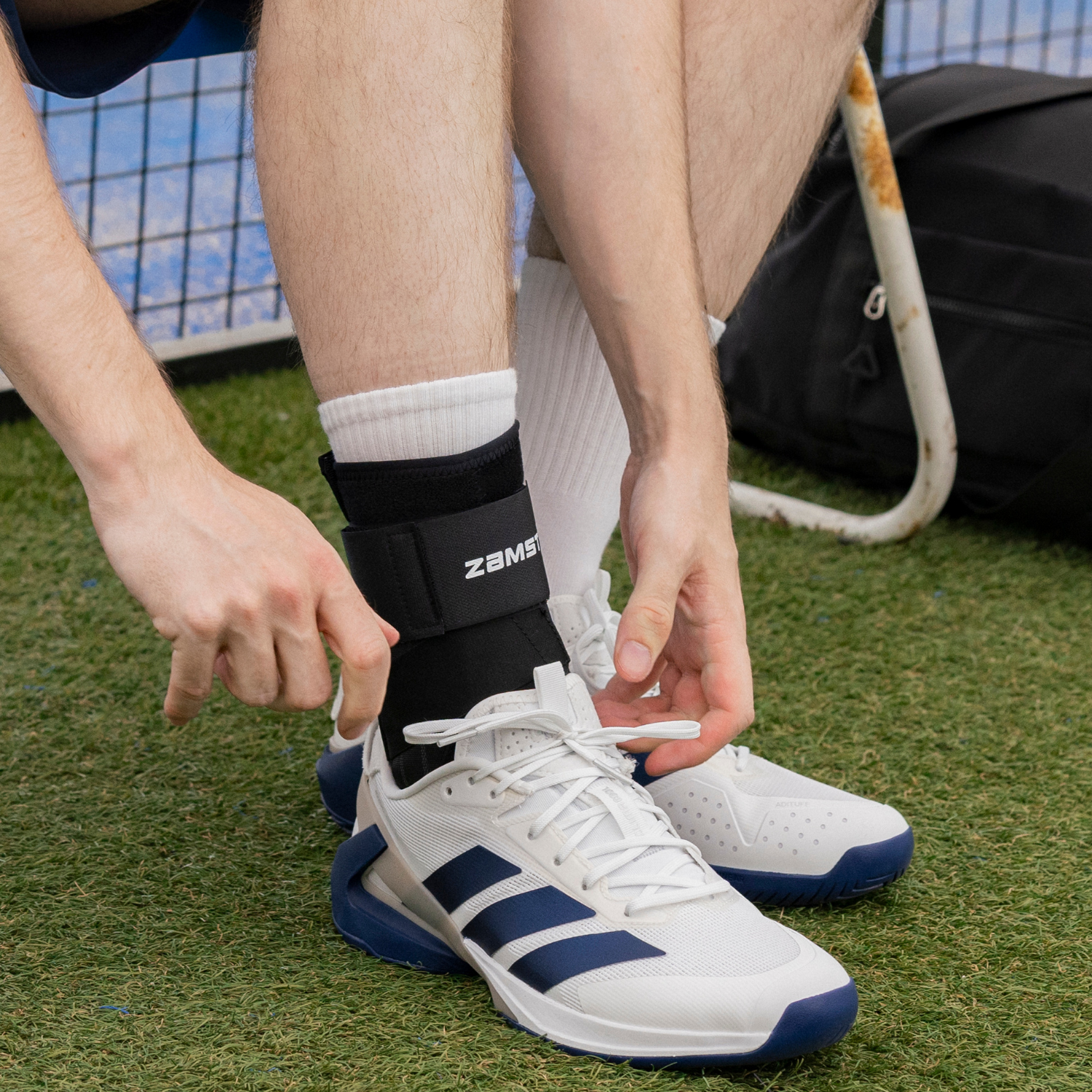
Zamst ankle braces are trusted by professional athletes across a wide array of high-impact sports like tennis, pickleball, and volleyball.
Full support without limiting range of motion. Guaranteed.
Why X-Rays Miss the Real Problem
One of the most common mistakes players make after an ankle injury is getting an X-ray, hearing it's normal, and assuming they're fine. X-rays do not show soft tissue damage. They show bones, not ligaments.
According to Dr. Tambar, ultrasound and MRI are the correct diagnostic tools for ligament injuries. Ultrasound has a specific advantage because it allows the clinician to move the ankle through its range of motion in real time and observe how the ligament reacts under stress. That's something MRI simply cannot do.
If your doctor only ordered an X-ray after your sprain and told you everything looks fine, push for an ultrasound evaluation before you conclude you've fully healed.
 The Dink Media Team
Will It Heal on Its Own?
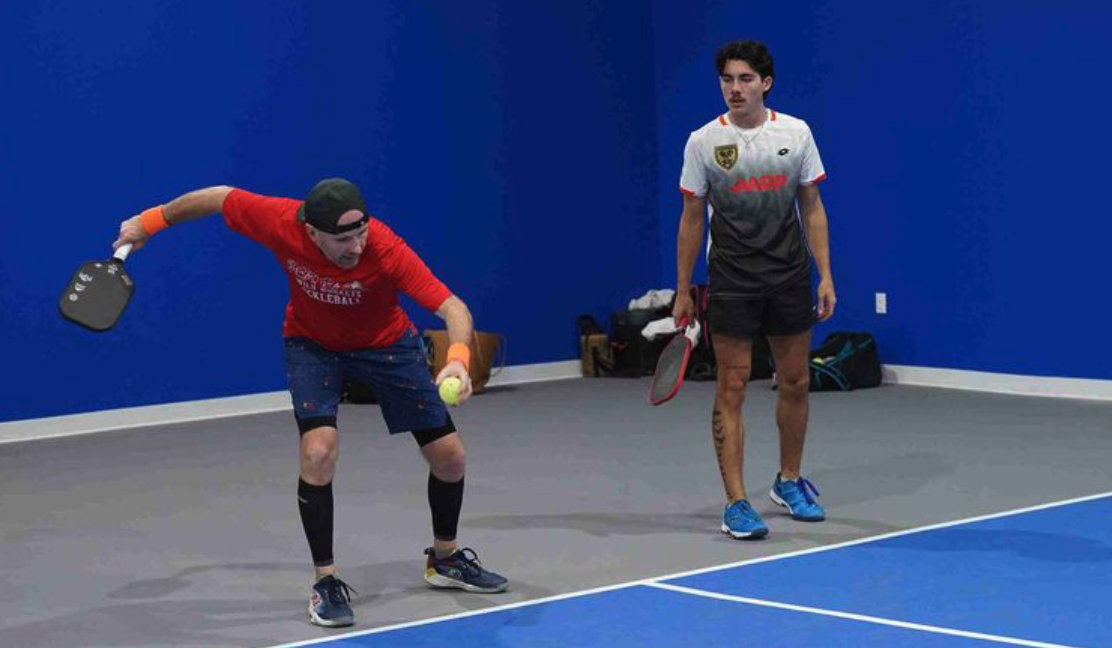
Sometimes, yes. With the right physical therapy protocol, some ankle sprains do heal fully without additional intervention. But many times the ligament heals in a weakened, elongated state that leaves the ankle structurally unstable even when the pain is gone.
That's the dangerous middle ground where most chronic ankle problems start. The pain disappears, you return to play, and then the ankle keeps giving out because the structure was never properly restored.
Surgery is not the only alternative. In the vast majority of cases, full recovery is achievable without it, especially if you treat the injury early and address the instability directly rather than just waiting for the pain to fade.
 The Dink Media Team
How to Prevent a Pickleball Ankle Injury Before It Happens
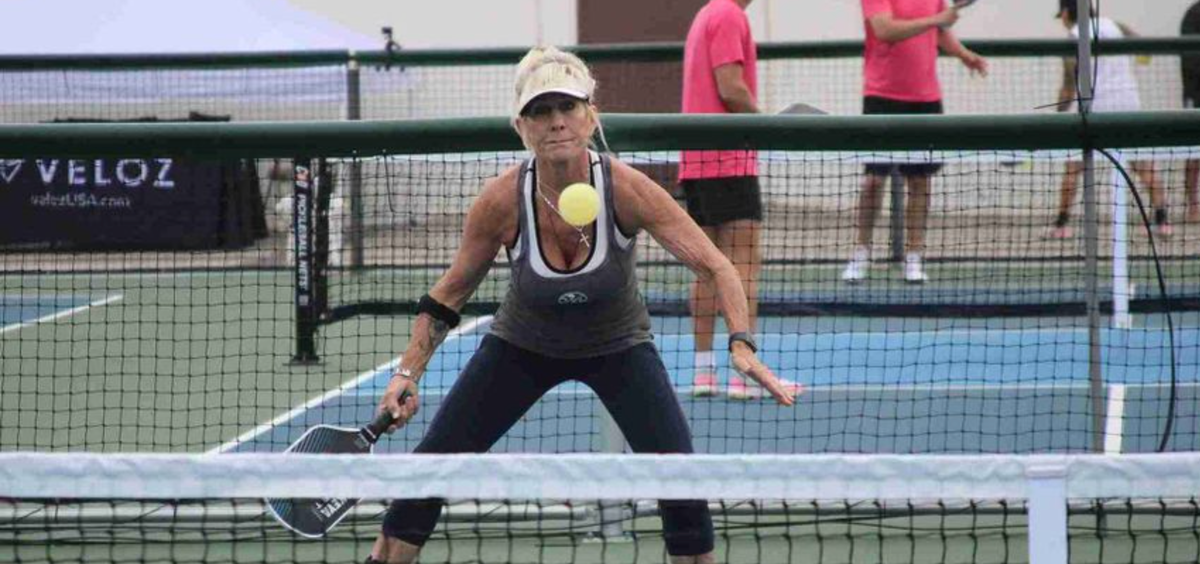
The best ankle sprain is the one you never get. Sprained ankles rank among the most common pickleball injuries, but most of them come down to a few fixable habits. Here's how to stay off the injury list:
- Wear court shoes, not running shoes: Court shoes are engineered for the lateral demands of pickleball. Running shoes are built for straight-line movement and offer almost no ankle support during side-to-side pivots.
- Train your ankles off the court: Single-leg balance stands, resistance band exercises, and agility drills build the strength and neuromuscular awareness that keep your ankle from folding under pressure. The stronger your ankle muscles, the more stable your joint becomes when things get fast and chaotic. Players looking to build this kind of athleticism will find real value in these footwork drills built for pickleball movement.
- Use the split step: This is a technique fix that directly reduces your ankle injury risk. The split step is a small hop you take as your opponent is about to make contact with the ball. It puts you on the balls of your feet and primes your body to move quickly in any direction. When you're flat-footed and get caught moving late, that's when ankles roll. The split step keeps you reactive. If you want to sharpen your movement mechanics more broadly, this article on the ready position connects directly to that idea.
For senior players especially, ankle strength and balance training are worth prioritizing before anything else on the practice schedule. Core strength and balance exercises for seniors are a natural complement to ankle-specific work and help prevent the kind of falls and rolls that lead to serious injuries.
If you want to understand how physical preparation connects to your overall performance on the court, this five-step warm-up routine is a good starting point. Warming up properly before play also significantly reduces soft tissue injury risk.
And if you're coming back from injury and working on rebuilding your game with smarter habits, these bad habits worth identifying is a useful companion read. Compensation patterns from an old injury often show up as mechanical flaws you don't even notice.
Players who've been sidelined and are returning to structured practice will benefit from thinking carefully about which skills to rebuild in the right order. Coming back too fast and too hard is one of the main reasons ankle injuries become recurring problems.
For those working on full return-to-play readiness, these drills used by PPA pros in daily practice can help you rebuild confidence and coordination at a controlled pace. Pairing pickleball drills with an ankle brace from Zamst can give you extra stability as your injury heals. And if you're a senior player navigating this process, playing smarter with less movement is exactly the right approach during recovery.
Once you're back and healthy, avoiding these common mistakes will help you move more efficiently and put less unnecessary stress on your ankles during play.
The bottom line is simple. Don't brush off an ankle sprain. Treat the structure, not just the pain, and you'll stay on the court for years longer than the players who ignored it.
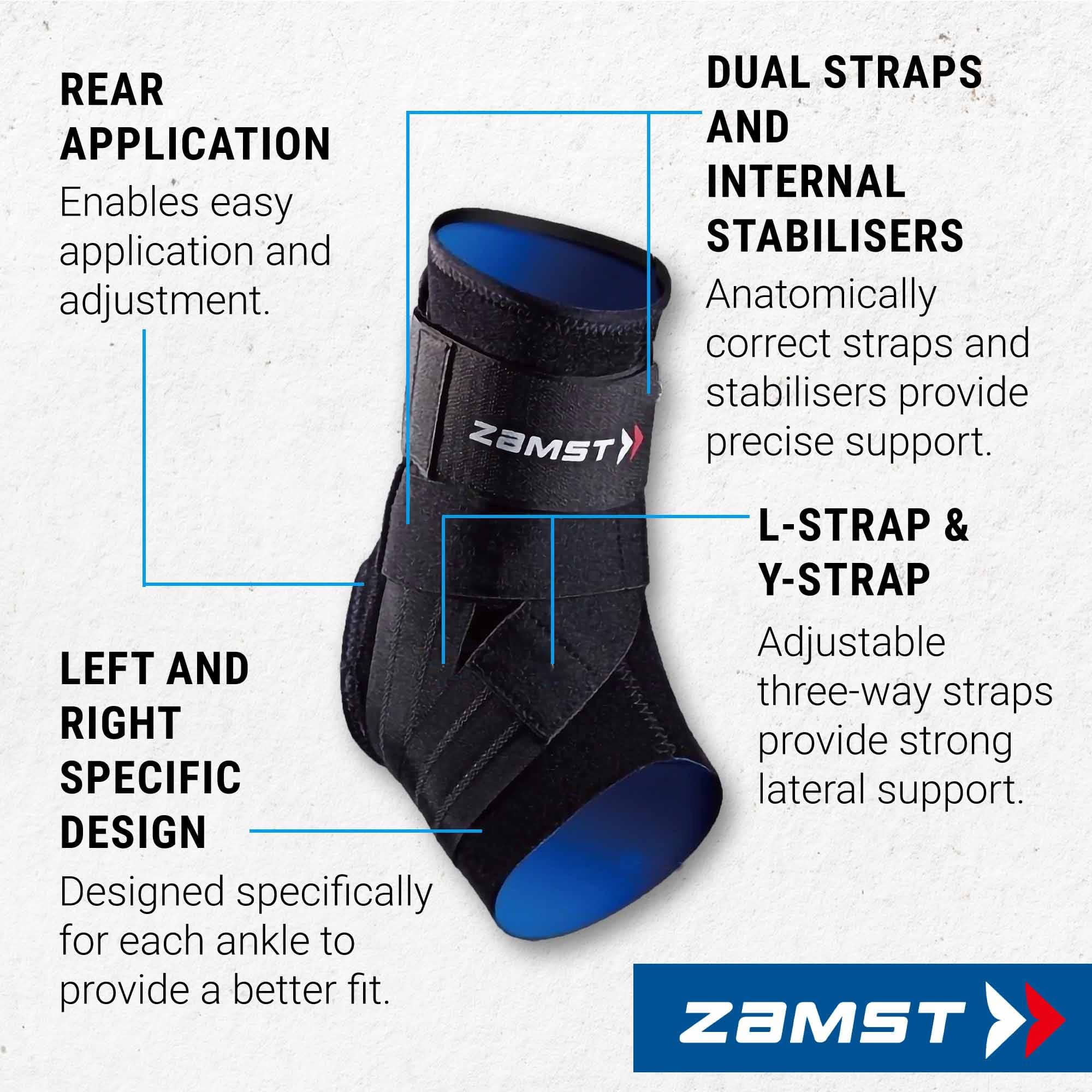
Trusted by competitive racquet sport athletes across tennis, pickleball, and high-impact sports worldwide. The Zamst A1 locks down the side-to-side rolling that causes sprains without limiting the range of motion you need on the court.
Support where you need it. Freedom where you don't.
The Conservative Treatments That Actually Work
Before anything else, you start with the lowest-risk options. These work well for most players, especially if you catch the injury early.
- Rest, then move: Initial rest matters, but staying completely inactive too long slows healing and causes muscles to weaken. Get moving again within a few days, even if it's just walking.
- Physical therapy: This is the most important step. Focus specifically on strengthening, balance work, and proprioception training. Your ankle needs to relearn how to react to sudden changes in direction.
- Anti-inflammatory nutrition: Omega-3 fatty acids and turmeric can help manage the inflammation that follows a fresh sprain. This isn't a cure, but it supports the healing environment your body needs.
- Short-term bracing: A brace during the early healing phase gives your ligaments support while they rebuild. Don't rely on it forever, but use it while you're recovering.
- Proper footwear: This one matters more than most players realize. Court shoes are built for lateral movement and ankle support during quick stops and pivots. Running shoes are not. If you're playing in running shoes, you're increasing your injury risk on every point you play. If you want guidance on what to look for, this breakdown on pickleball court footwear is worth your time.
These steps help your body recover naturally and reduce the risk of compensation injuries showing up in other joints.
Frequently Asked Questions
How long does a pickleball ankle injury take to heal?
A mild ankle sprain can resolve in two to four weeks with proper treatment. More significant ligament tears or cases with instability can take three to six months to fully stabilize, especially if regenerative treatment is involved. The biggest mistake is returning too early before the structural repair is complete.
Can I keep playing pickleball with a sprained ankle?
You should stop playing immediately after rolling your ankle and get it evaluated before returning to court. Playing on an unstable ankle dramatically increases your risk of a worse sprain and long-term chronic instability. A short break now prevents a much longer one later. Once you're cleared to play, a supportive brace, like those from Zamst, can add stability while your ankle finishes healing.
What is the difference between prolotherapy and PRP for ankle injuries?
Prolotherapy uses a dextrose solution to stimulate ligament repair and is typically used for mild to moderate damage. PRP uses concentrated platelets from your own blood for a stronger healing response that also reduces joint inflammation. Both are image-guided injections, and PRP is generally the next step if prolotherapy alone doesn't produce full recovery.
What is the best ankle brace for pickleball?
The ideal brace limits lateral rolling while maintaining forward-and-backward mobility. The Zamst A1 is widely considered a top choice because its semi-rigid internal stays prevent inversion without restricting ankle flexion, fitting comfortably inside standard court shoes.
Do I need an MRI after a pickleball ankle sprain?
An MRI or ultrasound is far more useful than an X-ray for diagnosing ligament damage. Ultrasound has the added advantage of showing how the ligament behaves under dynamic stress, which MRI cannot replicate. If your doctor only ordered an X-ray, ask specifically about soft tissue imaging before concluding your ankle is structurally sound.
What's the best pickleball injury prevention gear?
The essential gear includes court shoes, supportive insoles, and functional ankle braces like Zamst. Court shoes matter most, since running shoes are made for forward motion and leave your ankles exposed on every side-to-side pivot. Supportive insoles add stability, and a brace like the Zamst A1 limits side-to-side rolling while still letting your ankle flex, which helps a healing ankle rebuild. Zamst offers a full line of pickleball injury prevention gear designed to support you getting back on the court.
What shoes should I wear to prevent ankle injuries in pickleball?
Court shoes designed specifically for lateral movement are the correct choice for pickleball. Running shoes are built for forward motion and offer minimal support during the quick side-to-side pivots that pickleball demands. Wearing the wrong footwear is one of the most common and preventable causes of ankle injury on the court.
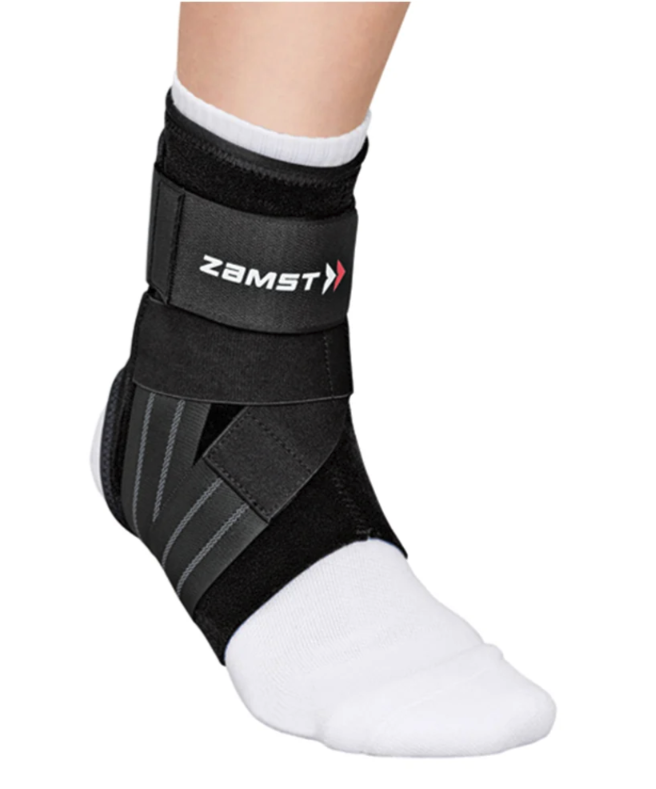
Zamst ankle braces are trusted by professional athletes across a wide array of high-impact sports like tennis, pickleball, and volleyball.
Full support without limiting range of motion. Guaranteed.
Disclaimer: This article is for educational purposes only and is not medical advice. Consult a qualified healthcare professional regarding any injury.

Love Pickleball? Join 100k+ readers for free weekly tips, news & gear deals.
Subscribe to The Dink