
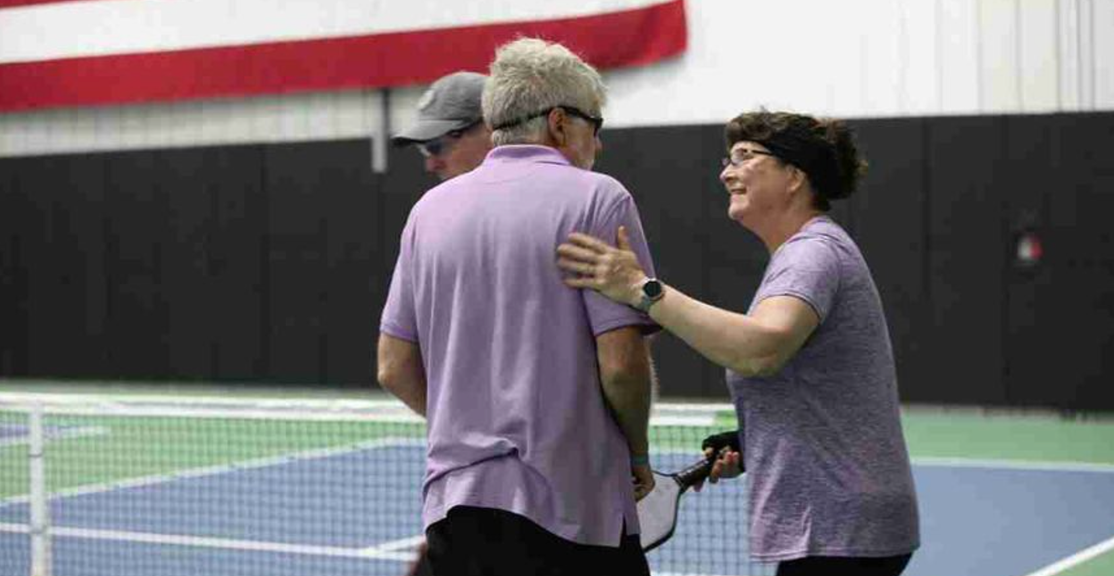
Pickleball Tips for Seniors Who Want to Play Smarter and Move Less
The most useful pickleball tips for seniors have nothing to do with getting faster. Injury data points somewhere else entirely: to court position, shot selection, and knowing when to let a ball go.
Most pickleball tips for seniors are written like the goal is to move faster to keep pace with everyone else on the court. It isn't.
Adults 50 and older accounted for 83.4% of pickleball-related emergency room visits between 2018 and 2025, and the mechanism behind most of them wasn't a lack of speed.
It was movement that didn't need to happen. The players still winning at 65 and 70 aren't outrunning anybody. They've just stopped playing the percentages badly.
Love pickleball? Then you'll love our free newsletter. We send the latest news, tips, and highlights for free each week.
Why Do Pickleball Tips for Seniors Have to Start With Falls?
Because falls are the single biggest category, and it isn't close.
Falls, slips, and trips accounted for 43.1% of all pickleball ER visits in that same period, with fractures the most common diagnosis at 23.9%.
Here's the thing about a fall on a pickleball court. It almost never happens on a shot you meant to hit.
It happens on the scramble, the backpedal, the lunge for a ball that was already gone. Which means the intervention isn't athletic.
It's tactical, and it lives in where you stand before the ball arrives.
ER visits climbed from an estimated 8,304 in 2018 to 31,463 in 2025.
Participation grew hard over that stretch too, so that number reflects both more players and more injuries.
The data can't separate them. Still, it explains why useful pickleball tips for seniors now read more like risk management than technique coaching.
The Falls Math Nobody Really Wants to Look At
The 55-and-over numbers are the ones worth sitting with.
A 10-year analysis of ER data collected between 2014 and 2023 found pickleball injuries in that age group rose 925%, with incidence climbing from 0.920 to 8.52 per 100,000. Pickleball passed golf.
In that same 55+ group, fractures made up 53.6% of injuries, outpacing sprains and strains at 41.5%.
That flips the usual assumption held by most players, including the ones already working on a sharper return of serve. Most players picture a rolled ankle.
The data points at something that takes longer to come back from, which is why knee and lower-body conditioning keeps coming up in senior-focused programming.
Do Pickleball Tips for Seniors Need to Change for Women?
The research suggests they might.
In that same analysis, female patients had 2.7 times higher odds of fracture than male patients, and fracture odds climbed with age.
Players 85 and up had 2.6 times the odds of players aged 55 to 59.
The researchers link this to osteoporosis and sarcopenia prevalence rather than anything about how women play.
It's a reason to treat fall avoidance as the priority rather than a footnote, and it's a genuine gap in most senior pickleball fitness advice.
 The Dink Media Team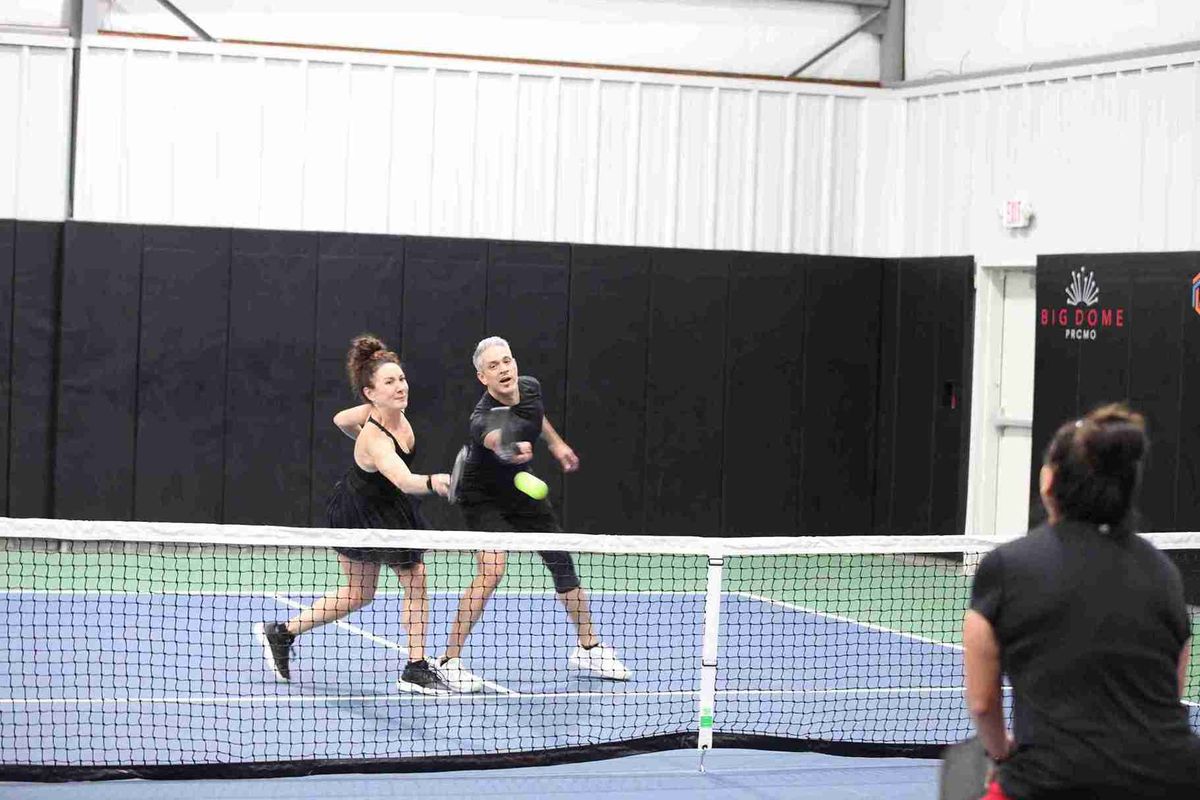
The Pickleball Tips for Seniors That Cut Movement, Not Ambition
The pickleball tips for seniors below share one trait: every one of them deletes a step you didn't need to take in the first place.
- Return deep and get to the line. A short return forces you to defend from no man's land, and that's where the frantic movement lives. Return placement buys you the walk-up instead of the sprint.
- Drop instead of drive. A drive that comes back at your feet costs you two reactive steps. A third shot drop costs you a slow walk forward.
- Reset rather than counter. Taking pace off the ball resets the point at a speed you choose. Learning to reset is the highest-leverage skill on this list.
- Let the out ball go. Chasing balls that were leaving anyway is unpaid labor.
- Cover the middle by agreement. Most mid-court chaos is two players moving for one ball, so sort it with your partner first.
Overuse was the most common injury mechanism in one health system's records, at 44% of cases. Fewer unnecessary steps is also fewer repetitions.
What Does "Unattackable" Actually Mean?
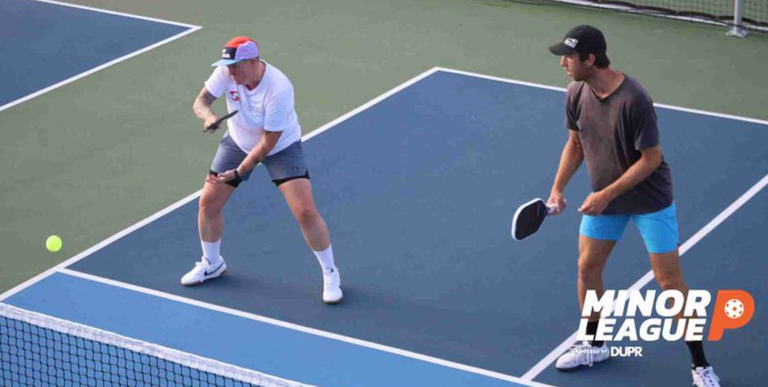
Unattackable position describes standing close enough to the kitchen line, with your paddle up and out front, that your opponent has no downward angle to hit through you.
No high ball to attack, no gap to speed up into. It's a static concept, which is exactly why it suits players who'd rather not cover ground.
Get unattackable and the point comes to you at a manageable pace.
Kitchen line positioning does more for a 70-year-old's results than any amount of added footspeed, and it pairs well with the T and sideline structure in doubles.
Should You Take That Overhead or Let It Bounce?
Let it bounce, most of the time.
Backpedaling for an overhead is the most fall-prone movement in recreational pickleball, and the shot you hit off it is rarely a winner anyway.
Turn, shuffle sideways, take the ball after the bounce. You give up a little offense and remove the exact motion that puts people on the ground.
This is also why a simple 3-part scoring strategy for senior players tends to beat highlight-reel shot selection.
 The Dink Media Team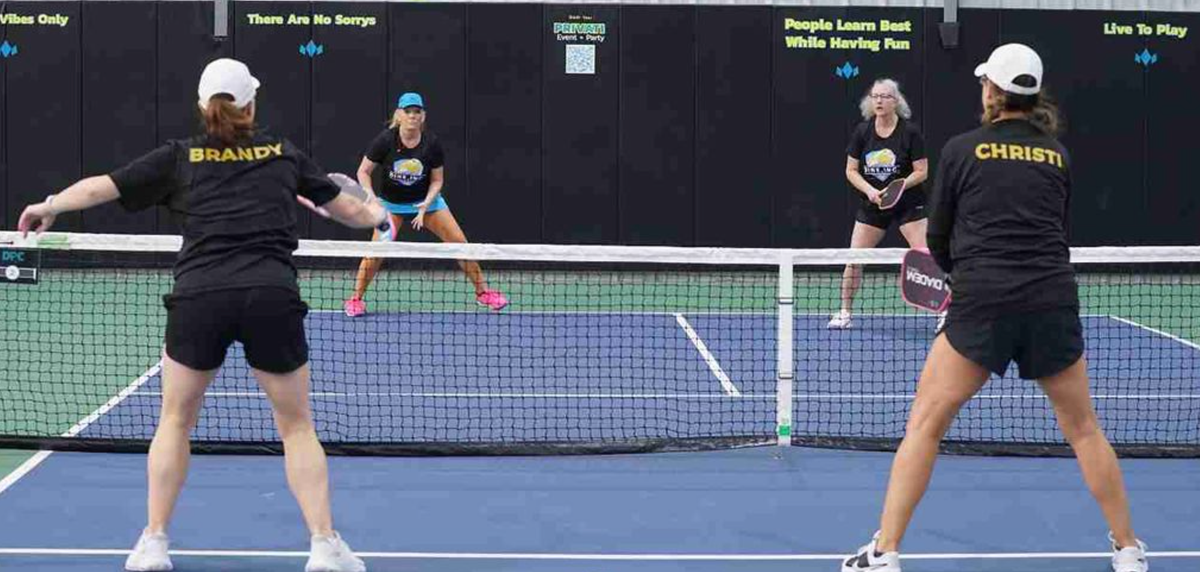
Can Training Actually Lower Your Fall Risk?
Early research suggests it may help, though the evidence is still thin.
Over half of older players report falling during play, and one study found 42% had a pickleball-related fall, with 30% falling more than once.
In that same cohort study, a 10-week program combining strength, balance, and change-of-direction work significantly reduced fear of falling and improved change-of-direction speed.
At five months, 25% of the training group reported a fall versus 44% of controls.
That difference wasn't statistically significant and the study wasn't randomized, so treat it as a promising signal, not proof.
Dynamic movement before play is the low-cost version of the same idea, and a proper warm-up routine takes about five minutes.
Separately, an 8-week supervised program in women aged 60 to 75 improved balance scores by 28.5% along with stride length and cadence.
Small sample, but the direction is consistent. Solo drills and structured practice are the accessible version of this.
Two load habits show up in the same research: keeping sessions under two hours and avoiding back-to-back play days.
Both come from retrospective data rather than trials, which is why they belong in pickleball tips for seniors as guidelines rather than rules.
 The Dink Media Team
How Much Do Shoes and Hydration Actually Matter?
More than most players assume.
In one insurance claims review of players 55 and up, roughly half of injuries involved the foot or ankle, with about a third tied to inadequate footwear.
That same analysis put the risk reduction from proper court shoes near 38%, though its methodology isn't published.
Court-specific shoes are still the cheapest change on this list.
On fluids, the American College of Sports Medicine suggests 5 to 7 mL per kilogram of body weight about four hours before exercise, with the National Athletic Trainers' Association recommending 16 to 24 ounces per pound lost.
General guidance, not pickleball-specific.
 Alex E. Weaver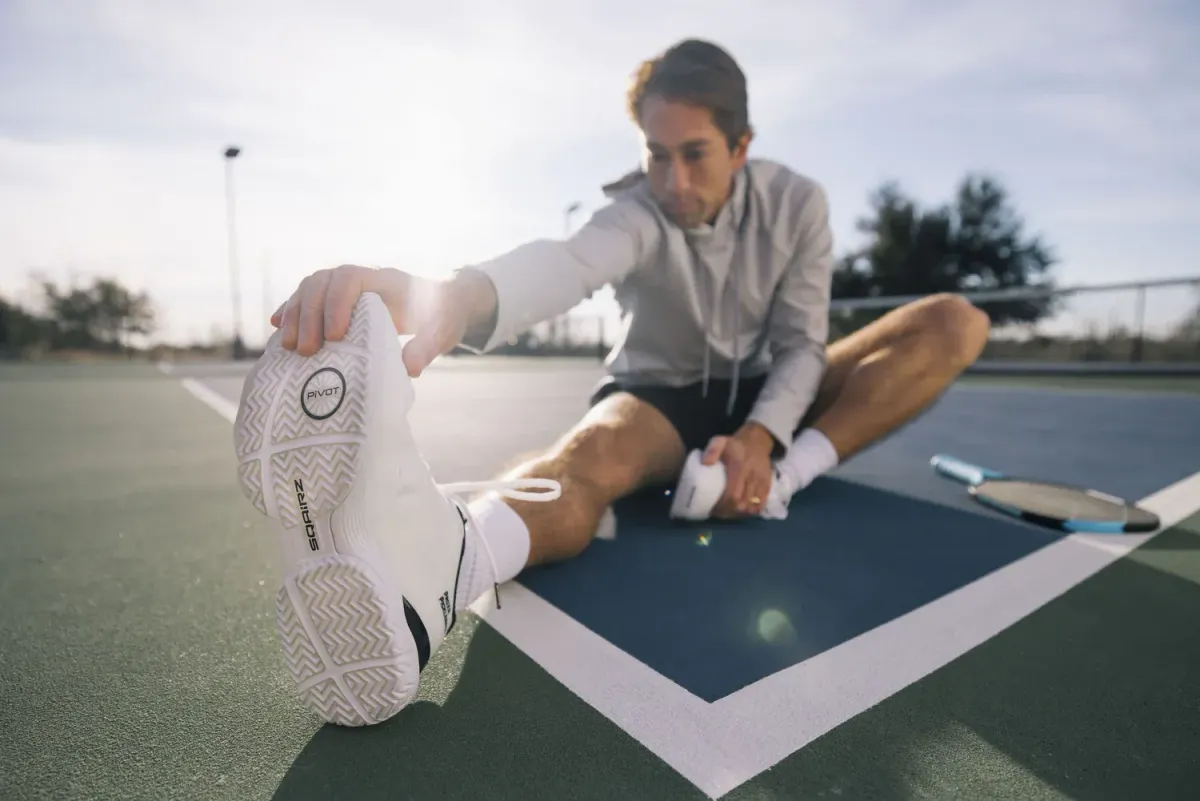
The Part the Injury Stats Leave Out
None of this argues against playing.
A national survey of adults over 50 found current players reported lower loneliness than people who'd never played, and were more than three times as likely to have made social connections through activity.
Doubles is doing most of that work, which is worth thinking about differently.
A separate analysis found playing three or more times weekly was associated with higher mental wellbeing, strongest in ages 63 to 77.
Both are observational, so association rather than cause.
But that second study found one thing worth noting: players with a recent injury reported substantially lower wellbeing.
Staying on the court is the whole point, and programs like AARP's clinic tour exist because of it.
 The Dink Media Team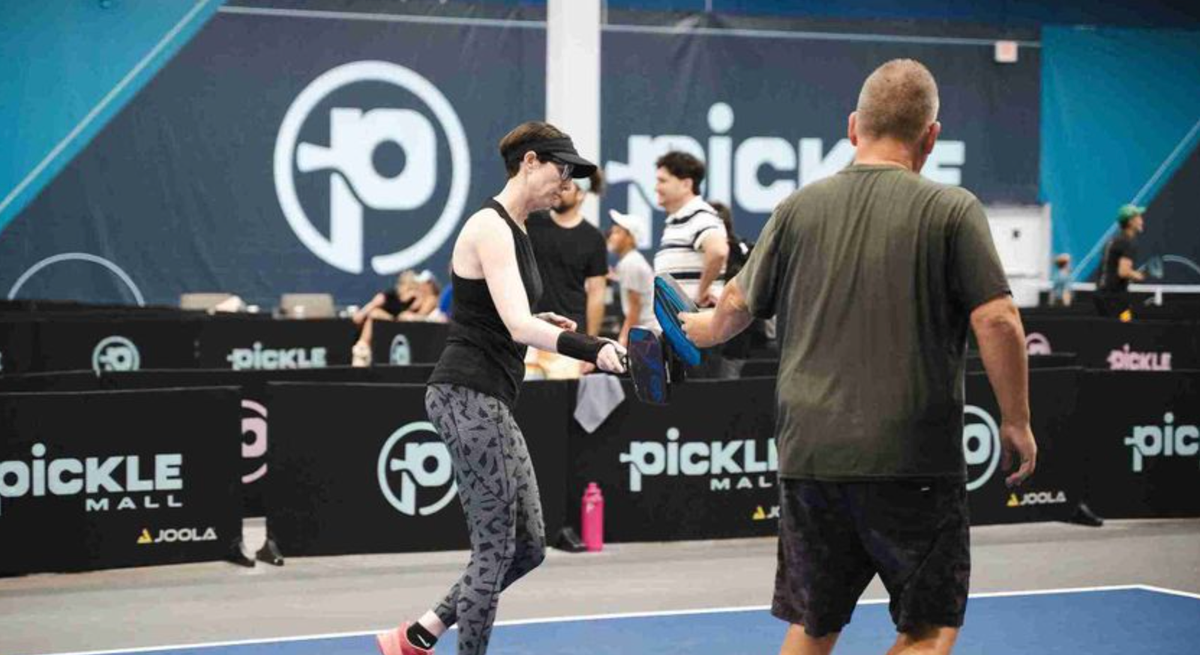
Key Takeaways
- Falls drive 43.1% of pickleball ER visits, and fractures dominate in the 55+ group at 53.6%.
- Women showed 2.7 times higher odds of fracture, which makes fall avoidance the priority.
- Deep returns, drops over drives, and resets remove steps rather than adding speed.
- Letting overheads bounce eliminates the most fall-prone movement in rec play.
- Balance and change-of-direction training may help, though the evidence is early.
- The best pickleball tips for seniors buy time and position rather than adding speed.
Frequently Asked Questions
What are the most useful pickleball tips for seniors starting out?
Position before speed. Get to the kitchen line, keep your paddle up and in front, and return deep so you have time to walk forward instead of sprint. Most points at the rec level are lost on unforced errors, not won on power.
Is pickleball safe for seniors?
The movement pattern is gentler than tennis or running, but the injury data is real. Adults 50 and up account for 83.4% of pickleball ER visits, and fractures are the most common diagnosis in the 55+ group. Manageable, not risk-free.
Why is pickleball good for seniors socially?
Survey research has associated regular play with lower reported loneliness and more social connections among adults over 50. It's an observational finding rather than proof of cause, but the pattern is consistent across studies.
How long should a senior play pickleball in one session?
Some researchers suggest keeping sessions under two hours and avoiding consecutive days, based on retrospective injury data. Individual tolerance varies with fitness and recovery, and this comes from observational evidence rather than trials.
Do pickleball exercises for seniors actually reduce falls?
Possibly. A 10-week strength, balance, and agility program reduced fear of falling and showed fewer falls at follow-up, but the difference wasn't statistically significant. A separate 8-week program improved balance scores by 28.5% in women aged 60 to 75.

Love Pickleball? Join 100k+ readers for free weekly tips, news & gear deals.
Subscribe to The Dink