
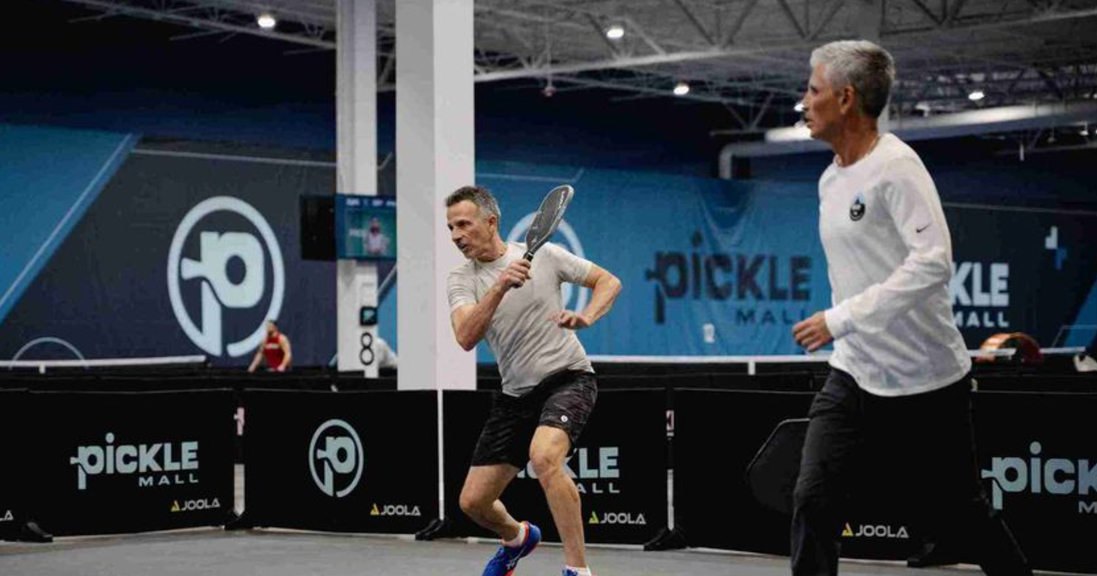
A pickleball pre-point routine is a short, repeatable sequence you run before every rally to reset your attention. This guide breaks down a four-beat version you can build today and keep running when the score gets tight.
A pickleball pre-point routine is the cheapest upgrade available to your game, and almost nobody bothers to build one.
Watch any 3.5 or 4.0 rec match between rallies. Players are still relitigating the last point, fiddling with a hat, arguing about a call that already happened.
Then the serve comes and they're a half second late. A pickleball pre-point routine fixes that, and it costs you four seconds of attention.
Pros treat those four seconds like equipment, which is part of why 7 habits of pro players reads less like talent and more like process.
Love pickleball? Then you'll love our free newsletter. We send the latest news, tips, and highlights for free each week.
What Is a Pickleball Pre-Point Routine, Anyway?
A pickleball pre-point routine is a short, repeatable sequence of actions and thoughts you run before every rally, always in the same order.
That's the whole definition, and it belongs in the same bucket as the small tips that change your game.
It isn't superstition and it isn't a lucky charm.
Sport psychology calls this a pre-performance routine, and researchers define it as task-relevant thoughts and actions performed systematically before executing a skill.
Our own tips for mental clarity before a match describe the pregame version of the same idea.
Task-relevant is the phrase doing the work. Bouncing the ball twice because you saw a pro do it is a tic.
Bouncing it twice because it resets your breathing and sets your grip is a routine.
That distinction shows up everywhere in consistent pickleball, where the boring stuff quietly separates players.
Plenty of players already run something like this without naming it.
Our breakdown of on-court rituals shows how common the habits are at the rec level. Most of them just aren't doing a job.
Why Does a Pickleball Pre-Point Routine Actually Help?
A pickleball pre-point routine helps because it gives your attention something to do during the one stretch of a match when your brain is otherwise unemployed.
A 2024 meta-analysis of pre-performance routines across sports found a small but significant improvement in before-and-after studies, plus moderate-to-large effects in experimental conditions, including under pressure.
Prepared attention is also what makes anticipating every shot possible in the first place.
A position statement on performing under pressure read the evidence the same way.
Here's the honest caveat. That research is cross-sport, not pickleball-specific, and no study has shown one particular sequence beats another on a pickleball court.
The evidence supports the concept, so build the structure and choose the contents yourself, the same way you'd pick which pressure points to attack in a match.
Think of it this way. Between rallies you're either ruminating, drifting, or preparing.
Two of those three cost you points, which is the same argument our piece on mental and physical walls makes from the other direction.
The rundown of stubborn habits sabotaging rec players lands in the same place.
Build Your Pickleball Pre-Point Routine in Four Beats
The best routine is short enough that you'll actually run it at 9-9. Four beats, roughly four seconds, same order every time.
Here's the version I'd hand to any player stuck between 3.5 and 4.5.
- Clear the last point. One physical gesture. Wipe the paddle face, tug the strap, turn your back to the net for a beat.
- Breathe out once, on purpose. Longer exhale than inhale.
- Say your one cue. A single word or short phrase about what you're doing next.
- Set your feet. Get into position and stance before the server is ready, not as the ball is tossed.
 The Dink Media Team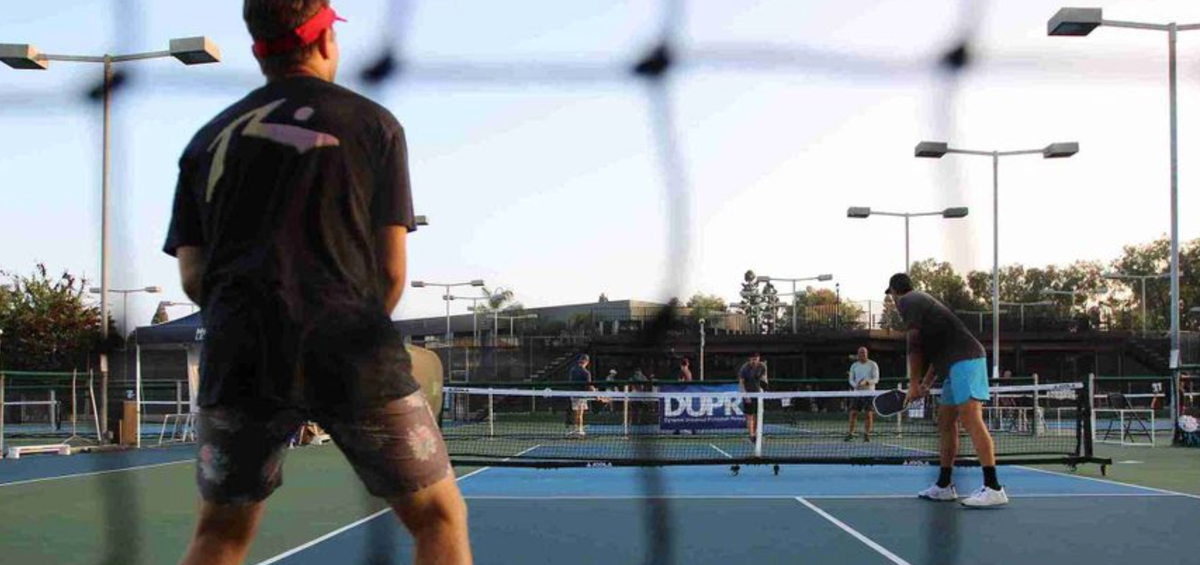
Beat One: Why Clearing the Last Point Comes First
Clear the point physically before you try to clear it mentally, because the body is easier to boss around than the mood.
Turning away from the net for one second is a hard stop.
It tells your brain the previous rally is filed, which is how the player who always makes the routine shots stays boring in the best way.
This is where most players leak. They carry a missed third shot drop into the next three rallies and call it focus. It isn't.
Our guide to resetting your game covers the long-form version of this, and a different kind of reset is worth a read too.
Beat Two: The Breath Does More Than You Think
One deliberate exhale gives your routine a metronome.
It's the only beat with a fixed length, which is why it keeps the other three from speeding up when the score gets tight.
Don't overbuild it. You're not meditating, you're exhaling once. Players who turn this into six breaths end up rushed by the serve and rattled anyway.
If breathing work interests you, our warm-up guide for body and mind is the right place for it, along with these five-minute competition warmups.
Beat Three: Pick One Cue and Keep It Boring
Your cue word should name one action, not one outcome. "Deep return" works. "Don't miss" doesn't, because your brain can't execute a negative.
Rotate the cue by situation, not by mood.
Returning serve? Try "deep and in," which pairs nicely with our notes on an effective return of serve. Dinking? "Soft hands" or "let it drop."
The elite dinkers breakdown is full of usable ones, and what 6.0 players think during every dink shows how simple the good cues really are.
Beat Four: Set Your Feet Before the Server Does
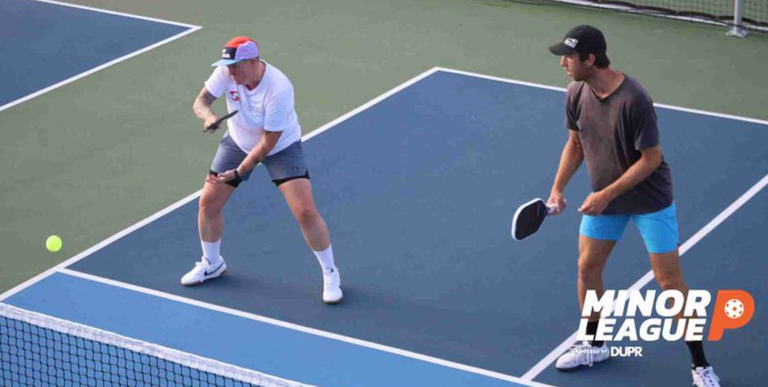
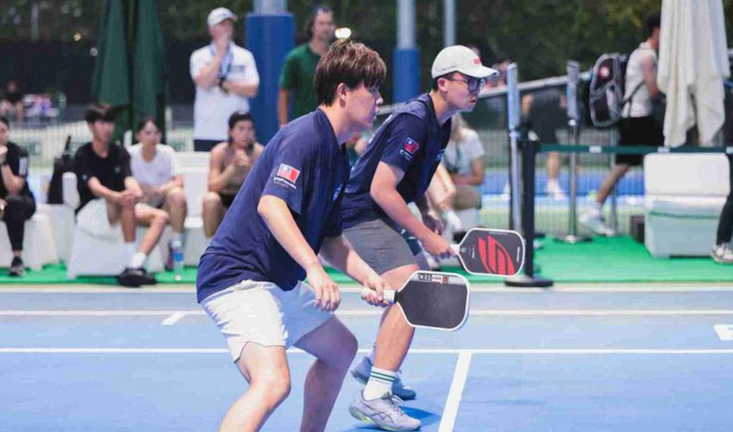
Be in your ready position a full beat before the serve, every single time.
Late setup is the most common focus leak in rec pickleball, and it's invisible on video unless you're looking for it.
Split step, paddle up, weight forward.
Our piece on how your ready position is costing you points breaks down exactly what that looks like, and the footwork technique guide covers the movement underneath it.
 The Dink Media Team
How Do You Keep the Routine From Falling Apart at 9-9?
You protect it by making it shorter under pressure, not longer.
When the score tightens, most players either abandon the sequence entirely or inflate it into a stalling ritual. Both are failures of the same kind.
Run the same four beats at 9-9 that you ran at 2-0. That consistency is the entire point.
Players who stay calm under pressure aren't feeling less pressure, they're just running the same process.
You can see it in this pro breakdown of patience and grit.
When Should Your Pickleball Pre-Point Routine Change?
Change the cue, never the structure. The clearing gesture, the exhale, and the feet stay identical from your first rec game to your last tournament match.
Only beat three adapts, because the tactical job changes depending on whether you're serving, returning, or grinding at the kitchen.
Partner dynamics matter here too. If your routine includes a quick word with your partner, keep it to three seconds and make it about the next point.
Our list of questions to ask your partner is a good source for those, and the tournament strategies for 3.5 players piece covers when to talk and when to shut up.
What Breaks a Pickleball Pre-Point Routine Fastest?
Emotion after an unforced error breaks it faster than anything else. One bad shot, one visible reaction, and the sequence gets skipped for the next two rallies.
The fix is to run the routine most deliberately right after your worst mistakes, which is exactly when you'll want to skip it.
Our take on unforced error improvement applies directly, as does the argument for subtracting your two worst habits instead of adding new skills.
 The Dink Media Team
Key Takeaways
- A pickleball pre-point routine is a short, repeatable sequence of task-relevant actions run before every rally, in the same order.
- Research across sports supports pre-performance routines generally, though no study has shown one specific pickleball sequence is best.
- Four beats work: clear the last point, exhale once, say one cue, set your feet.
- Cue words should name an action, not an outcome. "Deep return," not "don't miss."
- Keep the routine identical under pressure. Shrink it if you must, never inflate it.
Frequently Asked Questions
How long should a pickleball pre-point routine take?
Four to six seconds is the sweet spot. That's long enough to clear the last rally and set your feet, short enough that nobody is waiting on you. If yours runs past ten seconds, you've built a ritual instead of a routine.
Is a pre-point routine the same as a pre-serve routine?
No. A pre-serve routine is what you do with the ball in your hand, and it's one version of the broader idea. A pre-point routine covers every rally, whether you're serving, returning, or waiting at the kitchen line. The serving version runs longest because you control the timing.
Do beginners need a pre-point routine?
Yes, arguably more than advanced players do. New players leak the most attention between rallies and have the least automatic technique to fall back on. Start with two beats, the clearing gesture and the feet, then add the breath and cue later.
Will a pre-point routine actually lower my error count?
Research across sports links structured routines to improved performance, but no pickleball study has confirmed a specific error reduction. What it does reliably is put your attention on the next ball instead of the last one, which is where most avoidable errors start. Treat it as a focus tool, not a guarantee.
What should I do if my opponent rushes their serve?
Signal before you start your routine, not mid-sequence. Raising your non-paddle hand is the standard way to show you aren't ready yet. Just don't lean on it as a stalling tactic, because that reads as gamesmanship fast.
Love Pickleball? Join 100k+ readers for free weekly tips, news & gear deals.
Subscribe to The Dink