2 Pickleball Drilling Fixes That Finally Transfer to Match Play
Hitting the same ball a thousand times feels productive, but it rarely shows up when the game speeds up. Here are the two pickleball drilling changes that turn practice reps into real match improvement.
Most pickleball drilling feels productive and changes almost nothing.
You stand in one spot, your partner feeds the same ball, you make a hundred in a row, and then you lose to that ball in a real game anyway.
That gap between the practice rep and the match rep is the whole problem.
Hitting a shot cleanly when you know exactly where it is going is not the same skill as hitting it when you do not.
There are two changes that close the gap, and they come from a coach who says he has drilled for thousands of hours and only figured this out in the last two years.
Get these right and you stop wasting practice time.
Love pickleball? Then you'll love our free newsletter. We send the latest news, tips, and highlights for free each week.
Why Stagnant Pickleball Drills Stop Working
Stagnant drilling is when you stand in one place and hit the same shot to the same spot over and over. It has a real purpose, but a short shelf life.
It is the right tool when you are learning a brand new shot.
As the coach in the video puts it, if you have never hit a two-handed backhand, "yes, hit a million of these." Repetition builds the swing.
The trouble starts when you already own the shot.
Standing there feeding your reset for the thousandth time is comfortable, and comfort is exactly why it stops paying off. You already know how to make that ball.
If your sessions still look like this every time, you are leaving improvement on the table.
The same trap shows up in these practice mistakes that quietly ruin your game. The fix is not more reps. It is harder reps.
Fix #1: Build Progression Into Your Pickleball Drills
The first fix is progression: start a shot stationary, then add difficulty one layer at a time until the drill looks like a point.
The coach walks through it using resets from the midcourt, the same shot he and his partner Zach work on every day.
Here is the progression, step by step.
- Stationary. Feet planted, partner rips speed-ups at you, you work forehand and backhand resets. This is the base layer.
- Change your position. Hit some from up in the midcourt, then move back and hit some from deeper, where you are short-hopping balls off your ankles. Same shot, different read.
- Roaming. Put it together and move up and back while you reset, keeping your feet active because in a real game the ball is almost always hit while you are moving.
- Force the shot with attack pressure. Your partner now feeds you into the same shot but is allowed to attack a weak ball, which tells you instantly whether your reset was actually good.
- Focused live play. Play out live points, but ask your partner to send most balls to the shot you are training. Not 95 percent, not a tidy 50/50, just enough to keep you honest while you get real reps on the target shot.
The footwork layer is the part most players skip, and it is the one that matters most.
Standing still is the least game-like thing you can do, so the moment the ball makes you move, the pickleball drill gets honest.
 Alex E. Weaver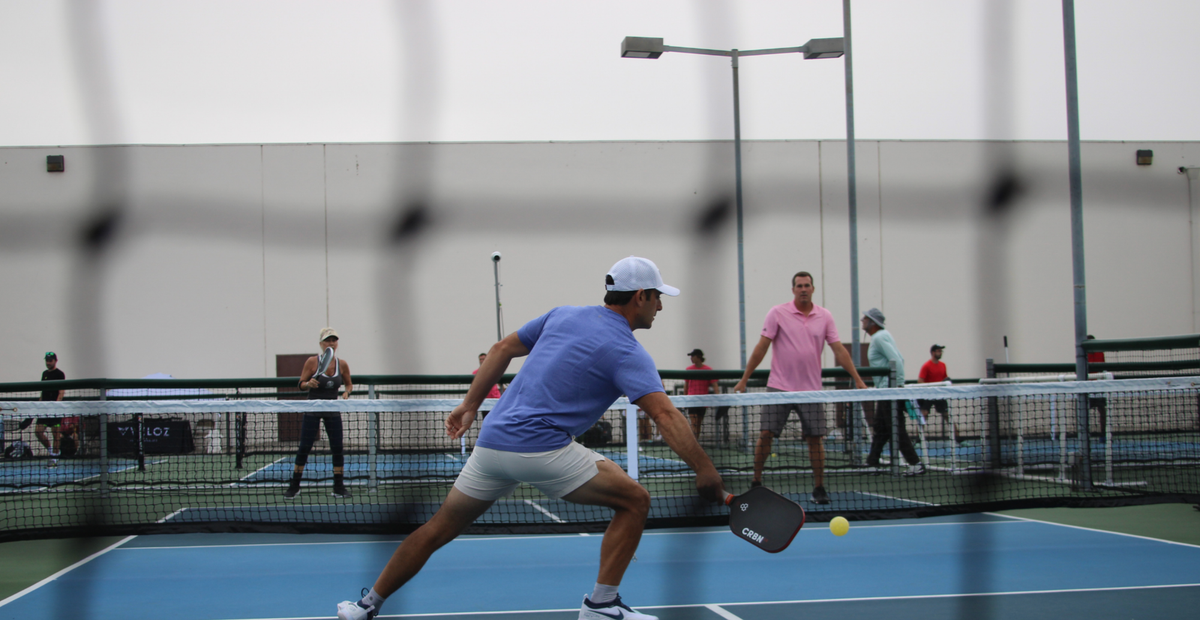
This works for any shot.
The coach demonstrates the same ladder on a forehand middle dink, starting with a basic feed and ending with focused live points where his partner targets the middle.
You can run it at the kitchen line just as easily as the midcourt.
If you want a repeatable structure for this, our framework for your next drill session lays out how to sequence it, and our practice routine for a few hours a week shows how to fit progression into limited court time.
What Does Live-Ball Pickleball Training Actually Mean?
Live-ball drilling means every rep starts from a realistic, moving ball instead of a friendly hand feed, so your shot is built on a game-like read from the first contact.
This is the second fix, and it is where recognition gets trained.
Go back to the reset.
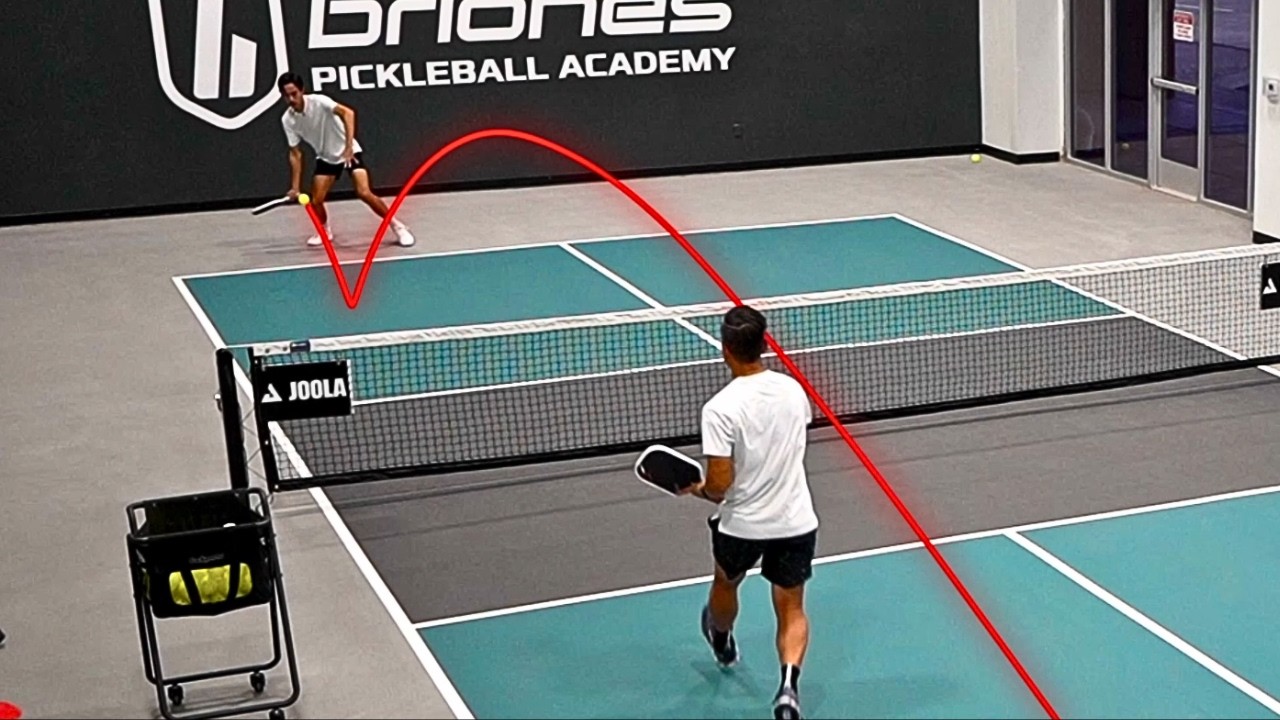
Instead of your partner feeding a clean ball, you hit a deliberately bad ball, float it up, and now you have to work your way in off a dead ball you created.
Suddenly the drill includes the ugliest part of a real point.
What changes is your ball recognition and anticipation.
You start reading your partner's paddle and feet the instant you give up an attackable ball, which is exactly the read you need mid-point.
 The Dink Media Team
How Do You Know Whether to Take a Ball Out of the Air?
You learn it by drilling it live, because the decision depends on the ball, not on a rule you memorized.
A lower ball lets you close and take it out of the air. A higher one tells you to wait and let it drop.
There is a sharper version of this read.
When you hang back instead of closing, anything your opponent hits at your waist is sailing out, so you get to take away half your body and just short-hop the reset.
That is recognition you cannot get from a static feed, and it pairs well with knowing your recovery position after an attack.
Short hops show up everywhere in defense.
According to CBS Sports' breakdown of defensive pickleball technique: soft hands, weight back, take the ball right off the ground with no backswing.
How Do You Turn a Stale Pickleball Drill Into a Live One?
You add a live feed and a real consequence. The coach's favorite example is the third shot.
For a long time he and Zach just hit thirds off a hand feed, which is good pickleball practice but nothing like a match.
In a game you never get that clean feed. So they changed it: the partner simulates a return by dropping a ball and feeding it in live, then they play the point out.
Now you are hitting a third shot drop off a real ball and following it forward to create offense, just like you would after a serve.
They take it further by moving the feed around: some from the middle, some from the line, some from wide, because the return never comes from the same place twice.
That single change is the difference between a drill that looks like practice and one that looks like a point through the transition zone.
 The Dink Media Team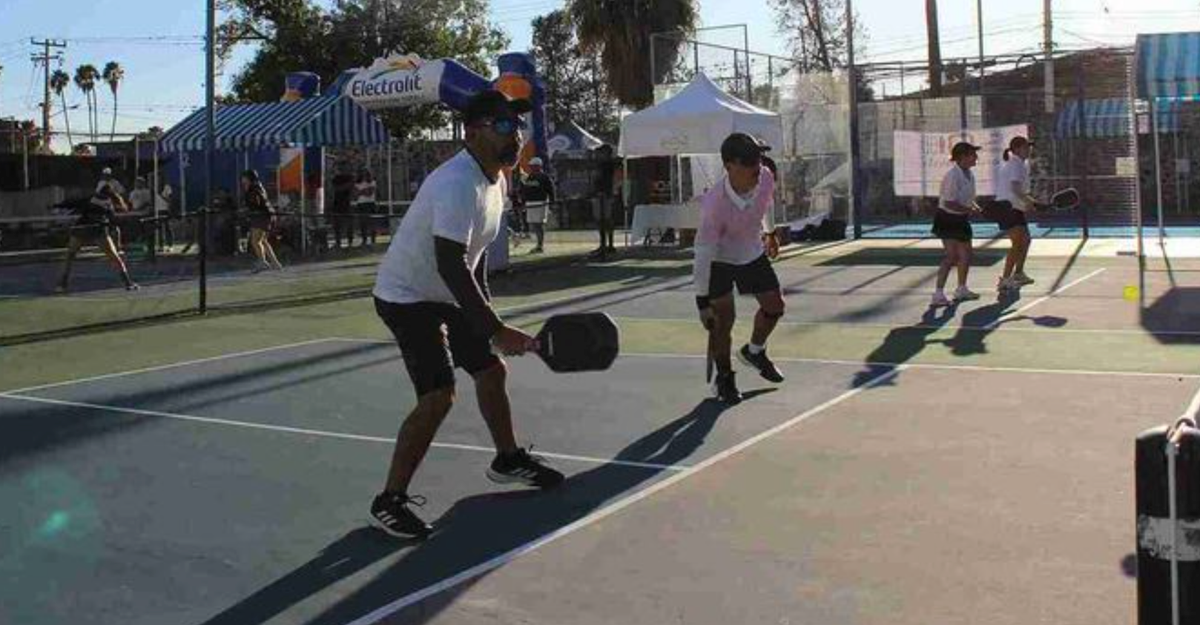
How to Make Any Pickleball Drill More Game-Like
The test for every drill is one question: how close to a live point can you make this?
The closer you get, the faster you improve. Run any rep through this checklist.
- Add movement. If your feet are planted, the drill is too easy. Make yourself move to the ball.
- Start from a live feed. Replace the clean hand feed with a dropped, fed, or floated ball so the rep begins with a real read.
- Add a consequence. Let your partner attack a weak ball so you get instant feedback on shot quality.
- Vary the source. Move the feed around the court so you never groove one exact ball.
- Follow the shot. Move forward after your third the way you would in a point instead of admiring it from the baseline.
This is also how the best players train. Our look at the shots every player must master for 2026 shows the same priority: reps that mirror real points, not reps that feel good.
It applies to fast hands too.
If reaction time is your weak spot, NBC Sports covers the rise of speed-focused training in competitive pickleball, showing how top players layer in pattern drills once the base read is solid.
You can apply the same method in your own pickleball practice: start with wall drills solo, then make them live by adding speed-up drills with a partner.
Progression teaches the shot. Live-ball drilling teaches you to use it.
Stack both into your pickleball drills and practice finally starts showing up on the scoreboard.
Frequently Asked Questions
How Long Should I Spend on Stationary Pickleball Drills Before Progressing?
Stay stationary only until you can make the shot consistently and the swing feels automatic. For a brand new shot that can take many sessions. For a shot you already own, a few minutes as a warm-up is plenty before you add movement and live feeds.
Can I Do Live-Ball Pickleball Training With Only Two Players?
Yes. Almost every example here uses two players. One person feeds a live, moving ball and looks to pressure the shot while the other works the target rep. You do not need a full four to make a pickleball drill game-like.
What Is the Difference Between Pickleball Drills and Just Playing Games?
Playing improves your game slowly because reps on any one shot are random and rare. Drilling lets you get focused, repeated reps on a specific shot. Live-ball drilling keeps that focus while making each rep look like a real point, which is why it transfers faster than open play.
Why Do My Practice Shots Fall Apart in Real Matches?
Usually because you only practiced them stationary off a clean feed. In a match the ball is moving, the read is unfamiliar, and an opponent is pressuring you. Train the shot off live, varied feeds with movement and your match performance catches up to your pickleball practice.
Is Stationary Drilling Ever Worth It?
Absolutely. It is the best way to build a brand new stroke and to groove mechanics when something feels off. The mistake is living there. Once you can make the ball, progress the drill toward live play.
Love Pickleball? Join 100k+ readers for free weekly tips, news & gear deals.
Subscribe to The Dink