When to Cross the Center Line and Cover Your Partner in Pickleball
If you've been treating the line in pickleball like it's a force field you can't cross, you're not alone.
Most intermediate players operate under the same misconception, and it's quietly sabotaging their doubles game.
Here are two scenarios when you should cross over the center line and cover your partner's court.
Love pickleball? Then you'll love our free newsletter. We send the latest news, tips, and highlights for free each week.
Here's the Real Problem With How You're Playing the Center Line
The biggest mistake 3.5 to 4.0 players make is treating the center line in pickleball as a boundary they shouldn't cross. They've internalized the idea that the court is split 50/50, with each player owning their half. This is the furthest thing from the truth.
In reality, the center line pickleball positioning is far more fluid than most players realize. Your job isn't to stay on your side of the court; your job is to cover the court intelligently with your partner. That means crossing the center line whenever your partner needs help.
Think of it this way: the court isn't divided by a force field. It's divided by responsibility. When your partner is in trouble, you move. When you're in trouble, they move. The center line is just a line on the court, not a rule about where your feet can go.
Why Do Players Get Hung Up on This?
The confusion likely stems from the way pickleball is taught to beginners. Early instruction emphasizes staying in your lane, covering your side, and maintaining court position. That's not wrong for absolute beginners, but it becomes a liability once you reach the intermediate level.
At 3.5 and 4.0 levels, your opponents are hitting harder, placing shots more precisely, and exploiting gaps in your coverage. If you're rigidly staying on your side of the court, you're leaving your partner exposed. You're also missing opportunities to take balls that are easier for you to handle than for them.
APP pro and coach Tanner Tomassi breaks this down in his recent video: "The center line is not a force field. They think that the court is split 50/50 and they can't cross it. This is the furthest thing from the truth."
The mental shift is simple but powerful. Stop thinking about your half of the court. Start thinking about your partnership and where the ball is going.
 The Dink Media Team
Scenario One: Covering the Middle on Speedups
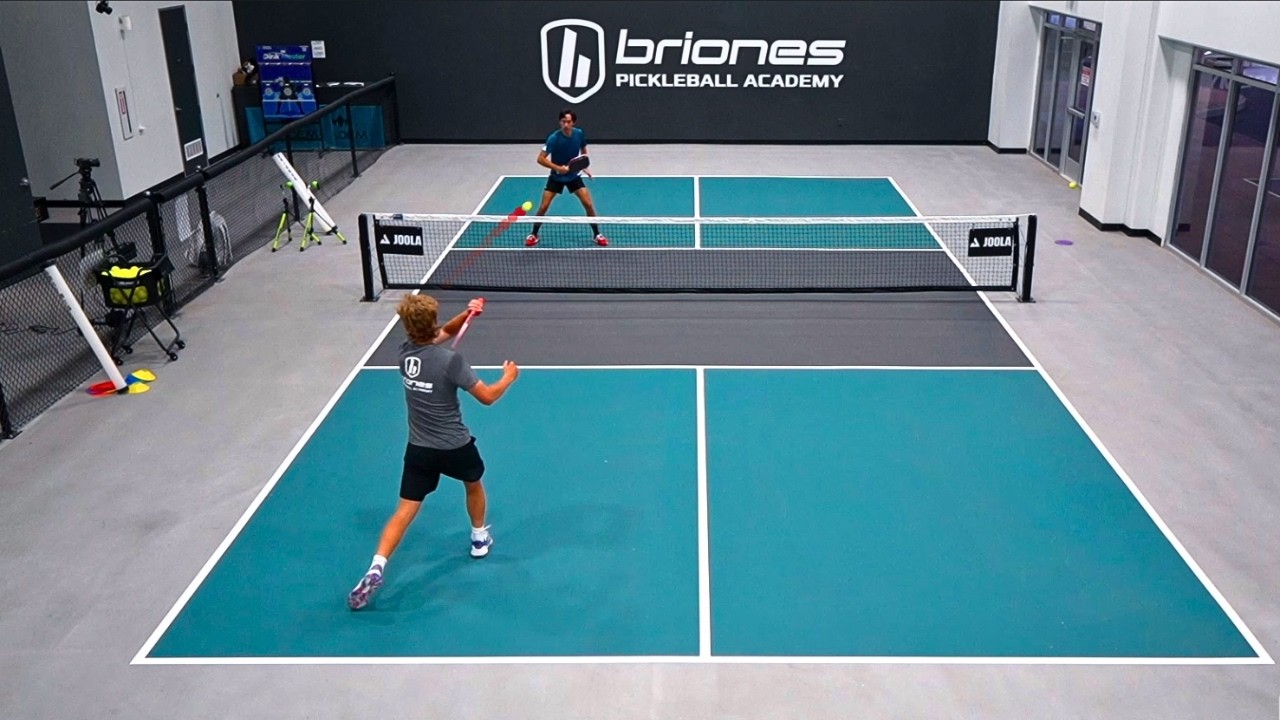
The first situation where you absolutely need to cross the center line is when your opponent hits a speedup down the middle. A speedup is a fast, low ball hit from the baseline or mid-court, designed to catch you off guard and force a weak return.
When a speedup comes down the middle, the wider the ball travels from your partner's position, the more you need to move across the center line to protect them.
Here's why: if your partner has to reach far to their side to handle the ball, they're in a compromised position. They can't hit it hard, and they can't hit it with precision.
By crossing the center line and taking the ball yourself, you're doing two things. First, you're hitting from a stronger position. Second, you're keeping your partner in a ready position at the net, where they can react to whatever comes back.
This is especially critical at higher levels of play. Your 4.0 opponents know that speedups down the middle create chaos. They're counting on you to stay in your lane and let your partner scramble. Don't give them that satisfaction.
The Dink Media Team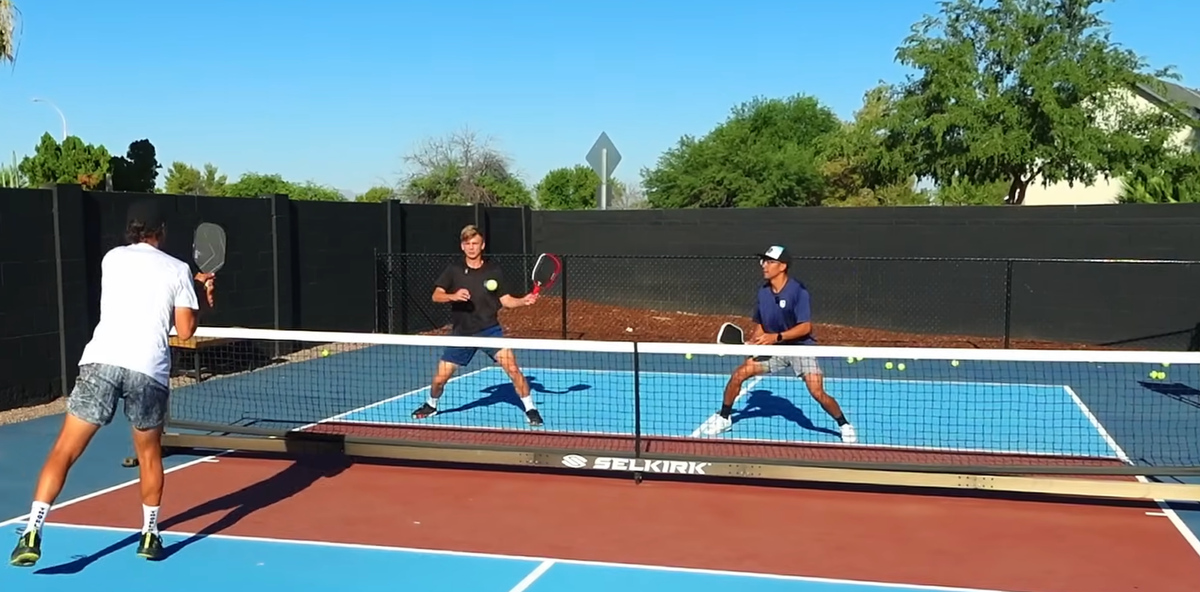
Scenario Two: Protecting Your Partner on Weak Returns
The second scenario is even more straightforward: your partner hits a weak return of serve. You see it immediately. The ball is going back over the net, but it's not a good ball. It's sitting up. It's slow. It's begging to be attacked.
This is the moment to cross the center line and take charge. Move over, handle the first ball after the return, and protect your partner. You're not just hitting the ball back; you're taking the initiative and setting up a better position for your team.
When your partner sees you moving to cover, they can relax slightly. They know you've got their back. This confidence translates into better positioning, better court awareness, and ultimately, better results.
The key phrase here is "then come back to your side." You're not abandoning your position permanently. You're making a tactical move to handle a specific situation, then resetting to your normal court position.
The Dink Media Team
The Bigger Picture: Court Awareness and Partnership
Understanding center line pickleball strategy is really about understanding doubles as a partnership. Pickleball is a team sport, even when you're playing with just one partner. Your success depends on how well you communicate, anticipate, and support each other.
When you're willing to cross the center line, you're signaling to your partner that you're engaged. You're reading the court. You're making decisions based on what's happening in the moment, not on rigid rules about which half of the court belongs to whom.
This kind of dynamic play is what separates 3.5 players from 4.0 and 4.5 players. Higher-level players move constantly. They're always adjusting their position based on where the ball is, where their partner is, and where their opponents are. The center line becomes irrelevant.
The Dink Media Team
How to Practice This Mindset
Start by watching your own matches or practice sessions. How often are you staying rigidly on your side of the court? How often are you crossing the center line to help your partner? If the answer is "rarely," you've found your weakness.
In your next practice session, make it a point to cross the center line at least once per rally. Don't force it; just be aware of the opportunity. When your partner is in trouble, move. When you see a ball that's easier for you to handle, take it.
Talk to your partner about this too. Let them know you're going to be more aggressive about covering the middle. This prevents confusion and helps you move as a unit rather than as two individuals on the same court.
The Dink Media Team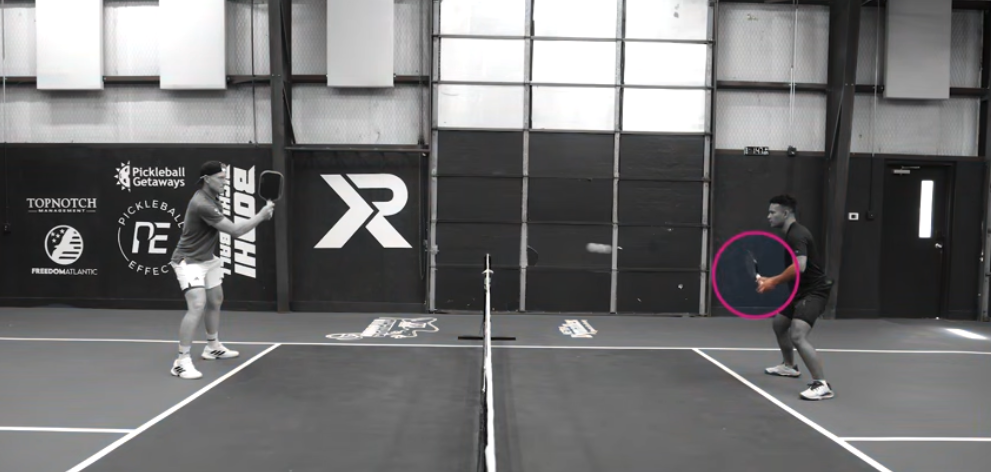
The Mental Shift You Need to Make
The real takeaway here isn't about footwork or positioning. It's about mindset. Stop thinking of the court as your territory. Start thinking of it as a space you and your partner control together.
The center line in pickleball is just a line. It's not a rule. It's not a boundary. It's a reference point. Your actual boundary is the sideline and the baseline. Everything between those lines is fair game for both of you.
Once you internalize this, your game will change. You'll move more confidently. You'll make better decisions. You'll cover more court. And most importantly, you'll win more matches.
Heads up: hundreds of thousands of pickleballers read our free newsletter. Subscribe here for cutting edge strategy, insider news, pro analysis, the latest product innovations and more.
Frequently Asked Questions
Can I cross the center line in pickleball?
Yes, absolutely. There's no rule preventing you from crossing the center line. In fact, crossing it strategically is essential to good doubles play. The center line is simply a visual reference on the court, not a boundary that restricts your movement.
When should I cross the center line in pickleball?
Cross the center line when your partner needs help covering the middle, especially on speedups or weak returns. If your partner is in a compromised position and you can handle the ball more effectively, move over and take it. The key is reading the situation and reacting quickly.
What's the difference between crossing the center line and poaching?
Poaching is a specific tactical move where you anticipate your opponent's shot and move to intercept it before it reaches your partner. Crossing the center line is broader; it includes any movement across the center line to help your partner or take a ball you can handle better. All poaches involve crossing the center line, but not all center line crossings are poaches.
How do I communicate with my partner about crossing the center line?
Talk before you play. Let your partner know you'll be more aggressive about covering the middle. Use verbal cues during play, like calling "mine" or "yours" to avoid confusion. The more you play together, the more you'll develop an intuitive sense of when to move and when to stay.
Will crossing the center line leave my side of the court exposed?
Only if you're not reading the court correctly. If you cross the center line, it's because the ball is in the middle or your partner needs help. Your opponent's next shot will likely come back toward the center or toward your partner. By moving to cover the middle, you're actually reducing the exposed area, not increasing it.

Love Pickleball? Join 100k+ readers for free weekly tips, news & gear deals.
Subscribe to The Dink