The pickleball reset is one of the most misunderstood shots in the game, but it doesn't have to be. Learn the exact technique, stance, and drills you need to master this critical defensive shot.
The pickleball reset is one of the most important and misunderstood shots in the sport.
If you've ever found yourself popping up balls and getting attacked at the net, you already know the frustration.
But here's the thing:
The reset isn't complicated once you understand what it actually is and why you need it.
Love pickleball? Then you'll love our free newsletter. We send the latest news, tips, and highlights for free each week.
What Exactly Is a Pickleball Reset?
A reset is a fast ball coming at you that you intentionally slow down. It can be hit either as a volley (out of the air) or off the bounce.
The goal is simple:
When your opponent attacks and you're in trouble, you reset the ball back to them in a way that gives you and your partner time to get up to the kitchen line and take control of the point.
Liam Duffin and professional player and coach Nicholas Wise break down this essential shot in their latest video.
Wise, who plays on the PPA tour and recovered from a brain tumor to pursue his dream of becoming one of the best players on the planet, brings real-world expertise to the fundamentals.
The reset is what separates players who stay stuck in the transition zone from those who consistently advance to the net.
You're not trying to win the point outright. You're buying yourself time.
The Foundation: Stance and Setup
Before you even think about hitting a reset, your body position has to be right. This is where most players go wrong.
Get nice and low.
Your legs should be wide, and your weight should be balanced in the middle of your feet, not back in your heels.
Think of it like you're sitting in a chair. Your paddle needs to be down low as well, not up high where the ball will sail out.
Nicholas Wise emphasizes that stability is everything when a fast ball is coming at you.
A wide base gives you the ability to move laterally without taking extra steps.
You're not sprinting around the court; you're moving efficiently with less energy.
Your grip matters too. Use a continental grip (sometimes called a handshake grip) and keep your grip pressure around a 4 out of 10. This is crucial.
If you grip too tight, the ball will ping off your paddle like a rocket. If you're too loose, you lose control.
Here's a pro tip from Katherine Prento that Wise mentions: use your thumb, pointer, and middle finger to hold the very bottom of the paddle loosely.
When you add your whole hand back on, it keeps that same looseness. This three-finger grip tension works for everyone, regardless of build or strength.
 Emily Visnic
The Technique: Shoulder-Driven Compact Swings
Once you're in position, the actual swing is where the reset comes together. The key is keeping everything compact and controlled.
Your shoulder should be doing the pushing, not your wrist.
Meet the ball out in front of your body. The moment the ball gets to the side of your body, your shoulder gets tighter and you lose control.
If your paddle is all the way to the side, you're more likely to swing big at a fast ball, which means you'll hit it harder instead of slower.
Think about your elbows. You don't want them glued to your torso, but you also don't want them so far out in front that you have no stability.
Wise calls this the "hula hoop" position. When you're in your hula hoop, you have the most control.
One technique that stands out is the seesaw technique. Imagine a seesaw: if the ball is up high, you need to get really low.
If the ball is more upright, you can come up a bit. This simple mental image puts your paddle in the right position automatically.
The Dink Media Team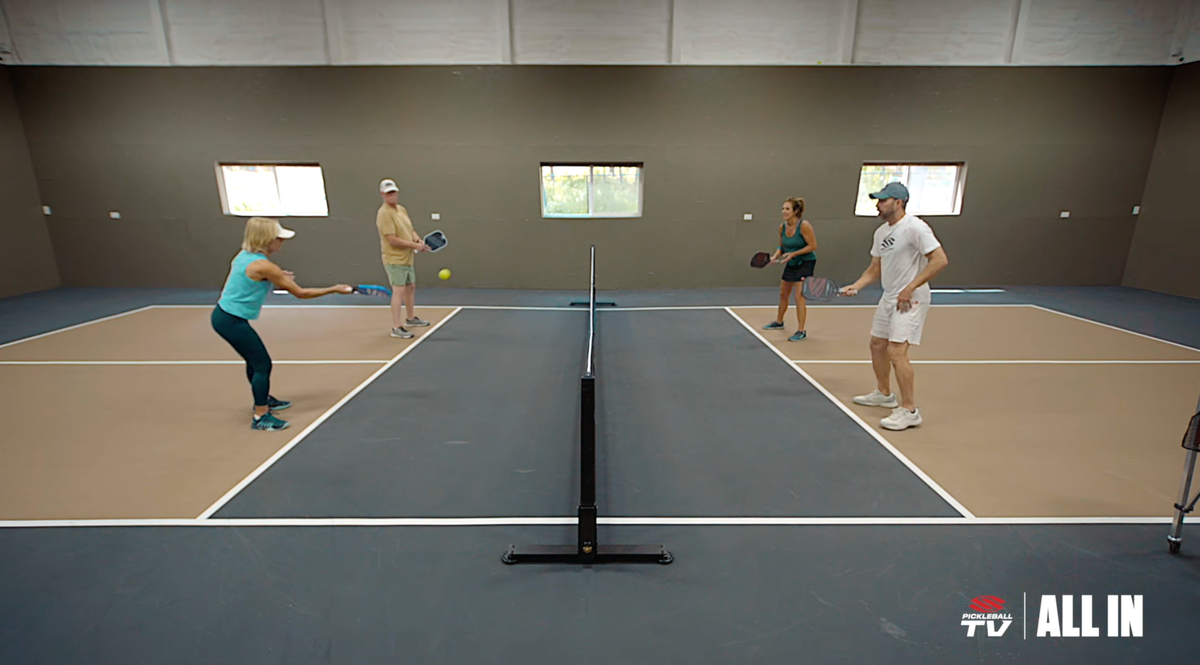
The Split Step: Timing Your Movement
The split step comes from tennis, and it's essential in pickleball.
You want to land on the balls of both feet right as your opponent makes contact with the ball. This gives you the best position to move in any direction.
Don't rush up to the line and run through your reset. Instead, move as far as you can until you see your opponent making contact.
That's when you split step and get into your reset position, nice and low and ready to defend.
Wise points out that a wide base during the split step is critical. You don't need to be shoulder-width apart; you can be wider.
This gives you the ability to side lunge and cover more court without taking extra steps. You're moving more efficiently with less energy.
The Dink Media Team
Three Types of Resets: Which One Should You Learn First?
There are three different ways to hit a reset depending on where the ball is on the court:
- The two-handed backhand reset.
- The single-handed backhand reset.
- The forehand reset.
The two-handed backhand is the most stable because you have two arms on the paddle. Since the ball is already coming at you fast, stability is your friend.
The single-handed backhand covers about 80% of all balls you'll encounter on the court. The forehand reset only covers about 20% of the area.
If you're learning, start with the two-handed backhand. You'll dig out way more balls. Then move to the single-handed backhand.
Save the forehand reset for last.
The Dink Media Team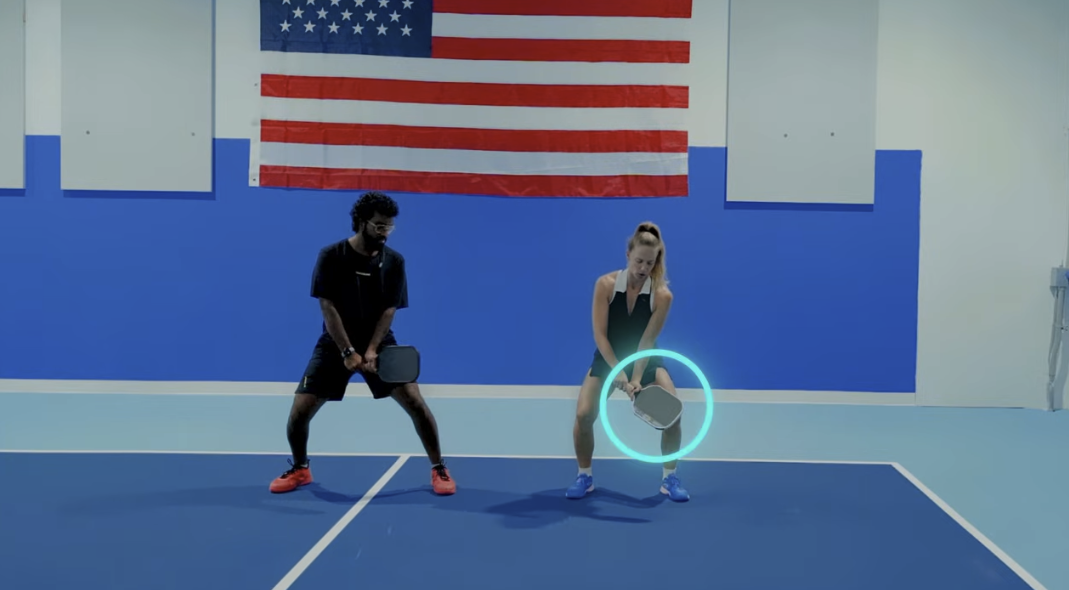
Spin Options: Flat, Topspin, or Slice?
You can hit a reset three different ways in terms of spin: flat (no spin), topspin, or slice.
- The flat reset is a pushy shot with no spin. Use this when the ball is coming so fast you don't have time for anything else. It's all about consistency.
- The topspin reset involves brushing up the back of the paddle. This gets you a bit more aggressive, but you lose some consistency.
- The slice reset is rare on the forehand but more common on the backhand, especially among tennis players. In tennis, you naturally create slice when you're falling through the ball.
Here's what Wise recommends:
Learn the flat reset first with no spin.
Get yourself up to the kitchen every single time. Hit great resets. Once you're more advanced, you can start adding topspin. But consistency comes first.
The Dink Media Team
Where Should You Target Your Reset?
This is where personal preference comes in, but there are two main options.
The easiest and most consistent approach is to reset the ball straight back to where it came from.
You're already lined up to where your opponent is coming from, so it's way easier to just go straight ahead of you back to that zone.
The second option is to take the ball to the furthest location away from you. This gives you more room and you go over the lowest part of the net.
But you have to change direction, which adds complexity.
Duffin shares a tip from his brother who played Division 1 tennis: there are three things you can always change in a shot:
- Direction
- Spin
- Speed
The more things you change, the lower percentage that shot becomes.
So if you just put it back to where it came from, you're keeping it simple and high percentage.
The Dink Media Team
Three Progressive Drills to Build Your Reset
The best way to master the reset is through deliberate practice. Here are three drills that progress in difficulty.
1. Fireball Drill
This drill is all about repetition. One person stands in the transition zone, and one person is at the kitchen line. The person at the kitchen line feeds hot ball after hot ball. Your job is just to get the ball and paddle to make contact and get that repetition. Don't worry about placement yet. Just get comfortable with the motion.
2. One-Step Drill
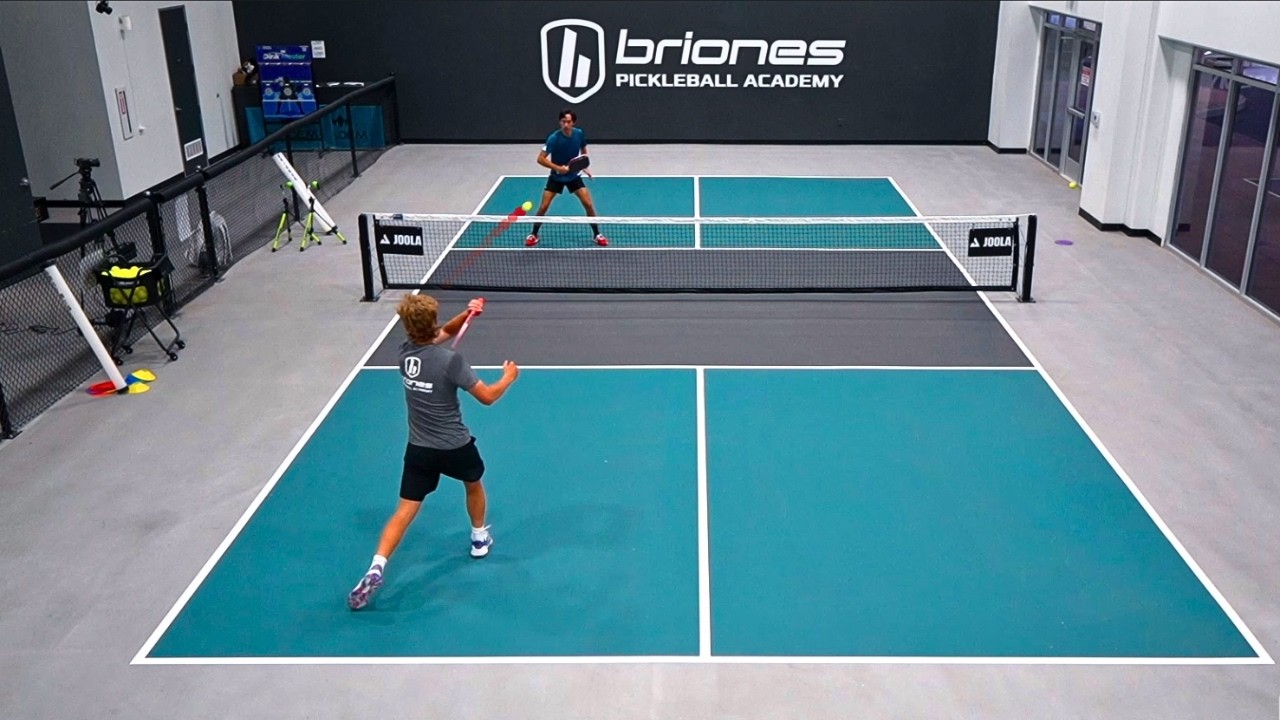
Start at the baseline. You're fed resets from the other side, and you hit a reset until it bounces in the kitchen. If you miss, you stay at the baseline and keep hitting. If you make it, you take one step forward. Now you're hitting resets from a new zone. Keep going until you reach the kitchen line, then start over.
This drill teaches you consistency while moving through the court. You get comfortable hitting resets from all different locations.
3. 7-11 Drill
One person is at the kitchen line (trying to get 11 points), and one person is at the baseline (trying to get 7 points). The person at the baseline's goal is to work their way from the back line to the kitchen line. You'll hit a variety of shots, but you're primarily transitioning through the zone and working on your reset under pressure.
This is where the reset meets real-game situations. You're not just hitting resets in isolation; you're hitting them while trying to advance and win points.
The Dink Media Team
The Bigger Picture: High-Percentage Pickleball
Duffin makes an important point: the reset is the hardest yet easiest shot in pickleball.
We often feel like we have to do so much, hit so much spin, and hit amazing targets.
But the reality is that a lot of the time, you're just getting the ball over and making your opponent hit one more.
This is what he calls high-percentage pickleball. It's not flashy. It's not Instagram-worthy. But it wins matches.
The reset is the foundation of that philosophy.
Master it, and you'll find yourself at the net more often, controlling points instead of scrambling to defend them.
Frequently Asked Questions
What's the difference between a reset and a block in pickleball?
A reset is a shot you hit to slow down a fast ball coming at you. A block is a more passive shot where you simply put your paddle in front of the ball with minimal swing. Both are defensive, but a reset involves more intentional technique and control.
Can I hit a reset on the bounce instead of as a volley?
Yes, absolutely. A reset can be hit either as a volley (out of the air) or off the bounce. The technique is the same; the timing is just different. Many players find the bounce reset easier because they have more time to react.
How do I know when to reset versus when to try to hit an offensive shot?
If the ball is coming at you fast and hard, reset it. If you have time and the ball is at a good height, you can be more aggressive. The reset is your safety valve when you're in trouble.
Should I always reset straight back to where the ball came from?
Not always, but it's the highest-percentage option. Straight back is easiest and most consistent. Crosscourt resets are possible but require changing direction, which adds complexity. Start with straight back and add variety as you improve.
How long does it take to master the reset?
With consistent practice using the three drills mentioned, you can develop a solid reset in a few weeks. True mastery takes longer, but you'll see improvement quickly if you focus on the fundamentals: stance, grip pressure, shoulder-driven swings, and the seesaw technique.

Love Pickleball? Join 100k+ readers for free weekly tips, news & gear deals.
Subscribe to The Dink