
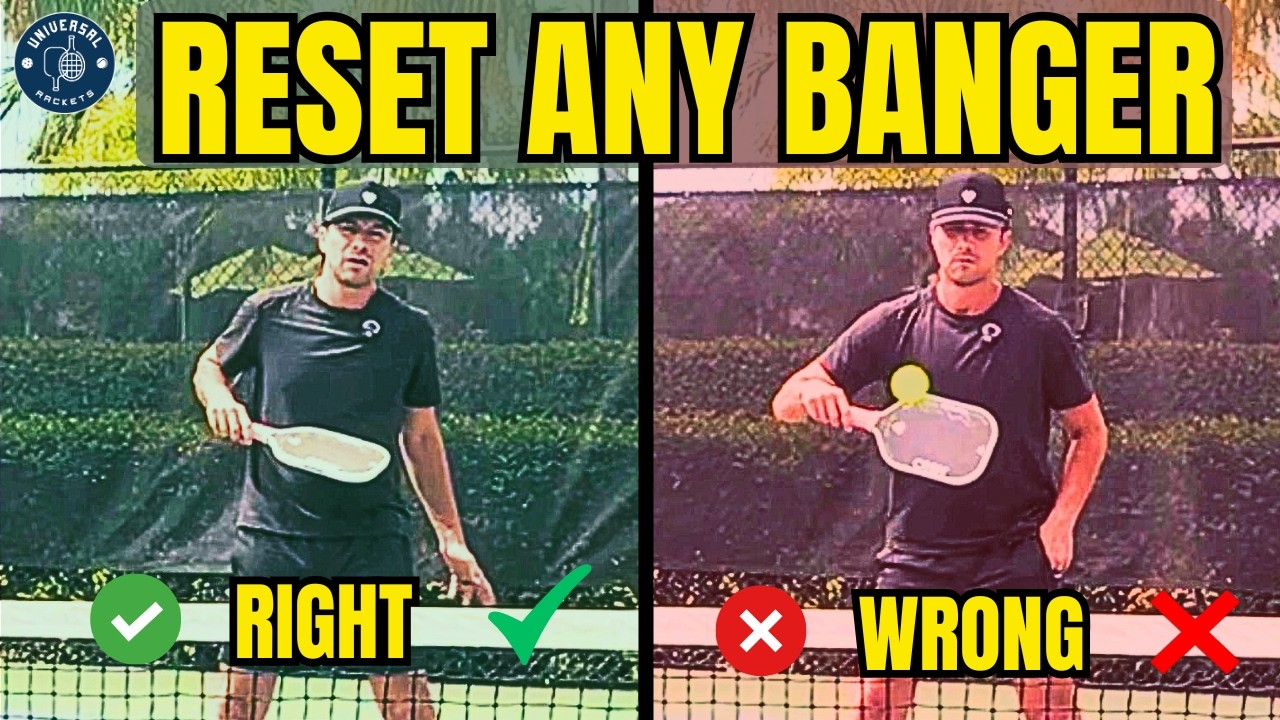
The reset shot is one of the most critical defensive skills in pickleball, yet most players struggle with it. Universal Rackets breaks down the exact mechanics and drills you need to stop popping up hard shots and start controlling the rally.
The reset shot is hit at you roughly 10 times in a single game, yet most players end up popping the ball up and handing their opponents an easy putaway.
If you're serious about improving your pickleball game, mastering this fundamental defensive skill isn't optional—it's essential.
According to Universal Rackets, a leading pickleball instruction channel, the reset shot separates players who can handle aggressive opponents from those who crumble under pressure.
The good news? It's not complicated. It just requires understanding three core mistakes and how to fix them.
Love pickleball? Then you'll love our free newsletter. We send the latest news, tips, and highlights for free each week.
The Three Mistakes That Ruin Your Reset Shot
Most players go wrong in the same three ways.
They either take too big of a back swing, pull their paddle away at contact because they're afraid, or angle their paddle face in the wrong position.
The common thread? They aren't in the proper position with their body and paddle.
Tyler, the lead instructor at Universal Rackets, explains that these three mistakes all stem from one root cause: poor setup.
"You need to make sure that your paddle's out in front and away from your body," he says.
"And you need to make sure that your body is forward."
Why Paddle Prep Position Matters More Than You Think
The foundation of any solid reset shot is your paddle prep position.
This isn't about having your paddle somewhere near your body—it's about having it positioned exactly where it needs to be before the ball even arrives.
Your paddle must be out in front and away from your body. Your body must be forward.
The goal is simple: your paddle meets the ball, not the ball meets your paddle. This distinction changes everything.
Many players keep their paddle down or too close to their body, forcing them to scramble and extend outward when the ball arrives.
Others listen to coaching advice about keeping their paddle up but still position it too close to their torso.
The correct approach is to keep your paddle already out in front in what's called the proper ready position. This is where stopping pop-ups starts with hand speed and paddle positioning — not with effort, but with setup.
"I need to be out here," Tyler demonstrates. "I need to have my paddle meet the ball and not the ball meet my paddle."
Once you're in this position, all you do is keep your paddle out and block the ball back. There's no swing, no aggressive motion.
Just a controlled block that keeps the ball low and in play.
One hack that helps tremendously is following the ball with your paddle after you hit your shot.
If you're pointing your paddle in the direction of where you just hit the ball, you should already be in the ready position when your opponent speeds it up.
This small adjustment was a game-changer for Tyler's own play.
How to Eliminate the Back Swing Problem on Your Reset Shot
In pickleball, time is currency. When someone speeds the ball up at you and you need to reset it, you don't have time to take a big back swing.
Yet this is exactly what most players do, and it's why they fail.
The solution is counterintuitive: keep your elbow tucked into your body.
Players who take big back swings do so because their elbow is going everywhere.
If you can keep your elbow tucked and not flail it out, your back swing automatically limits itself.
Instead of just keeping the paddle in front of your body, you actually need to keep it in front of your wrist.
This subtle distinction prevents the paddle from drifting behind your body where it can't react quickly enough.
Think of it this way: the faster the ball comes at you, the less time you have to move.
By keeping your elbow in and your paddle forward, you're already in position before the ball even arrives. You're being proactive instead of reactive.
Mastering faster hands in pickleball starts with exactly this principle: eliminate unnecessary motion before the ball arrives.
 The Dink Media Team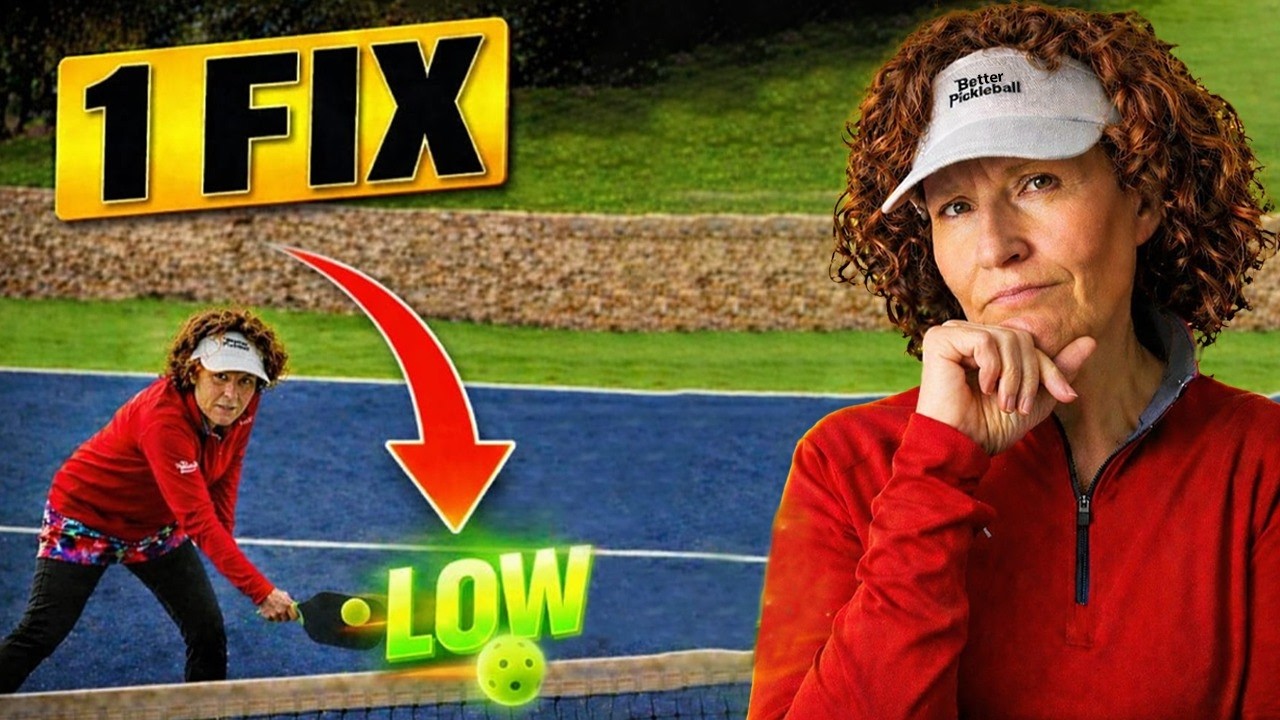
Overcoming the Fear Factor in Defensive Reset Situations
Here's where psychology meets mechanics. Many players flinch when a hard shot comes at them.
They're afraid the ball will hit them, so they pull their paddle away at contact. This instinctive reaction is exactly what causes the pop-up.
The reality? The ball is just a whiffle ball. Even if it hits you, it's not going to cause serious injury.
More importantly, if you're in the proper position and you don't swing, you can reset any ball your opponent gives you.
Michelle, Tyler's co-instructor, adds crucial perspective here:
"You're going to be a lot less scared of the ball when you're in the proper position. If you're scared of the ball, it's probably because your hands are down or you're going out to the ball."
One practical solution is wearing glasses—any type will do.
Sunglasses or carbon pickup glasses make players feel protected, which reduces flinching. The psychological boost alone helps tremendously.
Beyond that, you need exposure. Getting used to seeing hard shots come at you is like driving on the highway.
When you first start driving at 5 or 10 miles per hour, it feels fast. Once you're cruising at 60, it feels normal.
The same principle applies to pickleball. You have to get used to the speed, and the only way to do that is through repetition. The mental side of pickleball is just as demanding as the physical, and learning to stay calm under a speed-up is a skill you build deliberately.
The Dink Media Team
The Paddle Face Angle That Changes Your Pickleball Reset Shot
This is where many players make their final mistake.
If your paddle face is in your dinking position (open), and you use that same angle for a reset shot, you'll pop the ball up every time.
When you dink, you want to lift the ball and hit it up. But when you reset, you need your paddle face neutral, not open.
It can't be angled like a high volley or dink. You need your paddle face square.
"You can't have the same grip that you have for a high volley or a dink," Tyler explains.
"All you're going to do is you're going to keep your paddle face square. And again, you're just going to block the ball back."
Someone hits hard, you block the ball back. Keep it out in front, keep your elbow in, and block the ball back. That's the reset.
Understanding when to use each shot based on ball height and court positioning is what separates reactive players from players who control the point.
Alex E. Weaver
The Importance of Proper Stance and Leg Work
One element that often gets overlooked is your stance.
Being in a proper athletic position with your legs bent and your center of gravity low makes an enormous difference.
When you're standing upright, it's easy to get flinchy and move around. When you're down in the right position, you absorb the impact and brace for it.
Your legs do the work, not your upper body.
Think of it like this: if someone tried to push Michelle while she was standing straight up, she'd fall over.
But if she's in a low athletic stance with her weight distributed properly, she won't budge.
That stability is what allows you to reset hard shots without panicking.
The pace of the ball doesn't matter as much when you're in the right position.
Whether it's 10% power or 100% power, if you're down and stable, the ball goes back to your opponent.
If you're up and loose, you'll struggle even with slower shots.
Good pickleball posture is the foundation for better control and balance on every single shot, not just the reset.
Eric Roddy
Three Drills to Build Your Pickleball Reset Shot Skills
Universal Rackets provides three specific drills to develop your defensive reset ability.
The first is the speed progression drill, where your partner feeds you balls starting slow and gradually increasing the pace.
Each time you successfully reset, they speed it up a bit more. This builds confidence and helps your body get accustomed to faster speeds.
If you're not comfortable with a paddle, your partner can grab the ball and throw it at you instead.
Start with slow throws and progressively increase the speed.
This removes the complexity of paddle control and lets you focus purely on positioning and blocking.
The second drill is the live banger challenge.
Your partner starts at the baseline and hits drives at you with increasing power—10%, 20%, 30%, 70%, and finally 100%.
Your goal isn't to hit the ball hard back; it's to block it low.
Every time you can keep the ball low, you force your opponent to hit up, which gives you the advantage.
The third approach is fast hands drills, where you simply practice resetting repeatedly at game speed.
The more reps you get, the more automatic the movement becomes. It becomes muscle memory, then mind-body connection.
Simple wall drills are another underrated way to build the quick-reaction paddle positioning that the reset shot demands.
The Dink Media Team
Why the Reset Shot Matters in Mixed Doubles
In mixed doubles, the reset shot becomes even more critical. Aggressive opponents will target the female player, hitting hard drives directly at her.
If she can't reset these shots, the point is over.
Michelle points out that every female player on the court will pop up hard shots if they're afraid.
But once they understand the mechanics and get comfortable with the speed, everything changes.
"I actually love a drive because when you give me a drive, what do you get back from me? A short reply," she says.
The key insight is this: stop fighting the ball and start directing it. You don't need to fight a banger. You redirect it and give them a low reply.
When you give your opponent a low reply after they drive the ball at you, they can't drive the next ball without hitting it into the net or out of bounds. For a deeper look at doubles strategies that change how you win, this reset-first mentality fits right in.
The Dink Media Team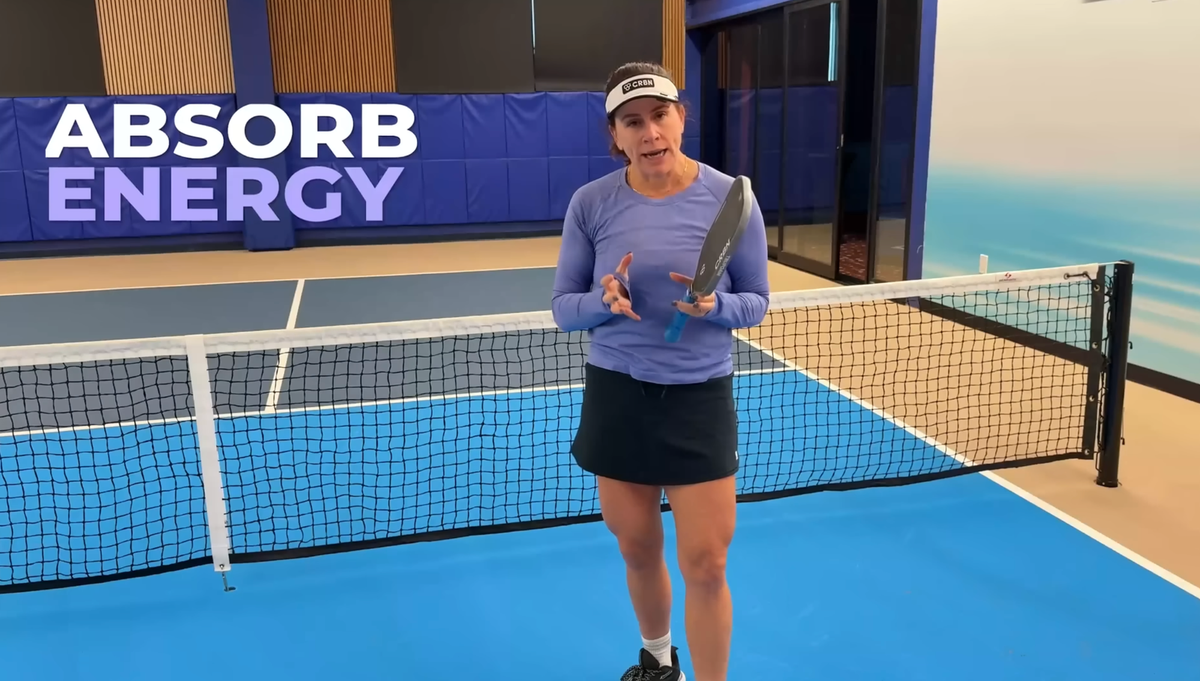
The Bigger Picture: Why This Skill Levels Up Your Entire Game
Universal Rackets has noticed something important about their audience.
Videos with instant, actionable tips that players can bring to the court immediately perform far better than longer, more theoretical content.
The pickleball reset shot is the perfect example of this principle.
These aren't complicated techniques that require months of practice. These are adjustments you can make today that will improve your game tomorrow.
Better paddle position, tucked elbow, neutral paddle face, proper stance—these are things you can implement in your next match.
NBC Sports has covered the rapid growth of pickleball and the increasing emphasis on technique and strategy as the sport moves beyond its recreational roots. The reset is exactly the kind of skill that separates casual players from serious competitors.
"If you take all three concepts that we gave you on the mistakes and the way to fix those problems and you put it into your game, I guarantee you're going to level up," Tyler says.
As the sport evolves, CBS Sports notes that the gap between recreational and advanced players increasingly comes down to defensive consistency, not just offensive power. Mastering your defensive reset shot is how you close that gap.
Frequently Asked Questions
What's the difference between a reset shot and a block?
A reset shot is a specific type of block used when your opponent hits a hard, fast ball at you. The goal is to absorb the pace and return the ball low and controlled, rather than letting it pop up. While all resets are blocks, not all blocks are resets—the term specifically refers to defensive shots against aggressive attacks.
How long does it take to master the reset shot?
You can see immediate improvement by adjusting your paddle position and stance today. However, true mastery comes from repetition. Most players see significant progress within 2-3 weeks of consistent practice, especially if they're doing the drills mentioned in the video.
Should I swing at the ball during a reset shot?
No. The reset shot is fundamentally about not swinging. You keep your paddle out in front, maintain a neutral face angle, and simply block the ball back. Any swing motion will likely cause the ball to pop up, which defeats the purpose.
Why do I keep popping up reset shots?
There are three main reasons: your paddle face is angled open (like a dink), you're taking too big of a back swing, or you're flinching and pulling your paddle away at contact. Check your paddle position first, then your elbow position, then your confidence level. One of these three is almost always the culprit.
Can I use the same paddle grip for reset shots as I do for dinks?
No. Your dinking grip keeps your paddle face open to lift the ball. For reset shots, you need a neutral paddle face. Adjust your grip so your paddle face is square to the net, not angled upward.

Love Pickleball? Join 100k+ readers for free weekly tips, news & gear deals.
Subscribe to The Dink