The pickleball backhand separates casual players from competitive ones. Here's exactly how 5.0+ players execute this critical shot with precision and power.
If you're serious about improving your pickleball backhand, you need to understand how elite players approach this fundamental shot.
The difference between a 3.0 player and a 5.0 player often comes down to one thing: backhand consistency and power.
Love pickleball? Then you'll love our free newsletter. We send the latest news, tips, and highlights for free each week.
According to Aylex Pickleball Academy, a leading coaching resource in the sport, the pickleball backhand requires three foundational elements: proper footwork, correct grip mechanics, and understanding which hand drives the motion.
Without these, even players with natural athleticism struggle to generate consistent power and accuracy.
1. Set Up Your Feet for Success
Here's the thing about the pickleball backhand:
Everything starts with your feet.
You can have the perfect grip and the smoothest swing, but if your footwork is off, the shot falls apart.
Elite players use what coaches call the "right angle triangle" positioning.
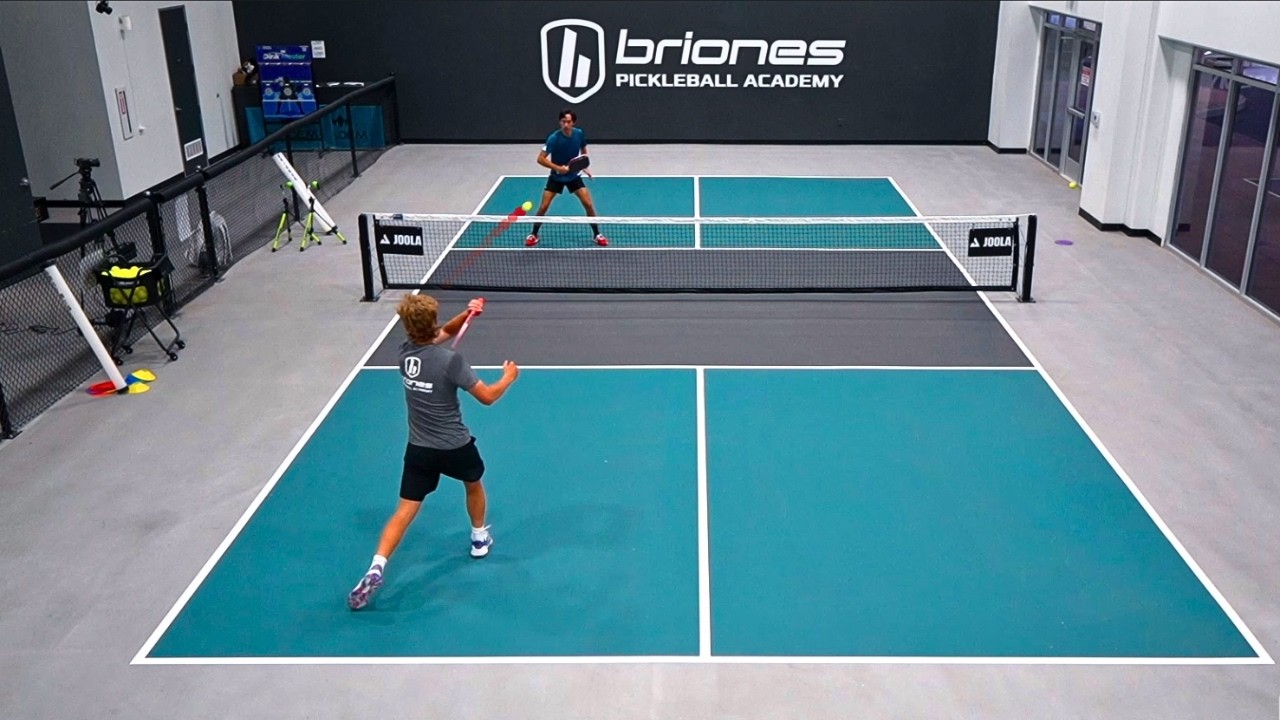
When you're about to make contact with the ball on a two-handed backhand, your body should form a specific geometric shape.
One foot stays behind you for balance and power generation, while your front foot positions itself so that your arms extend fully at contact.
The key is this:
Your contact point should be slightly in front of your body, not tight against it.
If you're too close to the ball, you lose leverage and control. If you're too far away, you can't generate power.
Think of it like this. Imagine a box on the court. Your back foot sits in one corner, and your front foot sits in an adjacent corner.
The ball makes contact at the third corner of that box.
This creates the right angle triangle that gives you stability, balance, and the ability to redirect the ball wherever you want it to go.
 Emily Visnic
2. Grip the Paddle Like a 5.0 Player
The grip for a two-handed pickleball backhand confuses a lot of intermediate players.
This feels counterintuitive at first. Most players instinctively want their strong hand to control the paddle.
But that's exactly what separates 3.0 players from 5.0 players.
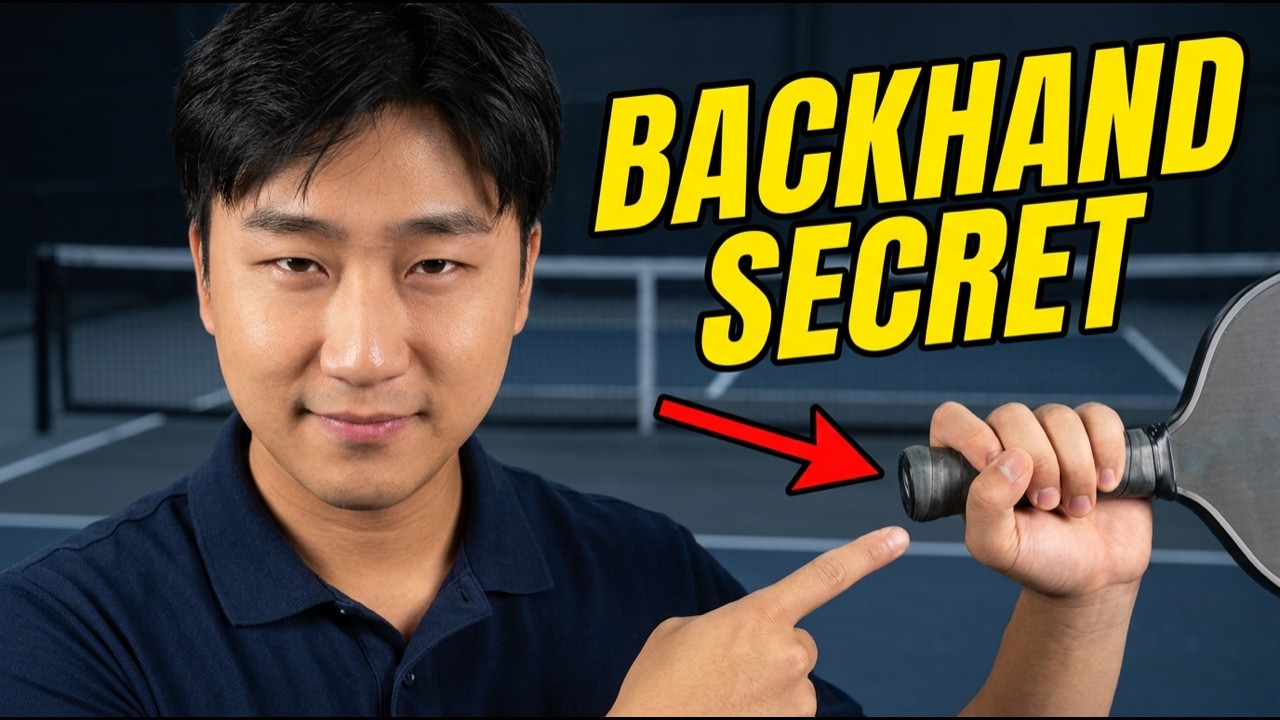
Position your non-dominant hand near the top of the grip. Many players place one or two fingers off the paddle to give themselves more room and stability.
Your dominant hand then slots into the remaining space below. It's totally fine if there's a small gap between your hands.
Why does this matter? Because a two-handed pickleball backhand is far more stable than a one-handed version.
When you're hitting aggressive drives or trying to redirect a hard shot, having both hands on the paddle allows you to absorb the ball's energy and maintain control.
Your non-dominant hand generates the power; your dominant hand provides stability and guidance.
The Dink Media Team
3. Let Your Non-Dominant Hand Drive the Shot
This is where most players make their biggest mistake with the pickleball backhand.
They grip the paddle correctly, they position their feet correctly, but then they let their dominant hand take over during the swing.
The moment your dominant hand starts leading the motion, your shot becomes inconsistent.
You'll pull the ball, lose accuracy, and struggle to generate real power. The solution is simple but requires practice:
Your non-dominant hand should feel like it's doing 80 percent of the work.
Here's a drill that works: practice hitting backhand drives with only your non-dominant hand on the paddle. Yes, it feels awkward.
Yes, your shots will be terrible at first. But this builds the muscle memory you need.
Once you've practiced single-hand backhand drives, gradually add your dominant hand back. Don't grip it tightly.
Instead, hover it lightly on top of the paddle. Your dominant hand is there to stabilize and guide, not to power the shot.
Think of it like steering a car versus driving it.
Your non-dominant hand is the engine; your dominant hand is the steering wheel.
As you get more comfortable, you can grip your dominant hand normally.
But keep that mental image: your non-dominant hand is generating the power, and your dominant hand is just along for the ride.
Alex E. Weaver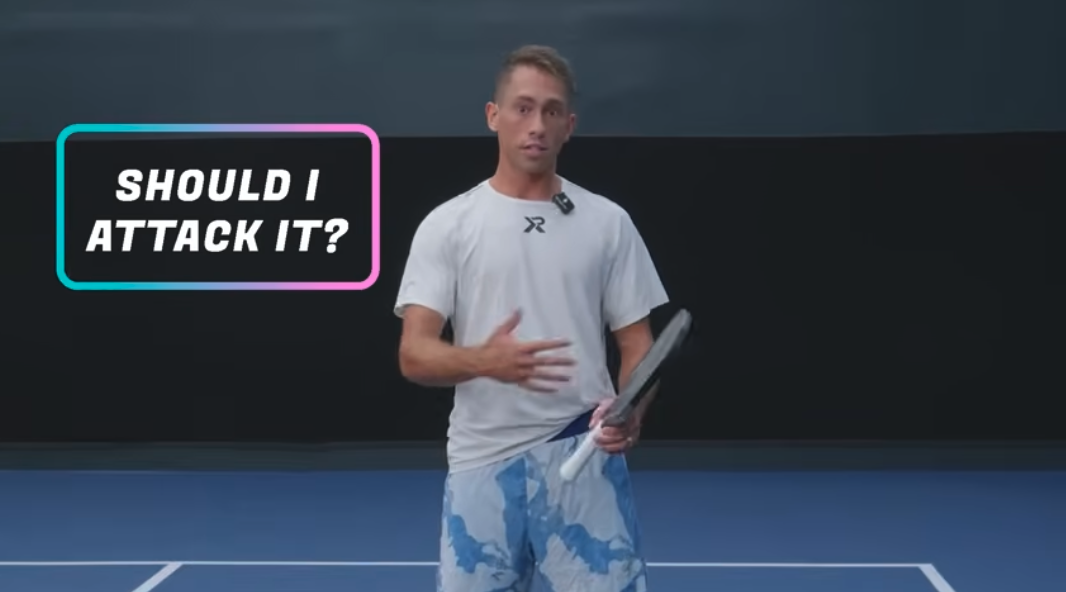
Bonus Tip: The Follow-Through Matters More Than You Think
One detail that separates good pickleball backhand shots from great ones is the follow-through.
After you make contact with the ball, don't keep your arms stiff and straight. Instead, let them wrap around your body naturally.
Think of it like slinging a backpack around your shoulder. There's fluidity to the motion.
Your paddle should come up and across your body after the shot, not stay locked in place.
This follow-through generates additional spin and control while also protecting your shoulder from injury.
The Dink Media Team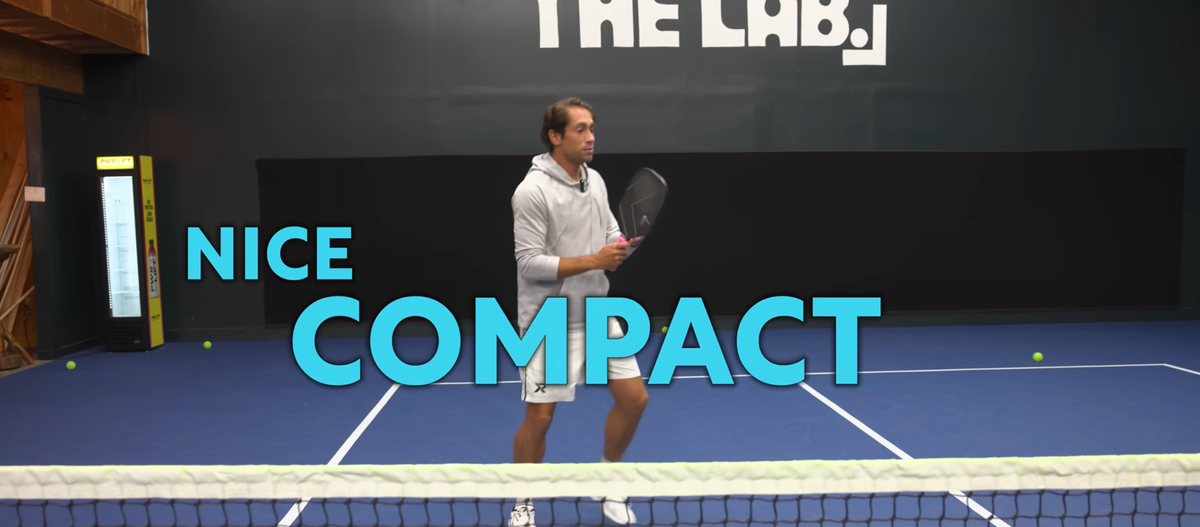
Pro vs. Amateur: What's the Real Difference?
When you watch a 5.0 player hit a pickleball backhand compared to an amateur, the difference is obvious once you know what to look for.
Amateurs often try to generate too much power too quickly. They swing hard and hope for the best.
Professionals, on the other hand, prioritize consistency and positioning. They set up their feet early, they lean into the shot, and they transfer their weight smoothly.
Their backhand looks effortless because they're not fighting the mechanics. They're working with them.
Another key difference: timing. Amateurs often make contact with the ball late, which forces them to compensate with their wrist or arm.
Professionals make contact early and out in front, which gives them maximum control and the ability to hit the ball where they want it.
The mental approach matters too.
Amateurs see the backhand as a defensive shot. Professionals see it as an opportunity to attack.
When you're on the baseline and your opponent hits a ball to your backhand, a 5.0 player is thinking about how to put pressure on their opponent, not just how to get the ball back in play.
The Dink Media Team
Why the Two-Handed Backhand Dominates Modern Pickleball
You might wonder why elite players prefer the two-handed pickleball backhand over the one-handed version.
The answer comes down to stability and power generation.
A one-handed backhand requires exceptional wrist strength and timing. If you're slightly off, the ball goes wild.
A two-handed backhand is more forgiving because you have two hands controlling the paddle. This means you can hit more aggressive shots with greater consistency.
Think about tennis. The two-handed backhand became dominant in professional tennis for the same reason.
It allows players to generate more power and control, especially on hard courts where the ball comes at you fast.
In pickleball, where the court is smaller and rallies are often decided by who can hit the most consistent aggressive shot, the two-handed pickleball backhand is simply more effective for most players.
The Dink Media Team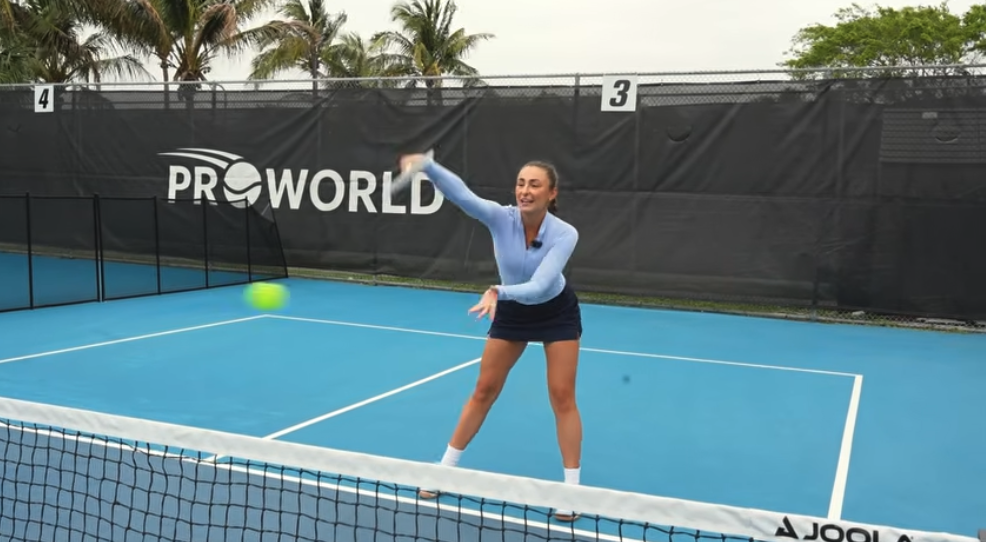
Practice Drills to Improve Your Backhand
Understanding the mechanics is one thing. Actually developing the skill is another. Here are the drills that work:
- Start with footwork. Have a partner or coach drop balls in front of you and practice setting up your feet correctly. Don't worry about hitting the ball hard. Just focus on getting into the right position every single time.
- Once footwork feels natural, add the grip and single-hand practice. Hit backhand drives with only your non-dominant hand. Do this for at least 50 shots before adding your dominant hand back.
- Finally, practice the complete shot. Have your partner feed you balls at different speeds and angles. Focus on making solid contact and following through smoothly.
Consistency beats power every single time.
The pickleball backhand is a skill that improves with deliberate practice. You won't master it in a week, but if you focus on these three fundamentals, you'll see dramatic improvement in your game.
Frequently Asked Questions
What's the most common mistake players make with their pickleball backhand?
The biggest mistake is letting the dominant hand take over during the swing. Players grip the paddle correctly but then unconsciously use their strong hand to power the shot, which creates inconsistency. The non-dominant hand should be doing most of the work.
How long does it take to develop a solid two-handed backhand?
Most players see noticeable improvement within 2 to 4 weeks of focused practice. However, developing a truly reliable backhand that you can trust in competitive matches takes 2 to 3 months of consistent drilling.
Should I practice my backhand more than my forehand?
Yes, most players should. The backhand is typically the weaker shot for recreational players, so dedicating extra practice time to it pays dividends. A strong backhand makes you a much more complete player.
Can I use a one-handed backhand at the 5.0 level?
Technically yes, but it's much harder. Some elite players do use a one-handed backhand, but they've developed exceptional wrist strength and timing. For most players, the two-handed version is more reliable and easier to master.
What grip size should I use for a two-handed backhand?
Most players find that a slightly smaller grip (4 and 1/8 inches) works better for two-handed backhands because your hands are stacked on top of each other. Experiment with different sizes to find what feels most comfortable.

Love Pickleball? Join 100k+ readers for free weekly tips, news & gear deals.
Subscribe to The Dink