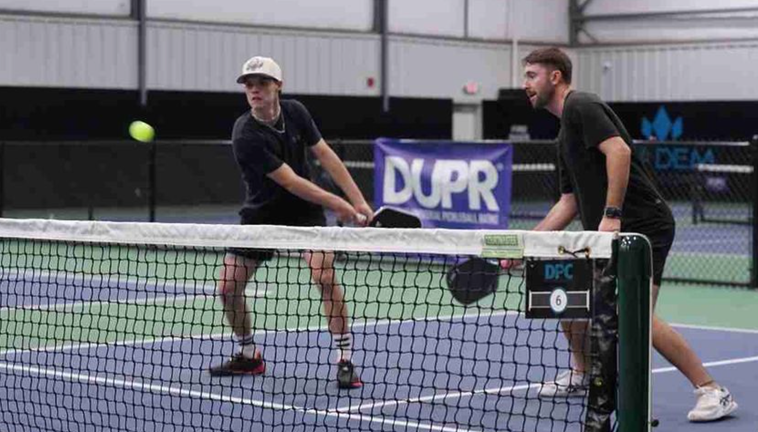

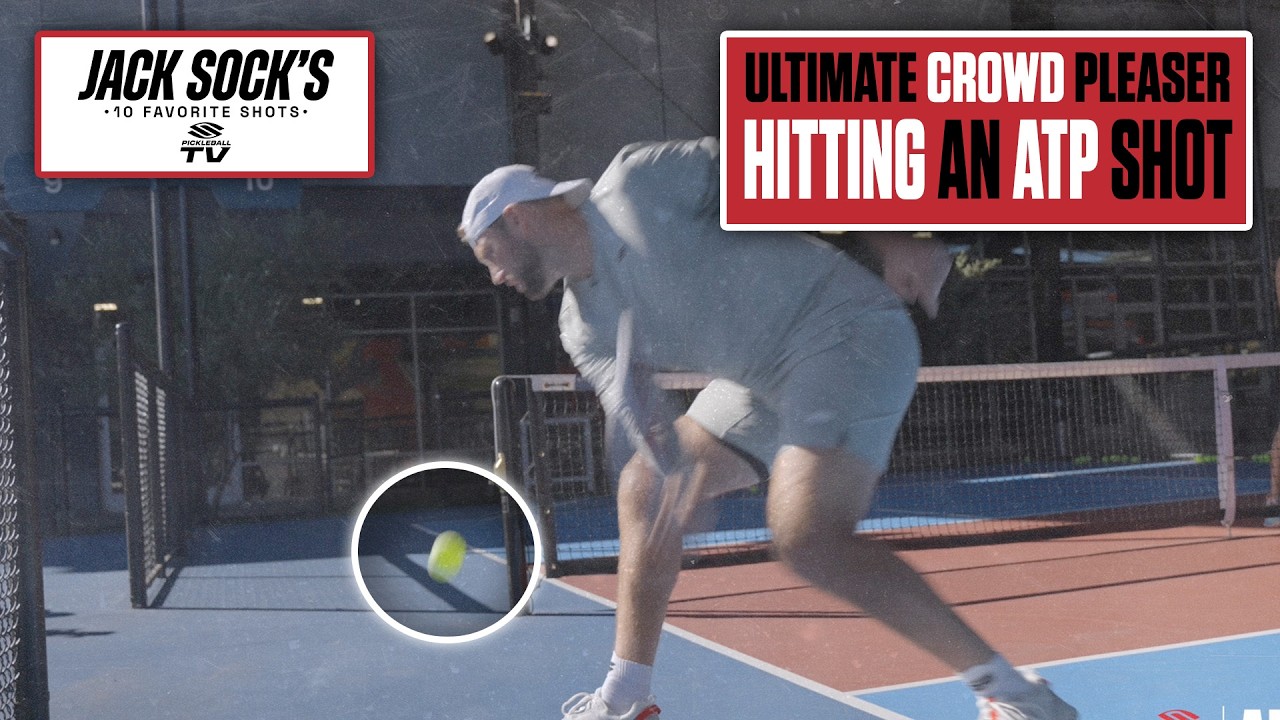
The forehand ATP pickleball shot is Jack Sock's newest weapon, and he says it delivers more pace and a lower ball than the backhand version. Here is exactly how he hits it and when to use it.
Most players who attempt the ATP reach for the backhand version by default.
It feels natural, it gets around the post, and for a long time it was enough to win the point outright.
That is no longer the case.
Defenses have caught up, and if you are not reading the situation correctly or selecting the right version of the shot, you are handing your opponents an easy reset.
Jack Sock has been working on a different approach.
This breakdown comes directly from Selkirk TV on YouTube, where Sock walks through the forehand ATP in detail, covering timing, positioning, and why he now considers it more effective than the backhand alternative.
Love pickleball? Then you'll love our free newsletter. We send the latest news, tips, and highlights for free each week.
What Is the ATP and Why Does It Matter Now?
The Around the Post (ATP) is a shot where you contact the ball outside the post rather than over the net.
Because the ball travels around the post and not above it, there is no height restriction.
That means you can keep it extremely low and make it nearly impossible for your opponents to dig up.
It used to be a near-automatic point winner. Hit it clean, and the rally was over.
According to Sock, that era has passed.
ATP defense has improved dramatically, which means you now need to pick your spots carefully and execute with more precision than ever before.
Why Is the Forehand Version Worth Learning?
Sock plays on the left side, and for left side players the typical option is the backhand wrap.
You get around the ball, extend wide, and roll it around the post.
But Sock started going all the way out to hit a forehand instead. He describes it as an inside-in or inside-out ATP, depending on where the ball goes.
The reason he made the switch is simple. The forehand generates significantly more pace and puts a heavier bend on the ball.
That extra spin keeps it lower through the shot's arc, which makes it harder to handle even when opponents are ready.
He now considers it more effective than the backhand version for his game.
If you see him sprinting wide to rip a forehand around the post, that is exactly what he is doing.
What Triggers an ATP Opportunity in the First Place?
The setup almost always comes from the same place. The player cross court from you hits a dink with too much pace.
That extra speed carries the ball wide and around the post, putting it in ATP territory.
Your job starts before the ball even gets there.
You need to read that dink early enough to decide whether you are going backhand or forehand, and whether the ball is actually hittable or if it is going to bounce out.
Here is what Sock specifically watches for when deciding to pull the trigger:
- The dink has too much pace from the cross court player
- The ball is traveling wide enough to clear the post without you hitting it over the net
- You have enough time and space to commit to the full forehand swing
- The ball is on its way down rather than still rising
That last point is where most players go wrong.
Timing is one of the most important factors in any ATP attempt, and hitting too early is the most common mistake Sock identifies.
 The Dink Media Team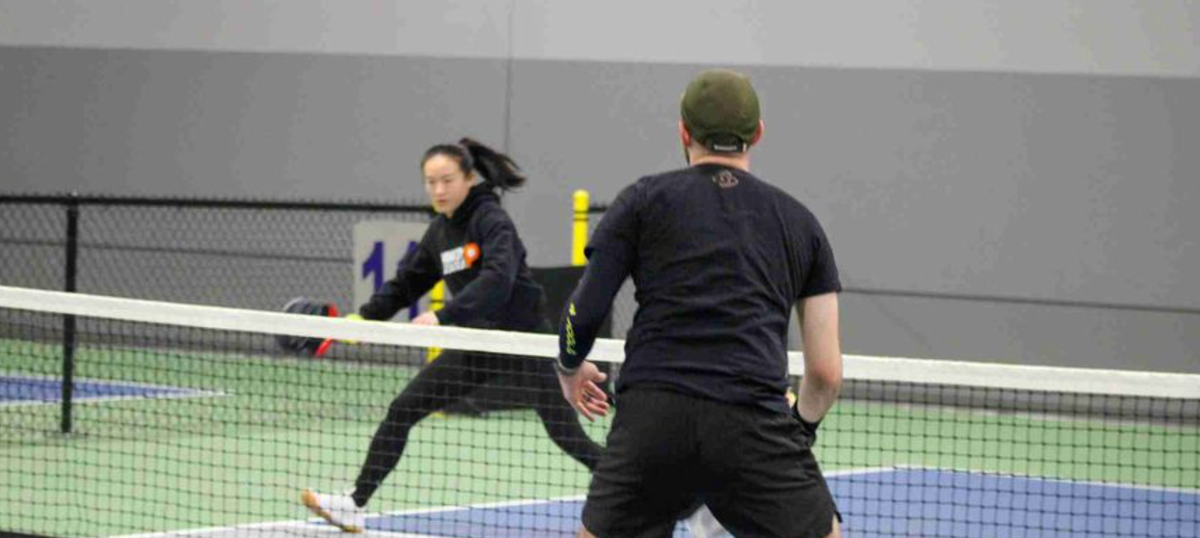
Why Do Most Players Hit the ATP Too Early?
When the ball floats wide, your instinct is to swing as soon as you can reach it. That impulse will hurt you every time.
If you contact the ball while it is still rising, you are going to push it directly into the post.
The ball needs to be coming down before you make contact so you can get underneath it and direct it where you want.
Sock's cue is to wait until the last possible second. Let the ball drop. Then pick it out of the air on the way down and shape your shot from there.
This patience is what separates a clean ATP from a mishit that clips the post or sails wide.
Shot selection is about timing as much as technique, and the ATP is the clearest example of that principle in action.
 The Dink Media Team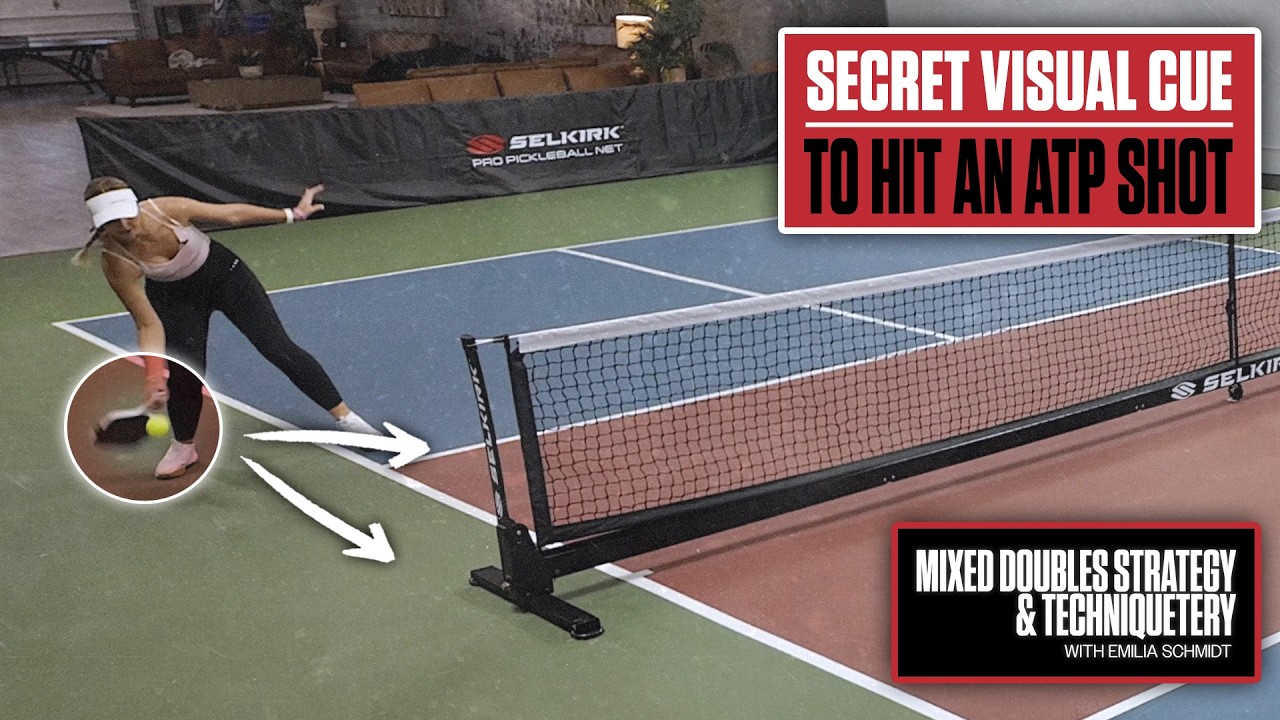
How Do You Actually Hit the Forehand ATP?
The mechanics of the forehand ATP are different from anything else you hit in pickleball. Here is the step-by-step breakdown based on what Sock demonstrates:
- Read the dink early. Watch the pace and trajectory the moment the ball leaves your opponent's paddle. If it has too much on it, start moving wide immediately.
- Get all the way out. Sock emphasizes that the forehand version requires you to fully commit and move further out than you would for the backhand wrap. You need room to swing.
- Wait for the ball to descend. Do not swing while the ball is still rising. Let it peak and start dropping before you initiate contact.
- Pick it out of the air. Contact the ball before it bounces. This gives you the most control over direction and keeps the shot low.
- Bend it low. The goal of the forehand version is to add pace and heavy spin so the ball stays as low as possible as it passes the post. This is where the shot becomes truly difficult to defend.
The backhand ATP is a one or two bounce option that most players can execute without fully committing.
The forehand ATP demands full commitment. You are going all the way out, loading up, and trusting the technique.
 The Dink Media Team
Backhand vs. Forehand: Which Should You Hit?
Both are valid options. The backhand wrap is easier to execute for most players because you can get around the ball more comfortably without committing your full body to the shot.
Sock's advice is that if you have the space and the time, go forehand.
The forehand generates more pace and spin than the backhand in almost every comparable situation.
On the backhand side, Sock still emphasizes keeping the ball as low as possible.
A high ATP is a gift to any player who has worked on their ATP defense, because they can step to it and put it away.
Your entire goal with either version is to make the ball nearly unplayable off the bounce or in the air.
The choice between them ultimately comes down to your position and how much time you have. If you can get into a full forehand setup, that is the stronger play.
If you cannot, the backhand remains a reliable option.
 Alex E. Weaver
Is the ATP Still Worth Adding to Your Game?
Yes, but with realistic expectations.
There is always value in adding a new shot, especially one that forces your opponents to account for a threat they might not be used to seeing.
The ATP is not a guaranteed point winner anymore.
Opponents at higher levels will be positioned and ready for it, which is why Sock stresses reading the situation before committing.
Hitting an ATP into a prepared defense is worse than not hitting one at all.
What the ATP still does very effectively is put your opponent under pressure.
Even if they get to it, a well-executed forehand ATP from Jack Sock's approach produces a ball that is low, fast, and awkward to handle.
That creates the next opportunity even if it does not win the point outright.
For players on the left side especially, building out your left side offense with both the backhand wrap and the forehand ATP gives you two distinct threats from the same zone of the court.
 Anna Bright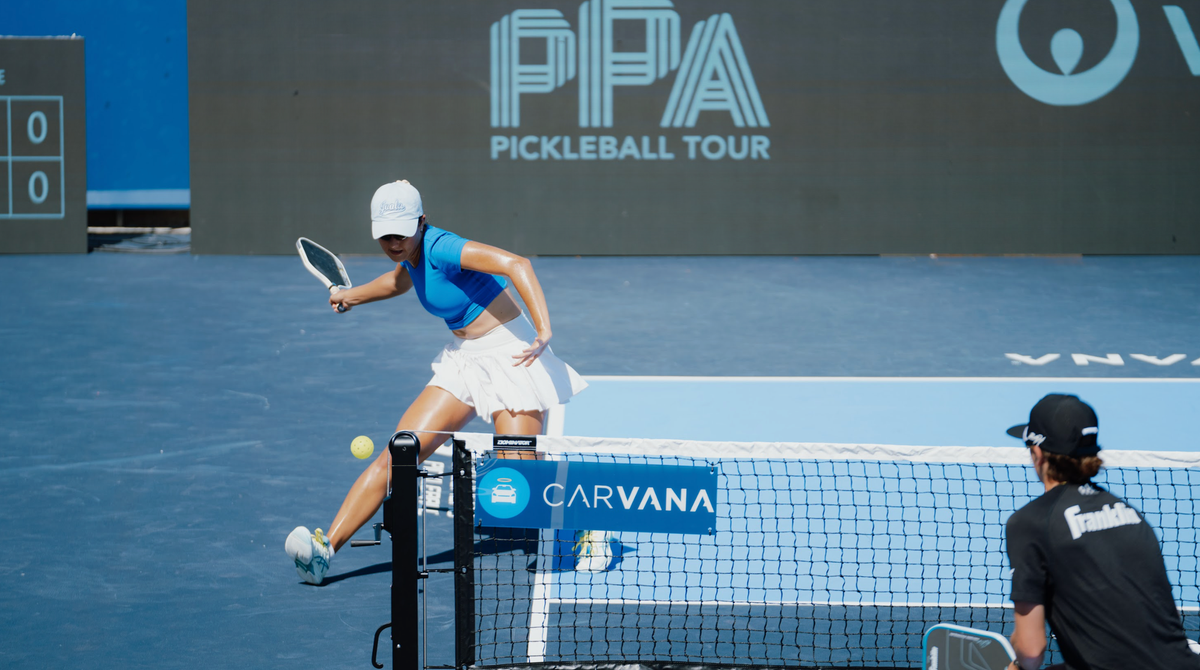
The Common Mistakes to Avoid
Even players who understand the shot theoretically tend to make the same errors when they attempt it in real rallies. Here is what to watch for in your own game:
- Swinging too early: Contacting a rising ball sends it into the post. Wait for the descent.
- Not committing to the forehand setup: A half-committed forehand ATP is worse than a clean backhand. If you go forehand, go all the way out.
- Hitting it too high: A high ATP is easily picked off. Your entire focus should be keeping the ball low around the post.
- Ignoring the defense: If your opponent is already shifting toward the ATP coverage position, consider whether another shot is the smarter play.
- Not reading the dink early enough: The ATP opportunity disappears fast. If you do not start moving the moment you see the pace on the dink, you will be scrambling instead of setting up.
Sock's approach to the Erne follows the same principle: read the situation early, commit to the shot, and execute with patience rather than panic.
The ATP and the Erne are both crowd pleasing shots that require real tactical awareness.
Picking the right shot at the right moment is what separates players who use them effectively from players who get burned trying to force them.
Practice the timing on its own before you start attempting it in match play.
The instinct to swing early is strong, and you need repetition to build the patience that the shot requires.
Once the timing is there, the forehand ATP becomes a genuine weapon that defenders cannot completely account for.
Sock's broader game is built around patience and shot selection, and the ATP is no different.
When you see him go wide for that forehand, he has already done the work of reading, waiting, and committing before the ball gets there.
Frequently Asked Questions
What is a forehand ATP in pickleball?
The forehand ATP is a shot where you contact the ball outside the post using a forehand swing instead of the more common backhand wrap. It travels around the post rather than over the net, allowing you to keep the ball extremely low. Jack Sock uses it specifically because the forehand generates more pace and spin than the backhand version.
When should you attempt an ATP in pickleball?
You should attempt an ATP when the cross court player hits a dink with too much pace, causing the ball to travel wide and around the post. The ball needs to be on its way down before you make contact, and you need enough space to set up properly. If the defense is already positioned for the ATP coverage, consider another shot instead.
Why do players hit the ATP into the post?
Most ATP errors happen because players swing while the ball is still rising. Contacting a rising ball pushes it directly into the post rather than around it. The fix is to wait until the ball peaks and starts descending before you initiate your swing.
Is the forehand or backhand ATP better?
According to Jack Sock, the forehand ATP is more effective when you have the time and space to set it up fully because it produces more pace and a lower ball. The backhand wrap is easier to execute and works well when you cannot commit to the full forehand setup. Both are valid, and having both in your game makes you harder to defend.
How do you defend an ATP in pickleball?
ATP defense has improved significantly at the pro level, which is exactly why Sock now says you have to pick your spots. Good defenders shift toward the sideline to cover the low ball coming around the post. Disguising your ATP setup as long as possible makes it harder for opponents to get into position early.

Love Pickleball? Join 100k+ readers for free weekly tips, news & gear deals.
Subscribe to The Dink