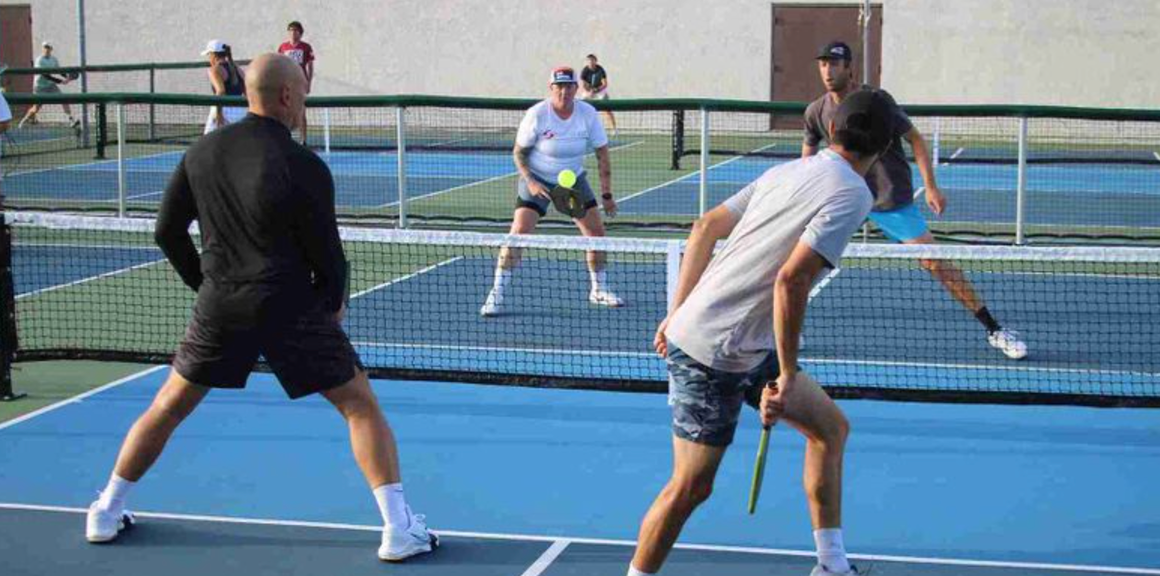
Reading a lob in pickleball comes down to four tells you can spot before your opponent's paddle ever touches the ball: an open paddle face, a taller stance, a sliding back foot, and your own compromised balance. Catch two of them and one drop-step turns a scramble into an easy overhead.
Reading a lob in pickleball has almost nothing to do with how fast you turn and run.
It has everything to do with what you notice two seconds before the ball is struck.
The players who never get burned overhead aren't faster than you, and they aren't playing smarter defense by accident.
They just started moving earlier, because they saw the shot coming while their opponent was still winding up. That's the whole trick, and it's learnable.
Here's the thing about the lob: it only works as a surprise.
Take away the surprise and it becomes the worst shot on the court, a slow, floaty gift that ends with your partner smashing an overhead into the ground.
So let's take away the surprise.
Love pickleball? Then you'll love our free newsletter. We send the latest news, tips, and highlights for free each week.
Why Is Reading a Lob in Pickleball a Skill and Not a Reflex?
Because the information you need arrives before contact, not after.
Once the ball leaves the paddle on a lob, you have roughly a second to turn, track, and get under it.
That's not enough time for anyone, no matter how good your hands are, and rushing the turn only makes it worse.
But the wind-up? That's visible a full beat earlier, and that beat is where points get saved.
Sport science backs this up.
Research on expert anticipation in racket sports, summarized by Dr. Susie Reiner of Seton Hall in this piece on reaction time, found that elite players don't react faster after the strike.
They gather visual information earlier, pulling cues from paddle angle, body position, and weight transfer instead of locking their eyes on the ball.
Same eyes. Better habits.
Quick definition: a lob is a high, arcing shot hit over the opponents at the kitchen line, meant to push them back and flip control of the point.
An offensive lob is disguised inside a dink rally. A defensive lob is a panic button hit from deep in the court to buy time.
The disguised one is what we're hunting. And anticipating shots like a pro starts with knowing exactly where to look.
The 4 Signs Your Opponent Is About to Lob
Four tells, in the order you'll usually spot them.
Reading a lob in pickleball works best as a checklist you run in sequence: watch the paddle first, the body second, the feet third, and the situation always.
1. The Paddle Drops Under the Ball and Opens Up
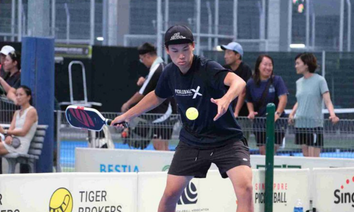
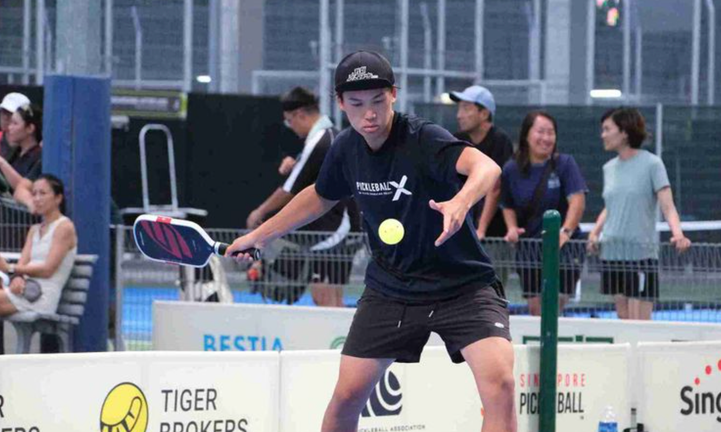
This is the loudest tell on the court. To lift a ball over two people, a player has to get the paddle face under the ball and open it toward the sky. A dink paddle, even on aggressive dinks, stays compact and slightly closed. A lob paddle drops low, opens up, and brushes upward through contact.
You'll see the wrist do it before the arm does, which is why faster hands help you act on the read. Watch for that upward brush at contact, a cue instructional coaches at Pickleball.com flag as the mechanical giveaway for the shot. If your opponent's paddle face suddenly points at the ceiling during a dink rally, start backing up. Don't wait to confirm.
2. They Stand Up Out of Their Dink Stance
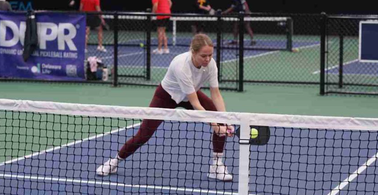
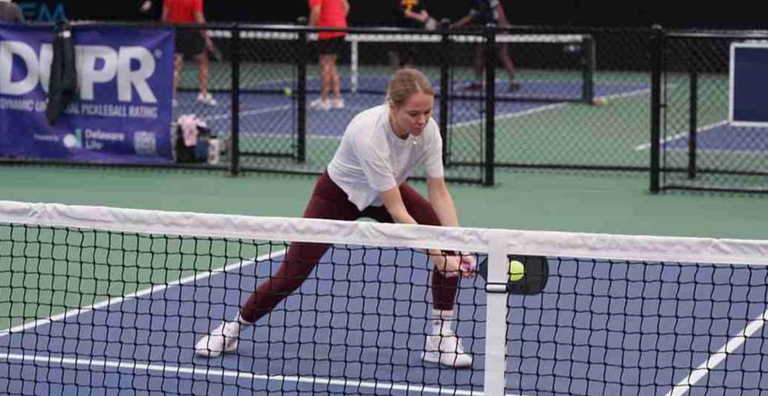
Lobbing from a low, compressed stance is hard. Generating that upward lift usually means straightening the legs and leaning back slightly, which is a completely different silhouette from the crouched posture that keeps you from getting lobbed.
So track the height of their shoulders instead of watching the ball travel, a habit worth building alongside your kitchen line fundamentals. If your opponent has been hunched over their dinks for six shots and suddenly stands tall on the seventh, that's your cue. Pro Catherine Parenteau has coached players to hide this exact tell, warning that leaning backward or taking a bigger backswing than a dink requires hands the point away. If the pros are actively trying to hide it, it's worth watching for.
 The Dink Media Team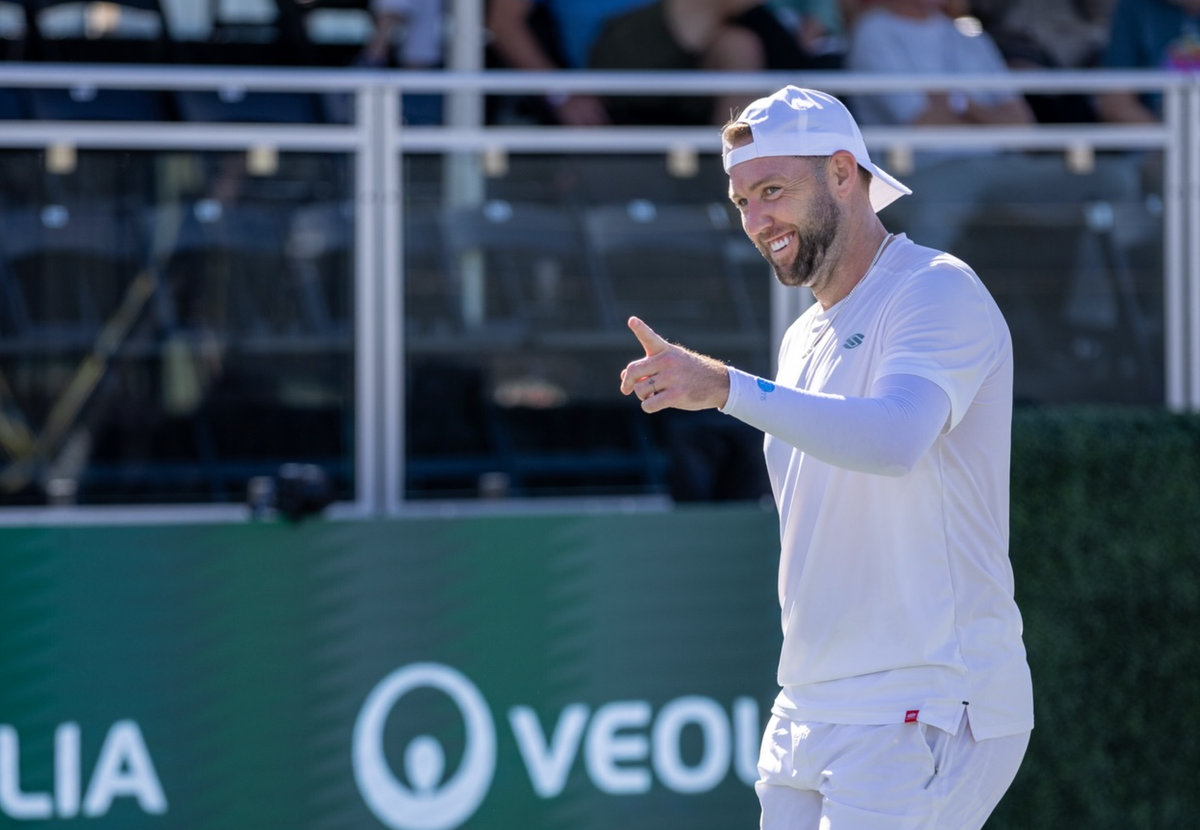
3. The Back Foot Slides Behind Them
Distance needs space, and the lob's whole mechanic depends on it. A player who steps back with their dominant foot right before contact is creating room to swing up and through, and that small weight shift is one of the most reliable pre-lob movements you'll see. It's subtle. It's also almost impossible to fake while maintaining a convincing dink motion.
This one rewards good footwork habits on your side too. If you're flat-footed and hunched at the line, you'll spot the tell and still be too late. Which brings us to the sign that has nothing to do with their body at all.
4. You Just Got Pulled Off Balance
The best lobbers don't lob randomly. They lob when you've been dragged wide, when you're leaning into the kitchen, or when you've just stretched for a ball and haven't recovered. Tyson McGuffin has called out the "over-leaner" in The Dink's breakdown of the offensive lob: the player with a wide stance who hunches over the line and tries to take everything out of the air. Their center of gravity is compromised, so they can't pivot or retreat.
Here's the honest version: sign four is usually your fault. Get pulled out of your court position and you've just invited the shot. Notice it yourself, and you get a free warning.
 The Dink Media Team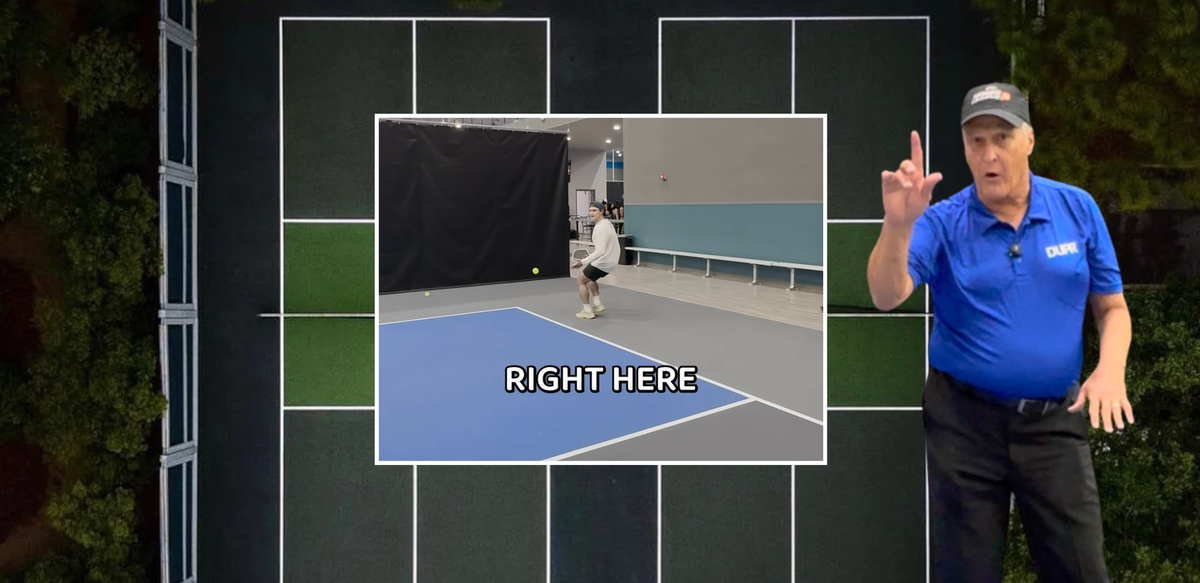
How Do You Turn Reading a Lob in Pickleball Into Won Points?
By moving on the read instead of the ball. The moment you spot two of the four signs, take one hard drop-step back before contact.
- If you were wrong, you've lost a half step in a dink rally, which costs you almost nothing.
- If you were right, you've bought the two feet that turn a scramble into a comfortable overhead.
That asymmetry is the whole argument. The downside of guessing wrong is tiny. The downside of guessing late is a point.
Reading a Lob in Pickleball Starts With Your Ready Position
You cannot move backward from a stance that's built to move forward.
Weight on the toes, hips leaning over the line, paddle chasing every ball out of the air: that's a body committed to one direction.
Fix the ready position first, with your weight balanced and your back foot live, and the reads actually convert into steps.
The other half is knowing what you'll do once you're back there.
A lob you saw coming should be an overhead you attack, not a desperate flick. Angles beat power there, every time.
 The Dink Media Team
Make Reading a Lob in Pickleball Easier by Killing the Forehand Lob
Take the shot away and you don't have to read it.
Most players lob comfortably from their forehand side only, which is why Pickleball Union's lob defense breakdown recommends forcing opponents to hit from their backhand.
Backhand lobs float short. Short lobs get punished with overheads.
So aim your dinks accordingly:
- Target the backhand when you're dinking crosscourt to a known lobber.
- Hold your dinks a beat longer so they can't set their feet, a tactic covered in holding your dinks at the kitchen.
- Keep your dinks low over the net, since an opponent reaching down cannot get under the ball to lift it.
- Talk with your partner about who covers the middle lob, using the spacing rules you already know.
Honestly, number four is the one most rec players skip. Then both partners turn, both yell "yours," and nobody hits the ball.
 The Dink Media Team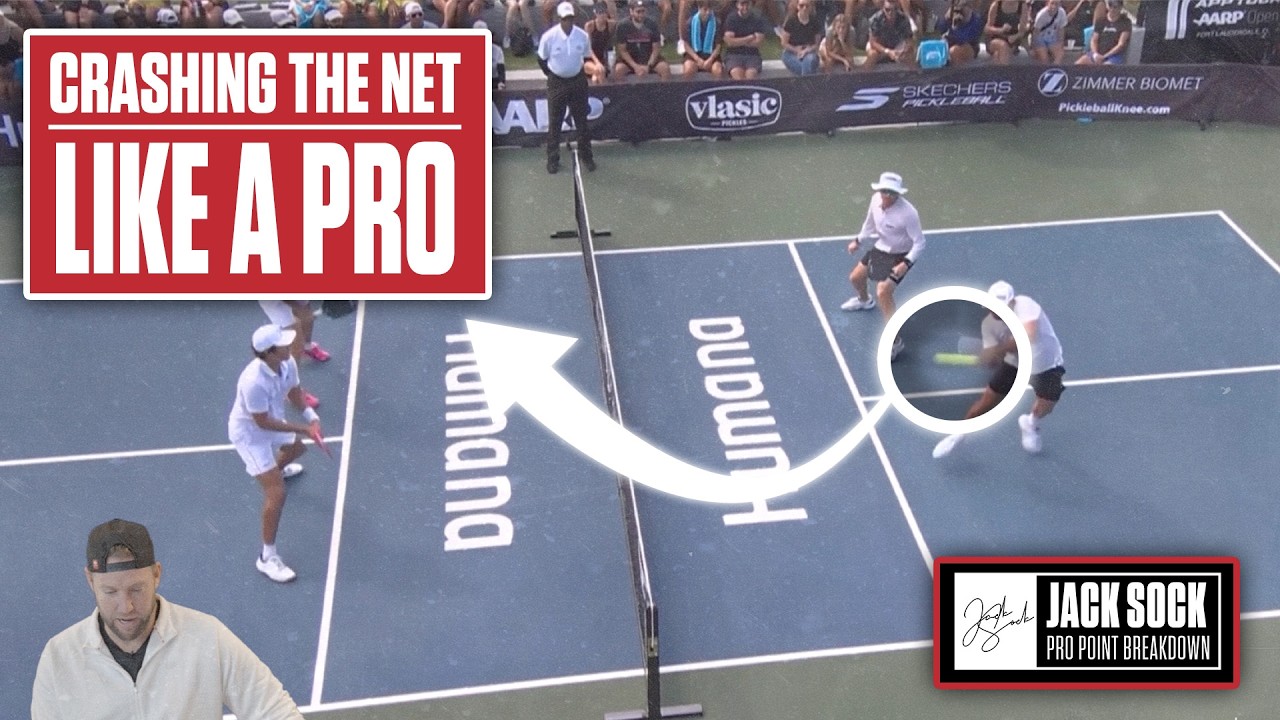
What Happens When You Miss the Read Anyway?
You will miss some, because reading a lob in pickleball is a percentage play, not a guarantee. The answer isn't to sprint blindly.
Turn, run with your eyes on the ball, and if you can't get under it cleanly, hit a defensive reset back into the kitchen instead of a hero shot off your back foot.
Living to play the next ball wins more points than swinging from the baseline while backpedaling.
And if you're getting lobbed repeatedly, the problem is usually a pattern, not a shot.
Study how to defend the lob without going passive, then drill the recovery with something like the survivor drill so the movement stops feeling like an emergency.
 The Dink Media Team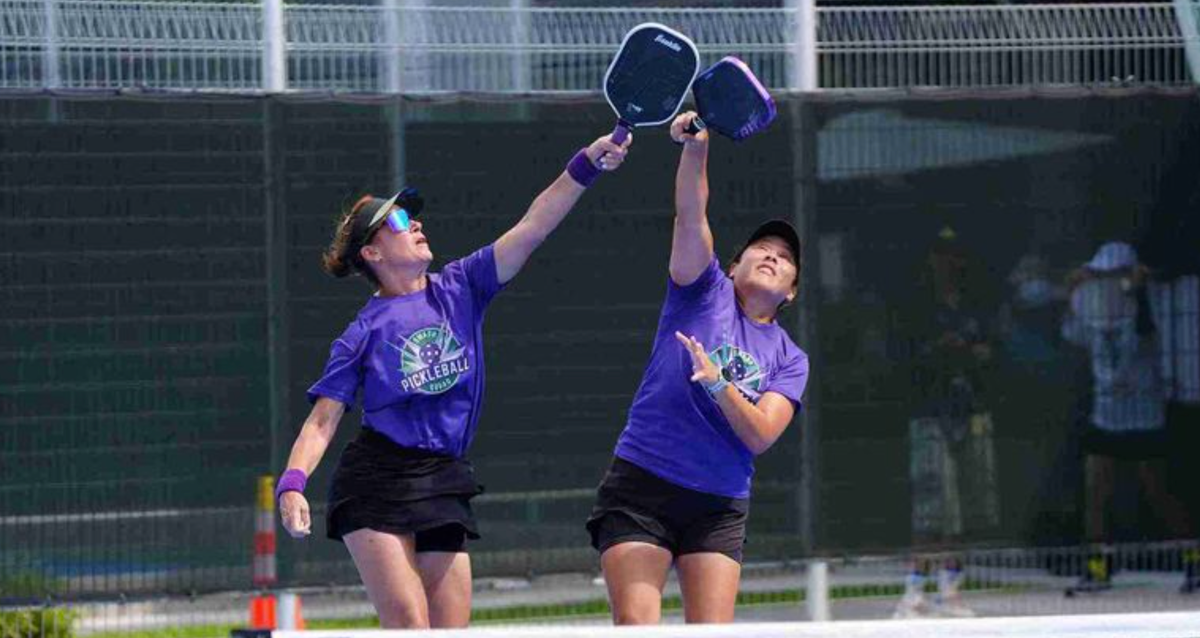
Key Takeaways
- Reading a lob in pickleball happens before contact, not after. The cues live in the wind-up.
- Watch in this order: paddle face, shoulder height, back foot, your own balance.
- Two signs are enough. Take the drop-step early; a wrong guess in a dink rally costs almost nothing.
- Force backhand lobs and keep dinks low. The shot you take away is the shot you never have to read.
- Sort out ready position and partner communication, or good reads still won't turn into good overheads.
Frequently Asked Questions
What is the first sign that a lob is coming in pickleball?
The paddle face. A player preparing to lob has to drop the paddle under the ball and open the face upward, which looks different from the compact, slightly closed face used for a dink. If the paddle points toward the sky during a dink rally, treat it as a lob until proven otherwise.
How far back should I move when I read a lob?
One hard drop-step to start, not a full retreat. That single step gets your weight moving backward and keeps you balanced enough to adjust once you see the ball's height and depth. Running all the way to the baseline on a read leaves the kitchen wide open if the shot never comes.
Why do I get lobbed more than my partner?
Usually because of posture, not speed. Players who crouch far over the kitchen line with a wide stance and try to volley everything are the easiest targets, since their weight is already committed forward. Standing a few inches taller with a live back foot makes you a much less appealing target.
Should I ever let a lob bounce?
Yes, often. If you can't get set under the ball with your body behind it, letting the lob bounce and then hitting a controlled reset is smarter than a falling-backward overhead. Bad overheads hand over the point faster than any lob does.
Can you practice reading a lob in pickleball without a coach?
Absolutely. Play dink rallies with a partner who lobs on a random count, watch their paddle and shoulders instead of the ball, and call out "lob" the instant you see the tell. Getting the call right matters more than getting the ball back at first.
Love Pickleball? Join 100k+ readers for free weekly tips, news & gear deals.
Subscribe to The Dink