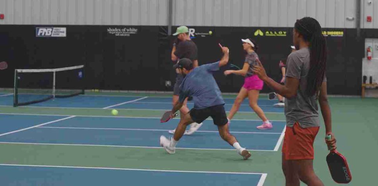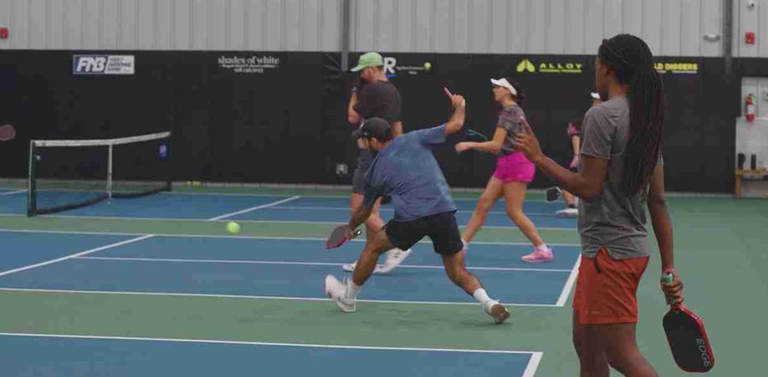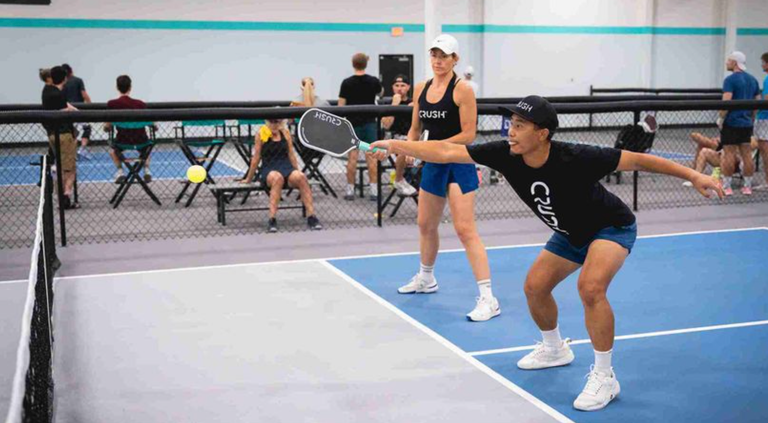

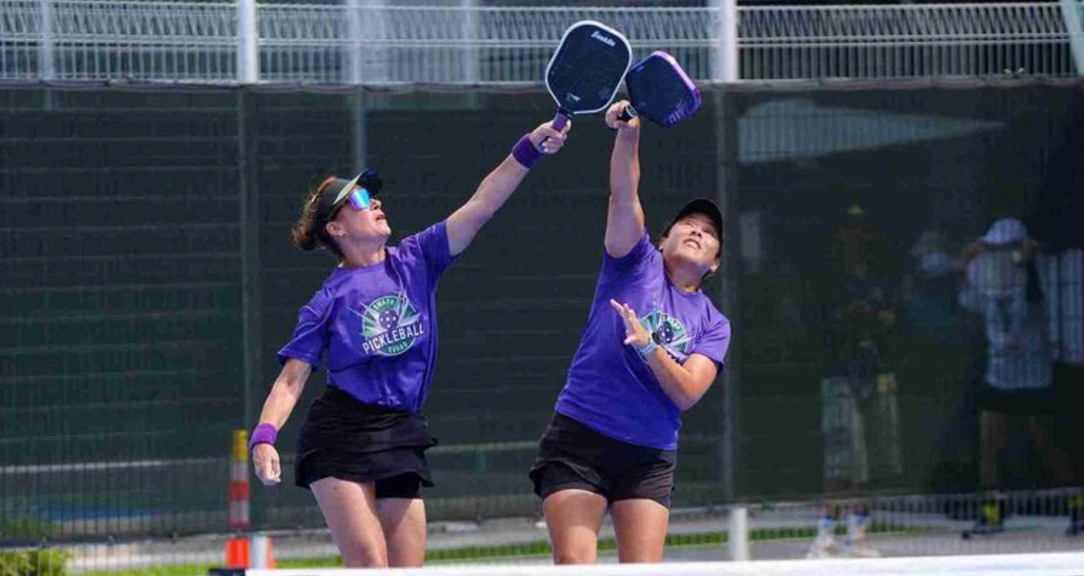
Most players think they have a decent lob pickleball technique until they watch the replay. Here are the most common mistakes destroying your lob game and how to stop making them.
Most players believe their lob pickleball technique is solid until they watch the replay.
The ball lands short. Their opponent smashes it back for an easy put-away. And they do the exact same thing two points later.
The lob is one of the most misused shots in the game.
Not because it's complicated, but because players rush it, misread it, and treat it as a desperation move instead of a deliberate weapon.
Love pickleball? Then you'll love our free newsletter. We send the latest news, tips, and highlights for free each week.
Why Most Players Lob Wrong in the First Place
Here's the thing about the pickleball lob: it looks simple. You swing up. The ball goes high. What could go wrong?
Everything. Depth is the difference between a great lob and a free overhead for your opponent.
A lob that lands in the kitchen or even mid-court is a death sentence.
One that lands within two feet of the baseline forces your opponent to retreat and start the point over.
Good shot selection starts with understanding why the shot exists in the first place.
The lob isn't a reset button. It's a tactical disruption designed to move aggressive opponents off the kitchen line.
Lobbing out of panic means you're misusing it before you've even made contact.
Most players don't drill the lob. So when the moment arrives in a live game, the muscle memory isn't there and the ball floats somewhere it shouldn't.
The 7 Most Common Lob Pickleball Technique Mistakes
Mistake 1: Lobbing Too Short
This is the big one. A shallow lob is not a lob. It's a free overhead. Blocking a smash off a short lob is one of the hardest situations to recover from, and you put yourself there voluntarily.
Your target is the back two feet of the court. Aim past the baseline in your head so the real ball lands near it. Most players naturally come up short under pressure, so building in that extra mental buffer helps a lot.
If you want to see what deep lob placement looks like at the pro level, The Lob Doctor breaks it down with context most players never get.
Mistake 2: Telegraphing the Shot
A telegraphed lob is a dead lob. If your opponent is already backpedaling before you swing, they'll be set up to crush it. The lob pickleball technique that actually works looks identical to your dink setup until the last second.
Keep your paddle face and body position neutral. The rotation and follow-through reveal the lob, not the setup. Players who master topspin have a real advantage here because the faster arc makes it harder to time even when anticipated.
Mistake 3: Using It When Opponents Are Positioned Back
The lob works because it exploits players who are crowded at the kitchen line. If your opponents have already stepped back, you're lobbing into their wheelhouse. They don't need to retreat. They're already there. Now you've given them a floater at shoulder height.
Read their positioning before every potential lob. Are they pressed forward, weight on toes, leaning into the net? That's your window. Are they standing a few feet behind the kitchen line? Consider a reset or a drive instead and wait for a better opportunity.
Mistake 4: Using a Flat Lob Instead of Topspin
A flat lob floats. It hangs in the air, gives opponents maximum reaction time, and bounces predictably. The topspin lob is a fundamentally different weapon. The ball arcs up, kicks down sharply on landing, and moves away from the opponent after the bounce.
The mechanics of generating topspin on a lob involve brushing up and through the ball rather than lifting it. The follow-through finishes high, near your opposite shoulder. Flat lobbers are easy to read. Topspin lobbers are a problem.
Mistake 5: Wrong Placement (Missing the Backhand Side)
Where you land the lob matters as much as the depth. Most players have a weaker overhead on their backhand side, which for right-handed players means the left side of the court from your perspective. Lobbing to the dominant forehand gives them their best possible return.
Targeting the backhand in pickleball is a foundational doubles strategy that applies to lobs the same as groundstrokes. Make them answer with their weaker shot. That's just smart positioning.
Mistake 6: Lobbing When You're Out of Position
A lob that buys time only helps if you use that time to recover. Players who lob while off-balance, too close to the net, or too far outside the court rarely recover position before their opponent's overhead arrives.
Court coverage after your fourth shot applies equally to any neutralizing shot, including the lob. Before you attempt it, ask: if this lob is mediocre, can I still get back to a defensive position? If the answer is no, think twice.
Mistake 7: Never Drilling It
The lob pickleball technique breaks down under pressure because players never train it intentionally. They drill dinks, reset shots, and third shot drops. The lob gets skipped.
Build it into your warmup. Fifteen to twenty dedicated lob reps per session, targeting the back foot of the court from different positions. Then practice lobbing out of a live dinking exchange so the transition feels natural.
 The Dink Media Team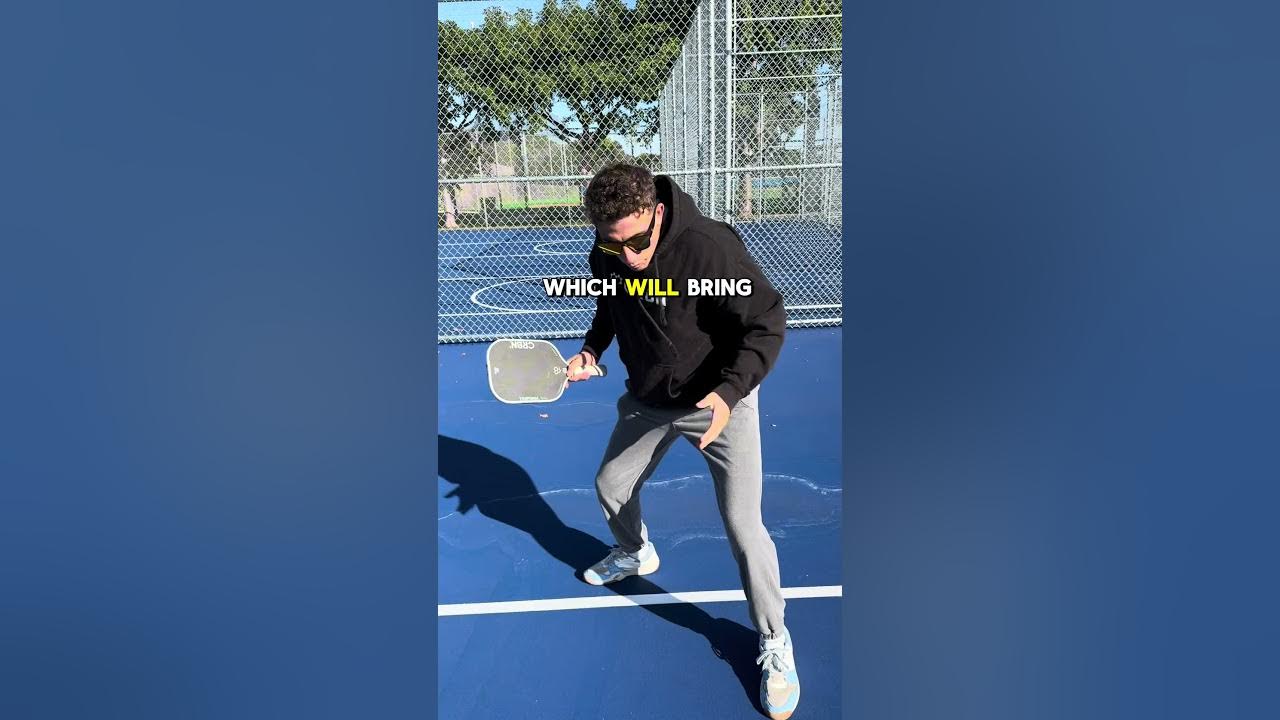
What Does a Correct Lob Pickleball Technique Actually Look Like?
The setup is the key. A well-disguised lob starts from the same body position as a dink. Paddle low, knees bent, contact point in front of your body.
The difference happens at contact. You open the paddle face slightly and brush upward, generating the arc and the topspin.
The follow-through finishes near your ear on the opposite side.
Your footwork before contact affects everything since a lob hit off the back foot almost always lands short.
Target depth: the final eighteen to twenty-four inches of the court. Anything shorter becomes attackable.
Great pickleball players consistently hit the shots that aren't attackable and the lob is no different.
Trajectory matters too. The peak of your lob should be around twelve to fourteen feet high.
That's high enough to clear an outstretched paddle at the kitchen line but not so high that it floats forever.
According to USA Pickleball's coaching resources, a lob that crests too low gives opponents time to run it down even from good position.
 The Dink Media Team
When Should You Actually Use the Lob in a Match?
The lob is a situational weapon, not a default option. Use it when opponents are crowded at the kitchen line and their weight is forward.
That's when it creates maximum disruption.
It's also effective after a dinking exchange when both teams have settled into a slow rhythm.
A sudden lob breaks the pattern before your opponent's brain registers it. The banana shot works on the same principle of pattern disruption.
In singles, the lob pickleball technique is more viable because there's only one opponent to track down a deep ball.
Singles strategy in pickleball rewards variety and a deep lob to the back corner burns serious energy on the retrieve.
According to a 2025 analysis of professional pickleball rally data published by Pickleball Magazine, lobs account for roughly 8 to 12 percent of all non-serve offensive shots at the pro level, with the highest success rate when placed cross-court to the backhand corner.
 Eric Roddy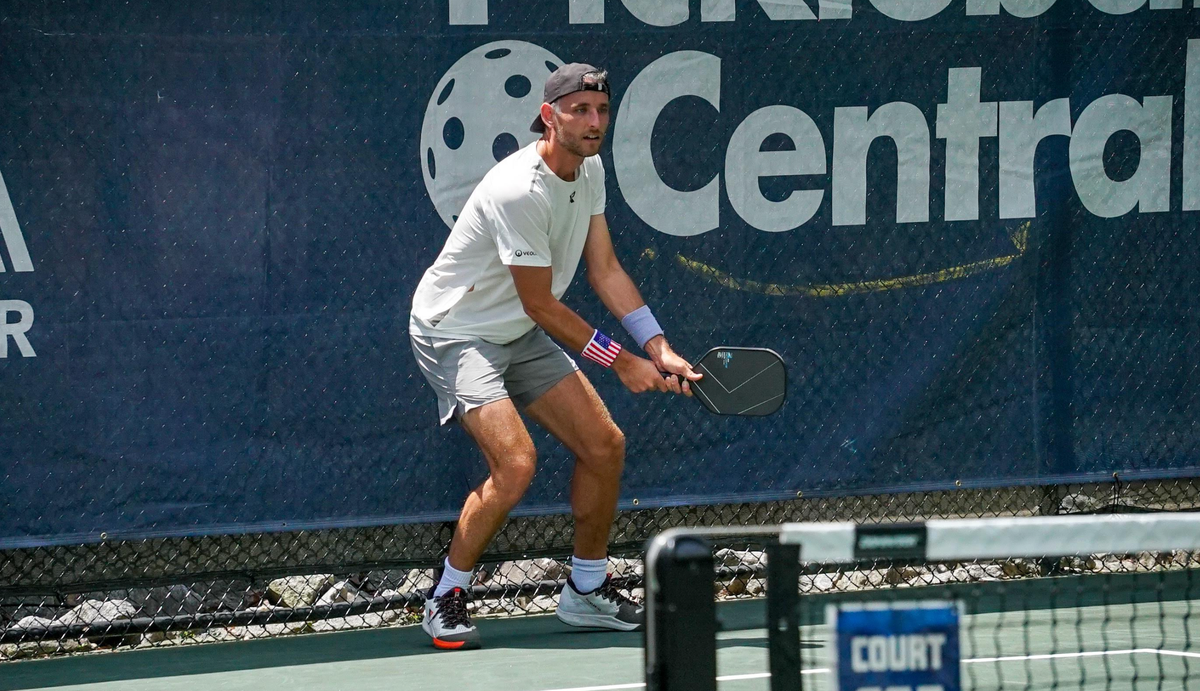
How Does the Lob Interact with Your Overall Game Plan?
A lob used in isolation is a one-trick pony that opponents adapt to fast.
The lob pickleball technique is most dangerous when it's part of a layered strategy that forces opponents to stay honest at multiple depths.
If you never lob, opponents can camp at the kitchen line worry-free. Two or three well-placed lobs per match changes that.
The hesitation opens up drives and power shots that would otherwise get easily blocked from a set position.
Becoming unattackable at the kitchen line and developing a credible lob are two sides of the same coin.
When opponents know you can hurt them at the net and over their heads, they have no comfortable place to settle.
 The Dink Media Team
Key Takeaways
- A proper lob pickleball technique requires depth, trajectory, and timing above all else
- The most common mistake is lobbing too shallow, which gifts your opponent a smash opportunity
- Topspin lobs land faster and give opponents less time to react than flat lobs
- The lob works best as a surprise weapon when opponents are crowding the kitchen line
- Reading body language and positioning before you lob is just as important as swing mechanics
Frequently Asked Questions
What is the lob pickleball technique, and when should I use it?
The lob pickleball technique involves hitting a high, arcing shot that clears opponents at the kitchen line and lands deep near the baseline. It works best when opponents are pressed forward with weight on their toes. Use it intentionally as a disruption tool, not a panic button.
How deep does a pickleball lob need to land?
A good lob should land in the final eighteen to twenty-four inches of the opponent's court. Anything shorter is attackable. Aim to visualize a target past the baseline so natural undershooting still lands in the correct zone. Depth is the single most important variable in a successful lob.
What is a topspin lob in pickleball?
A topspin lob is a high shot where you brush upward through the ball at contact rather than lifting it flat. The result is a faster arc that kicks downward on landing and moves away from the opponent after the bounce. It's harder to read and harder to run down than a flat lob, making it the preferred technique at any level above beginner.
Why does my lob keep getting smashed?
Nine times out of ten, the lob lands too short. A ball that peaks low or lands in the back third of the court hands your opponent a setup smash. The secondary cause is telegraphing your intent before contact. Match your lob setup to your dink setup and drill target-depth reps until landing near the baseline is automatic.
Can you lob in pickleball from the kitchen line?
Yes, but it requires more lift and more precision than a lob from mid-court. The margin for error is tighter from close range. The topspin lob is the better option from this position because forward spin helps the ball clear quickly and still land deep. Flat lobs from the kitchen line tend to sit up and invite an easy overhead.
Love Pickleball? Join 100k+ readers for free weekly tips, news & gear deals.
Subscribe to The Dink