
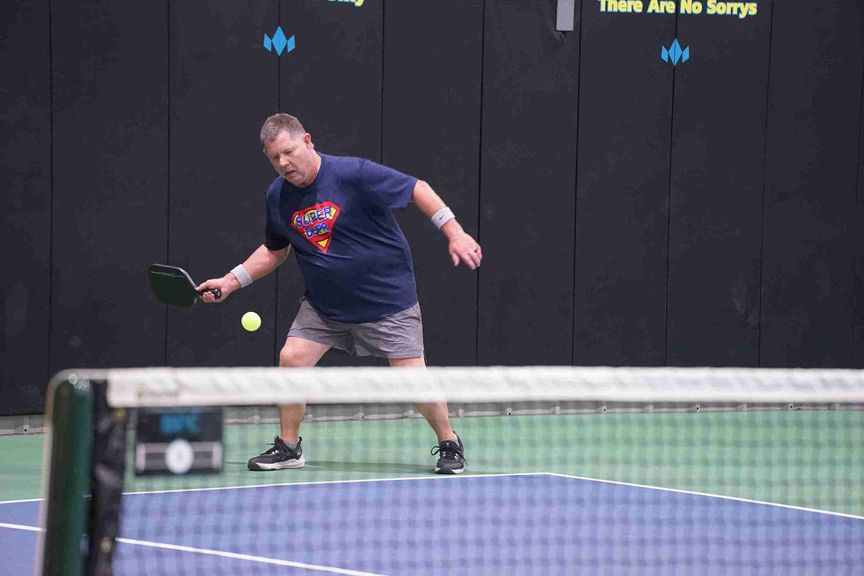
How to Train for Pickleball at Home: 8 Off-Court Drills That Build Real Skills
You can train for pickleball at home with targeted off-court drills that sharpen footwork, reflexes, and mechanics. Here are 8 drills that actually translate to better play.
The best players you know don't just show up and play.
They train for pickleball at home, in their driveways, living rooms, and garages, and it shows the second they step on the court.
Court time is valuable. But it's limited. You can't always get out, and even when you can, games don't always target your weaknesses.
That's where home training fills the gap.
With the right drills, you're building the physical and mechanical foundation that makes everything click once you're back in competition.
These eight drills are specific, repeatable, and actually translate to real game improvement. No fancy equipment required.
Love pickleball? Then you'll love our free newsletter. We send the latest news, tips, and highlights for free each week.
Why Training Off the Court Moves the Needle
Here's the thing: most pickleball improvement doesn't happen during open play. It happens in the hours between sessions.
The split-second reaction you make at the kitchen line? That's reflexes trained through repetition. The smooth reset that saves the rally?
That's muscle memory built away from the court.
Research published in the Journal of Strength and Conditioning Research consistently shows that sport-specific agility and reaction training off the court transfers directly to in-game performance.
You're not just staying in shape. You're hardwiring the movement patterns pickleball demands.
The beauty of learning to train for pickleball at home is that you control the reps. Open play is chaotic. Home training is deliberate.
Drill 1: The Split-Step Wall Drill
What it builds: Explosive first-step reaction and ready-position instinct.
The split step is the single most underrated movement in pickleball.
It's the small hop you take just as your opponent contacts the ball, it keeps you light, balanced, and ready to push off in any direction.
- Stand facing a wall.
- Do a small split-step hop, land in an athletic stance, then immediately push laterally to your left or right.
- Alternate sides. Do 3 sets of 10 reps each direction.
Why a wall? It gives you a visual anchor and forces you to stay compact. No wandering footwork.
This drill directly reinforces the ready position fundamentals that separate reactive players from reactive-looking players.
Drill 2: Shadow Footwork Patterns
What it builds: Court coverage, lateral speed, and pickleball footwork mechanics.
Shadow drilling is borrowed straight from tennis and badminton.
You move through footwork patterns without a ball, simulating the side-to-side, forward-and-back movements you make during a rally.
It's how you engrain movement without needing a partner.
Mark a 10x10 foot space in your home or driveway. Set cones or tape markers at five positions: center, left, right, forward-left, forward-right.
Move from center to each cone and back in randomized order. Drive off the outside foot on every lateral step. Don't cross your feet.
Do 4 rounds of 45 seconds on, 15 seconds rest. This is the same pattern used in solo pickleball drills to build movement efficiency.
 The Dink Media Team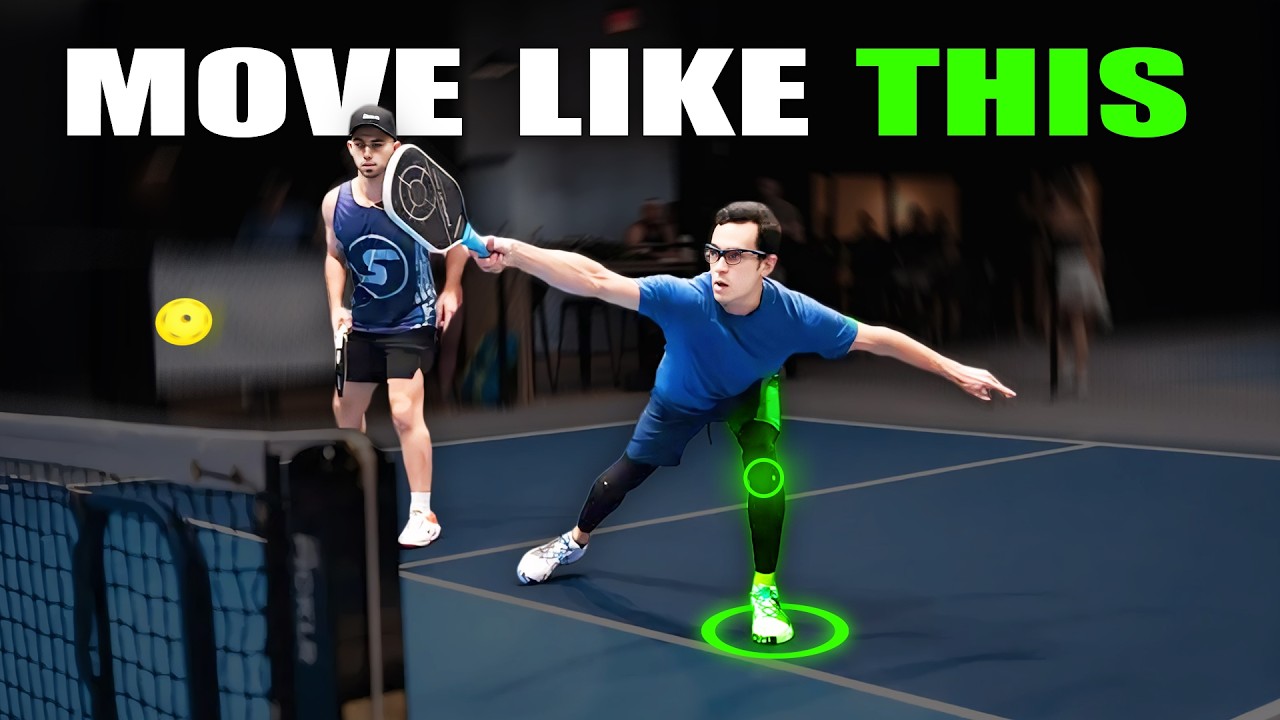
Drill 3: Wrist and Forearm Strengthening
What it builds: Paddle control, dink consistency, and injury resilience.
Paddle control starts in the wrist and forearm, not the shoulder.
Weak wrists mean inconsistent dinks, mis-hits on resets, and a paddle face that wobbles at contact.
This is easy to fix at home with a light dumbbell or resistance band.
Do three movements daily:
- Wrist curls (palm up): 3 x 15 reps each hand
- Reverse wrist curls (palm down): 3 x 15 reps each hand
- Radial and ulnar deviation (side-to-side wrist rotation): 3 x 12 reps each hand
A 2021 study in the Journal of Sports Sciences found that forearm strengthening reduces lateral epicondyle stress, the exact area stressed by high-volume dinking.
Stronger wrists mean fewer injuries and cleaner touch shots.
Alex E. Weaver
Drill 4: Reaction Ball Drops
What it builds: Hand speed, reaction time, and tracking unpredictable ball flight.
A reaction ball is a cheap, irregular-shaped rubber ball that bounces in unpredictable directions.
Drop it from chest height, let it bounce once, and catch it before the second bounce.
Start with your dominant hand, then move to your non-dominant hand, then alternate.
This trains the same neural pathway that fires when you're tracking a hard drive at the kitchen line. Your eyes and hands learn to compute irregular trajectories faster.
Add a mirror in front of you so you can check your stance, you want to stay balanced, not lunge.
This is one of the most effective ways to train for pickleball at home without a court, a partner, or a wall. It's also genuinely addictive.
The Dink Media Team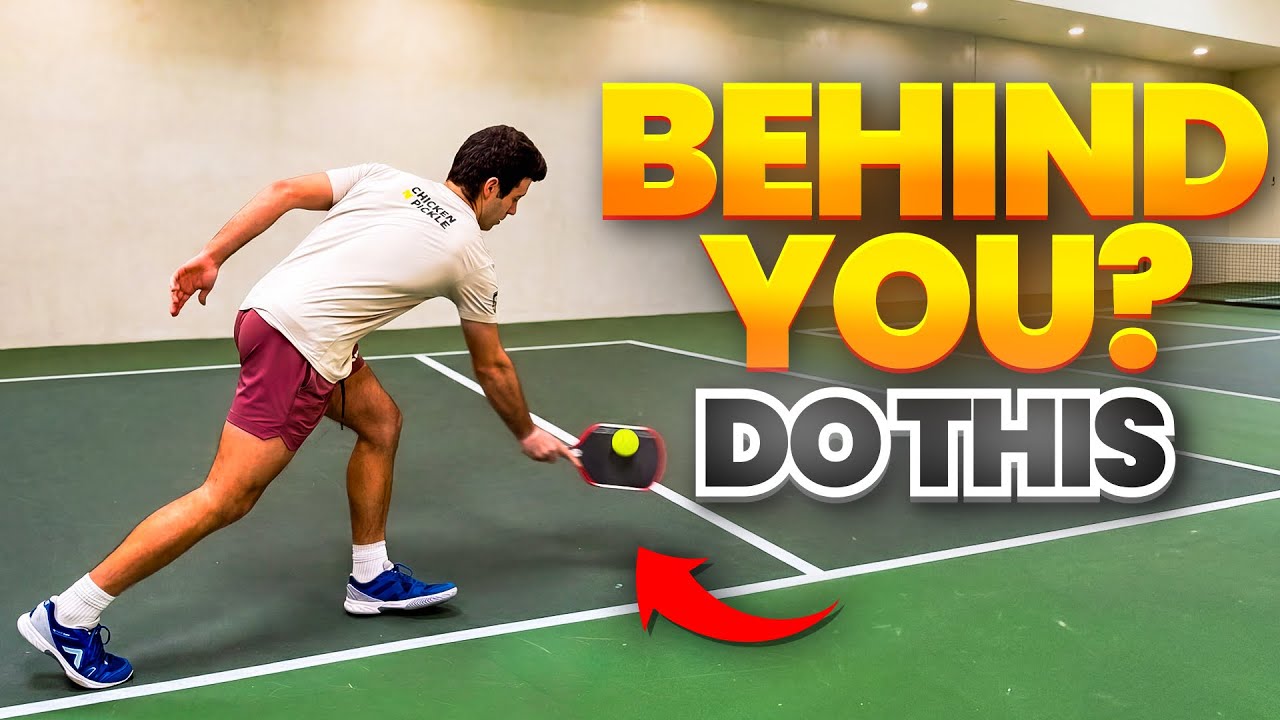
Drill 5: Third-Shot Drop Mimicry
What it builds: The mechanics of the third shot drop, specifically the swing path and contact point.
The third shot drop is the great separator in pickleball. You either have one or you don't. Most people don't because they've never isolated the mechanics.
Stand in your driveway or your living room and practice the swing motion without a ball.
Focus on: a low-to-high swing path, soft grip pressure (4 out of 10), and a stable, quiet shoulder. Your wrist should be firm through contact, not flopping.
Do 50 slow-motion reps, then 50 at game speed.
Once you add a ball, bounce it to yourself and drop it into a bucket or target zone on the ground roughly 15 feet away. The goal is arc, not power.
Check your skill development fundamentals if the ball keeps going long.
The Dink Media Team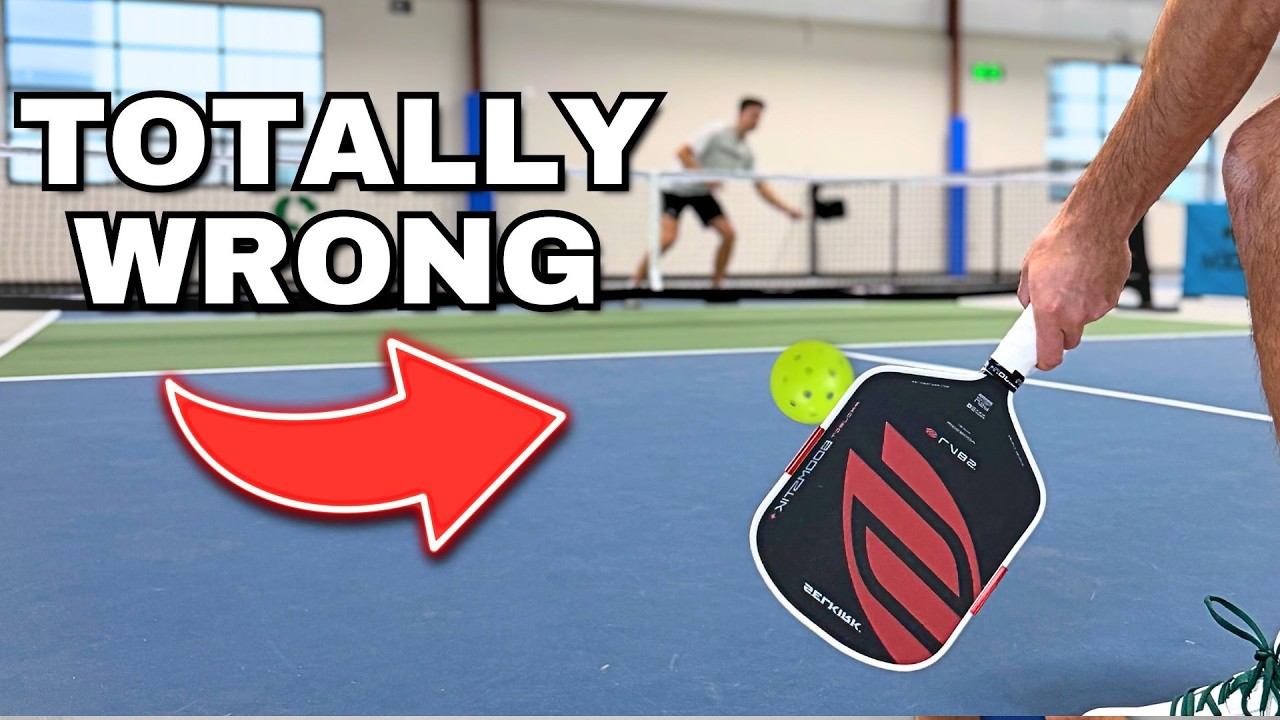
How Do You Build Pickleball Speed and Agility at Home?
Pickleball-specific agility training at home is built around three things: lateral quickness, explosive first steps, and deceleration control.
You don't need a court for any of them.
Ladder drills on a flat surface (or a rope ladder laid flat) cover the lateral and deceleration piece.
The two-in, two-out pattern, both feet in each rung, side shuffle, directly mirrors the footwork you use to cover cross-court attacks.
Do 5 minutes of ladder work before every home training session.
Jump rope handles conditioning and footwork simultaneously.
Research from the Journal of Human Kinetics links rope training to improved reactive agility in racket sports.
Aim for 10-minute sessions with varied patterns: alternating feet, single-leg, lateral jumps.
Combine both with the shadow footwork patterns from Drill 2 and you have a complete agility circuit that translates directly to court positioning under pressure.
The Dink Media Team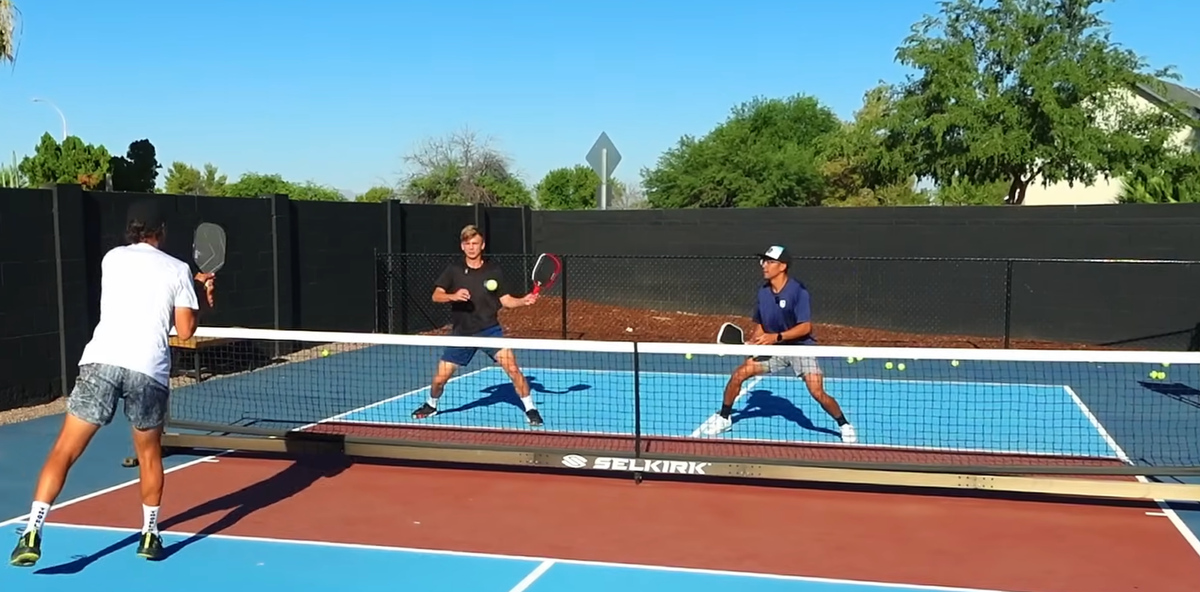
Drill 6: The Towel Reset Drill
What it builds: Soft hands, absorbing pace, and the feel of a reset dink.
Place a small towel on your kitchen counter or a low table. Practice hitting the towel softly with a paddle, working on absorbing rather than blocking.
The towel represents the net, you're ingraining the physical feeling of taking pace off the ball.
The goal is to make the paddle head stop at contact. Not punch, not follow through aggressively, stop. Soft hands are a feel, and feel is trainable.
This is the muscle memory that makes your reset look effortless when you're getting attacked at the line.
Try 3 sets of 20 contacts. Vary your contact point slightly with each rep. You can also use this drill to practice the transition zone shots that most players rush.
The Dink Media Team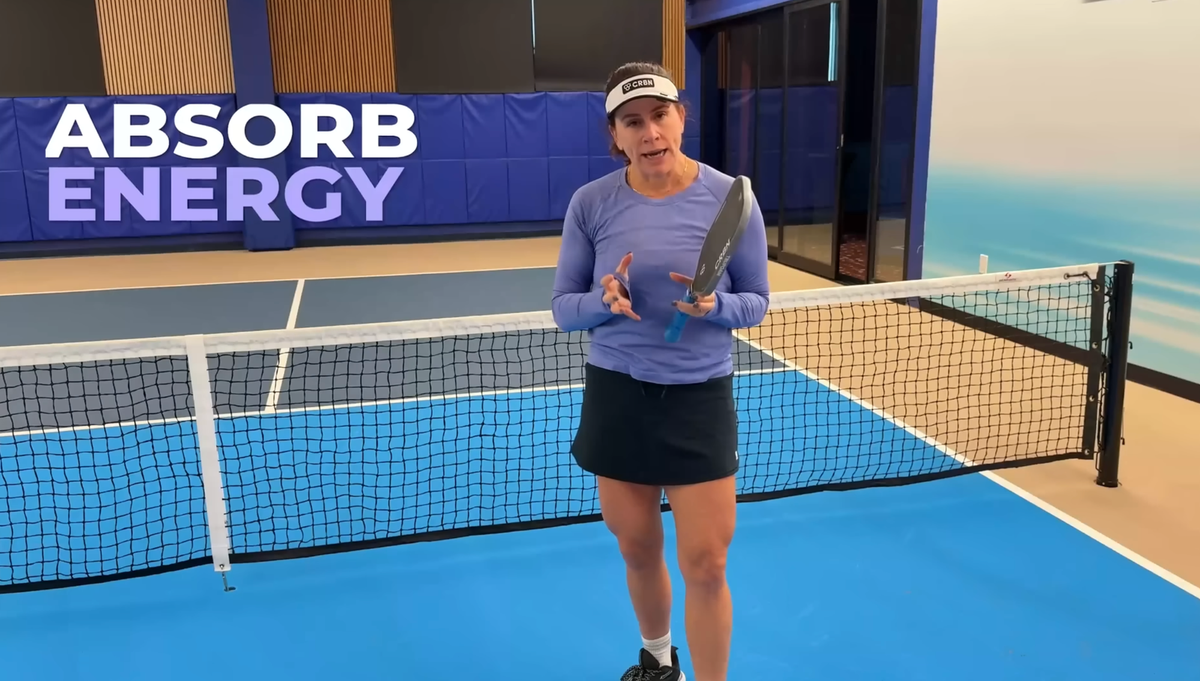
Drill 7: Isometric Core Work
What it builds: Rotational stability, balance through contact, and injury prevention.
Pickleball is a rotational sport. Every groundstroke, every drive, every reset involves your core stabilizing your body as your paddle arm moves.
If your core is weak, you compensate with your arm, and that's where bad habits and injuries come from.
The best at-home core work for pickleball is isometric: planks, dead bugs, and Pallof presses.
The Pallof press in particular builds anti-rotational strength, the ability to resist twisting when an opponent's pace is coming at you fast.
- Plank: 3 x 45 seconds
- Dead bug: 3 x 10 reps per side
- Pallof press (with a resistance band anchored to a door): 3 x 12 reps per side
According to NIH research on racket sport biomechanics, core stability training significantly reduces injury risk and improves stroke efficiency in side-to-side sports. Two benefits for one drill. Worth it.
The Dink Media Team
Drill 8: Video Analysis with Slow-Motion Replay
What it builds: Mechanical self-awareness and faster skill corrections.
This is one of the most overlooked ways to train for pickleball at home, and it costs nothing. Set your phone up on a tripod or lean it against a bag.
Film your swing mechanics in slow motion: third shot drops, overhead mechanics, reset technique.
Watch it back frame by frame. Are you dropping the paddle head before contact? Is your wrist flipping instead of staying firm?
Is your stance open when it should be closed?
Your phone camera is better than most coaches at catching subtle errors.
Use the practice tips framework: film, identify one specific flaw, drill it in isolation, film again. Repeat.
You can pair this with full training enhancement resources to get the most out of your court time when you do get back on.
The Dink Media Team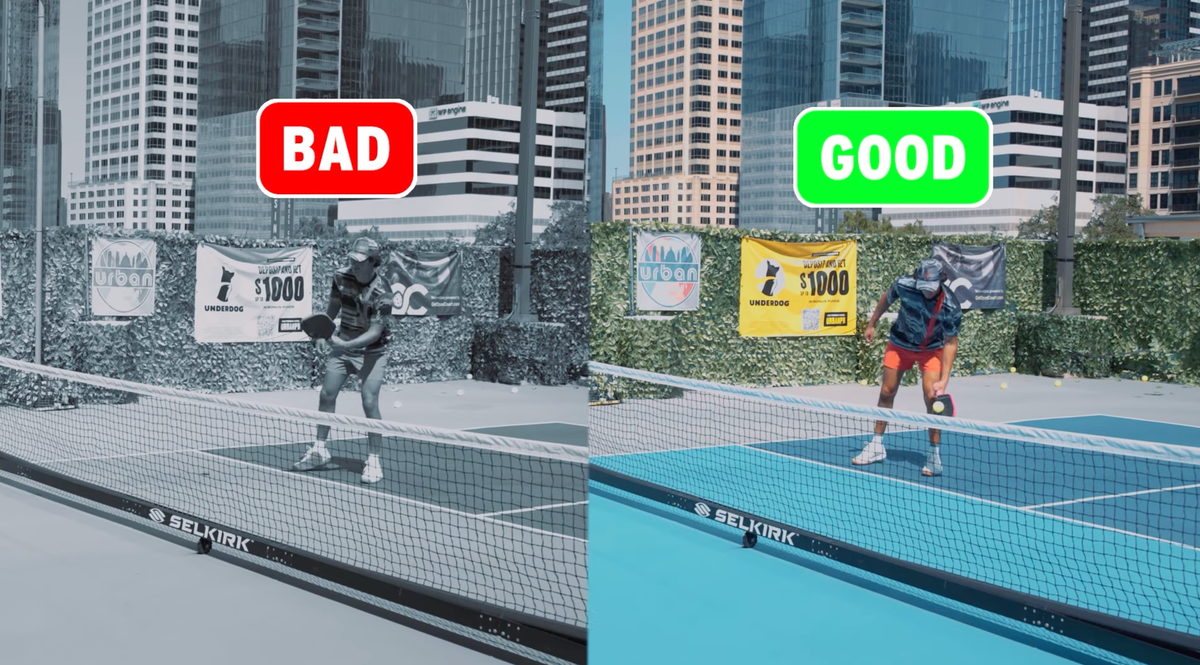
Does Off-Court Training Actually Transfer to Real Play?
It does, with one condition. The drills have to be specific to the movements pickleball demands. Generic gym cardio keeps you fit.
Pickleball-specific training at home makes you a better player.
The key is pattern transfer. When you shadow drill lateral footwork a thousand times at home, the pattern is already stored when you need it at the kitchen line.
The reaction ball trains the neural pathways your hands use to track a driven ball. Wrist exercises preserve the joint health that lets you play at volume.
The players who invest in 3 skill areas consistently, footwork, touch, and mechanics, improve faster than players who just play more.
Home training is how you do that without burning court time on fundamentals.
The Dink Media Team
Key Takeaways
- You can meaningfully train for pickleball at home with no partner and minimal equipment
- Split-step drills, shadow footwork, and reaction ball work build the reactive movement pickleball demands
- Wrist/forearm strengthening and core stability work are injury prevention and performance tools
- Video self-analysis is one of the most efficient off-court habits you can build
- Specificity matters, the drills need to mirror actual pickleball movement patterns to transfer
Frequently Asked Questions
Can you really train for pickleball at home without a court?
Yes, and many of the most impactful skill areas don't require court access at all. Footwork mechanics, reaction training, wrist strength, core stability, and swing mechanics can all be developed through deliberate at-home practice. The court is where you apply what you've built, home is where you build it.
What equipment do I need to train for pickleball at home?
Very little. A paddle, a reaction ball (under $10), a resistance band, and a phone for video analysis will cover most of the drills here. Optional additions include an agility ladder, a small towel, and light dumbbells for wrist curls. No ball machine or hitting wall required.
How often should I train for pickleball at home?
Aim for three to five sessions per week, each 20 to 30 minutes. Consistency beats intensity for skill development. Shorter, focused sessions five days a week will outperform one two-hour cram session every weekend.
How do I improve my reaction time for pickleball at home?
Reaction ball drops are the most direct tool. Drop the irregular-shaped ball from chest height and catch it before the second bounce, alternating hands. Agility ladder drills with randomized pattern calls from a training partner (or a phone app) also build reactive speed. The key is unpredictability, your nervous system improves by responding to stimuli it can't anticipate.
What's the single best off-court drill for pickleball skill development?
Shadow footwork. It targets the movement patterns that drive almost every other skill on the court. When your feet are in the right place, your shots have time to develop. When they're not, nothing else matters. Build the footwork first and the rest of your game will follow.

Love Pickleball? Join 100k+ readers for free weekly tips, news & gear deals.
Subscribe to The Dink