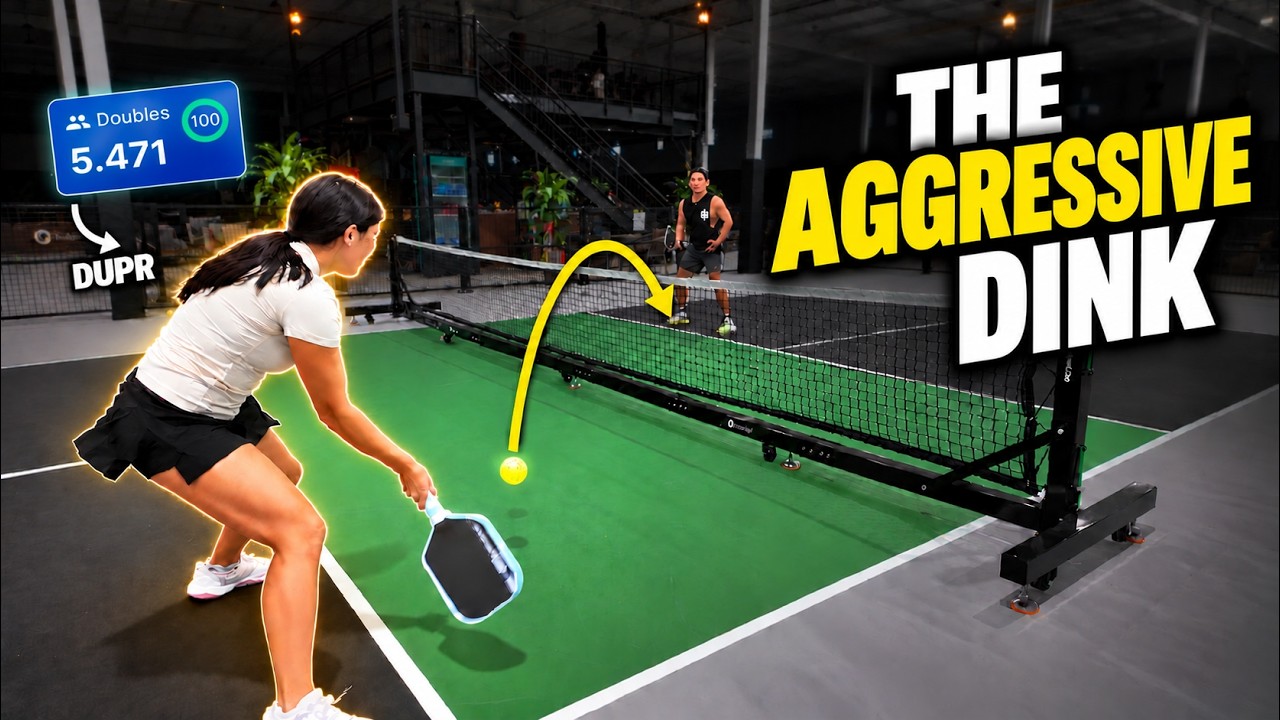


5 Pickleball Tips Every Player Should Know Before Their Next Game
The fastest way to improve is to fix the fundamentals most players ignore. This pickleball tip list from a pro coach covers ready position, the kitchen line, serve returns, counters, and attacking the dominant side.
The most useful pickleball tip is rarely a new shot, it is usually a small habit you have been getting wrong for months.
You drift back on balls you should take out of the air, you stand too close to the baseline on returns, and you hold your paddle in a spot that tells your opponent exactly where to attack.
These fixes are simple, but they change how every point starts and how every rally unfolds. Most players never address them because nobody points them out.
These five tips come from Michael Oakson on YouTube, a chiropractor and professional coach who has worked with everyone from beginners to touring pros.
We are breaking down each one so you can work on them in order, one at a time.
Love pickleball? Then you'll love our free newsletter. We send the latest news, tips, and highlights for free each week.
What Is the Ideal Ready Position in Pickleball?
The ideal ready position keeps your dominant side elbow in front of your body, not fully extended and not pinned against your ribs.
At the pro level, you will see the elbow sitting somewhere out in front of the torso without touching it.
That spot gives you room to move the paddle in either direction.
This is the pickleball tip everything else sits on, which is why posture and balance show up first in almost every pro lesson.
Your offhand matters just as much. If it hangs down by your hip, you are telling your opponent you are nowhere near ready for a two-hand backhand counter.
If it is locked onto the paddle, you cannot absorb a body attack with a one-handed push.
You want the offhand close enough to join the paddle quickly when a ball goes wide, but free enough to let you counter on one hand when you get attacked at the body.
The cue is simple: right elbow, left hand for right-handers.
Repeat the phrase “dink, elbow, offhand” until it becomes automatic, and build it into a real pickleball warm-up routine instead of a few lazy cross-court dinks.
How Do You Secure Your Kitchen Line?
You secure your kitchen line by refusing to let balls bounce in front of you when you can reasonably take them out of the air.
Every time you back up on a dink or third shot drop, your opponent mentally enlarges the court.
If I see you retreat on every ball, I know I can swing more confidently because I have more space to hit into.
Backing up sends a message you do not want to send. There is a fine line here, though.
Taller players tend to overreach, taking balls with a fully extended elbow and weight on their toes, which is one of the amateur mistakes that quietly feeds unforced errors.
Here is a simple rule to set your boundary:
- Get into your ideal ready position with the elbow just in front of your body.
- Draw an imaginary straight line from your heel down to the ground.
- Treat that spot as your cutoff, and take any ball that would land at or beyond it out of the air.
The exact spot varies with your reach, so find your own. Once opponents see you shut down depth, they will dink shallow instead.
That is your cue to attack off the bounce, which opens up patterns like the triangle.
Players like Anna Leigh Waters and Tyra Black show what this looks like at the highest level: they own their kitchen line, and opponents feel it.
Why Is the Serve Return So Important?
The serve return is the most important shot to fix because a good serve lands in the back third of the court, and you are catching it off a half bounce with only one place for the ball to go: up.
This pickleball tip starts with where you stand.
Take at least two to three steps back from the baseline, depending on the power of the serve.
That extra space lets the ball apex so you can move through it with your body weight.
The second mistake is going completely still at contact. Many players get into a good starting position, then move, stop, and move again.
Stopping kills your momentum right when you need it.
Your legs should be the primary driver, transitioning through the ball so you push it deep into the opposing court, which is exactly what the return targets pros aim for.
Practice the timing of gently moving through the ball in a controlled way, not hit, stop, then go.
From there, the transition from baseline to kitchen line becomes a lot less frantic.
 The Dink Media Team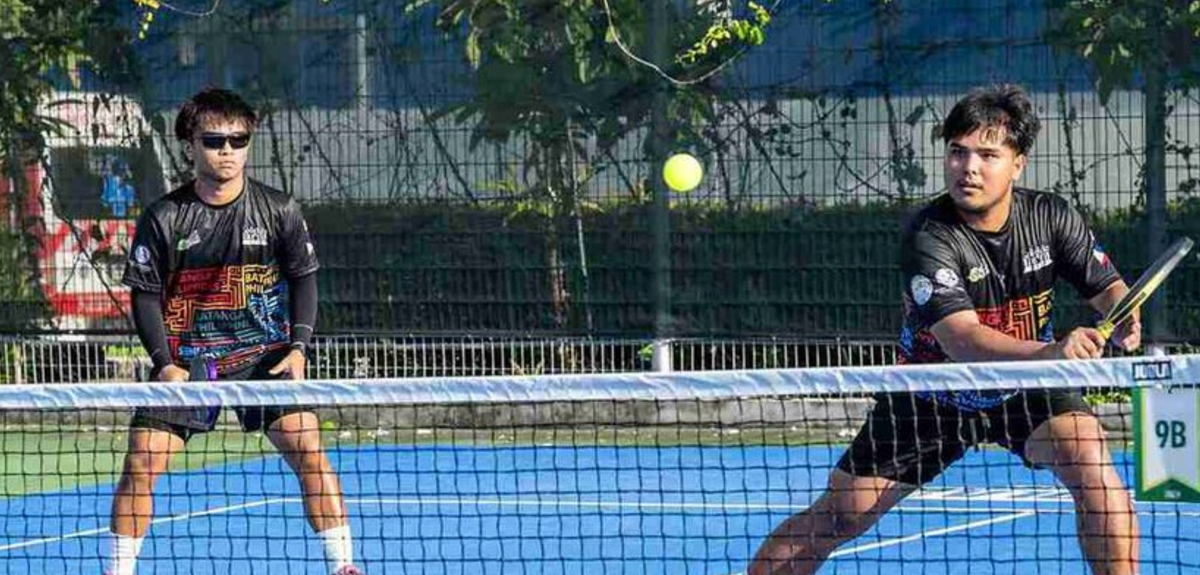
How Do You Counter an Attack Without Popping the Ball Up?
You counter an attack by feeling extension through the ball, not a downward swing and not an upward swing.
When you are on defense, your job is to absorb the force and redirect it, not to win the point.
This pickleball tip ties directly back to your ready position.
Players with fully extended elbows have swings that are too compact because there is nothing left to push with.
Players with their elbows jammed in tend to let the ball get too close to the body, which is how the chicken wing shows up.
A bent elbow in front of you gives you room to extend and make real contact.
Here are the common errors to avoid:
- High to low swings on high drives, which send the ball into the net.
- Lifting motions on balls hit at net height, which send the ball too high.
- Overswinging to kill the ball, when the goal is only to show you are not attackable.
Meet the ball where it is. A flat, extended counter keeps the ball low and consistent, and pros build whole counter routines around that feel.
For the version of this against hard hitters, learn when to block vs counter and stop guessing in the moment.
 The Dink Media Team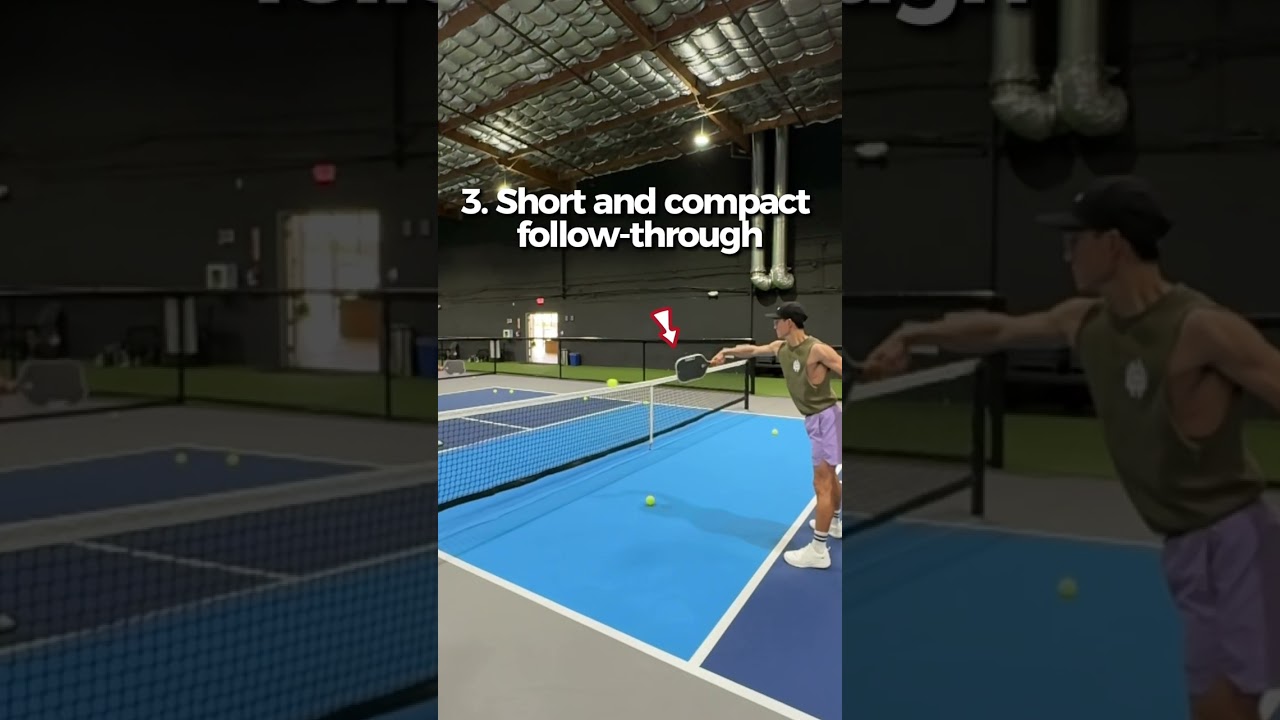
Why Should You Attack the Dominant Side?
You should attack the dominant side because most amateur players prefer a heavy backhand setup, and a ball at their right shoulder (for right-handers) puts them in an awkward chicken wing position.
If you do not know your opponent yet, assume they like their backhand counter better than their forehand.
Avoid attacking the body too much or just to the left of the body early on. Come out attacking that dominant side first.
Watch how they react. Players tend to respond in one of two ways: they slide into a backhand counter or subtly open up to a forehand.
Either way, they are pulled to their right, which creates an opening to their left.
Their partner now has to cover more court, and imbalances start spreading across the whole formation.
If you see a weak reaction, keep targeting that spot for the next few attacks, and sharpen your read on opponents while you do it.
Ben Johns is the clearest example of a player who owns the left side and the middle by understanding where opponents are vulnerable.
 The Dink Media Team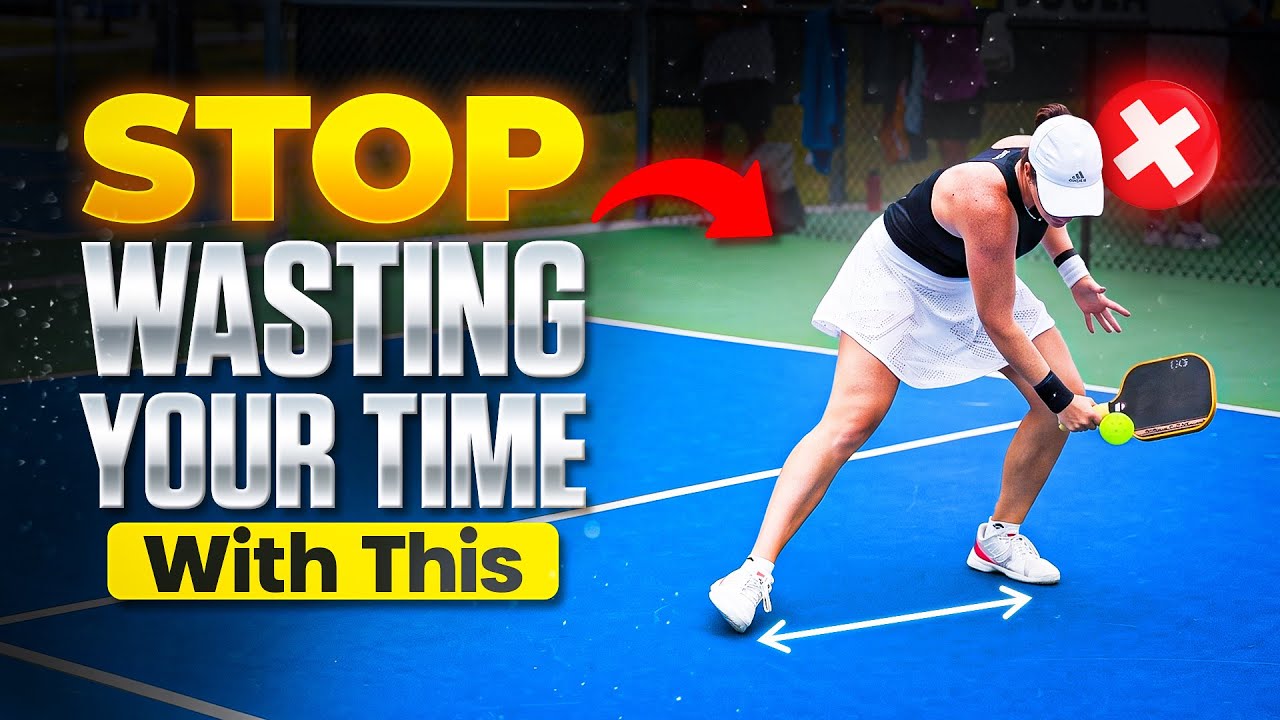
Which Pickleball Tip Should You Fix First?
Work on one pickleball tip at a time, in the order above. Trying to fix everything at once is the quickest way to fix nothing.
Start with your ready position, because the later tips build directly on it.
Check where your dominant elbow and offhand sit during every dink and every warm-up rally.
Here is the order to follow:
- Ready position: elbow in front, offhand close but free.
- Kitchen line: take balls out of the air at your heel line.
- Serve return: stand two to three steps back and keep your legs moving.
- Counters: extend through the ball and meet it where it is.
- Offense: attack the dominant side early and read the reaction.
The last pickleball tip is about gear, and it is the smallest one.
Footwear supports the movement you need on serve returns and kitchen line coverage, so if you are shopping, start with our picks for the best men’s pickleball shoes and best women’s pickleball shoes.
A fresh overgrip is the other cheap upgrade.
Before you buy a new paddle, try changing your grip, since that new feel in your hand is often what you actually wanted.
If you are still not sure where to start, 7 simple tips that actually change your game and these 11 tips to go from 3.5 to 4.5 will help you prioritize.
Frequently Asked Questions
What is the best ready position in pickleball?
Keep your dominant elbow in front of your body, not fully extended and not pinned to your ribs. Hold your offhand close to the paddle so you can add a two-hand backhand quickly but still counter on one hand if attacked at the body.
Where should you stand to return a serve in pickleball?
Stand two to three steps behind the baseline, depending on the power of the serve. That space lets a deep serve apex so you can drive through the ball with your legs instead of catching it off a half bounce.
Why do I keep popping the ball up when I counter?
You are most likely swinging upward or lifting through the ball. Focus on feeling elbow extension, not up or down, and meet the ball where it is instead of trying to kill it.
How do I stop opponents from attacking my kitchen line?
Take balls out of the air before they bounce past a spot in line with your heel when your elbow is in its ready position. When opponents see you protecting that line, they have to dink shallow, which gives you a chance to attack off the bounce.
Which side of the opponent should I attack first?
Attack their dominant side first, since most amateurs prefer a backhand counter and get jammed by a ball at the forehand shoulder. Watch how they react, because it will tell you where to attack next.

Love Pickleball? Join 100k+ readers for free weekly tips, news & gear deals.
Subscribe to The Dink