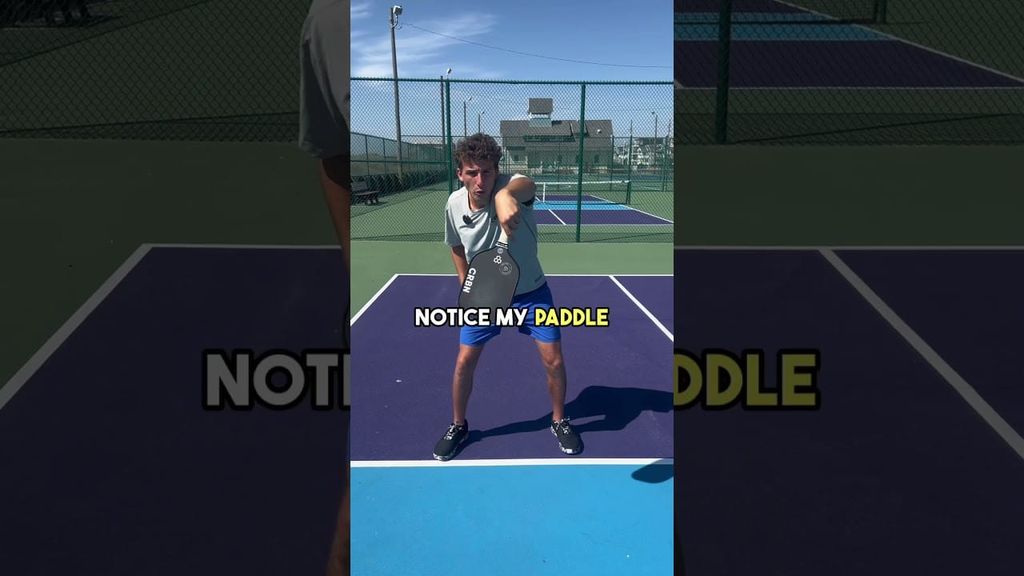
Attacking a dink out of the air starts before the ball even comes back to you. Fix your ready position and paddle angle and you will win far more kitchen exchanges.
You hit a great dink, your opponent is scrambling, and instead of taking the ball out of the air you just stand there and let the advantage disappear.
This is one of the most common missed opportunities at the kitchen line. Knowing how to attack a dink out of the air is not just about reflexes.
It is about what you do in the half-second after your dink leaves your paddle.
There are two specific things you need to fix: your ready position after you dink, and your paddle head angle.
This breakdown comes from tanner.pickleball on YouTube, and both fixes are simple enough to apply in your very next session.
Love pickleball? Then you'll love our free newsletter. We send the latest news, tips, and highlights for free each week.
Why Most Players Give Up the Advantage After a Good Dink
Here is the problem. You work hard to construct a tough dink, something low and wide that puts your opponent in trouble, and then you stand flat-footed and wait.
By the time the ball comes back, you are reacting instead of attacking.
You gave up the advantage you just created, which is the same critical kitchen line skill most rec players are missing.
The fix is to treat the moment right after your dink as part of the shot itself.
Your body needs to be moving forward and reaching before you even know what the return will look like.
This is what anticipatory positioning means at the kitchen.
It is not reckless, it is calculated pressure applied at exactly the right moment, and it starts with fixing the ready position that is costing you points.
Fix 1: Lean In and Reach After Every Pressure Dink
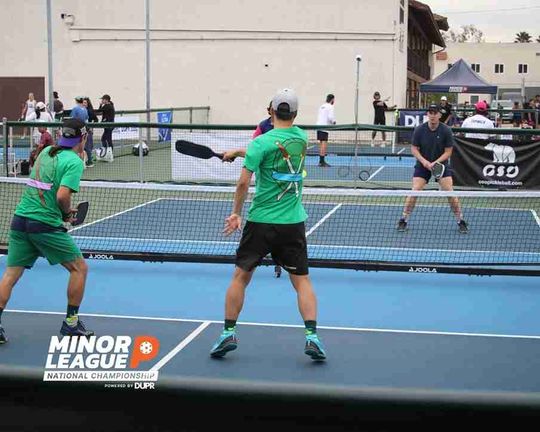
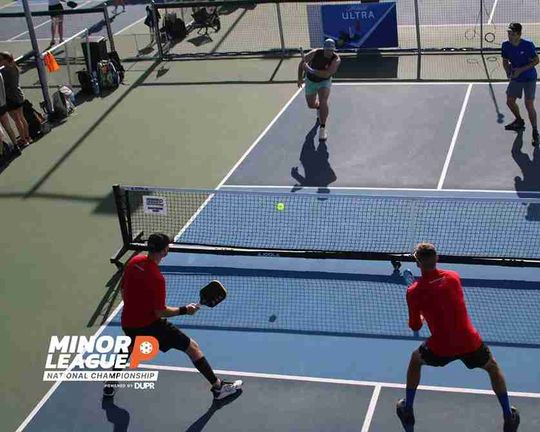
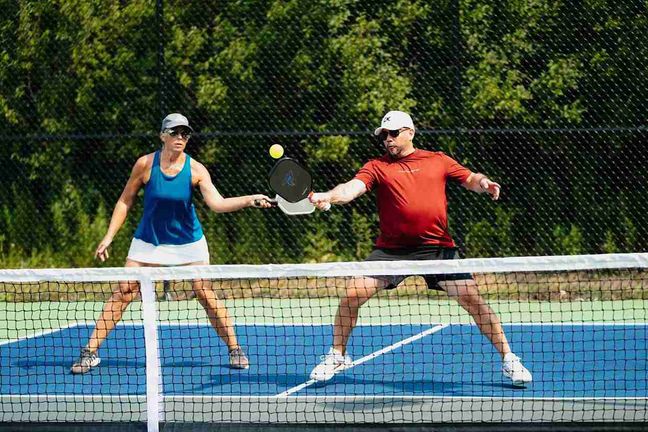
When you hit a dink you believe will give your opponent difficulty, your immediate next move should be to lean forward and extend your paddle arm out toward the kitchen line.
You are not guessing. You are positioning yourself to attack a dink out of the air before it has a chance to bounce, the same way modern kitchen strategy turns defense into offense.
Think about what this does to your opponent.
They are already stretched or off-balance trying to handle your dink, and now they look up and see you already there, inches from the net.
That pressure alone changes what they do.
Many players will rush or mishit simply because they feel the time pressure you have created, which is exactly why aggressive teams win more in the modern meta.
If they somehow hit a perfect return, you reset. But if they give you anything readable, you are already in position to volley it before it drops.
That is the entire point of this adjustment.
What Does "Reaching Out" Actually Look Like?
This is where many players get confused. Leaning in does not mean stepping into the kitchen illegally or lunging wildly.
It means your weight shifts onto your front foot, your paddle arm extends forward, and your chest moves closer to the net.
You are creating a shorter distance between your paddle and the incoming ball, which is the mechanical foundation behind every offensive technique players miss at the kitchen line.
Here is a quick checklist for proper post-dink positioning:
- Weight transferred to your front foot immediately after contact
- Paddle arm extended outward, not tucked to your body
- Eyes up and tracking where the return is coming from
- Feet still grounded, not jumping or leaping
- Body angled slightly forward, not standing straight up
You are not committing to a volley. You are making yourself ready for one while staying balanced enough to adjust if needed.
Good footwork is what makes this possible consistently. Read more on pickleball footwork fixes for safety and better shots to build the base that supports this move.
 The Dink Media Team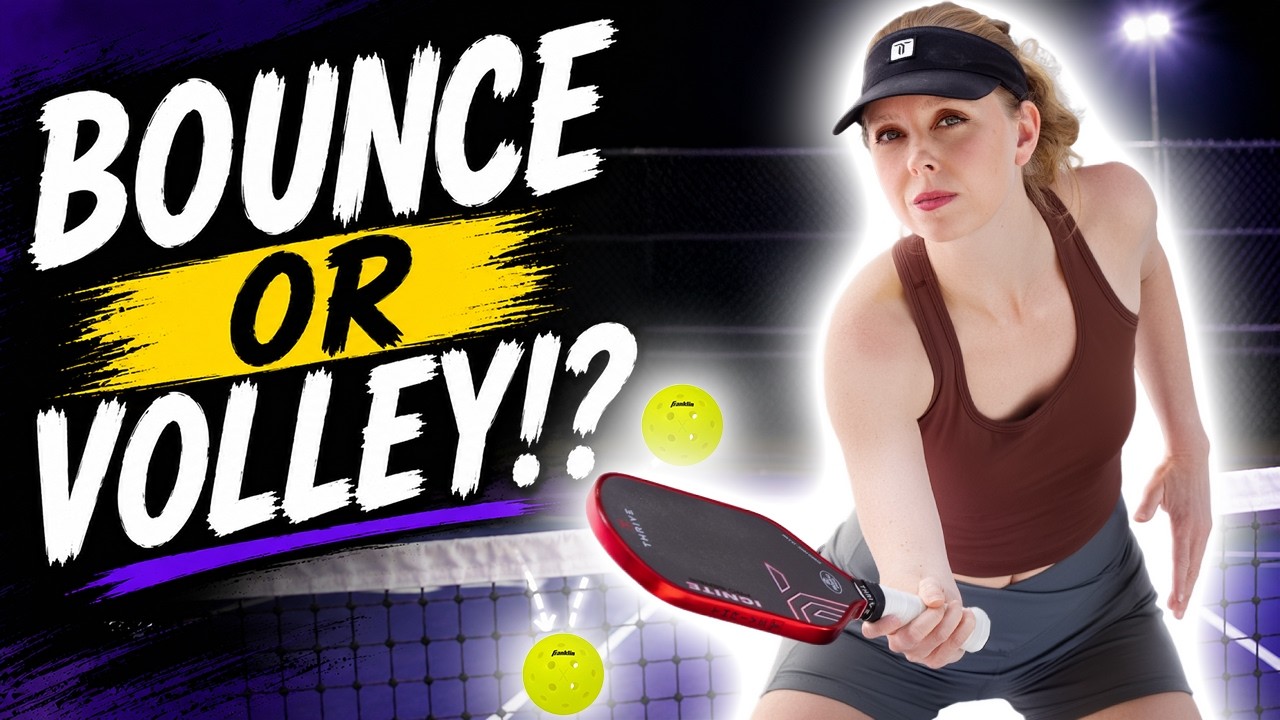
Fix 2: Drop Your Paddle Head Completely
This is the part of the technique that most players get completely wrong. And it is costing them points they should be winning.
The common instinct is to hold the paddle sideways or at a neutral angle when preparing to volley a dink. It feels natural. It feels ready. It is actually a problem.
When your paddle face is sideways, the ball can spray left or spray right on contact.
You have two directions you can miss, and at the speed and proximity of a kitchen exchange, that means errors you never see coming.
Drop your paddle head completely downward. The face should point upward, and the tip of the paddle should be angled toward the ground.
Here is why this works so well:
- You eliminate sideways misses entirely. When the paddle is dropped, the only direction you can miss is long. You cannot spray the ball left or right.
- Long misses are survivable. When you are leaning into the kitchen attacking from close range, a ball that goes slightly long is very difficult for your opponent to react to. They are not expecting it, they are too close, and the pace catches them off guard.
- Your margin for error becomes one-dimensional. One direction of miss is always better than three. You simplify the shot under pressure.
This is a counterintuitive fix, which is exactly why most players never make it.
If you are playing too passively and waiting instead of attacking, pair this paddle adjustment with forward lean and study the deadly mistakes that ruin aggressive dinking.
 The Dink Media Team
Why Does the Dropped Paddle Head Work Mechanically?
When your paddle is sideways, your wrist and forearm have more potential movement in multiple planes. That means more variables on contact.
When your paddle is dropped with the head pointing down, your swing path is essentially forced upward through the ball.
You are scooping with a controlled arc that naturally sends the ball forward and slightly up over the net.
The mechanics limit your mistakes rather than relying on you to be perfect every time.
That is the kind of technique that holds up under pressure, not just in practice.
It is also the fastest cure for popping the ball up, which you can troubleshoot further with these four fixes for popping the ball up and three technical tips for winning kitchen line hands battles.
 The Dink Media Team
How Do the Two Fixes Work Together?
The lean-in positioning and the dropped paddle head are not separate skills. They create a single attacking system at the kitchen line.
When you lean in after a good dink, you shorten the distance the ball has to travel to reach you. That cuts your opponent’s reaction time down significantly.
Combined with a dropped paddle head, you attack a dink out of the air with a controlled, directional shot that your opponent simply does not have time to handle.
Think about it from their side. They are dealing with a tough dink, they are stretched, and when they look up they see you already reaching forward with your paddle ready.
That is a lot of information to process in less than a second.
Even if you miss long, the proximity and pace mean they struggle to get out of the way. That pressure is part of your strategy, not a mistake.
This connects directly to how pros approach the kitchen.
Anna Leigh Waters and other elite players constantly use forward body pressure to create discomfort before they even make contact, something you can see up close in a day in the life of Anna Leigh Waters at the Mesa Cup.
To build attacks your opponents cannot read in advance, study how to master dink placement and control the kitchen line.
 The Dink Media Team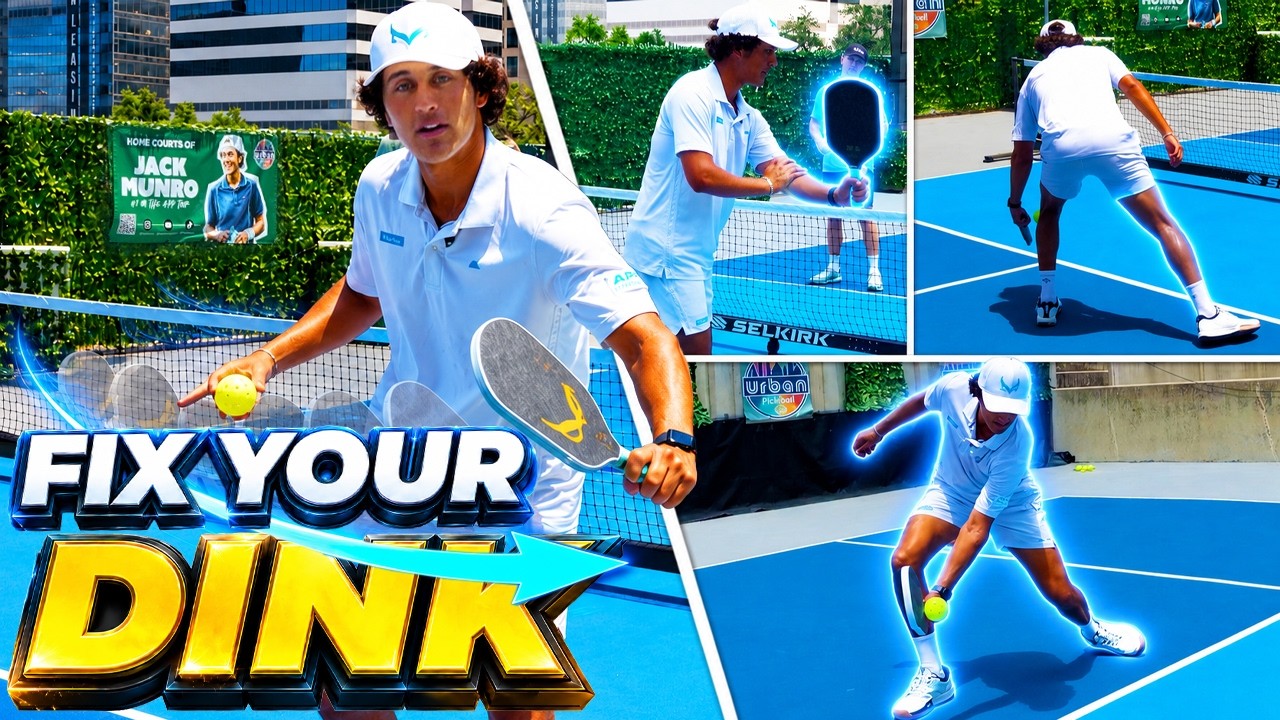
When Should You Actually Attack a Dink Out of the Air?
Not every dink is worth attacking.
The lean-in positioning is reserved for moments when you have hit something genuinely difficult for your opponent to handle cleanly.
Here is how to read the situation correctly:
- Did your dink land low and wide? That is a signal to lean in.
- Is your opponent moving sideways or reaching off-balance? Lean in.
- Did you hit a sharp cross-court that jammed them? Lean in.
- Did your dink sit up high and comfortable for them? Stay back and reset your position.
- Are you uncertain about where the return is going? Stay balanced rather than committing early.
The goal is to apply pressure only when you have actually created an opportunity.
If you rush forward on every single dink, you will get punished when your opponent handles a comfortable return and attacks you while you are off balance.
Knowing the boundary matters too, since the official pickleball rules govern exactly where your feet can be when you volley.
For more on the legal side of the line, read the essential non-volley zone rules explained.
This is the same concept behind pro speed up strategy at the kitchen line. You earn the right to attack, and then you take it decisively.
 The Dink Media Team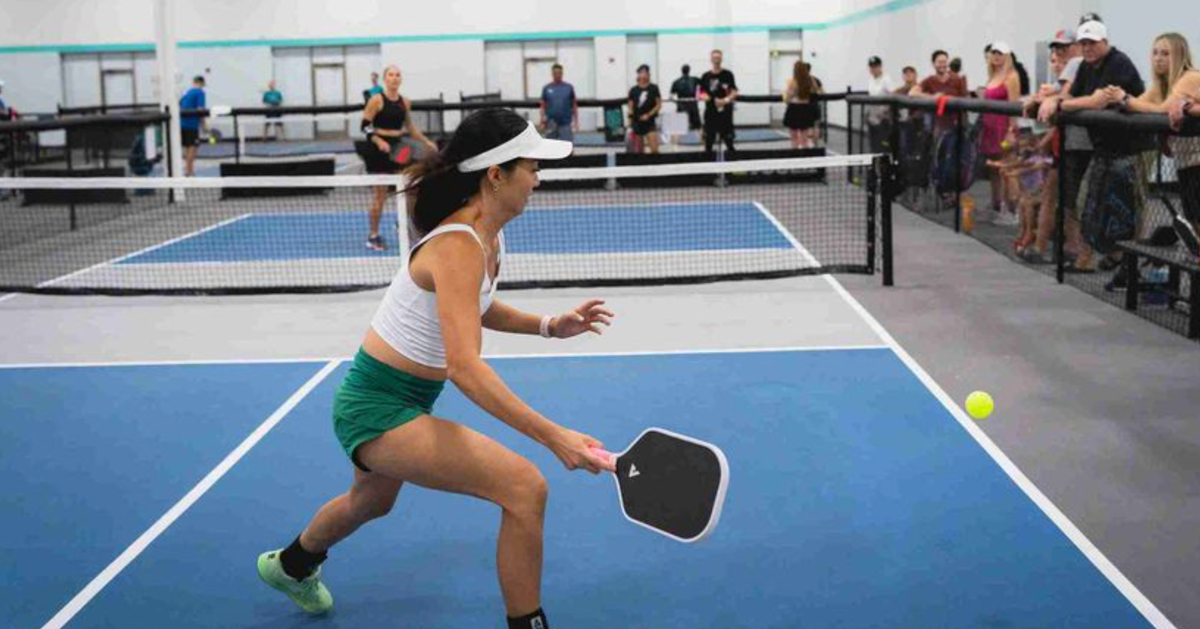
The Common Mistake That Kills This Technique
Players learn the lean-in move and immediately start using it on every single dink. That is the mistake.
If you lunge forward on a dink that sat up nicely for your opponent, you are handing them an easy put-away while you are completely out of position.
Patience and aggression have to work together. Hit the dink. Read the result. If it was a good one, lean in.
If it was not, stay composed and reset the exchange, which is where the reset shot becomes your most overlooked weapon.
This kind of smart shot selection is exactly what separates 3.5 players from 4.0 and above.
For the full breakdown on that jump, read 11 tips to go from 3.5 to 4.5 in pickleball.
 Alex E. Weaver
Drills That Help You Attack a Dink Out of the Air
The best way to build this into your game is through deliberate drilling before you try it in a live match.
Start with a partner feeding you dinks from across the net. Practice leaning in and volleying with your paddle head dropped, without worrying about placement.
Once that feels natural, add the read.
Have your partner mix in some comfortable feeds and some tough ones, and your job is to identify which ones deserve the lean-in attack and which ones you should let bounce.
With pickleball participation still climbing nationwide, court time is harder to get, so make your reps count. For a structured framework, check out three pickleball drills disguised as games.
The two fixes here are not complicated. They just require you to change a habit you have probably built over hundreds of hours of play.
Give them real repetitions and they will start showing up automatically when it counts.
Frequently Asked Questions
What does it mean to attack a dink out of the air in pickleball?
Attacking a dink out of the air means volleying your opponent's return before it bounces, while leaning forward at the kitchen line to apply maximum time pressure. It is most effective after you have hit a dink that puts your opponent in a difficult position. The goal is to remove their recovery time entirely.
Why should I drop my paddle head when volleying a dink?
Dropping your paddle head eliminates sideways misses, which are the most common errors on quick kitchen volleys. With the paddle head down and face angled upward, the only direction you can miss is long. A long miss from close range is still very hard for your opponent to handle because of the pace and proximity.
Is it a fault to lean into the kitchen when volleying?
Leaning forward is legal as long as your feet do not enter the kitchen before the ball bounces, and you do not follow through with your momentum into the non-volley zone after the shot. You can reach your paddle across the kitchen line to volley the ball. Just keep your feet planted behind the line during the swing.
How do I know when a dink is worth attacking out of the air?
Attack when your dink lands low, wide, or forces your opponent to stretch and reach. If they are off-balance or moving awkwardly to retrieve it, that is your signal to lean in. If your dink sat up high and comfortable for them, stay back and wait for a better opportunity.
Can this technique work at lower skill levels like 3.5?
Yes, and it is actually a great way to accelerate your improvement as a 3.5 player because it teaches you to think about positioning immediately after contact rather than just watching the ball. The mechanics are simple and the results are visible quickly. Start drilling it with a partner before applying it in match play.

Love Pickleball? Join 100k+ readers for free weekly tips, news & gear deals.
Subscribe to The Dink