Bad pickleball footwork does not just hurt your shots, it puts you at real risk of falling and injury. Here are five movement patterns that fix both problems at once.
Bad pickleball footwork is not just costing you points. It is putting you at real risk of falling on the court.
Most players focus on paddle technique and shot selection while completely ignoring how they move.
That is a mistake. The way your feet work determines your balance, your shot quality, and your safety every single time you step on the court.
These five movement patterns come from Tony Roig Pickleball (formerly In2Pickle) on YouTube, built specifically to help players move smarter, stay balanced, and avoid the injuries that end seasons early.
Love pickleball? Then you'll love our free newsletter. We send the latest news, tips, and highlights for free each week.
Why Footwork Is the Real Foundation of Your Game
Every bad shot you hit has a footwork problem behind it. You reach because you did not step. You pop it up because you were off balance.
You fall because you crossed your feet.
Fix the movement, and the shots follow. Here is exactly how to do it.
Movement Pattern 1: Stop Cross-Stepping at the Kitchen Line
Open lateral steps are safer and more effective than cross steps at the non-volley line, full stop.
The cross step, where you bring one foot in front of the other while moving laterally, creates three serious problems.
Here is what goes wrong every time you do it:
- Kitchen violations: When you cross step, your momentum often carries a foot into the non-volley zone. If you volley from there, it is a fault.
- Balance loss: The crossed position is wobbly. You have to unwind or recover, adding extra movement at exactly the wrong moment.
- Body turns away from play: A cross step rotates your torso. Now you are not square to the action, and you are exposed to hard attacks while you unwind.
The fix is simple. Keep your body square to the net and push off the outer leg in the opposite direction you are headed. Open, close, open, close.
That is lateral footwork done right. If you need to cross step to reach a short ball, that is fine occasionally.
But understand that every cross step adds imbalance and risk. If you are not comfortable with it, let the ball go. There is always another rally.
If you want to drill this movement pattern until it becomes automatic, check out this pickleball footwork drill that fixes lateral movement fast.
Movement Pattern 2: Stop Reaching, Start Stepping
Reaching for the ball is one of the most common causes of falls in pickleball.
The moment your body weight tips past your base, you are one small slip away from hitting the ground.
This happens on dinks and volleys constantly. You see a ball slightly out of reach and you lean toward it instead of moving your feet.
The lean puts your center of gravity outside your support base, and now you are falling in slow motion.
The solution is to take a step before you hit the ball.
Move your feet so the ball is inside your base, not outside it. One step to establish position changes everything about the shot and about your safety.
This concept, keeping a stable base under your body through your shot, is what separates controlled, consistent dinking from scrambled, erratic hitting.
You can see how this directly affects court positioning and shot quality across every part of your game.
 The Dink Media Team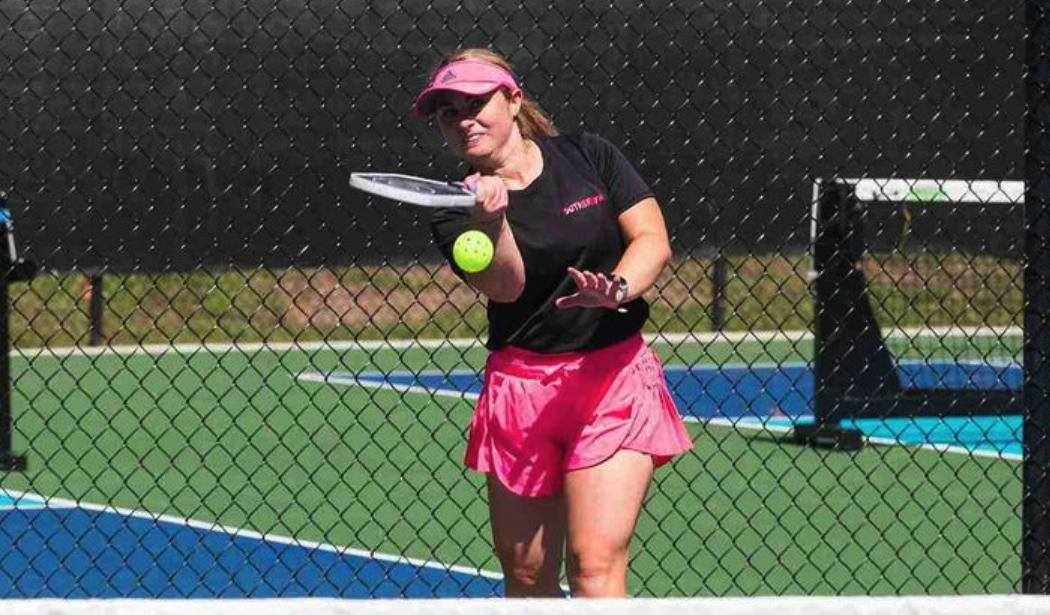
Is Ducking Away from Hard Shots Actually Dangerous?
Yes, ducking is a poor response to hard drives, and it gets more problematic the older you get.
Movement Pattern 3 covers what to do when a banger is teeing up. Most players either freeze or duck. Neither works well.
When you duck, your head goes down and you are still a wide target. The ball can still hit you on the top of the head or across the back.
And getting into that crouched position quickly is not easy or safe for most recreational players. Here is what actually works instead:
- Turn sideways: Boxers do not stand square to their opponent for a reason. A sideways profile is a much smaller target. Turn your body so you present a narrow silhouette to the incoming ball.
- Step to one side: Pick a direction you prefer and simply step out of the path of the ball. Let it travel through the space you were standing in.
There is also a timing element here that most players miss entirely. Do not wait for the ball to be flying at you before you move. Watch the banger's setup.
The moment you see them winding up for a hard hit, start stepping out of the way. Anticipation is the real skill.
Understanding how to beat a banger in pickleball goes beyond just surviving their attacks. Movement is your first line of defense.
 The Dink Media Team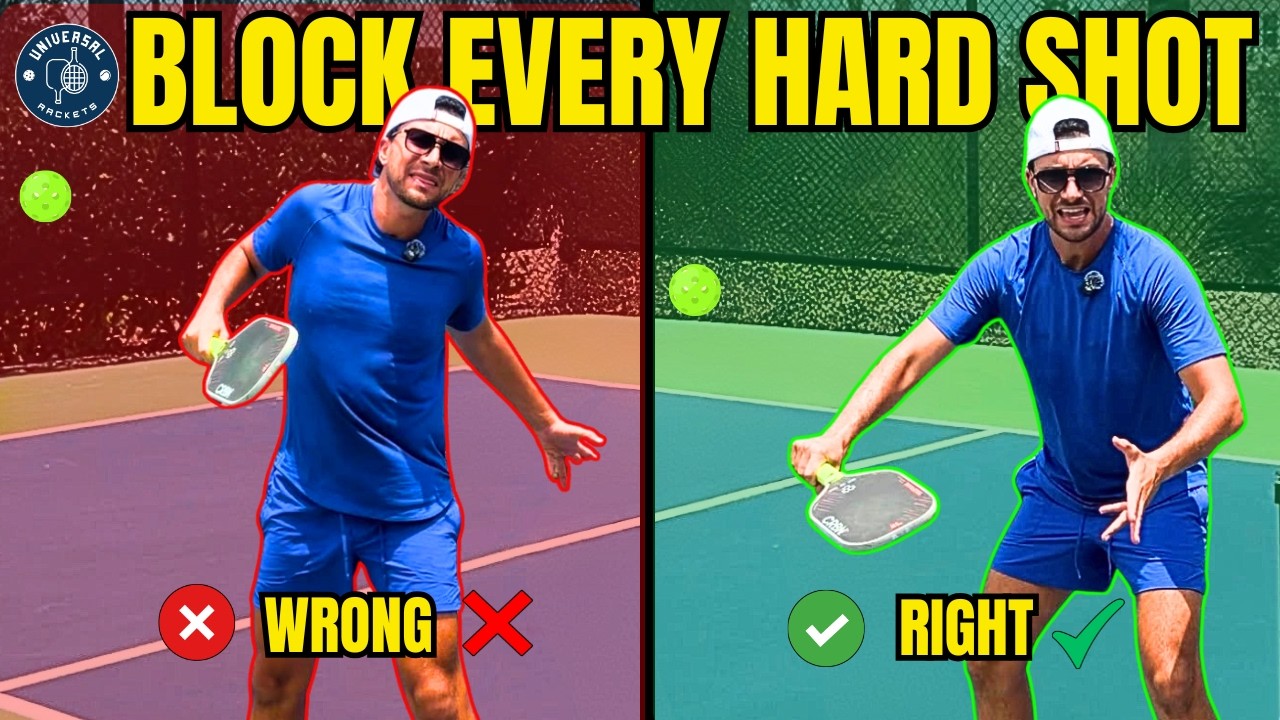
Movement Pattern 4: What Is a Split Step and Do You Need to Jump?
A split step is simply the act of regaining your balance before hitting a shot or changing direction. You do not need to jump.
Players over 50 especially get stuck on the mechanics of the split step.
They have seen it described as a little hop or jump, and they either cannot do it comfortably or they waste energy trying to execute a perfect textbook version.
Here is what actually matters. Before you hit the ball or change direction, your weight needs to be balanced and your body needs to be in a ready position.
Two versions both work equally well:
- The hop version: You move forward, take a small hop, land with both feet, and drop into your ready position. Looks clean. Works great.
- The step version: You move forward, bring your trailing foot up to meet the lead foot, establish balance, and settle into your ready position. Same result. No jumping required.
Focus on the outcome, not the motion. Balanced. Ready. Set. That is a split step.
Once you are set coming up through the transition zone, you can move laterally to handle a wide ball, absorb a hard shot, or set up a punch volley.
This matters most on the return of serve. You want to arrive at the kitchen line balanced and ready, not stumbling to a stop.
Mastering court positioning for seniors starts with getting this transition right every time.
 The Dink Media Team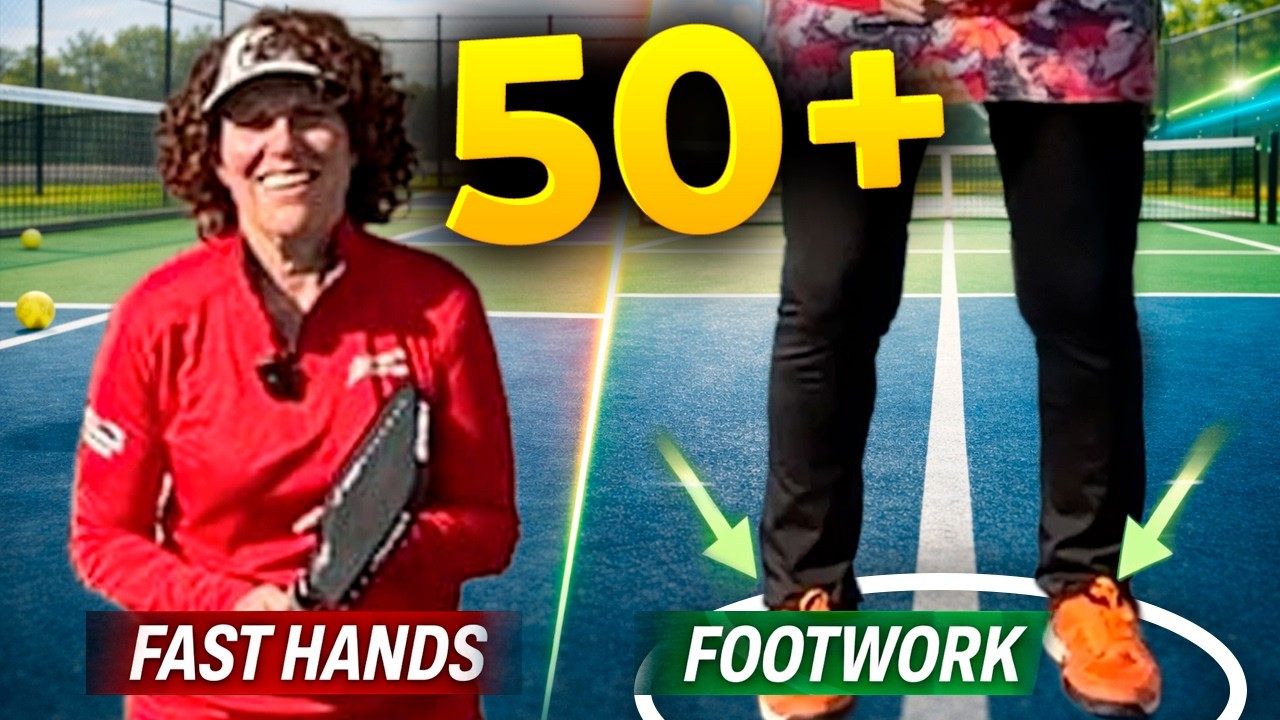
Movement Pattern 5: How Do You Move Back for Lobs Without Getting Hurt?
Moving straight backward for a lob is the single most dangerous movement in recreational pickleball.
It causes more serious injuries than almost anything else on the court.
When you track a lob by looking up and walking or running backward, three things go wrong at once.
Your weight shifts over your heels, your vision is aimed at the sky instead of the court surface, and if you stumble there is nothing to break your fall except your wrist or the back of your head.
The solution uses a technique called open the door, sometimes called "after you." Here is how it works for each hand dominance:
For right-handed players:
- Shift your weight into your left foot.
- Swing your right leg back and open your body to face the sideline.
- From this lateral position, either take the ball out of the air with a punch volley, or close back the other direction and run forward toward where the ball will land.
For left-handed players:
- Shift your weight into your right foot.
- Swing your left leg back to open your body laterally.
- Then either go for the volley or turn and run forward to the ball.
The key principle in both cases is that you are always moving in a forward direction relative to your body.
Your feet go where your eyes go. You are never stumbling blind into open space behind you.
Until you have this movement dialed in, consider letting lobs go. Seriously. A lost point is recoverable.
A fall that injures your wrist or head is not. The extra coaching tip here is blunt: do not risk your body chasing a lob you are not ready to handle safely.
There is a lot of crossover between this technique and general lob defense strategies for senior players.
Learning to read the lob early also helps you get into position before the pivot.
 The Dink Media Team
Putting All Five Patterns Together
These five movement patterns are not isolated techniques. They build on each other.
Open lateral steps keep you balanced at the net. Stepping instead of reaching keeps your base under you. Turning sideways protects you from bangers.
The split step resets your balance between shots. And the open-the-door pivot keeps you safe on lobs.
If you are playing over 50, these are not optional refinements. They are the foundation of playing this sport without getting hurt.
Senior players who move smarter consistently beat younger players who rely on raw athleticism.
Fix your pickleball footwork and you fix your balance. Fix your balance and you fix your shots. Fix your shots and you stay on the court longer, healthier, and with a lot more confidence.
If you want to go deeper on how bad movement patterns show up in your third shot, take a look at why footwork is failing your third shot drop.
The connection between your feet and your most important shot is direct and fixable.
And if you are dealing with pickleball injuries already, or want to avoid the ones that send players to surgery, getting your movement patterns right is the best insurance you have.
Frequently Asked Questions
What is the safest way to move laterally in pickleball?
The open lateral step is the safest way to move sideways at the kitchen line. Keep your body square to the net, push off the outer leg, and move in an open-close pattern without crossing your feet. Cross steps increase your risk of falling and create non-volley zone violations.
Why should I avoid stepping backward to chase a lob?
Moving straight backward is dangerous because your weight shifts over your heels and you cannot see the court surface behind you. If you stumble, there is nothing to break the fall except your wrist or your head. Use the open-the-door pivot to turn sideways and move forward toward the ball instead.
Do I need to jump when doing a split step in pickleball?
No. A split step is just the act of regaining your balance before a shot or a direction change. You can simply bring your trailing foot forward to meet your lead foot and settle into a ready position.
The outcome matters, not the mechanics.
How do I avoid reaching for balls at the kitchen line?
Take a step before you hit the ball. Any time you feel yourself leaning or reaching, your feet have not moved enough. One step to reposition puts the ball inside your base and gives you a stable platform for a controlled shot.
What should I do when a banger is about to hit a hard drive at me?
Turn sideways to reduce your target profile and step to one side to get out of the ball's path. Start moving the moment you see the banger setting up, not after the ball is already flying at you. Anticipation is the skill that makes this work.

Love Pickleball? Join 100k+ readers for free weekly tips, news & gear deals.
Subscribe to The Dink