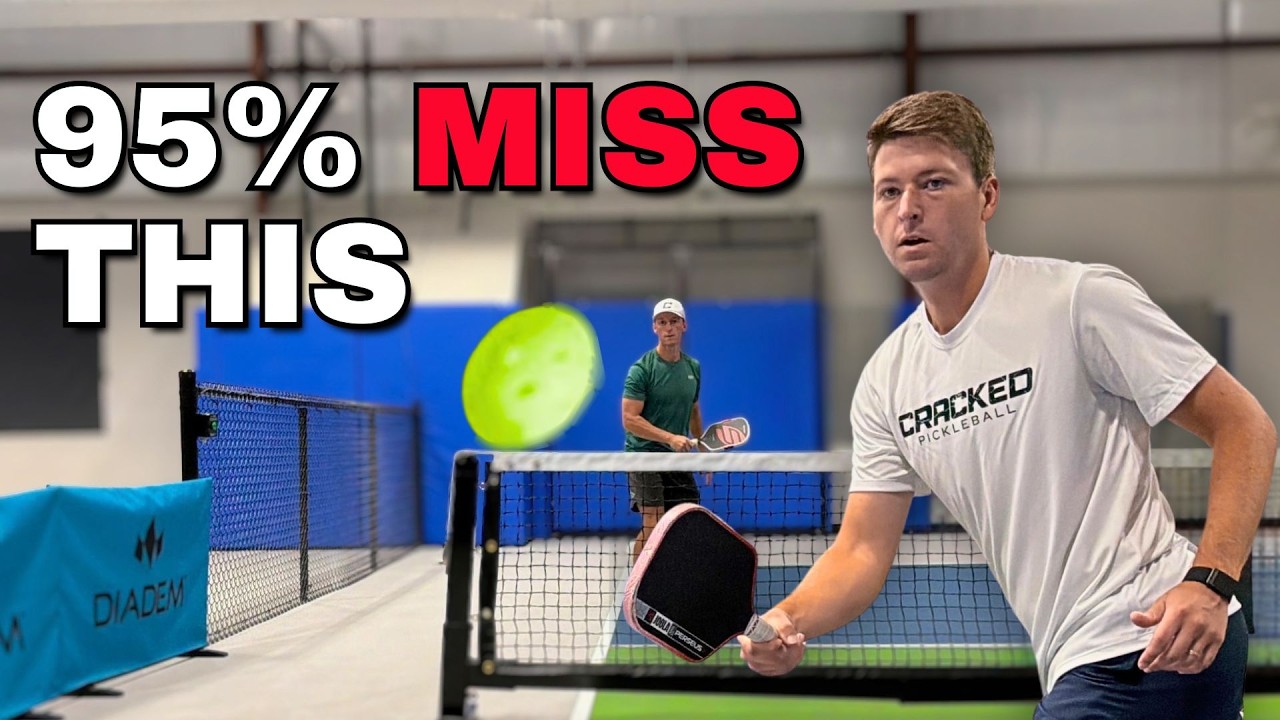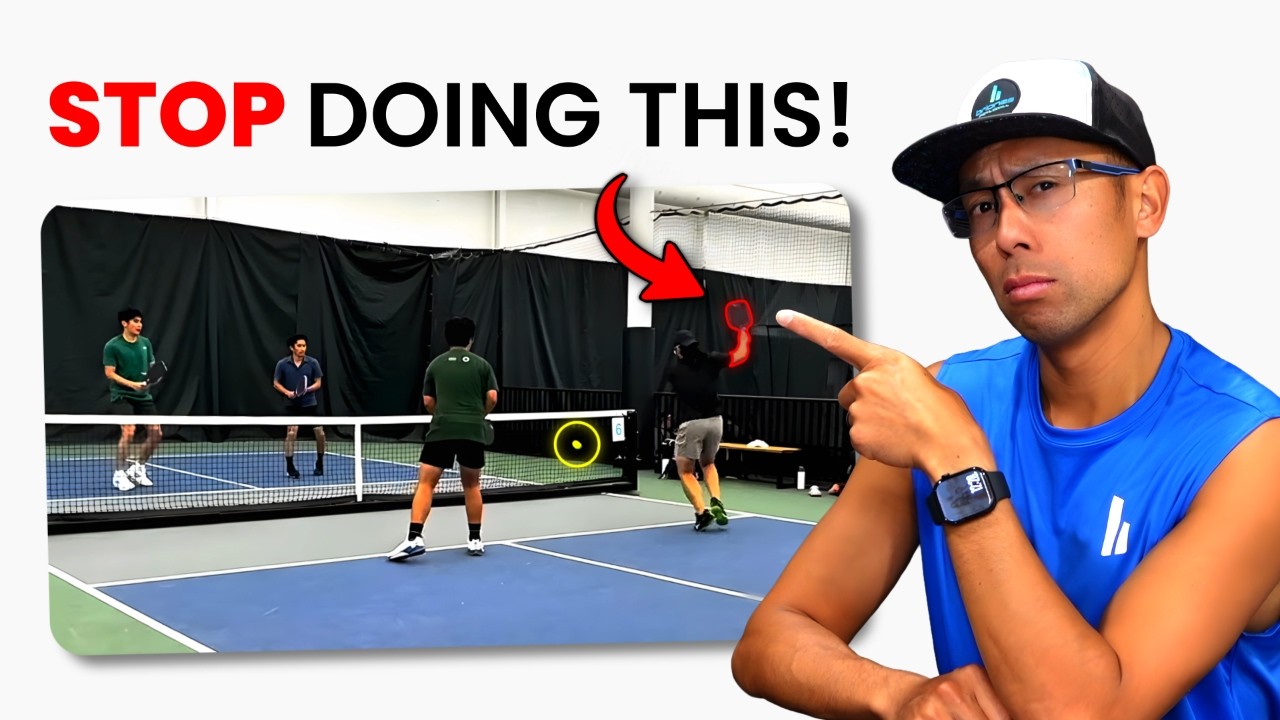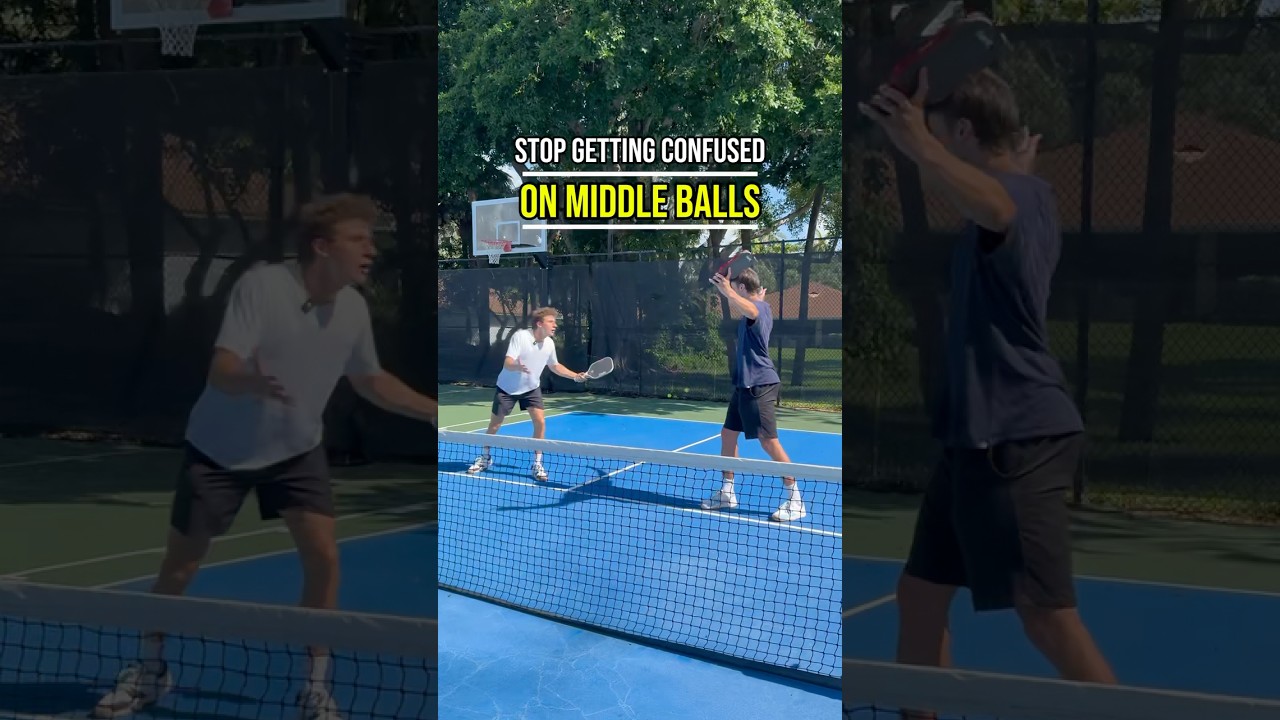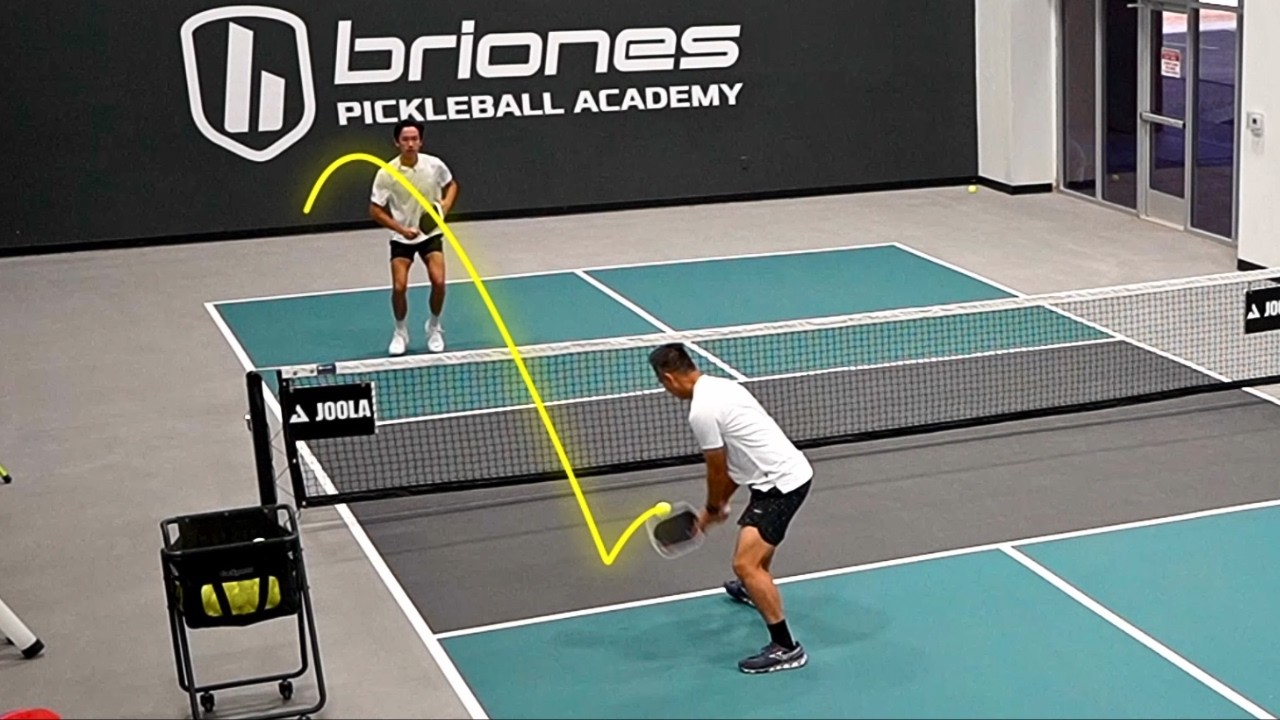
Most players hit their 3rd shot drop and then stand still, and that single mistake traps them in the transition zone. Fix your momentum and your drop gets dramatically better, fast.
You hit what feels like a decent 3rd shot drop, but instead of moving forward, you hesitate.
You watch the ball. Your opponent resets easily and now you're stuck at the baseline wondering what went wrong.
The problem usually isn't your swing. It's what happens before and after contact.
This breakdown covers the core mechanics behind a consistent, effective 3rd shot drop, including how momentum, contact point, and topspin work together to get you to the kitchen line faster.
The tips here come directly from More Briones Pickleball on YouTube, where these concepts are demonstrated with real return-of-serve situations.
Love pickleball? Then you'll love our free newsletter. We send the latest news, tips, and highlights for free each week.
Why the 3rd Shot Drop Is So Hard to Execute Consistently
The 3rd shot drop is one of the most important shots in pickleball, and one of the most misunderstood.
Most players treat it like a slow, defensive push when it's actually a controlled offensive tool.
The goal is to land the ball softly in the kitchen so your opponents can't attack it. But hitting it softly doesn't mean hitting it passively.
There's a real difference between a drop that survives the rally and a drop that puts pressure on your opponents.
That difference comes down to a few specific mechanics, and national participation data compiled by SFIA shows just how many new players are now fighting through this exact learning curve.
What Does the Return of Serve Have to Do With It?
Your shot selection on the third shot should be based on what the return of serve gives you. Not every ball deserves a drop.
If the return is sitting up high, you have options.
A drive, a hybrid shot (sometimes called a drip), or a full drop all become available depending on ball height and your position.
When the return is average, not low enough to attack and not high enough to rip, the drop is almost always the right call. Recognizing that moment is the first step.
Here's the simple framework:
- High return (above waist): consider a drive or hybrid shot
- Mid return (around waist): drop or drip depending on your momentum
- Low return (below waist): the drop is usually your only safe choice
Understanding the right shot for each third shot situation will save you from trying to force drives off bad positions.
The Forward Momentum Rule Most Players Ignore
Forward momentum is the single biggest factor separating players who get stuck in no man's land from players who close the kitchen gap quickly.
You don't need to sprint through your shot. That's actually what causes pop-ups.
What you need is your body weight trending forward before, during, and after contact.
When your momentum moves forward, two things happen automatically.
You contact the ball out in front, which gives you more control, and you continue toward the kitchen without resetting your feet.
Players who stand flat-footed hit the 3rd shot drop and then pause to see where it lands. That pause is what strands you in the transition zone.
The transition zone rewards pressure, not hesitation.
The drop and your movement toward the kitchen are not two actions. They are one continuous sequence.
Players who hit drops from a planted stance restart their movement from zero after every shot, which is exactly why they struggle to escape the midcourt.
 The Dink Media Team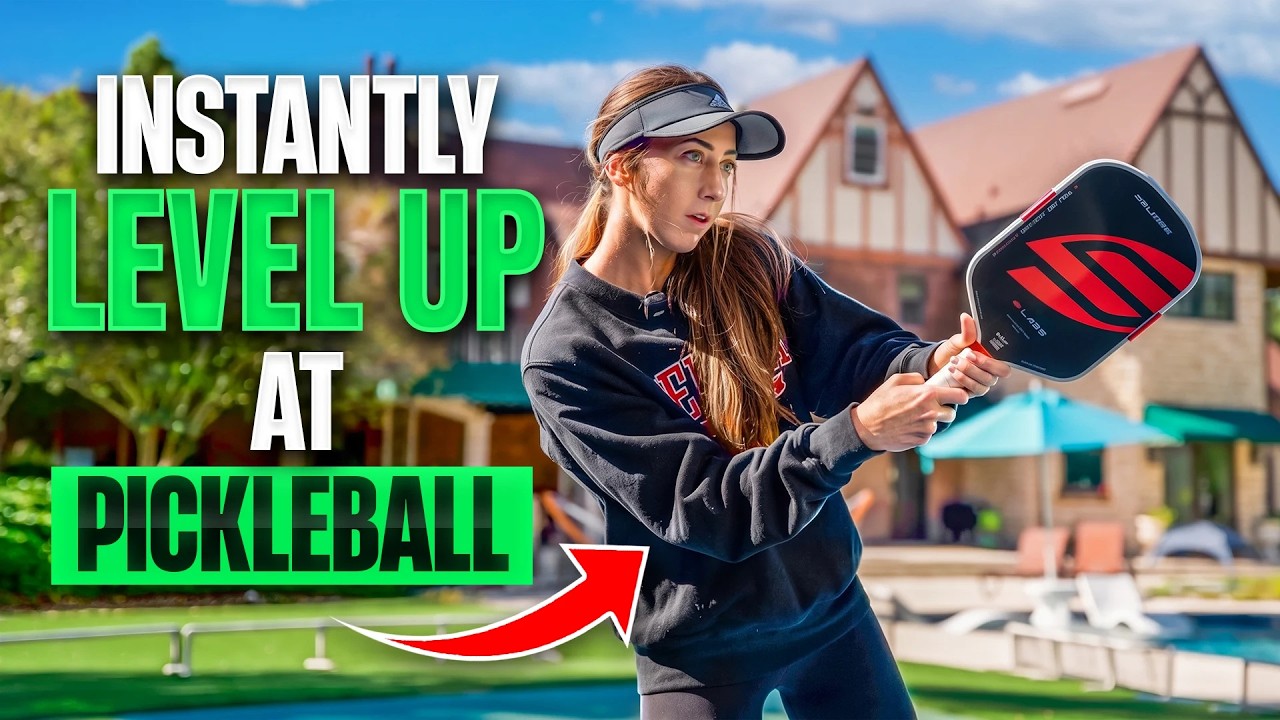
How Do You Actually Contact the Ball Out in Front?
Contacting the ball out in front means your paddle meets the ball before it gets level with or behind your hip. This is where most players go wrong.
When you let the ball travel too deep into your body before swinging, you lose control of the paddle face angle. The ball often goes into the net or floats too high.
Here's a step-by-step breakdown of the contact mechanics:
- Get behind the ball early by reading the return and moving your feet before the ball reaches you
- Position your body so you have space to extend your arm forward at contact
- Swing low to high with a relaxed grip, letting the paddle face do the work
- Contact the ball out in front of your lead hip, not beside or behind it
- Follow through forward and let that follow-through carry your weight into your next step toward the kitchen
This is why footwork matters so much here. Fixing your lateral footwork directly improves how early you can get behind the ball.
 The Dink Media Team
What Is the Drip Shot and When Should You Use It?
The drip shot (sometimes called a hybrid drop) sits between a full drop and a drive.
It carries a little more pace than a traditional drop but still lands softly in the kitchen area.
It's useful when the return is mid-height and you want to apply a bit more pressure without fully committing to a drive. Think of it as a drop with attitude.
You can read more about how to hit the drip shot correctly and when to choose it over the traditional drop.
 The Dink Media Team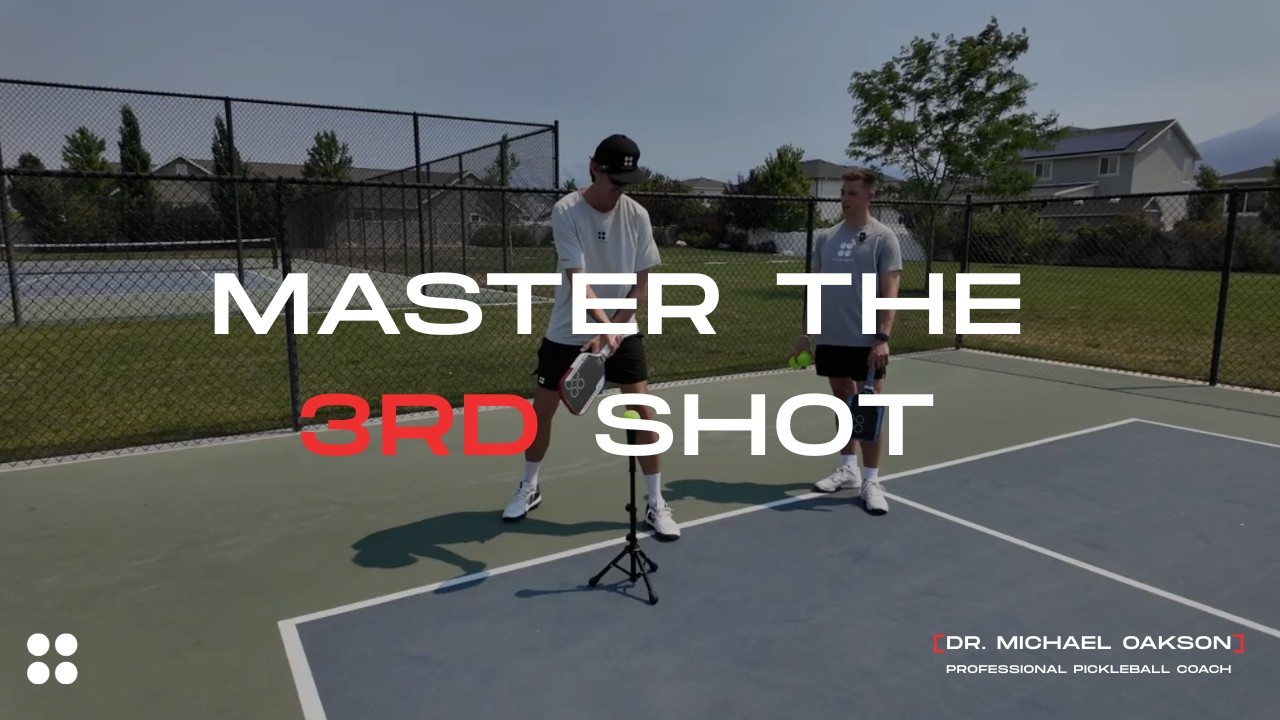
Why Topspin on the 3rd Shot Drop Is a Weapon
Adding topspin to your 3rd shot drop is not just for advanced players. It's a practical tool that makes your opponents' next shot harder.
Topspin makes the ball dip faster after crossing the net.
That means it still lands in the kitchen even with extra clearance, which cuts your error rate, and it kicks through on the bounce so opponents can't reset cleanly.
The key is not muscling it. You generate spin by accelerating the paddle from low to high through contact, brushing up the back of the ball with a relaxed wrist.
Players who apply topspin off their drops force weaker resets. That's not a bonus. That's the point of the whole shot.
If your topspin keeps failing, the fix is almost always in the swing path, not the grip.
What Is the Drip Shot and When Should You Use It?
The drip shot, sometimes called a hybrid drop, sits between a full drop and a drive. It carries more pace than a traditional drop but still lands softly in the kitchen.
Use it when the return is mid-height and you want pressure without fully committing to a drive. Think of it as a drop with attitude.
 The Dink Media Team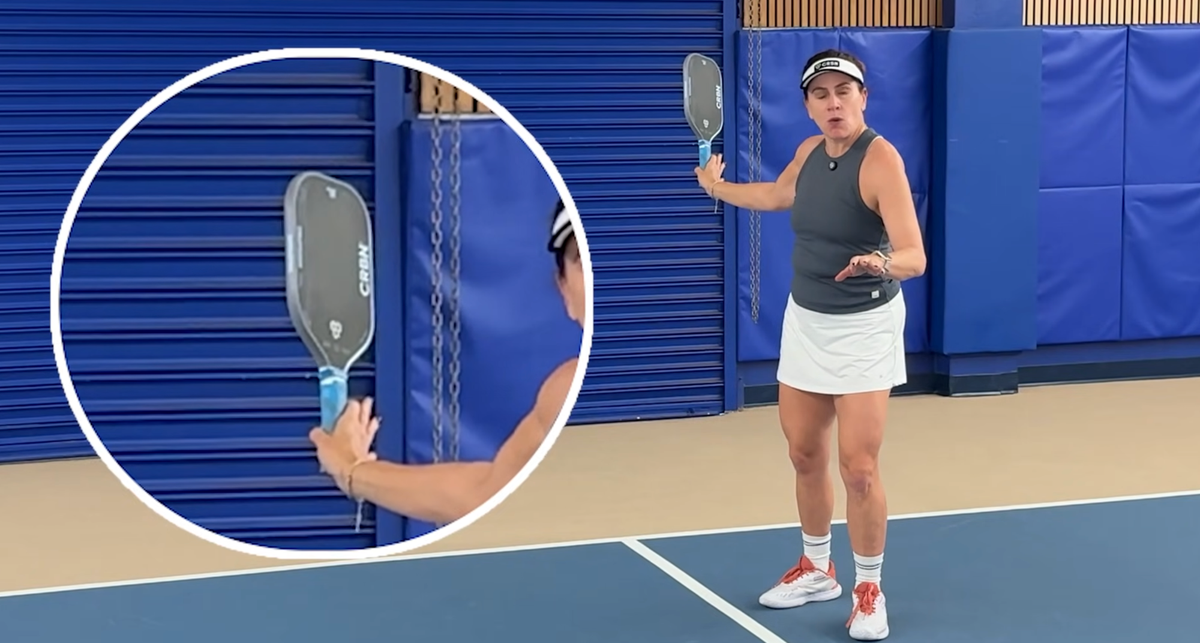
Common Mistakes That Trap You in the Transition Zone
Even when players understand the concepts, the same errors keep showing up. These are the ones that do the most damage:
- Hitting and watching: pausing to see where the ball goes instead of continuing forward
- Too much backswing: a long backswing adds pace you don't need and makes timing harder
- Leaning back at contact: shifting weight back pushes the ball up with no arc
- Frantic movement: rushing the swing rushes the paddle face and pops it up
- Wrong shot selection: dropping a ball you could have driven puts you on defense immediately
If your 3rd shot drop keeps failing, one of these five is almost certainly the reason.
And per the official non-volley zone rules published by USA Pickleball, a rushed close is just as costly as a slow one once your momentum carries you into the kitchen.
 The Dink Media Team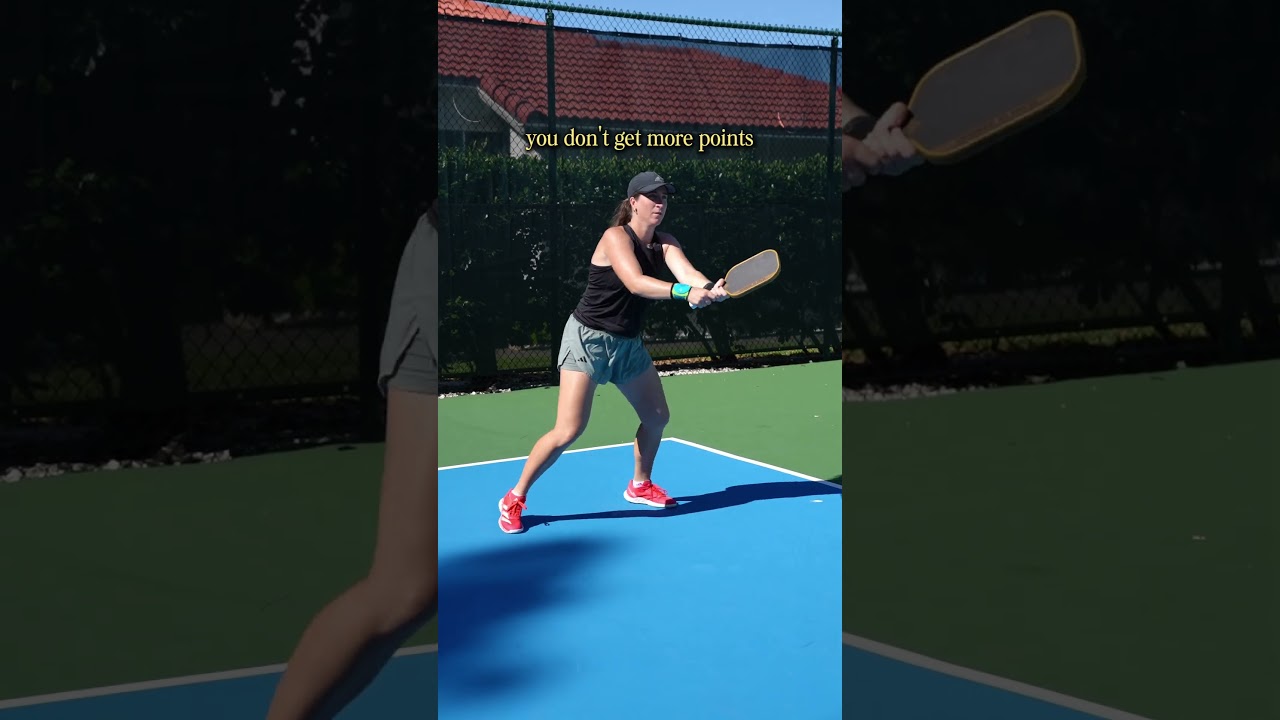
How Do You Practice This Without a Partner?
You can groove the mechanics without a full session. Wall work, shadow swings with forward momentum, and targeted feeding drills all build the muscle memory you need.
The most important thing to practice is the follow-through into movement. Shadow swing, then immediately take two steps forward.
Your body needs to learn that the drop and the move to the kitchen are the same motion.
This target drill sharpens your drop accuracy without a full court setup.
Breaking the habit of rushing the kitchen matters just as much as learning to close it efficiently.
If you want the footwork that makes all of this easier, these drills are a great starting point.
Frequently Asked Questions
What is a 3rd shot drop in pickleball?
The 3rd shot drop is a soft, arcing shot hit from the baseline that lands in the opponents' kitchen, preventing them from attacking. It is called the third shot because it typically follows the serve and the return of serve. The goal is to neutralize the opponents' position at the net and allow the serving team to advance toward the kitchen line.
Why do I keep popping up my 3rd shot drop?
The most common reason for popping up the drop is letting the ball get too close to your body before you swing. When the ball is beside or behind your hip at contact, your paddle face naturally opens and the ball goes up. Focus on getting behind the ball early and contacting it out in front of your lead hip.
Should I use topspin on my 3rd shot drop?
Yes, topspin makes your drop more effective because it helps the ball dip into the kitchen faster after crossing the net. You get more margin over the net with less risk of the ball floating too high. Brush up the back of the ball with a low to high swing path rather than pushing through it flat.
How do I stop getting stuck in the transition zone?
The key is making sure your momentum is already moving forward when you hit the drop, so your steps toward the kitchen begin immediately after contact. Players get stuck when they hit the shot and then pause to evaluate it. Treat the drop and your forward movement as one connected action, not two separate decisions.
What is the difference between a 3rd shot drop and a drip shot?
A drip shot, also called a hybrid drop, carries slightly more pace than a traditional drop but still lands softly enough to prevent a strong attack. It works best when the return of serve sits at mid-height and you want to apply a little more pressure. A traditional drop is the better call when the return is low or when you need maximum control over the landing zone.

Love Pickleball? Join 100k+ readers for free weekly tips, news & gear deals.
Subscribe to The Dink