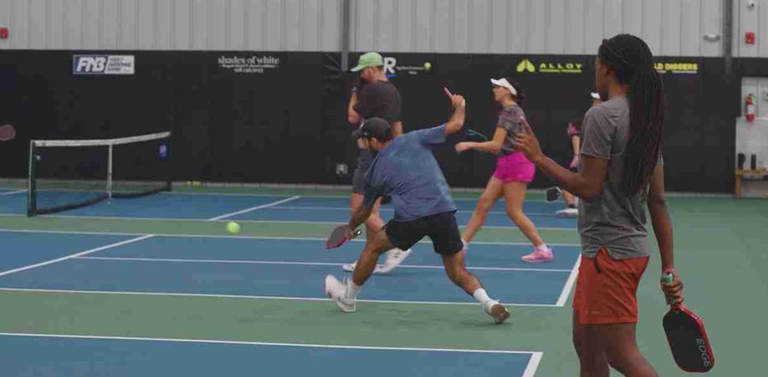


The drip shot is a hybrid between a drop and a drive that gives you the best of both worlds on the court. Master this versatile third shot with step-by-step mechanics and proven drills.
Love pickleball? Then you'll love our free newsletter. We send the latest news, tips, and highlights for free each week.
The drip shot is one of the most exciting and versatile shots in pickleball, and honestly, it might be the pickleball third shot option you've been missing.
If you've ever stood at the baseline debating whether to hit a third shot drive or a third shot drop, here's the thing: there's actually a third option that combines the best of both worlds.
According to Cam Luhring of The Dink Pickleball, the drip shot is a hybrid between a soft, controlled drop shot and a powerful drive, giving you the flexibility to attack when your opponents are caught in transition.
This shot has become increasingly popular at higher levels of play, and for good reason: it puts pressure on your opponents while maintaining control.
As pickleball continues to evolve at the pro level, shot variety has become a defining skill that separates competitive players from everyone else.
What Exactly Is the Drip Shot?
The drip shot isn't some complicated new invention. It's simply a shot that borrows mechanics from both the drop and the drive.
Think of it as the Goldilocks of pickleball third shots: not too soft, not too hard, but just right for catching opponents off guard.
The key difference between a drip and other third shots comes down to intent and execution.
A drop shot is designed to land softly near the kitchen line with minimal pace. A drive is meant to be aggressive, with full swing and power aimed at the baseline.
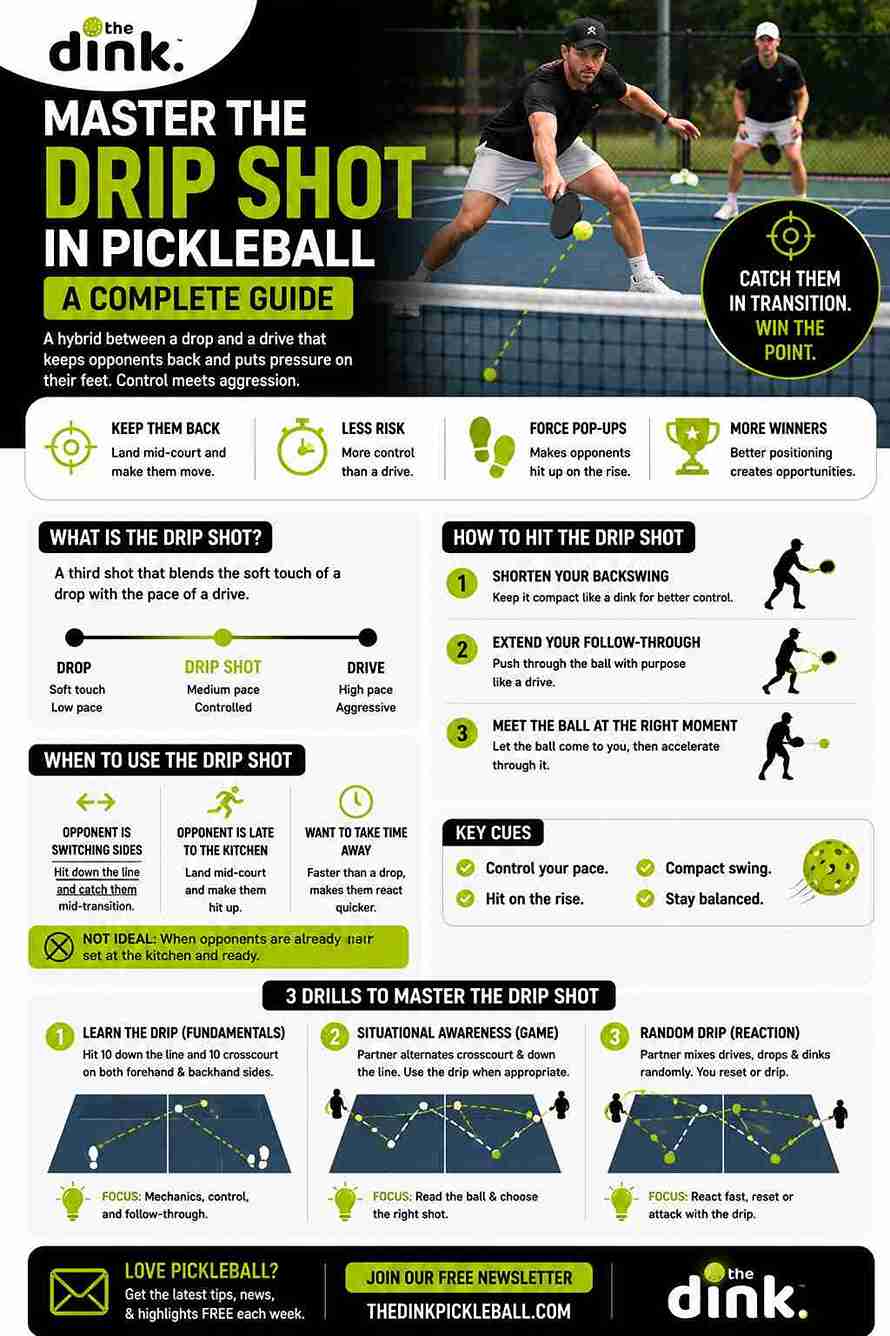
The drip shot splits the difference: you shorten your backswing like you're hitting a dink, but you extend your follow-through like you're hitting a drive.
This creates a ball that has more pace than a drop but more control than a full third shot drive.
It's the perfect weapon when your opponent is late getting to the kitchen line or caught in the transition zone.
Understanding how pros have shifted away from predictable shot patterns in 2025 makes it clear why the drip shot has earned its place in the modern toolkit.
How to Hit the Drip Shot: The Mechanics
Here's what makes the drip shot work mechanically. According to Cam Luhring's breakdown, the fundamental technique involves three key elements:
Shorten Your Backswing
Unlike a full drive where you load up and take a big swing, you want to minimize your backswing. Think of it like you're preparing for a dink.
This gives you better control and allows you to react to the ball's position.
Extend Your Follow-Through for a Clean Drip Shot
This is where the "drive" part comes in. While your backswing is short, your follow-through should be long and accelerated.
You're pushing through the ball with purpose, not just guiding it over the net.
Players who struggle with popping the ball up often benefit from refining their paddle positioning and hand speed before adding the drip shot to their game.
Meet the Ball at the Right Moment
The biggest mistake players make is starting their swing when the ball is too far in front of them.
Instead, let the ball come to you. Wait until it's about to meet your paddle, then accelerate through it.
This gives you maximum control and consistency. The feeling should be one of controlled aggression.
You're not swinging hard, but you're definitely swinging with intent. Your paddle should feel like it's accelerating through the contact point, not decelerating.
Smart shot decisions almost always come down to timing, and the drip shot is no exception.
When Should You Actually Use the Drip Shot?
Timing is everything with the drip shot. You can't just hit it whenever you feel like it; there are specific situations where it becomes your best option.
- Your opponent is switching sides. When your opponent is moving laterally to cover the court, they're vulnerable. A drip shot down the line catches them mid-transition, forcing them to scoop the ball up on the rise. This is one of the most effective uses of the shot.
- Your opponent is late getting to the kitchen line. If your opponent is still at the baseline or caught between the baseline and the kitchen line, the drip shot is perfect. It's not soft enough that they can attack it aggressively, but it's not so hard that it sails past them. You're essentially catching them in no-man's land. Knowing when to play safe versus when to attack in the transition zone is the mental skill that makes the drip shot dangerous in the right hands.
- You want to take time away. The drip shot is faster than a drop, which means it reaches your opponent quicker. This reduces their reaction time and forces them to make a decision faster than they'd like. Taking the ball early, what Luhring calls "on the rise," amplifies this effect even more.
What the drip shot is not good for: hitting when your opponent is already at the kitchen line and ready.
If they're set and waiting, a drop shot is usually better because it keeps the ball lower and forces them to hit up.
The drip shot's extra pace actually works against you in this scenario.
Recognizing your court position before you swing is what turns the drip shot from a gamble into a weapon.
If you often find yourself in trouble during transitions, these two tactics for escaping the transition zone pair directly with what the drip shot solves.
The Three Essential Drills for Mastering the Drip Shot
Luhring breaks down three specific drills that will help you develop consistency and game awareness with the drip shot.
These aren't just random exercises; they're designed to build the exact skills you need.
If you want a broader training framework, these 12 drills for your best pickleball in 2026 are a strong companion resource.
1. Learning the Drip Shot: The Fundamentals
This is your baseline drill for developing the mechanics. You'll start at the baseline with a partner feeding you balls.
The goal is simple: hit 10 balls down the line and 10 balls crosscourt on both your forehand and backhand sides.
Focus on the mechanics we discussed: short backswing, extended follow-through, and meeting the ball at the right moment.
The biggest thing to watch for is making sure you're accelerating through the ball like you would on a topspin drive, not just guiding it like a dink.
As you're doing this drill, pay attention to how the ball feels off your paddle. You should feel a sense of controlled power, not just soft touch.
If it feels too much like a dink, you're not extending your follow-through enough.
If it feels too much like a drive, you're probably taking too big a backswing.
Simple wall drills can help you isolate the follow-through feel before you bring a partner into the equation.
2. Drip Shot Situational Awareness: The Game Situation
This drill is where things get real. One player serves, the other returns.
After the return, the returner switches to the opposite side of the court and moves forward (simulating a side switch).
The server then hits a drip shot down the line.
The key here is taking the ball early, what Luhring calls hitting "on the rise." Instead of waiting for the ball to bounce and drop to your strike zone, you're looking to short-hop it or take it immediately after the bounce.
This beats your opponent to the kitchen line and gives them less time to react.
You'll notice in the video that every time Luhring successfully executes this, he's catching his opponent mid-movement.
The ball gets to their feet, and they're forced to scoop it up on the rise. That's the goal.
One additional tip from Luhring: if your opponents are stacking (both starting on the same side), pull them out wide with your serve first.
This forces them to unwind the stack, which opens up the line for your drip shot.
The serve is the one shot you have total control over, so use it to set up your third shot.
Mastering these five shots before 2026 includes the exact serve-to-third-shot connection Luhring is teaching here.
3. Mix and Drip: The Decision-Making Drill
This is the most game-realistic drill. Both players start at the baseline. One player feeds, the other drives.
The feeder then hits another drive back, but here's the catch: they can't move forward until their ball bounces on the other side.
This creates a situation where the feeder is late getting in, which is exactly when you want to use the drip shot.
But here's the learning moment: if your opponent isn't moving forward at all, you should just drive the ball back to the baseline.
The name of the game is getting the ball down to the feet, and if they're not moving, a drive accomplishes that better than a drip.
Knowing when to attack drives and how to beat bangers gives you the complementary read you need to run this drill with full tactical awareness.
The drill teaches you to read your opponent's positioning and make the right decision. Sometimes the drip shot is the answer. Sometimes it's not.
Developing that awareness is what separates good players from great ones.
Why the Drip Shot Changes Your Third Shot Game
Here's what makes the drip shot so valuable: it gives you a third option that sits perfectly between two extremes.
A drop shot is passive; a drive is aggressive.
The drip shot is aggressively passive, or passively aggressive, depending on how you look at it.
This matters because your opponents can't predict what you're going to do. If you only hit drops, they'll creep forward. If you only hit drives, they'll back up.
But if you're mixing in drips, they have to stay honest.
They can't anticipate your shot selection, which means they're always slightly off-balance.
The drip shot also solves a common problem at the amateur level: players hit great returns but then stand and admire their shot instead of moving forward.
When your opponent does this, a drip shot down the line is devastating. It's too fast to be a drop, too controlled to be a full drive, and it catches them completely unprepared.
The Bigger Picture: Why Shot Selection Matters for the Drip Shot
If you're struggling with your pickleball third shot or never getting the opportunity to hit a drip, Luhring offers some perspective: maybe the problem isn't your third shot at all.
Maybe it's your serve.
The serve is the one shot you have total control over.
If you're not going for your serve aggressively, you're not setting yourself up for success on the third shot.
A weak serve leads to a strong return, which means your opponent is already moving forward when you hit your third shot.
That's not ideal. This four-step system for winning more games in 2026 breaks down exactly how the serve sets the table for every shot that follows.
But if you're serving aggressively and pulling your opponent out wide, you're creating the exact situation where a drip shot becomes effective.
Your opponent is late getting in, and you have the opportunity to attack.
This is a good reminder that pickleball isn't just about individual shots; it's about how shots connect to each other.
Your serve sets up your third shot, which sets up the rally. Understanding these connections is what takes your game to the next level.
If you want to accelerate that process, the pickleball reset skill that bridges 3.5 to 5.0 pairs naturally with the controlled-aggression mindset behind the drip shot.
Frequently Asked Questions
What is the drip shot in pickleball?
The drip shot in pickleball is a hybrid pickleball third shot that combines elements of the drop shot and the drive. It uses a shorter backswing than a full drive but a longer follow-through than a traditional drop, producing a ball with more pace than a drop but more control than a third shot drive.
What's the difference between a drip shot and a third shot drive?
A third shot drive is a full, aggressive swing aimed at the baseline with maximum pace. The drip shot uses a shorter backswing but an extended follow-through, creating a shot with more control and less pace than a drive. The drip shot is designed to catch opponents in transition, while a drive is meant to be a winner or force an error outright.
Can I hit a drip shot from anywhere on the court?
The drip shot is most effective as a pickleball third shot from the baseline, but you can apply similar mechanics from other positions. The key is understanding when your opponent is vulnerable. If they're in transition or late getting to the kitchen line, the drip shot mechanics work. If they're already set at the net, a softer drop is usually the smarter call.
How do I know if I'm hitting the drip shot correctly?
You should feel controlled power, not just soft touch. The ball should have noticeably more pace than a drop shot but more control than a full third shot drive. If it feels too soft, extend your follow-through more. If it feels too hard, shorten your backswing first.
Is the drip shot a beginner-friendly shot?
The drip shot requires solid fundamentals, so it's better suited for intermediate players who already have consistent drop and drive mechanics. Beginners should master those two shots first, then add the drip shot to their arsenal once they're comfortable with basic third shot strategy.
How often should I use the drip shot in matches?
Use it situationally, not as your default pickleball third shot. Mix it in when your opponent is in transition or late getting to the kitchen line. If you overuse it, your opponent will start anticipating it. The best players keep their opponents guessing by varying their shot selection based on positioning.

Love Pickleball? Join 100k+ readers for free weekly tips, news & gear deals.
Subscribe to The Dink