
3 Reasons You Can't Block Hard Shots in Pickleball (And How to Fix All 3)
Most players pop up hard shots because of three fixable mistakes, not bad reflexes. Learn how to block hard shots in pickleball with soft hands, a short swing, and better paddle position.
If you struggle to block hard shots in pickleball, the problem almost certainly isn't your reflexes.
It's three specific technical mistakes that most players never fix because nobody names them clearly.
You know the feeling.
Someone speeds the ball up at you, and the next thing you see is your return sailing high above the net directly into your opponent's strike zone.
It happens fast, it feels out of control, and it keeps happening until you understand exactly why.
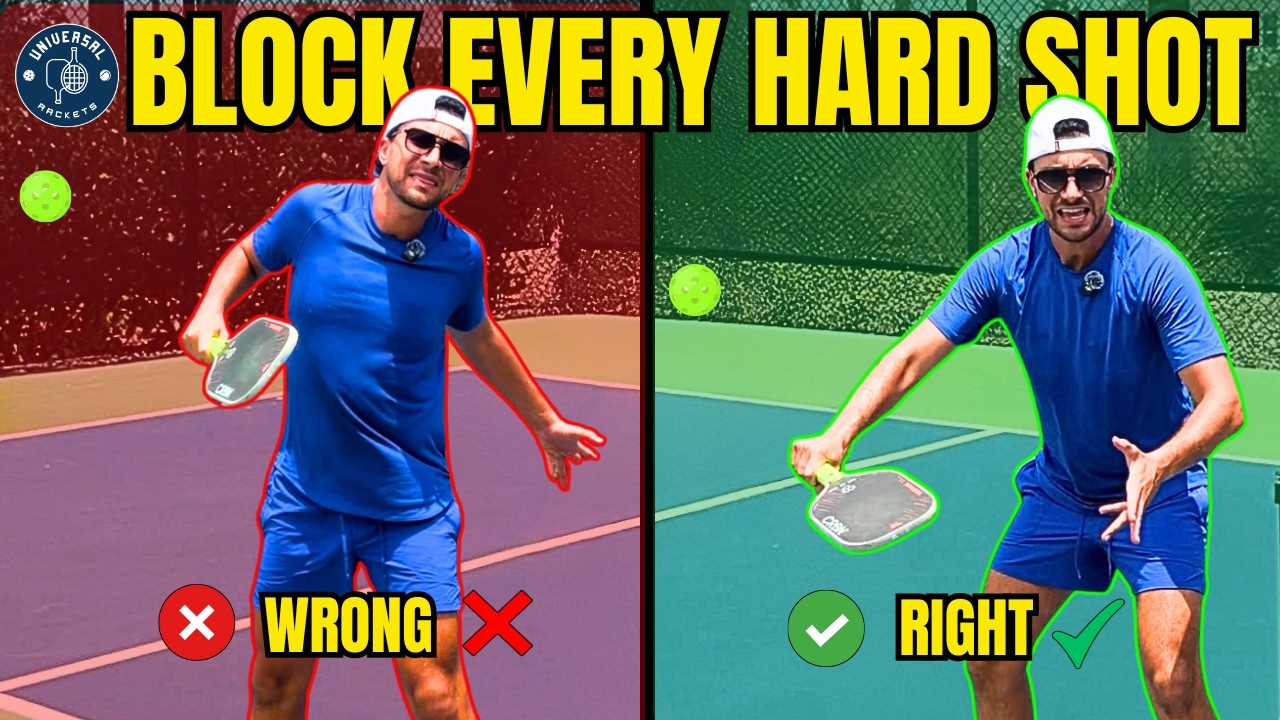
These three fixes come straight from Universal Rackets on YouTube, a coaching channel that breaks down exactly what separates players who handle pace well from those who keep handing attackers free points.
Love pickleball? Then you'll love our free newsletter. We send the latest news, tips, and highlights for free each week.
Why Most Players Fail Against Hard Shots
The instinct when someone drives the ball hard at you is to swing back at it.
That instinct is wrong, and it's the root cause of most blocked shots that go out of bounds or float up into the air.
A hard-driven ball already carries all the energy it needs to travel across the court.
When you add a swing on top of that energy, you are doing the opposite of what the situation requires.
Your job is not to hit the ball.
Your job is to absorb it and redirect it softly.
There are three distinct mistakes that stop players from being able to block hard shots in pickleball, and each one has a direct fix.
Work through all three and bangers will start second-guessing their decision to attack you at all.
Mistake 1: Swinging Instead of Blocking
The fix is simple: stop swinging and start absorbing.
When a fast ball is coming at you, the shorter your paddle movement, the better your result.
Think of your paddle as a wall. A wall does not swing at the ball. It just stops it, and the ball drops.
That is exactly what a good block looks like at the kitchen line, where the non-volley zone gives you no room to wind up.
How a Short Swing Helps You Block Hard Shots in Pickleball
The fastest way to train this is with a partner who throws or hits balls directly at you repeatedly. You are not trying to do anything fancy.
You are holding the paddle out in front and moving it as little as possible.
- Keep your swing as short and compact as possible
- Let the pace of the incoming ball do all the work
- Think "absorb and redirect," not "hit back"
- The harder the shot coming at you, the less you should move your paddle
If your block keeps going long, you added too much swing. Shorten everything.
Players who understand this principle start looking almost effortless against hard hitters, and that is because they are letting the ball work for them instead of fighting it.
This is also why block volley technique matters so much at the kitchen. A good block is not passive. It is controlled.
There is a difference between standing still because you are confused and standing still because you have made the right decision.
Mistake 2: Gripping the Paddle Too Tight
A tight grip turns your paddle into a trampoline. The ball springs off instead of being absorbed, and your block rockets off your paddle and flies out of bounds.
This is a fight-or-flight response. Someone attacks you hard, your body braces for impact, and your grip tightens automatically.
You have to train yourself out of it.
The Rule of 10: Grip Pressure When You Block Hard Shots in Pickleball
The rule to memorize is called the Rule of 10. It works like this:
- Rate the incoming ball's speed on a scale from 1 to 10
- If the ball is coming at a 9, your grip should be a 1 or 2
- If the ball is slow and coming at a 2 or 3, you can grip at a 7 or 8
- The faster the ball, the looser your grip needs to be
Your grip on a hard block should be loose enough that someone could take the paddle right out of your hand after the shot.
If you resist that, you are holding too tight.
Think of the paddle as a paintbrush. You are letting it do the work. You are guiding it, not forcing it.
This mental image is surprisingly effective for resetting your grip pressure mid-game when you feel yourself tensing up.
On a scale of 1 to 10, you want your grip sitting at about a 2 or 3 against any pace shot. Soft hands absorb energy.
Tight hands redirect it at full speed, usually out of bounds or back up in the air.
If you find your resets keep popping up too, the same principle applies.
Grip pressure is one of the main reasons resets fail at every level of play, and it is the same reason most players cannot block hard shots in pickleball cleanly.
 The Dink Media Team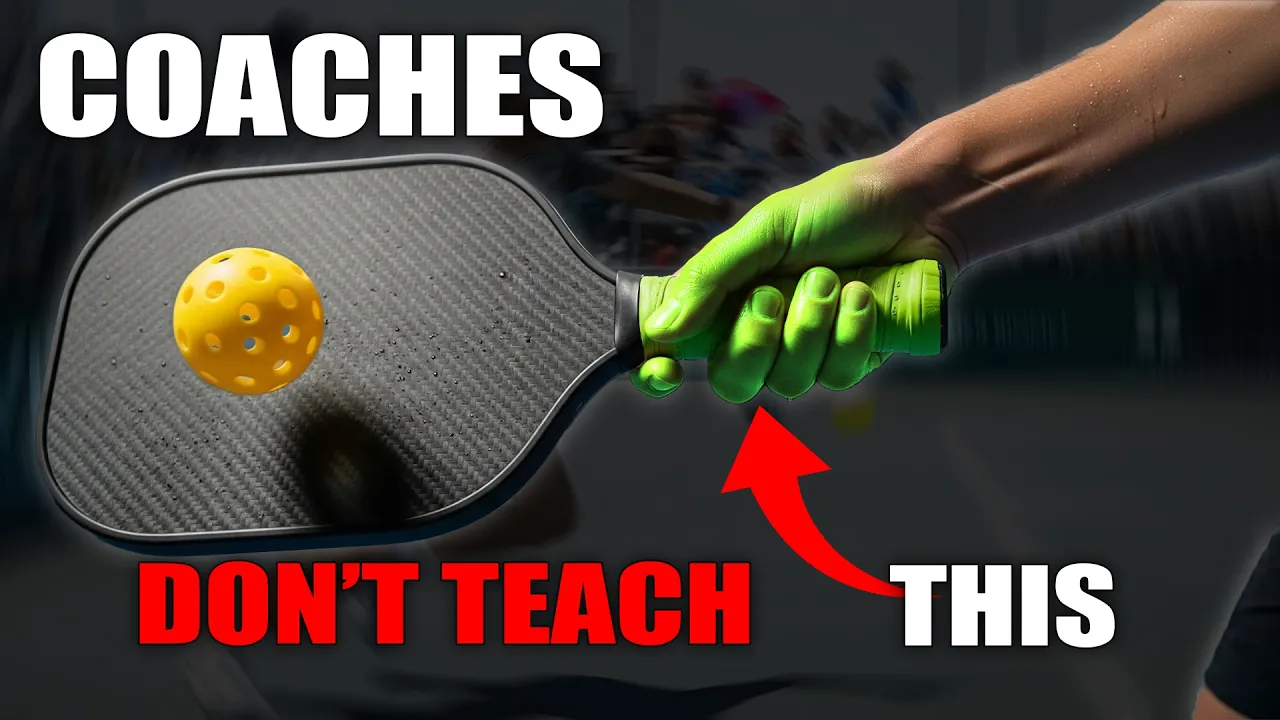
Does Paddle Position Actually Matter That Much Against Hard Shots?
Yes, and it matters more than most players realize. Paddle position is the third mistake, and it might be the one that costs you the most points.
When the ball is coming fast, you have almost no time to react.
If your paddle is down at your side, close to your body, or in the wrong grip orientation, you will not get there in time.
The math simply does not work in your favor.
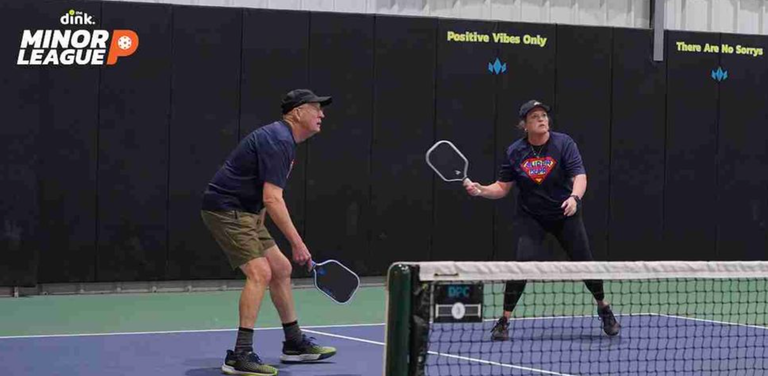
Your paddle needs to be up and out in front of your body before the ball is hit. Not here, not close to your chest.
Out in front, with space between the paddle and your torso.
The mistake most players make is thinking they have their paddle up when they actually have it in close to their body.
Getting from a paddle at chest height to a paddle extended out front takes time you do not have when someone is driving the ball at 40 miles per hour.
 The Dink Media Team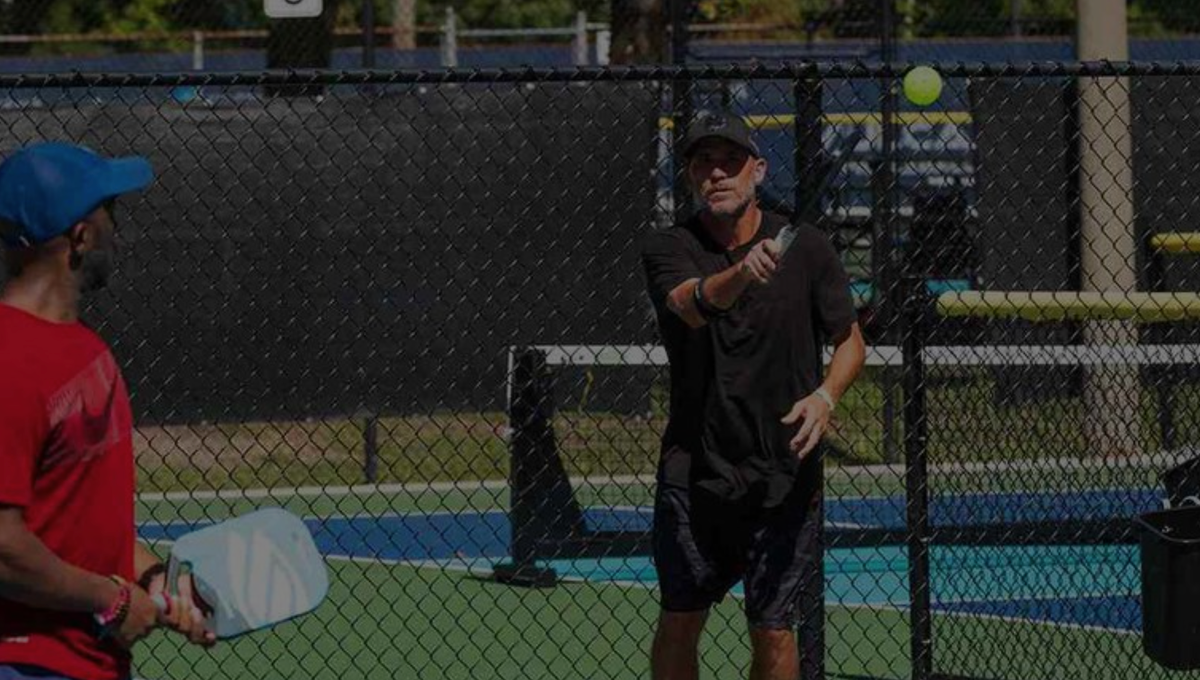
What Paddle Position Should You Default To?
Default to the backhand. About 80 percent of hard shots coming directly at you will be handled better as a backhand volley than a forehand.
The faster and closer the ball is when it arrives, the more likely a backhand is your best play.
A lot of players instinctively reach for the forehand when the ball comes straight at their body, and that habit is costing them points.
Here is how to think about it:
- Ball coming straight at your body: backhand
- Ball to your left side: backhand
- Ball to your right side, wide and with time: forehand
- Ball you genuinely cannot reach backhand after repeated attempts: adjust to forehand
Unless someone is consistently getting the ball wide to your forehand side, stay in the backhand. Make the forehand the exception, not the default.
Leaning forward instead of stepping back is also a critical body position adjustment here.
Stepping back feels safer but it gives the ball more time and angle to drop below the net after your contact point.
If you tend to chicken-wing on the backhand side and pull your elbow back toward your body, work on keeping that elbow forward and the paddle face out in front.
Fixing the chicken wing directly improves your ability to block hard shots in pickleball while staying in the correct position under pressure.
 The Dink Media Team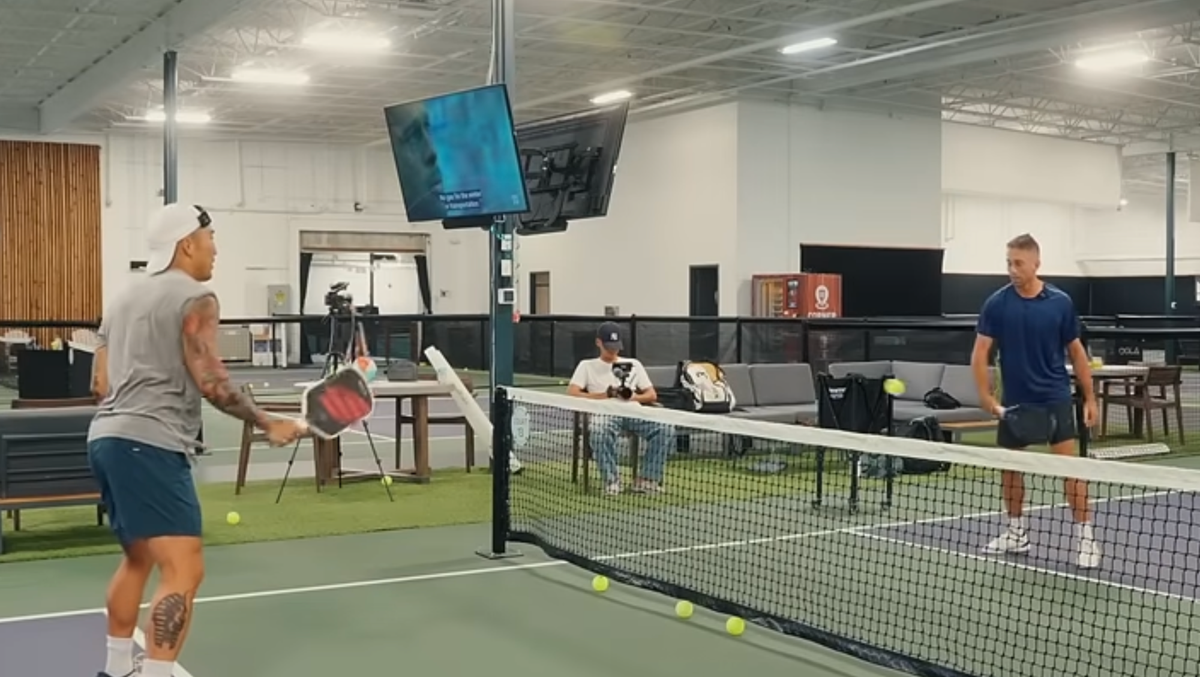
How to Practice Blocking Under Pressure
The best way to get comfortable with hard shots is simple repetition at increasing pace.
Start with a partner throwing the ball directly at you from close range. You are not rallying.
You are just absorbing and redirecting.
Once that feels manageable, have your partner hit the ball at you from the kitchen.
Your target for a good practice session is 10 to 11 controlled blocks out of every 15 shots. The ball should go low, into the middle of the court, not up in the air.
When you can do that consistently, you are ready to test it in live play. Countering bangers requires exactly this kind of controlled, rehearsed response.
Once it is trained, it becomes automatic.
The psychological shift that happens when you stop fearing hard shots is significant.
You stop tensing up, your grip naturally softens, and you start seeing the attack as an opportunity rather than a threat.
Mastering pickleball defense is largely about reaching that mental state.
 The Dink Media Team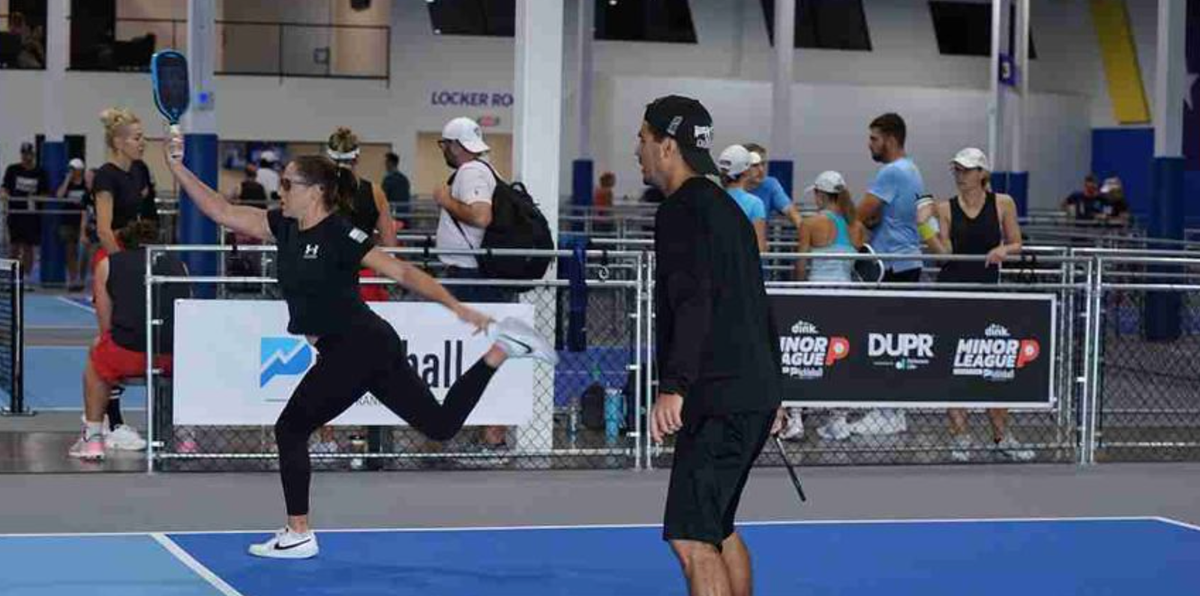
What Happens When Blocking Works
When you show a hard hitter that their pace is not working, one of two things happens.
They stop attacking you. Or they try to hit even harder, take a bigger swing, and start making errors on their own.
Either outcome is a win for you.
You are not trying to overpower them. You are absorbing their energy and giving it back softly, forcing them to generate their own pace from scratch every single time.
The players who handle hard shots best are not faster or more athletic. They just start with the paddle in the right place, keep a soft grip, and refuse to swing.
It is a skill built through deliberate repetition, not raw talent.
Work through all three fixes in practice before you test them in a game.
The wall drill, repetitive throws from a partner, and conscious grip pressure checks during warmups will all accelerate how quickly these habits stick.
For more work on building clean volley mechanics, these three volley mistake fixes pair well with everything covered here.
If you are also struggling with your opponents popping balls up after your attacks, the same principles of absorbing and redirecting apply in reverse.
Fixing the pop-up habit from both sides of the exchange is how you start controlling rallies at the kitchen.
Stop swinging. Soften your grip. Get your paddle up and out front early.
Those three things, done consistently, will make bangers move on to easier targets.
Frequently Asked Questions
What is the most common reason a pickleball block goes out of bounds?
A tight grip is the most common reason a block flies long. When you grip the paddle hard, the ball springs off instead of being absorbed, adding energy to a shot that already had plenty. Loosen your grip to a 2 or 3 out of 10 and the ball will die into the kitchen instead.
Should I use a forehand or backhand to block hard shots in pickleball?
Default to the backhand for about 80 percent of hard shots aimed at your body or to your left side. The backhand keeps your paddle out in front more naturally and gives you faster coverage of your center and left. Only switch to a forehand when the ball is consistently wide to your right and you genuinely cannot cover it backhand.
How do I keep my paddle in the right position at the kitchen line?
Keep your paddle up and out in front of your body at all times, never below your chest. Think of it as holding a shield: out from your body, at chest height or above, with the face ready to absorb. The wall drill is the fastest way to train this habit because any lapse in position immediately kills the rally.
Why do I panic when someone drives the ball hard at me?
Panic during hard shots is a fight-or-flight response that tightens your grip, triggers a big swing, and pulls your paddle back toward your body. All three of those things are the opposite of what produces a good block. Repeated practice at speed, starting with a partner throwing the ball at you, is the most effective way to desensitize that response.
How do I know if my block technique is improving?
A simple benchmark: out of 15 hard shots aimed directly at you, you should be able to redirect 10 or 11 back into the court, low and toward the center. If your blocks are going high, you are adding swing. If they are going out, you are gripping too tight.
Track those two outcomes and you will know exactly what to fix.

Love Pickleball? Join 100k+ readers for free weekly tips, news & gear deals.
Subscribe to The Dink