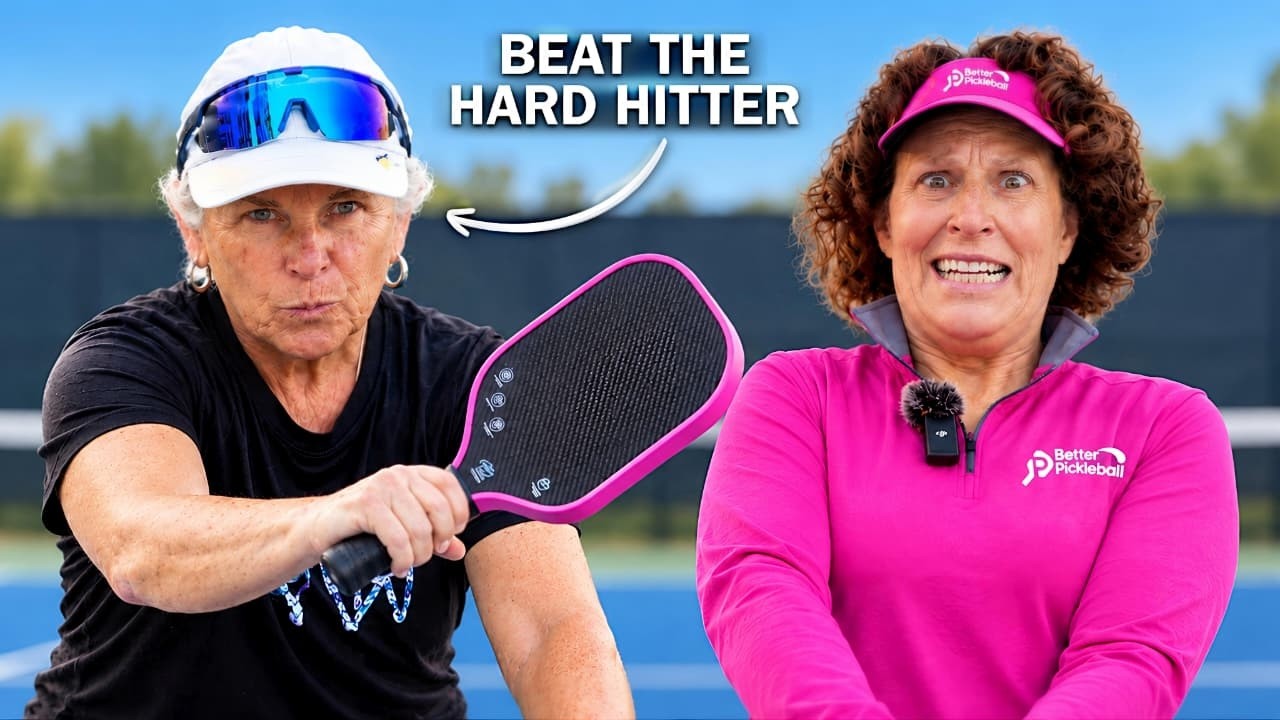
If you struggle to beat bangers in pickleball, you are likely making two fixable mistakes. Here is how to stop the bleeding and start winning more rallies.
If you want to beat a banger in pickleball, the worst thing you can do is try to match their power.
Yet that is exactly what most intermediate players do every single time a hard hitter loads up and fires.
The result is almost always the same. The ball comes back faster, you get pushed further back, and eventually you spray one into the net or sail it long.
You did not lose because of a lack of effort. You lost because of the wrong approach.
These two fixes come from Better Pickleball on YouTube, where coach CJ breaks down the exact mistakes players make when they try to beat a banger in pickleball.
Here is what you need to know.
Love pickleball? Then you'll love our free newsletter. We send the latest news, tips, and highlights for free each week.
The Real Problem With How You Play Against Bangers
Most players treat a hard hitter as a power problem. They think if they just hit harder back, they can win the exchange.
That thinking is exactly backwards.
A banger's entire game depends on pace. When you return the ball with pace, you are literally feeding the machine.
The harder you swing, the more comfortable they are, because they are just redirecting what you give them.
The players who consistently beat a banger in pickleball understand one thing: smart shot decisions beat power.
You do not need to outmuscle anyone. You need to take the ball on your terms and neutralize the rally.
That starts with fixing two very specific mistakes.
Mistake 1: You Have No Real Block Volley
The block volley is the single most important shot you can develop against a hard hitter. The entire goal is to absorb pace, not add to it.
Most players get to the kitchen line and, the moment a hard drive comes at them, they swing. They punch. They try to do something with the ball.
That is the mistake. A true block volley is almost passive in nature.
You are putting your paddle in the path of the ball and letting the ball do the work of slowing itself down.
Here is what a proper block volley actually looks like, broken down into three checkpoints:
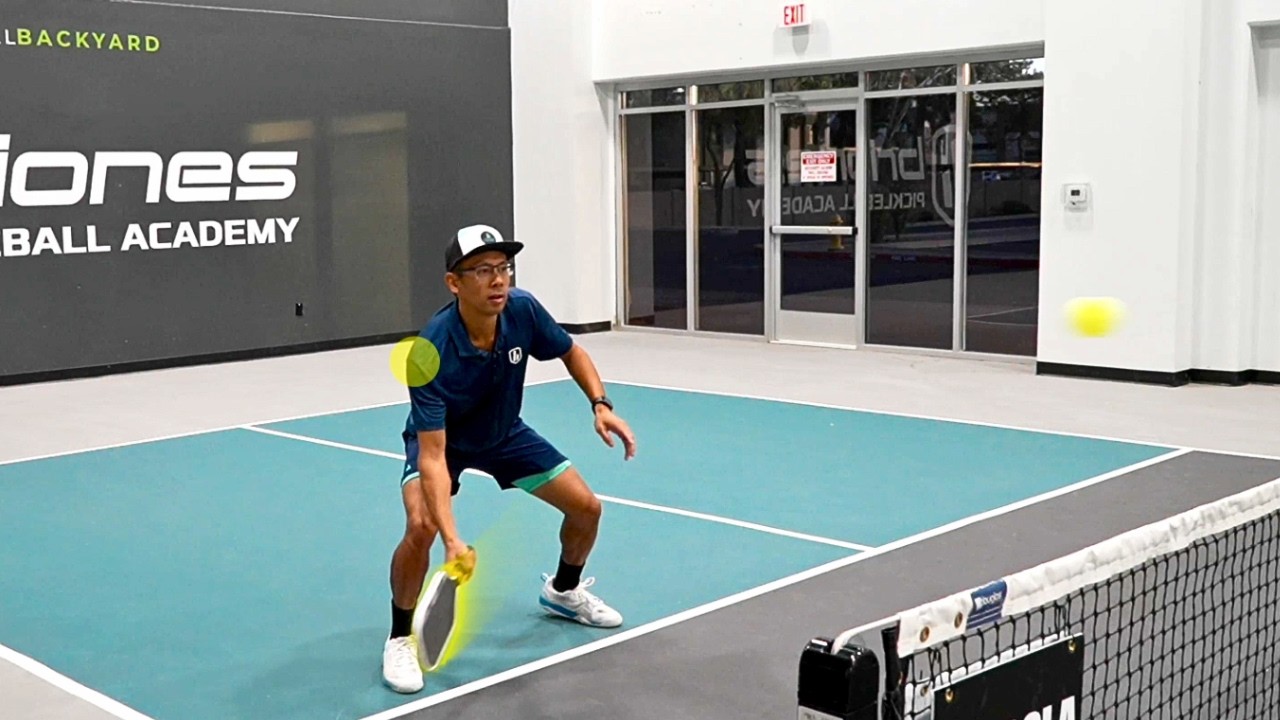
- Get on your triangles. This means your weight needs to be forward, on the front part of your feet. When you drop back onto your heels, your paddle face opens up automatically. An open paddle face sends the ball up, which means it comes back to the banger at a comfortable height. Weight forward keeps everything compact and controlled, and it is the same posture foundation that steadies every other shot you hit.
- Keep your arms away from your body. If your paddle is tucked close to your chest when a hard ball arrives, you have no room to absorb anything. Your shoulders tilt back, your body opens up, and the paddle face opens with it. The fix is simple: extend your arms out in front of you before the ball arrives, not after.
- Turn the paddle face parallel to the net. This is the position that actually absorbs pace. When the face of your paddle is square to the incoming ball, the energy transfers cleanly and the ball slows down. This is not about adding spin or punch. It is purely about letting the paddle face do the work.
- You are not swinging. You are blocking. This takes discipline because every instinct tells you to swing. Resist it. The moment you add a punch volley or a shoulder turn, you are putting pace back into the rally and giving the banger exactly what they want.
If your volleys pop up or go long against hard hitters, the culprit is almost always one of those three checkpoints.
These volley fixes for the kitchen line can help you sharpen the mechanics even further, and this breakdown of hand speed and paddle positioning clears up the most common misconceptions about handling fast play.
It also helps to think about where the banger is standing.
If they are behind the baseline, the ball has more distance to travel and may actually stay in. You have to play that ball.
But as soon as they step inside the court, the math changes completely.
Why Is the Block Volley So Hard to Trust?
It feels passive. Players at the intermediate level have been told their whole game to be aggressive, take initiative, and attack.
The block volley feels like giving up, so they abandon it mid-point. But there is nothing passive about a well-executed block.
It is an aggressive act of control. You are dictating the pace of the rally by refusing to play on the banger's terms.
Taking pace off and building a real soft game is one of the most effective ways to beat a banger in pickleball at any level, and it starts with trusting the block.
Think of it this way. Every time you soft-block a hard drive back at a low angle, you are forcing the banger into a difficult shot.
They wanted pace, and you gave them a dying ball. Now they have to generate everything themselves, and that is when errors happen on their side.
 The Dink Media Team
Mistake 2: You Are Hitting Every Ball Back, Including the Ones Going Out
This is the mistake that costs players the most points, and almost nobody talks about it clearly. Not every hard drive from a banger is in.
A significant portion of them are going out, and you are hitting them anyway.
Under the official USA Pickleball rules, the instant you touch that ball it becomes your fault, not theirs.
Here is the rule of thumb. When a hard hitter is behind the baseline and driving, most of those balls will land in. You need to deal with them.
But the moment that player steps two or three feet inside the baseline and drives, the probability of that ball going out goes up dramatically.
That is a calculated read you need to make in real time.
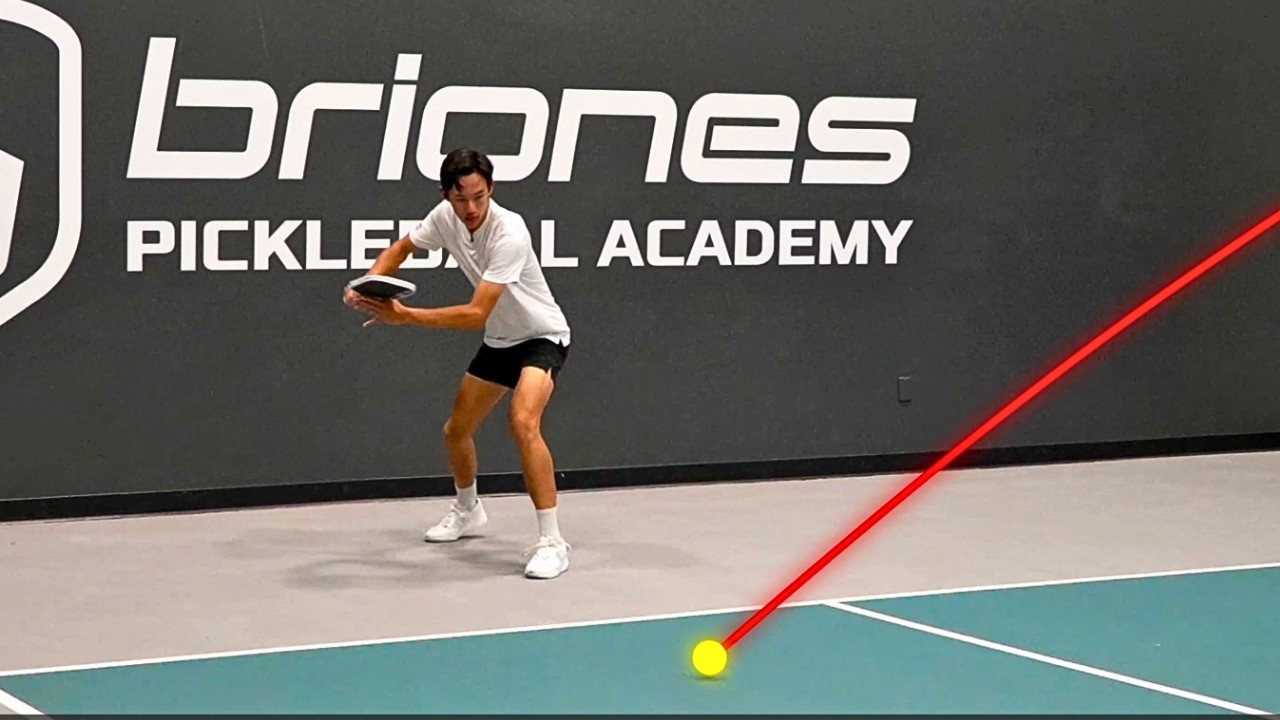
The video shows exactly this scenario: the banger comes two to three feet inside the court, hits a low hard drive, and the ball lands out by a full foot.
If you swing at that ball, you are the one who loses the rally.
Here is how to sharpen your out-ball reads:
- Watch the player's position, not just the ball. If they are inside the baseline, your out-ball radar should activate immediately.
- Track ball height at the net. A ball that is low at the net from inside the court has very little margin to land in. If it clears the net low and the hitter is standing close, let it go.
- Make the call early and commit. The worst thing you can do is hesitate, start to swing, then pull back. You either play the ball or you let it go. Half-measures get you hurt.
- Accept that you will be wrong sometimes. You will let a ball go that clips the line. That is fine. The math still works in your favor if you are reading position and ball height correctly.
Most players are so conditioned to react to pace that they never even consider letting the ball go.
The real cutoff for out balls is lower than you think, and learning to trust that read is one of the fastest ways to cut unforced errors against bangers.
The mental shift here is significant.
You have to stop thinking of yourself as someone who reacts to everything and start thinking of yourself as someone who controls what they engage with.
That is a completely different mindset.
If you make chaotic decisions under pressure, the problem may run deeper than these two issues.
These stubborn pickleball habits are worth reviewing alongside the fixes here.
 The Dink Media Team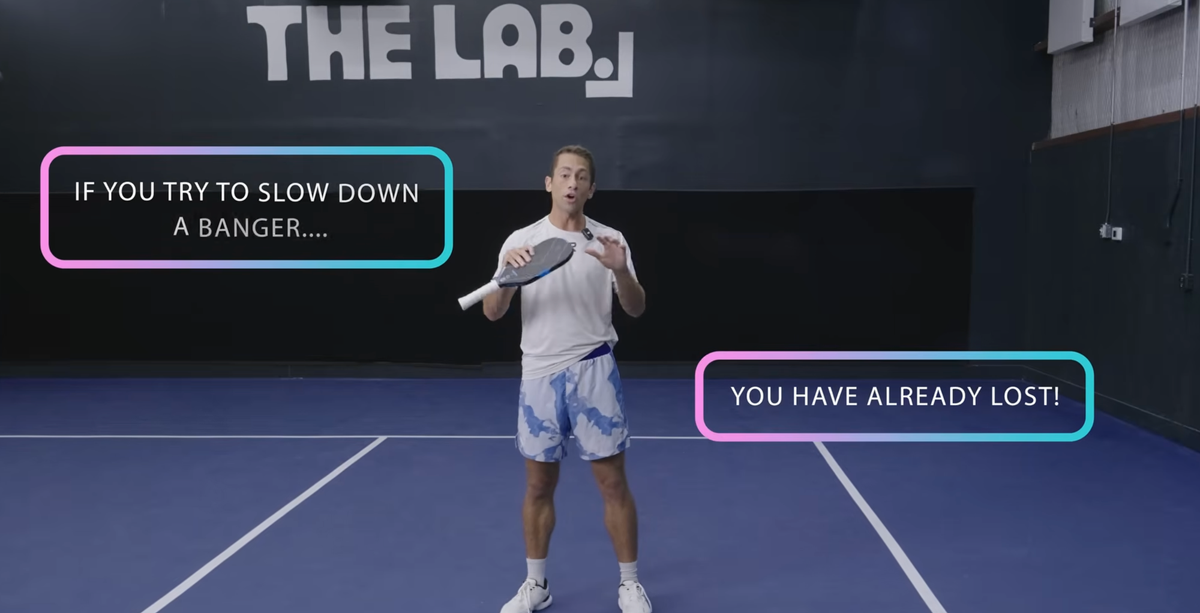
How Do These Two Fixes Work Together?
The block volley and the out-ball decision are not separate ideas. They are two parts of the same strategy.
When you have a reliable block volley, you stop fearing the hard drive.
You know you can absorb it and send back a neutral or soft ball, the same way a clean reset buys you time from the midcourt.
That confidence makes your out-ball reads better, because you are not panicking and swinging at everything out of desperation.
When you get better at identifying out balls, you reduce the number of times you engage with the banger's best shots.
The ones you do engage with, you block. The ones going long, you let fly.
Together, these two adjustments take the banger's biggest weapon away.
They need pace to thrive. A good block volley neutralizes it when it is in, and a smart out-ball read eliminates it when it is not.
The same logic applies to your decision-making everywhere on the court.
Ball height and court positioning are the two reads players get wrong most often, and they get exposed fastest against hard hitters.
 The Dink Media Team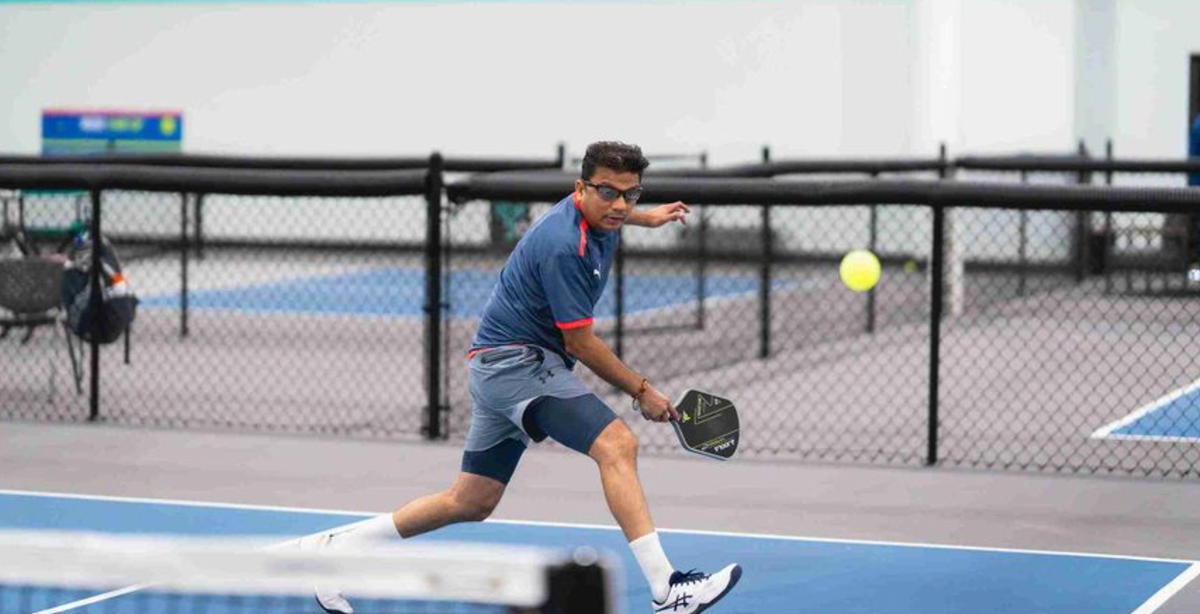
Quick Fixes to Practice Before Your Next Game
You do not need a full drilling session to start applying these ideas. Even five minutes of focused work can make a difference.
- Stand at the kitchen line and have a partner drive balls at you. Focus exclusively on weight forward, arms extended, paddle face parallel. Do not swing. Just block.
- Have your partner drive from inside the baseline. Practice saying "out" and letting the ball pass. Get comfortable with the feeling of releasing a ball.
- Shadow the ready position: get on your triangles, arms out, paddle set. Repeat it until it becomes the default stance you return to after every shot.
If you want to make this a real habit, understanding the right types of drilling will help you structure your practice so these skills actually transfer to live play.
For players who want to go deeper on controlling pace and handling fast exchanges, pro tips for overcoming frustrated speed-ups cover closely related territory that will sharpen your overall defense game.
And if you want to understand the bigger picture of what separates players who handle pressure from those who crack, what pro pickleball players do differently gets into the mindset and mechanics behind consistent performance.
Hard hitters are beatable. You just need the right two tools and the discipline to use them.
Block the balls that are in. Let go of the ones that are out. Do those two things consistently, and the banger stops being a problem.
Frequently Asked Questions
What is a block volley in pickleball?
A block volley is a defensive shot where you hold your paddle still in front of you and absorb the pace of an incoming hard drive rather than swinging back at it. The goal is to deaden the ball and send it back soft, taking the power out of the rally. It is the most effective tool against hard hitters because it refuses to give them the pace they need.
How do I know when to let a pickleball go out instead of hitting it?
The key read is the hitter's court position combined with ball height at the net. If the hard hitter is two or more feet inside the baseline and the ball is low over the net, the odds are strong it will land out. Commit to the read early and do not swing once you decide to let it go.
Why do I keep popping up my volleys against hard hitters?
The most common cause is weight on your heels, which automatically opens your paddle face and sends the ball upward. Get your weight forward onto the front of your feet, extend your arms away from your body, and set your paddle face parallel to the net before the ball arrives. That combination keeps the paddle face square and the ball low.
Is it better to block or punch back against a banger?
Block, almost every time. A punch volley adds pace back into the rally and gives the banger something to work with. A block volley neutralizes their power and forces them to generate pace from scratch on the next shot, which leads to more of their errors.
How do I stop being afraid of hard drives at the kitchen line?
Fear at the kitchen line usually comes from not having a reliable plan for what to do when the ball arrives fast. Build your block volley until it is automatic, practice the ready position with weight forward and arms extended, and trust that a well-executed block is the correct response. Confidence comes from repetition, not from being naturally fearless.

Love Pickleball? Join 100k+ readers for free weekly tips, news & gear deals.
Subscribe to The Dink