

The block volley is the single most effective way to neutralize a banger in pickleball. Here is exactly how to fix the most common errors and use it with confidence.
The block volley is the shot that separates players who survive against bangers from players who fall apart against them.
If your resets keep popping up or flying long when someone drives hard at you, the problem almost certainly is not your paddle.
It is your body, your grip, and a misunderstanding of what the shot is actually supposed to do.
This breakdown pulls from a detailed lesson by Tony Roig Pickleball (formerly In2Pickle) on YouTube, where coach Tony Roig walks through every layer of the block volley with live feeding from his co-coach Eileen.
Love pickleball? Then you'll love our free newsletter. We send the latest news, tips, and highlights for free each week.
What the Block Volley Actually Does
The block volley is not a counterattack. It is an energy absorber.
When a banger drives the ball hard at you, your only job is to take that energy and redirect it softly back into the kitchen.
You are not fighting them. You are not trying to match their pace.
You are receiving the ball into your paddle.
That one mental shift changes everything.
Players who fight the banger back, swinging through the shot, are doing the opposite of what the block volley requires.
Think of your paddle as a catcher's mitt, not a bat.
This is also why the block volley is such a powerful tool for players over 50. You do not need quick explosive hands. You need stillness, positioning, and a soft touch.
That is completely learnable at any age.
Step 1: Set Up Your Paddle Before the Ball Arrives
Paddle preparation is the first and most overlooked piece of the block volley technique.
Start in your normal ready position. The moment you see the ball coming hard at you, you rotate your paddle into the block position before the ball gets there.
From ready, you set up.
Then you simply track the ball with the face of the paddle and let it come to you.
You are not reacting to the shot by swinging.
You are pre-positioning and letting the ball find your paddle. That sequence is the whole technique in its simplest form.
If you are struggling to prepare early enough, your anticipation skills need work too.
This guide on how to counter a banger in pickleball covers the read-and-react piece in detail.
Why Does My Block Volley Keep Going Wrong?
The answer is almost always your body, not your hands.
The most common block volley errors are all about movement at the wrong time. Here are the three body faults that wreck this shot:
- Standing up on contact. When you rise through the shot, your paddle pulls away from the ball. The ball clips the edge of the paddle or misses entirely. Stay low and stay level.
- Turning your shoulder. A big shoulder turn drags the paddle out of position. The face angle changes and the ball goes off target. Your upper body needs to stay quiet.
- Pulling away from the ball. Flinching backward as the ball arrives is the most natural human response to a hard shot, and it is the most damaging one. The paddle pulls away and the ball goes underneath it.
Your foundation is what coaches call the stability platform you are hitting from. If your foundation moves, your paddle moves, and the shot breaks down.
A still body is the biggest technical asset you can bring to the block volley.
For a related look at how body movement affects other volleys, read about backhand volley fixes that stop bangers at the kitchen.
 The Dink Media Team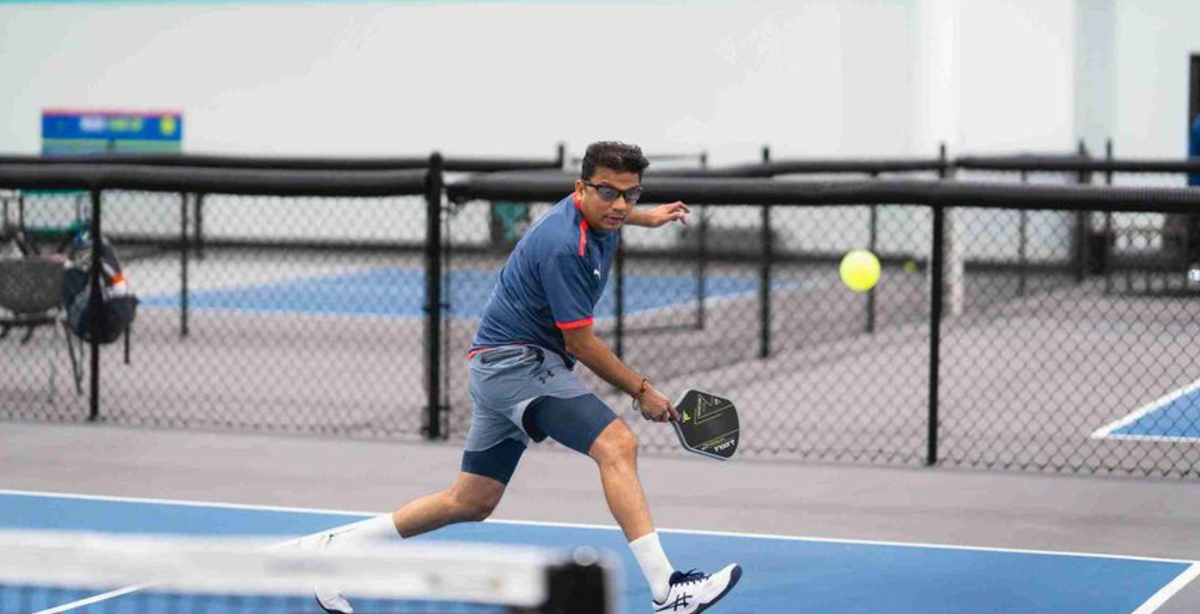
Use Your Backhand as the Default
Here is something most recreational players get wrong: your backhand should be your default block volley position, not your forehand.
The backhand lets you cover a massive range of court, from the center all the way to the chicken wing zone on your left side.
Your forehand only covers out to the right. Once your elbow gets jammed into your body on the forehand side, you have nowhere to go.
The chicken wing on the backhand volley is completely fine and functional. Do not panic when the ball comes into your body.
Set up your backhand early and let it cover the wide range it is designed to cover.
If the chicken wing has been a problem in your game, this breakdown on how to fix the chicken wing problem in pickleball is worth a read.
 The Dink Media Team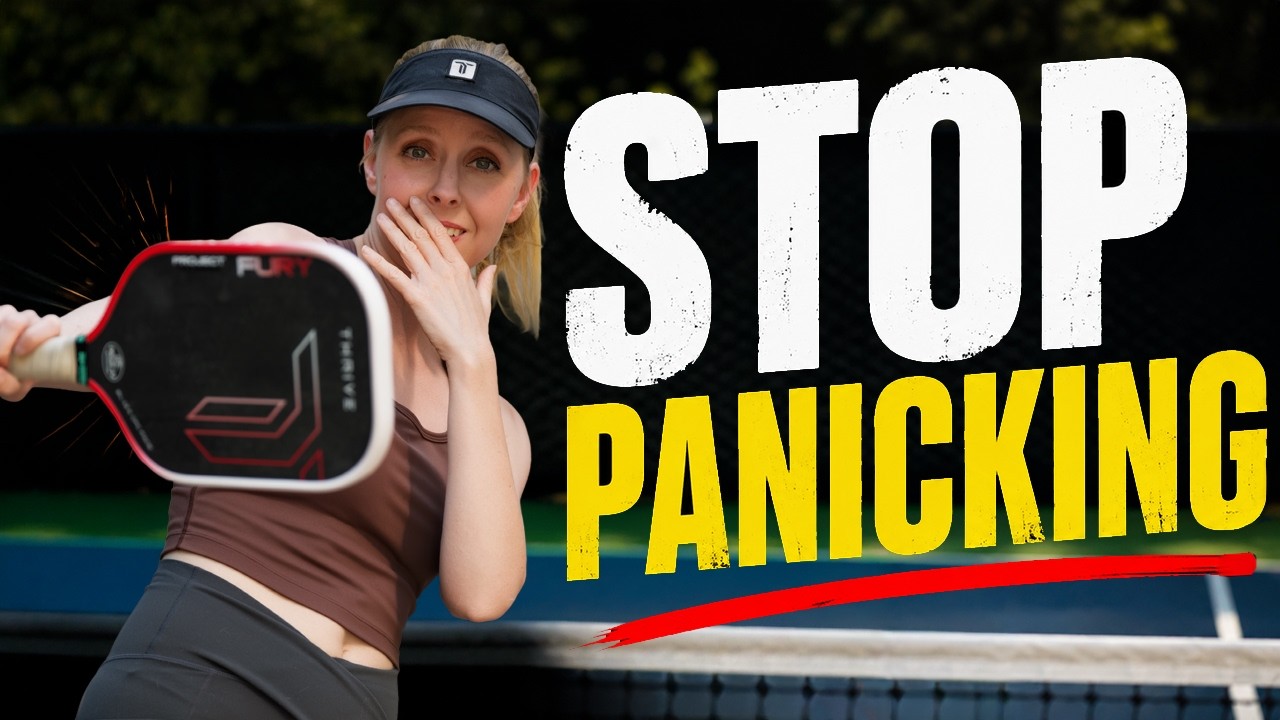
Grip Pressure Is the Secret Weapon
Grip pressure might be the single most underrated variable in the block volley.
Think of grip pressure on a scale from zero to ten. Zero is the paddle falling out of your hand. Ten is a death grip where your whole arm tightens up.
Your block volley lives around a three.
Here is a simple way to find it. Squeeze to a ten, go half, that is a five. Go half again, that is your three.
That relaxed grip is what allows the paddle to absorb energy instead of bouncing the ball back off like a trampoline.
 Zoey Weil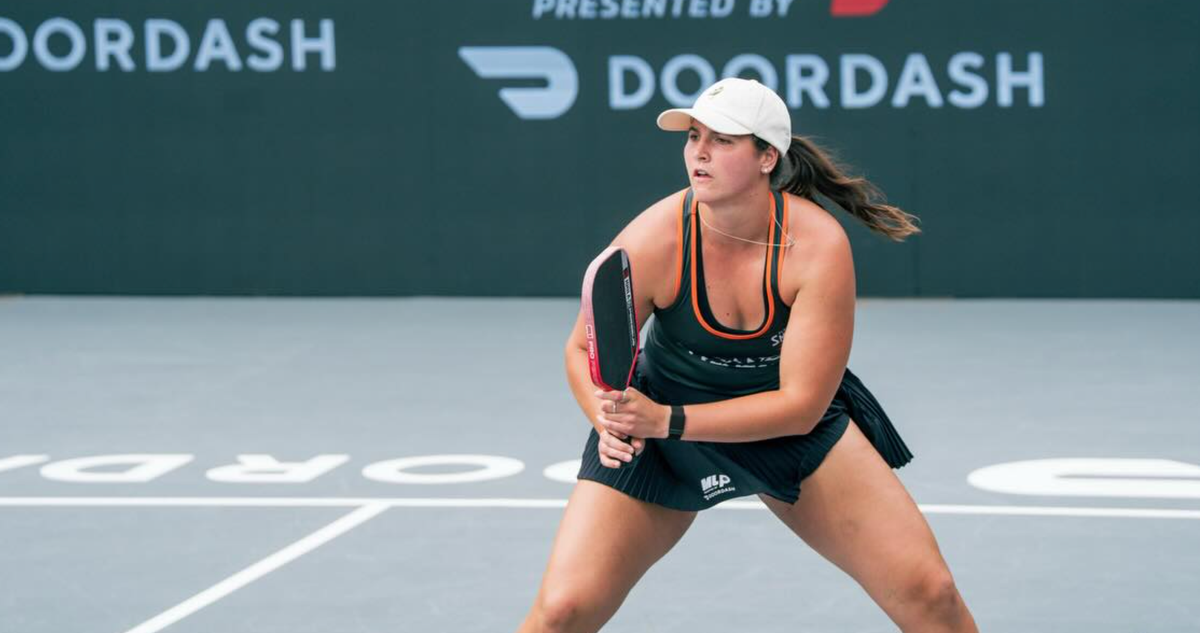
The difference is audible. A tight grip creates a loud pop off the paddle and sends the ball flying long.
A soft grip creates a quieter, flatter sound and keeps the ball short.
You can literally train yourself to listen for the right contact.
There is also a mental benefit. A tight grip tightens your forearm, your shoulder, and eventually your whole body. A loose grip relaxes the chain.
If you want to manage pressure during big points, your grip is one of the fastest ways to calm yourself down.
If managing your mental state during matches is a challenge, these five mental game habits that beat pickleball pressure are worth building into your routine.
 The Dink Media Team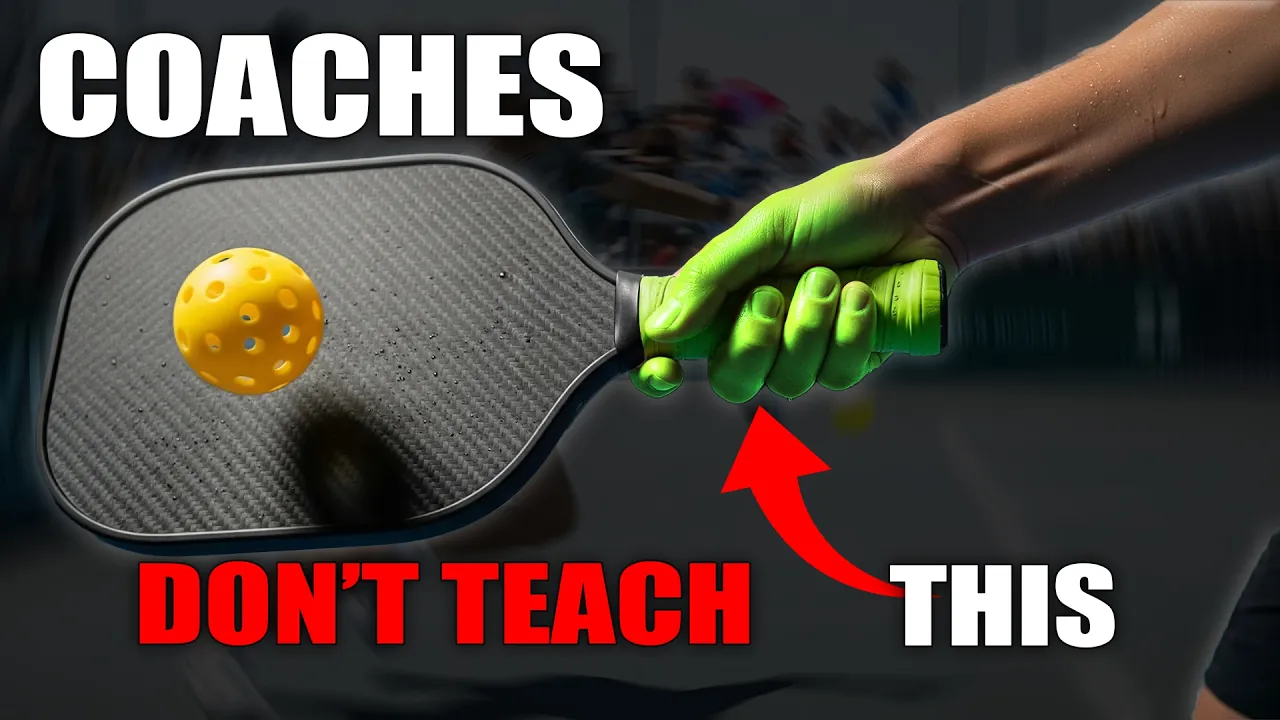
How to Use the Block Volley Against a Banger: The One-Two Technique
Knowing the mechanics is one thing. Knowing how to deploy the block volley in a real game situation is where it gets practical.
The one-two technique is the real-world pattern you want against someone who drives everything. Here is how it works:
- Shot one: Block the baseline drive. When the banger is back at the baseline and they rip a hard shot at you, block it soft. Aim for the kitchen line or just inside it. Your goal is to land the ball short and pull them forward.
- Shot two: Let the next ball go. Once your short block has pulled the banger into the court, they are going to try to hit hard again from close range. That ball is almost always going to sail long. Do not swing at it. Let it go out of bounds.
This is why the block volley is such a useful weapon against bangers specifically.
You are not trying to win the point with your block. You are setting up the banger to beat themselves with the next shot.
For more context on reading banger tendencies and setting up this pattern, this article on how to handle hard shots in pickleball adds three complementary methods.
You can also build on the block with a reset reset approach. These three pickleball reset fixes that stop the pop-up pair directly with the block volley technique.
 The Dink Media Team
How to Practice the Block Volley at Home
You do not need a court to get better at this shot.
Grab your paddle and find a comfortable space in your home.
A mirror is ideal so you can watch your own body position. Then run through this sequence repeatedly:
- Get into your ready position.
- Visualize a hard shot coming at you.
- Set your paddle into the block position.
- Hold the position and track an imaginary ball into your paddle face.
- Repeat at different heights: belly high, lower, out to the side, and into the chicken wing zone.
The one thing to avoid is blocking up high above your shoulder. Balls at that height are almost certainly going out.
Train your brain to block from the belly area and below, left and right.
This kind of mental repetition builds the motor pattern before you ever get back on the court.
Your body starts to default to stillness and the correct setup because you have rehearsed it hundreds of times without any pressure.
If you want more ways to improve without burning court time, this guide on how to practice pickleball with limited court time has practical methods that work.
 The Dink Media Team
Where the Block Volley Fits in Your Bigger Game
The block volley is one piece of a larger defensive toolkit, but it is a foundational one.
Once you can reliably absorb energy from a hard shot and redirect it soft, you stop giving bangers free points. You stop flinching. You stop swinging back out of panic.
You start controlling the pace of every rally instead of being controlled by it.
That shift in control is what makes this shot feel like a superpower, especially at the 4.0 level and above where drives come fast and the kitchen battle gets intense.
If you want to see where the block volley fits into your overall kitchen game development, these three pickleball volleys that win more kitchen points round out the picture.
And if you are working on moving beyond a 4.0 rating, this breakdown of five habits of a 5.0 pickleball player shows exactly where the block volley fits into a more complete skill set.
Frequently Asked Questions
What is a block volley in pickleball?
A block volley is a defensive shot used to absorb the energy of a hard-hit ball and redirect it softly back into the non-volley zone. Instead of swinging through the ball, you set your paddle in place and let the ball come to you. The goal is to slow the rally down, not to counter-attack.
Why does my block volley keep popping up?
Grip pressure that is too tight is the most common cause of a block volley that pops up. When you grip the paddle hard, the ball bounces off instead of being absorbed. Try loosening your grip to around a three out of ten and you will see the ball stay much shorter.
Should I use a forehand or backhand block volley?
Default to the backhand. The backhand covers far more court than the forehand, including the center and the chicken wing zone on your left side. Once your elbow gets jammed into your body on the forehand side, the shot breaks down completely.
How do I stop flinching on hard shots at the kitchen?
Flinching is a body stability problem, and the fix is training your foundation to stay still. Practice the block position at home with visualization so your body learns to stay calm under pressure. Loosening your grip also helps because a relaxed grip signals your brain and your body to stay loose instead of bracing.
Can I practice the block volley without a partner?
Yes, and it is one of the best ways to build the habit fast. Stand in your ready position, visualize a hard incoming shot, set your paddle into the block position, and hold it steady at different heights and angles. Do this for five minutes before every session and your on-court execution will improve noticeably within a week.

Love Pickleball? Join 100k+ readers for free weekly tips, news & gear deals.
Subscribe to The Dink