

7 Pickleball Mental Strategies Pros Use to Clutch Up Through Pressure
Choking, the yips, and tournament nerves are not about talent. A mental performance coach who trains tour pros shares the pickleball mental game habits that keep you steady when it counts.
Your pickleball mental game is the difference between the player you are at 3-all and the player you become at 9-9 on your second serve.
The strokes do not change. The pressure does.
Pro player Zane Navratil sat down with Jeff Troesch, a mental performance specialist who has worked with MLB organizations, Olympians, and a growing roster of tour pros, to break down what actually happens in your head when the game tightens up.
Troesch helped Zane through a stretch of burnout, and the conversation is full of fixes you can use this weekend.
It is a worthy companion to our other deep dives on the mental game.
Here are seven of them, in the order they tend to wreck your game.
Love pickleball? Then you'll love our free newsletter. We send the latest news, tips, and highlights for free each week.
What Is Choking, and Why Does Your Pickleball Mental Game Collapse Late in a Game?
Choking is a physical threat response, not a character flaw, and Troesch describes it as your throat and body literally restricting under perceived danger.
Your heart rate climbs, your breathing shifts, your pupils dilate, and your digestive system shuts down as blood runs to your organs. That is fight, flight, or freeze.
It gets triggered by a thought: "I might lose this," or "I do not want to embarrass myself."
Once that response fires, you stop being fluid. Your tempo gets off. You get tight and jabby.
The shots you were making at 3-all start sailing because your body is no longer relaxed.
Troesch points to a useful piece of NBA data.
The players we think of as clutch, Jordan or Kobe, actually shoot about the same percentage in big moments as they do the rest of the game.
The takeaway: staying steady is the skill, not some magical extra gear.
Understanding the modern pickleball strategies to winning in 2026 can give you the structural clarity that keeps panic from flooding in during big moments.
1. Win the Time Between Points
The single biggest pickleball mental game leak Troesch sees is wasted time between points.
Pickleball moves fast, faster than tennis, and players rush to the next serve without ever releasing the last point.
That rush compounds errors. One bad point becomes three because you never reset.
The fix is simple to say and hard to do: set the last point down before you pick up the next one.
Tennis players learned this generations ago within the same pace rules pickleball gives you.
Use your seconds. A clean reset beats a fast one. If pre-game jitters are the issue, our guide on how to manage tournament nerves pairs well with this habit.
Leaning on a simple 4-step system to win more pickleball games in 2026 can also reinforce what you do between points with a repeatable game plan.
2. Build a Between-Point Ritual You Always Run
Troesch calls a consistent between-point ritual "massively important and massively influential," and Zane has touched the fence after points since his college tennis days.
Anna Bright and Georgia Johnson do versions of the same thing on tour.
The ritual is a flush mechanism. The previous point goes behind you, the next point sits in front of you, and the routine draws the line between them.
It does not have to be a fence touch. Common ones that work:
- Take one slow breath
- Use a towel, even briefly
- Turn your back to the net and walk away from it
- Fix your eyes on a focal point: the holes on the ball, a mark on your paddle, a word on your wristband
The point is familiarity. When things speed up or get random in your head, the thing you always do restabilizes you.
This is exactly what steady players lean on, and it slots neatly into a repeatable pre-match warm-up routine.
The 12 drills you need to play your best pickleball in 2026 build the same kind of muscle memory that makes between-point rituals automatic.
 Alex E. Weaver
3. Control Your Eyes to Control Your Pickleball Mental Game Focus
Focus is a momentary thing. Concentration is focus sustained over time. You build the second by repeating the first.
Troesch defines focus as attention, and he is blunt about the lever you can actually pull: where your eyes go, your focus goes. So when you yell at yourself to "focus," the actionable version is to put your eyes where they need to be.
On court that means eye control: tracking the ball off the paddle, watching the holes on the ball as you serve, reading your opponent.
The Dink covers the offensive side of this in how to read your opponent's eyes, and if your attention drifts mid-game, our piece on how to stay focused during a match goes deeper.
Improving your overall pickleball court awareness starts with mastering the 6 essential pickleball shots for 2026 so your body handles execution while your eyes stay locked on the right target.
 The Dink Media Team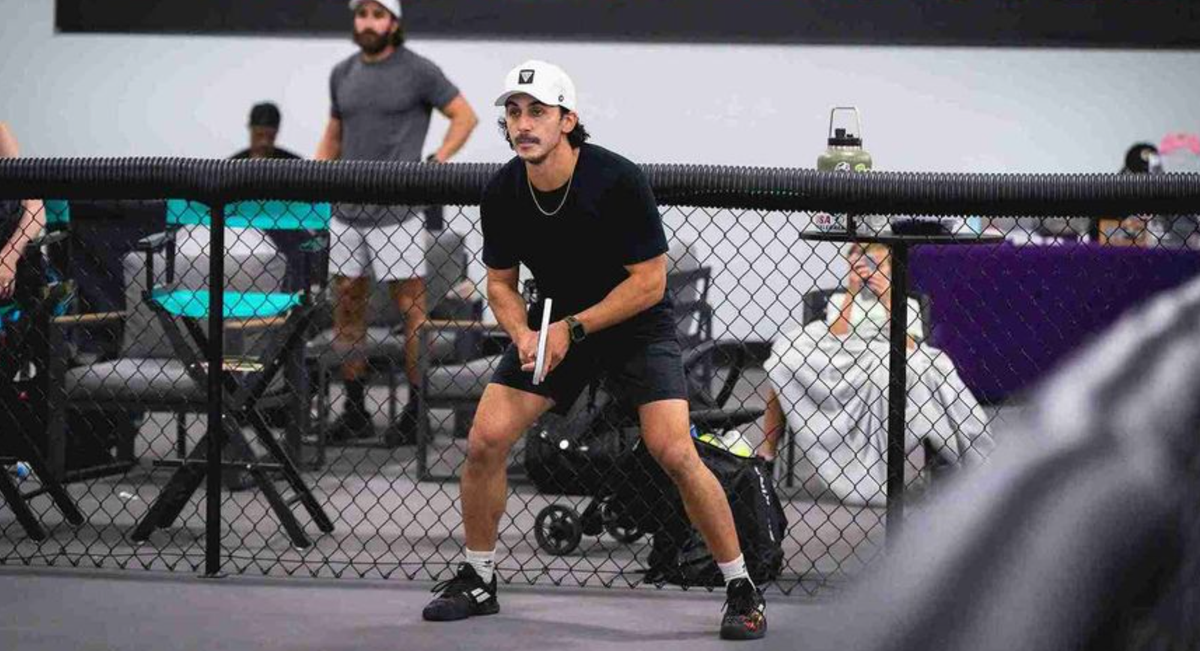
4. Reset After a Bad Call or a Bad Point
Zane admits the thing that throws him most is not pressure, it is getting cheated on a line call.
That fight-or-flight response spikes, and suddenly he is playing the last point instead of the next one.
Troesch is honest that shutting down the feeling of being robbed is one of the hardest resets in sport, harder than forgiving yourself.
There is no trick that erases it.
What works is the routine. Self-talk that is instructional or encouraging, a sensory cue, and a deliberate return to next-point mentality.
You are not pretending it did not happen. You are choosing, through your ritual, to put your attention back on the only point you can still win.
Reviewing the 25 biggest stories in pro pickleball from 2025 shows how even elite players faced adversity and had to reset their competitive mindset across an entire season.
 The Dink Media Team
5. Beat Overthinking by Getting Into Your Senses
Overthinking is rampant in pickleball because there are so many tiny adjustments available on every ball.
The brain floods. The primary fix, Troesch says, is sensory awareness.
Feel your feet on the ground. Press your thumb and forefinger together. Take a breath you can actually feel.
It sounds almost too simple, but he points to brain-wave studies: when a player is locked into a sensory experience, the traffic in the brain drops dramatically.
The other half of the fix is narrowing to one intention, like a single serve target or the angle of your paddle face on the return.
One clear task crowds out the noise. Sharpening your pickleball mindset through targeted drills is one of the fastest ways to make sensory grounding a reflex, and the 5 pickleball shots you must master before 2026 give your attention something concrete to lock onto during practice.
 The Dink Media Team
6. Beat the Pickleball Yips With Target Orientation
The yips are the ugliest form of overthinking, when your serve suddenly abandons you and you start dissecting every millisecond of your motion.
Troesch explains they are usually two things at once: a physical, twitchy nerve response below the forearm, and a psychological stress response stacked on top.
The escape is to stop thinking about your hand and start thinking about your target.
For the serve, get crystal clear on where the ball is going and emphasize accelerating through it.
The same applies to dinking, where the yips also show up: focus on the spot you want to hit, not on what your hand is doing to get there.
That target-first mindset is the heart of learning to play your way through the yips, and it is worth its own read if the serving yips have ever found you mid-match.
It is also why according to NBC Sports, performance coaches consistently preach that athletes should commit to a target before executing a movement, not during it.
Pairing target orientation with the right equipment matters too, and understanding the UPA-A 2025 pickleball paddle guidelines ensures your gear is never the extra variable feeding the mental spiral.
 The Dink Media Team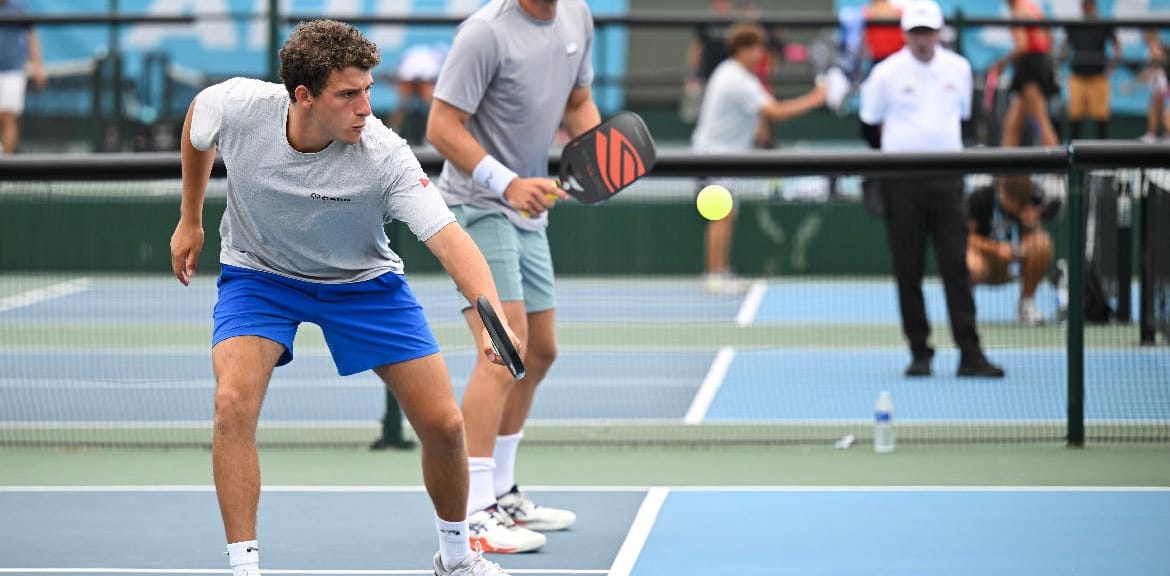
7. Treat Confidence as a Fact, Not a Feeling
Troesch's definition of confidence reframes the whole pickleball mental game: confidence is a thought about your skill set, and your skill set is static.
However many reps you have hitting a pickleball, that is how good you are, and a bad serve for ten minutes does not erase it.
The mistake is downgrading yourself in the moment.
You are a 100 out of 100, but your backhand feels off, so you tell yourself you are an 80 today. Then you play tentative, and you manifest the 80.
His reset is a question. Are you capable of getting your serve in right now, based on the sum total of your life as a pickleball player?
The honest answer is always yes.
Walk in knowing you have the capacity for success and you are far more likely to accelerate through the ball instead of steering it.
Tracking how the pros sustain that confidence under high-stakes conditions is part of what makes ranking the best PPA pros based on 2025 medal counts such a useful lens for recreational players studying the mental habits of champions.
 The Dink Media Team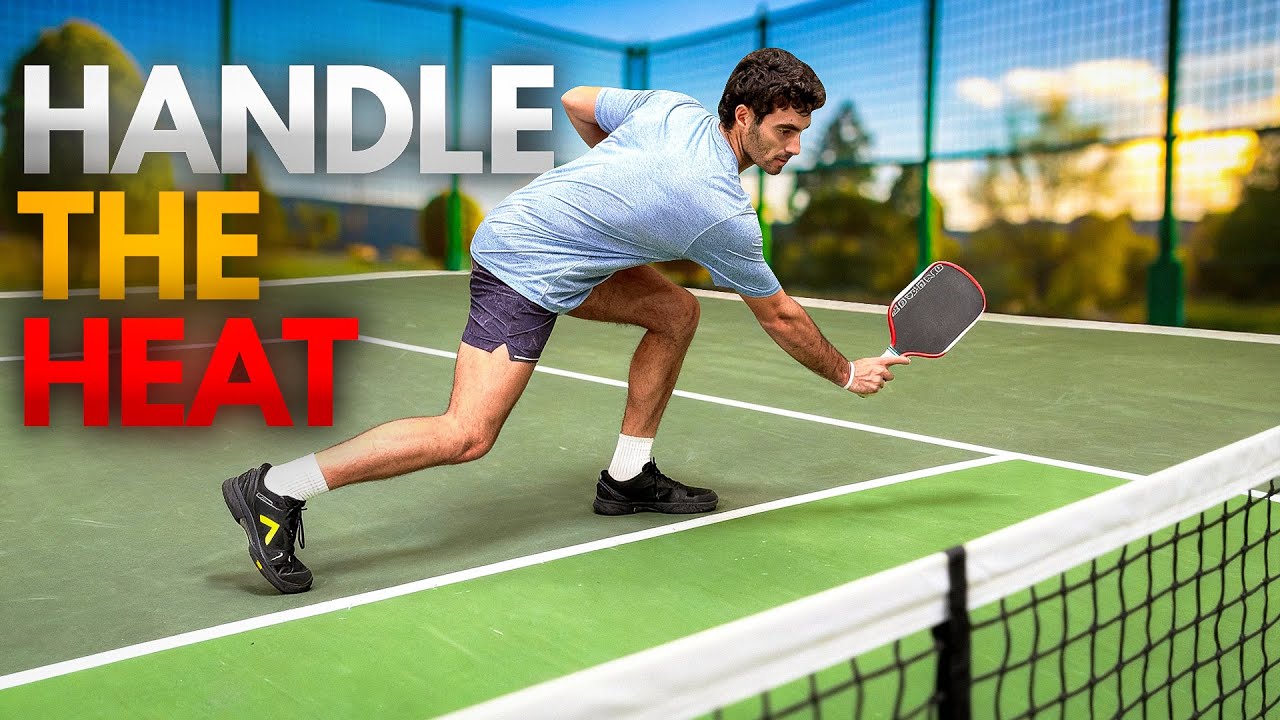
Does Your Confidence Dip Against Stronger Players?
That is a perception problem, not a skill problem.
Troesch points out that your ability does not shrink because the player next to you is better, so the goal is to play your pickleball with your skill set, independent of the group you are in.
The exception is real: if a 4.0 lands on a court with 5.0s, the game may genuinely outpace you, and that is information, not a confidence crisis.
Work on the gap rather than feeling bad about it.
Studying 26 pro pickleball predictions for 2026 gives you an honest picture of where the elite game is heading, which is useful context for calibrating your own growth benchmarks without ego.
 The Dink Media Team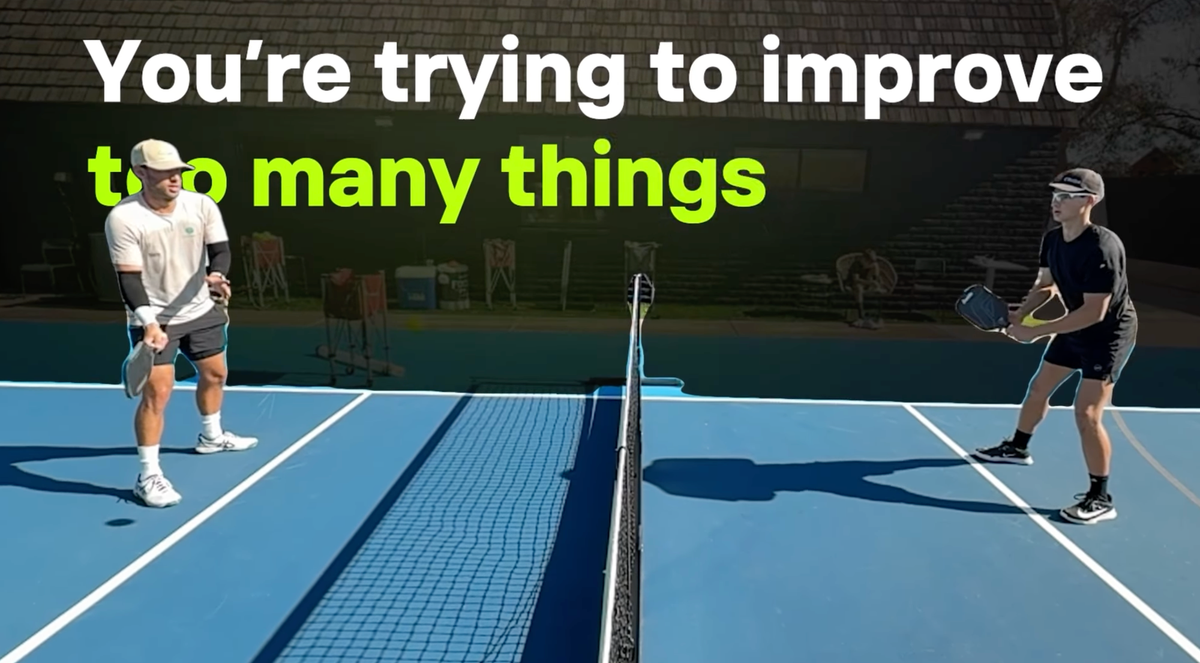
What Should You Do When You Are the One Getting Targeted?
Do what the game asks.
If every ball comes to you, play your best pickleball with each one and minimize the reward your opponents get for picking on you.
If your partner is the target, support them and resist the urge to over-poach.
The real battle is emotional, so shut down the insult of being seen as the weaker player and lock onto the next ball.
The mental backbone of any sound tournament strategy starts with exactly this kind of emotional discipline.
Reviewing the new USAP pickleball rules for 2026 is a useful parallel exercise, because players who know the rulebook cold remove one more source of in-game mental clutter.
 The Dink Media Team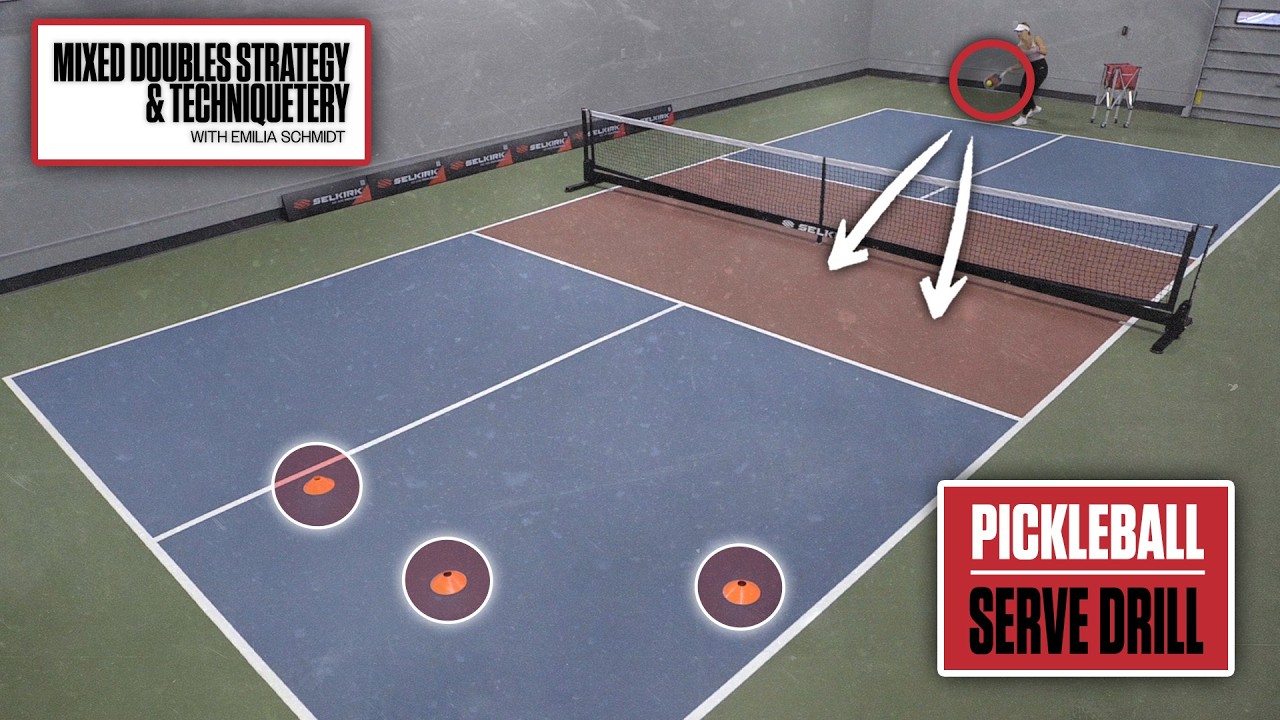
Stop Expecting to Win, Start Expecting It to Be Hard
One of the most counterintuitive notes in the conversation: wanting to win is great, but putting your attention on winning is a distraction, and expecting to win is a setup for an internal "uh oh" the second things go sideways.
Troesch tells the players he coaches to expect their opponent to play the best game of their life and to expect every moment to be harder than they imagined.
Upsets happen the instant a favorite starts thinking it will be easy.
Walk in with a blank slate, expecting only difficulty and the need to adapt, and you protect yourself from the let down that sinks number one seeds.
It is the mental backbone of any sound tournament strategy.
Tie it all together with intention.
Troesch's parting advice is to pick one skill to develop each time you play, then give yourself honest feedback afterward, so every session moves your game forward instead of just filling time.
That is how you become, in the title of his book, one day better. Build it into a real practice routine and the mental gains compound.
And if you needed one more reason to keep showing up, playing more pickleball improves your mental health too.
Watching why professional pickleball players abandoned the slice shot in 2025 is a sharp example of how even tour pros regularly rethink their approach, adapt, and rebuild confidence around a new skill set.
Frequently Asked Questions
What is the pickleball mental game?
The pickleball mental game is how you manage attention, emotion, and pressure on court. It covers resetting between points, controlling your focus, handling nerves and bad calls, and thinking about your own ability accurately. Troesch's view is that pickleball is just as mental as it is physical.
How do I stop choking in pickleball?
Recognize that choking is a physical threat response triggered by a thought, then interrupt it with a sensory cue and a between-point routine. Take a breath you can feel, fix your eyes on a target, and narrow to one clear intention for the next point. The goal is staying fluid, not finding a special gear.
What are the yips in pickleball and how do I fix them?
The yips are a mix of a twitchy nerve response and a stress reaction that make your serve or dink break down. The fastest fix is target orientation: focus on where the ball is going and accelerate through it, rather than analyzing your hand. Changing up your serve technique can also create new neural pathways.
How do I build confidence in pickleball?
Treat confidence as a fact rather than a feeling. Your skill set is static, so a few bad shots do not erase the reps you have banked. Before each point, ask whether you are capable based on your whole history as a player, and the answer will always be yes.
Why does my pickleball mental game fall apart in tournaments?
Tournaments raise the perceived threat, which fires the choke response and tempts you to rush between points. A consistent ritual, sensory awareness, and an expectation that the match will be hard all keep you grounded. A solid pre-match routine and a clear reset habit go a long way.
Love Pickleball? Join 100k+ readers for free weekly tips, news & gear deals.
Subscribe to The Dink