

An aggressive dink can rattle even experienced players, but the right techniques turn pressure into opportunity. Learn how to neutralize aggressive dinks and regain control of the rally.
The kitchen is supposed to be your sanctuary. It's where you control the pace, dictate the rally, and keep your opponents on their heels.
But then someone hits an aggressive dink at you, and suddenly that calm, methodical exchange turns into a scramble.
You're not alone if aggressive dinks give you trouble.
According to Richard Livornese Jr., an APP pro and pickleball instructor, this is one of the most common pain points for players at the 3.0 to 4.0 level.
The good news? There are specific, repeatable techniques that can help you neutralize these attacks and flip the pressure back on your opponents.
Love pickleball? Then you'll love our free newsletter. We send the latest news, tips, and highlights for free each week.
Why Aggressive Dinks Feel So Threatening
Here's the thing: when someone hits an aggressive dink, especially with topspin, your instinct is to pop it up or back way off the line.
At lower levels, that pop-up usually ends the point immediately.
At higher levels, players have learned to stay calm and use specific techniques to neutralize the attack.
The real problem isn't the aggressive dink itself. It's that most players don't have a clear game plan for handling it.
You're reacting instead of responding, and that's where mistakes happen.
The Backhand Side Is Where Most Players Struggle Against an Aggressive Dink
If you're a right-handed player, the aggressive dink on your backhand side is your biggest challenge.
The court dimensions make it nearly impossible for your opponent to hit a wide-to-wide aggressive dink that you can't reach, unless it's an ATP (around-the-post shot).
That's actually good news, because it means you have options.
The key is learning to differentiate between two types of wide balls: short ones and deep ones.
Livornese explains that if the ball is on a path closer to the net, you should look for an ATP. If it's deeper in the kitchen, you can take it out of the air.
This distinction matters because if you think a ball is going to be an ATP but it's actually reachable, you'll get caught leaning and lose the point.
Recognizing the depth of the ball immediately sets you up to neutralize the attack.
 Alex E. Weaver
What to Do When the Aggressive Dink Comes Wide
When your opponent hits an aggressive dink wide to your backhand, you have two main options depending on the depth of the ball.
- For short, wide balls: Hit an ATP. This is non-negotiable. If you don't hit the ATP on a short, wide aggressive dink, your opponent will roll you off the court because there's nothing you can do from that position. Whether you slice it, roll it, or use two hands, the ATP neutralizes the threat immediately.
- For deep, wide balls: You have two shots that work.
- First, you can take the ball out of the air and slice it to the inside foot of the player hitting the dink. This forces them to move and shifts their positioning.
- Second, you can get around the outside of the ball and chip it back at a short angle. Both shots keep the ball low and close to the net, forcing your opponent to hit a dead dink back to you and getting you back to neutral.
The reason the inside foot works so well is simple: if your opponent is going wide and rolling, and you suddenly send the ball to their inside foot, they have to move to hit it.
You've flipped the script on them.
The Dink Media Team
Handling the Middle Ball From an Aggressive Dink
When an aggressive dink comes from the middle of the court, the strategy shifts slightly.
You're not going to use the inside foot as much because your opponent is already positioned in the middle. Instead, you want to slice the ball wide.
Why? Because your opponent is shifted into the middle of the court to hit that dink. When you go wide, they have to take two or even three steps to get that ball.
A lot of times, this forces them to pop it up, make an error, or at least give you an easy ball back.
If they leave the ball up from the middle, you can attack it. But when they hit it well, the wide slice is your best response.
The Forehand Side Gives You More Offensive Options Against an Aggressive Dink
The right side of the court is where you can get a little more aggressive in your response to an aggressive dink.
You have your forehand, which means you can be more offensive than you can on the backhand side.
The fundamentals are similar: short and wide balls get an ATP, and deep balls get sliced or rolled. But here's where it gets interesting.
On the forehand side, if you get a ball that's a little higher, you can look to roll it out of the air wide to wide. This is more offensive than slicing and can put real pressure on your opponent.
Livornese also mentions a technique that causes absolute chaos: the push roll.
When you reach in and your opponent jumps to the middle, you can push the ball back behind them.
It's a simple shot, but it's devastatingly effective because your opponent has already committed to moving the wrong direction. According to CBS Sports coverage of elite pickleball strategy, reading opponent positioning before you execute a shot is one of the defining traits separating 4.0 players from 5.0 players.
The Dink Media Team
The Mental Side of Neutralizing Aggressive Dinks
Here's something that doesn't get talked about enough.
The mental game matters as much as the technique.
When someone hits an aggressive dink at you, your first instinct is panic. You feel rushed. You feel like you have to do something big to counter it.
But that's exactly the wrong mindset.
The goal isn't to hit a winner off an aggressive dink. The goal is to neutralize it and get back to a neutral rally.
Once you're back to neutral, you can work the point from there.
Livornese emphasizes that staying calm and controlling the pace is the key. You're not trying to be flashy. You're trying to be smart.
You're trying to recognize the depth of the ball, execute the right shot, and keep the ball low and close to the net. Research featured by NBC Sports on competitive pickleball confirms that controlled aggression at the kitchen line consistently outperforms reactive power play at every level.
The Dink Media Team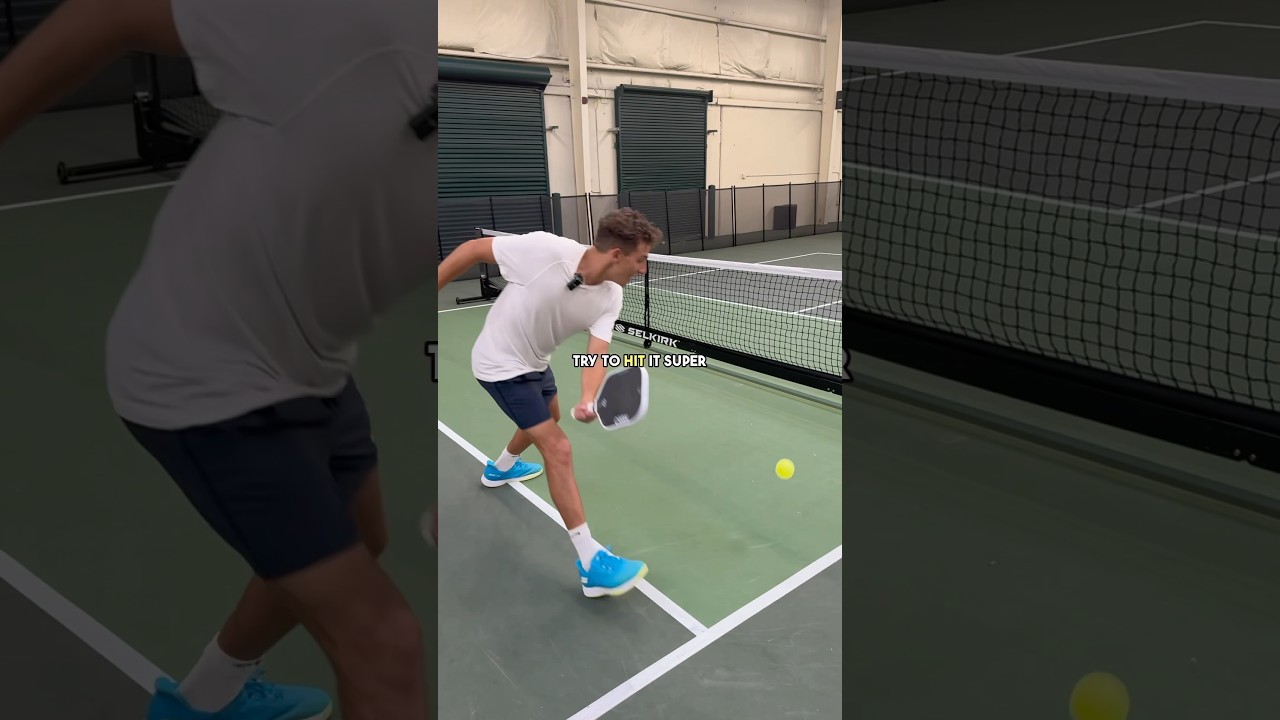
Putting It All Together: How to Handle an Aggressive Dink
The techniques for handling an aggressive dink aren't complicated, but they do require practice.
You need to drill the ATP on short, wide balls. You need to practice your slice dink to the inside foot. You need to get comfortable with the push roll on the forehand side.
But here's the real takeaway: aggressive dinks aren't the end of the world. They're just another shot you need to have an answer for.
Once you have that answer, you can stay calm, control the pace, and flip the pressure back on your opponents.
The players who level up fastest are the ones who stop reacting and start responding. They have a plan for every situation, including aggressive dinks. Now you do too.
Frequently Asked Questions
What is an aggressive dink in pickleball?
An aggressive dink is a dink hit with extra pace, topspin, or sharp angle designed to force a pop-up or draw a weak response from your opponent. Unlike a standard dink, it's intended to apply pressure rather than simply extend the rally.
How do you neutralize an aggressive dink on the backhand side?
Read the depth of the ball first. If it's short and wide, hit an ATP. If it's deeper in the kitchen, take it out of the air and slice it to your opponent's inside foot to force movement and shift the point back to neutral.
When should you hit an ATP in response to an aggressive dink?
Hit an ATP when a short, wide aggressive dink puts the ball too close to the net to take out of the air legally. If you don't execute the ATP in that situation, your opponent will use the angle to roll you completely off the court.
Is the push roll effective against an aggressive dink on the forehand side?
Yes. The push roll is most effective on the forehand side when your opponent has committed to moving toward the middle. Pushing the ball back behind them forces an awkward reset and frequently generates a pop-up or an unforced error.
How much should you practice these aggressive dink responses?
Drill each response in isolation before adding it to live rallies. Most players see measurable improvement within a few weeks of focused repetition on the ATP, the inside foot slice, and the push roll.

Love Pickleball? Join 100k+ readers for free weekly tips, news & gear deals.
Subscribe to The Dink