
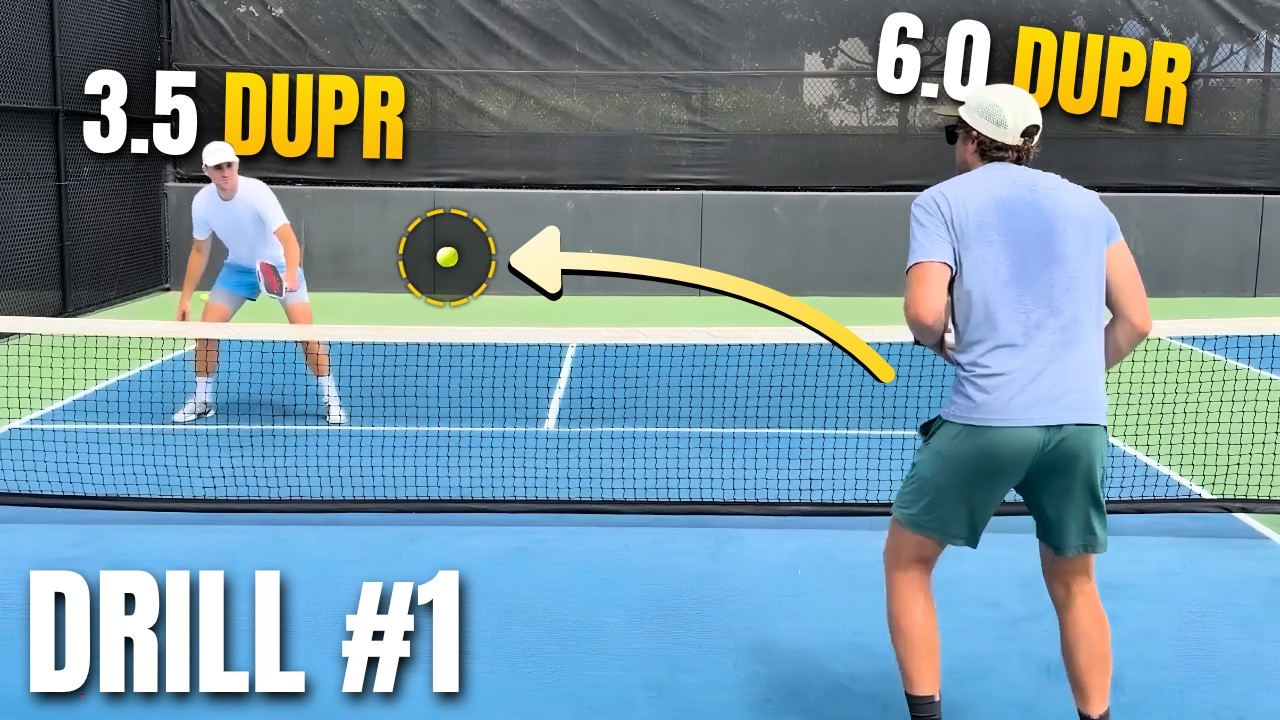
Most players waste court time when their practice partner isn't at their level. These 5 pickleball practice drills fix that and make both players better at the same time.
Finding a practice partner at your exact skill level is harder than most players admit.
You show up to the court, your usual hitting partner cancels, and you're left with someone who's two levels below you wondering if the session is even worth running.
It is. You just need the right drills.
These five drills come from Troy Akin Pickleball on YouTube, built specifically around the situation of training with a weaker partner while preparing for high-level tournament play.
Every drill here gives both players a real job to do, regardless of the skill gap.
Love pickleball? Then you'll love our free newsletter. We send the latest news, tips, and highlights for free each week.
Why Skill Gap Drilling Actually Works
The common assumption is that drilling with a weaker partner slows you down.
That's wrong. The gap creates a specific training advantage if you build each pickleball practice drill around it intentionally.
The weaker player works on fundamentals. The stronger player works on consistency, pressure management, and shot-making under unfamiliar pace.
Both players leave better than they arrived.
Drill 1: 100 Dinks in a Row
Consistency is the skill most players think they have and don't. This drill forces you to find out fast.
Both players stand at the kitchen line and dink cross-court. The goal is to complete 100 dinks in a row without a miss. You are not trying to win the rally.
You are trying to survive it together.
The key technical focus here is low net clearance. You want that ball barely skimming over the tape, not floating up where an opponent can attack.
If your partner's ball is sitting high, that's the rep to focus on fixing.
Here's what makes this drill powerful beyond the obvious consistency work. When you reach 90 dinks, real pressure builds.
There is no good way to replicate match nerves in practice, but the feeling of being one mistake away from resetting the count at 98 is about as close as you'll get.
If you can build genuine dink consistency at the 100-rep level, you will win points at every skill level simply by staying in the rally longer than your opponent wants to.
Drill 2: Mandatory Reset Drill
This drill exists to make you uncomfortable on purpose.
The setup is simple. Your partner has full permission to attack any ball, any time. You are not allowed to counter-attack.
Every single ball you receive must be reset softly into the kitchen, no exceptions.
Your technical focus is a loose wrist, a wide low stance, and a soft paddle face that absorbs pace rather than redirecting it.
The ball should drop into the kitchen, not pop back at them fast.
What you are building here is a reliable reset shot that holds up when a better player attacks you in a real match.
If you can handle your practice partner's speed-ups consistently, you have that shot in your back pocket for when it actually matters.
The reset drill that actually works is about repetition under controlled pressure, and this format delivers exactly that.
 The Dink Media Team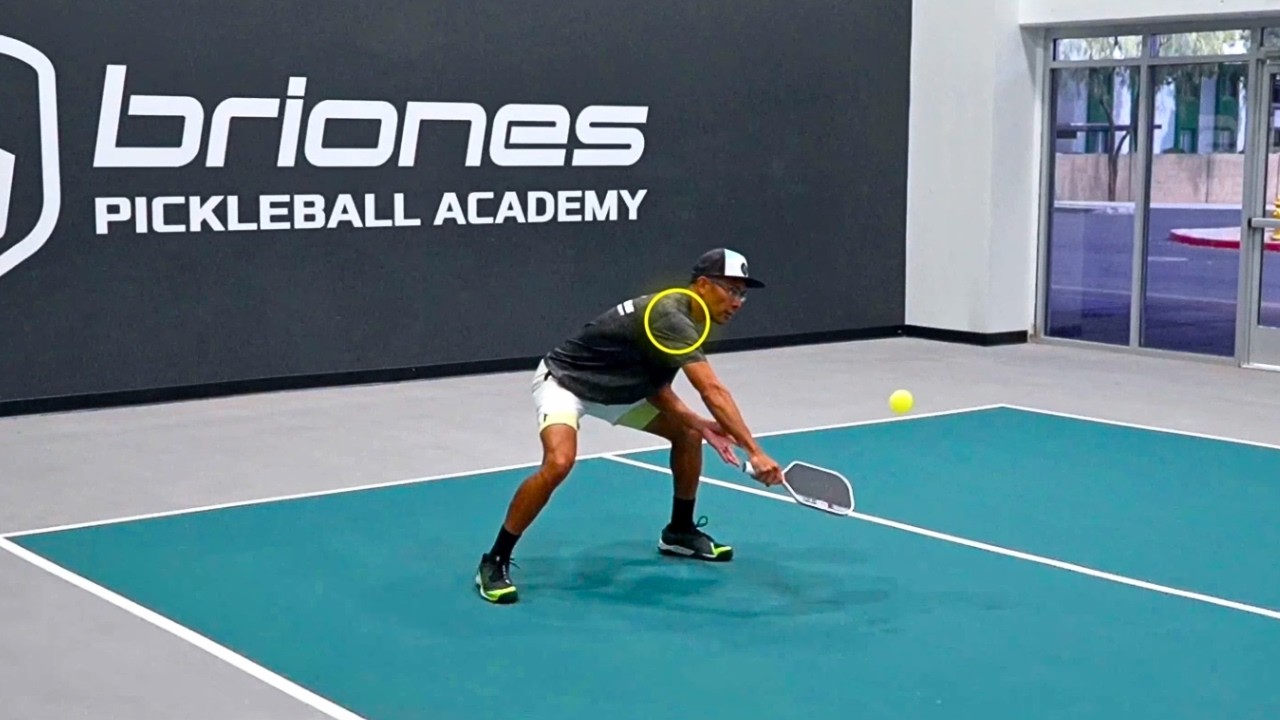
Does the Weaker Player Actually Get Anything Out of This?
Yes, and that matters for keeping a willing practice partner.
In the reset drill, the attacking player (typically the weaker one) is practicing speed-ups from the kitchen line.
That is a real skill they need. The lesson they are learning is that the initial speed-up rarely wins the point outright.
The second and third ball after the first attack is where the point gets finished.
Giving the weaker player an offensive role keeps them engaged and builds a shot most 3.5 players never develop intentionally.
For more on how to approach speed-ups the way pros do, the prep before the shot matters as much as the swing itself.
 The Dink Media Team
Drill 3: Fifth Shot and Seventh Shot Recovery
This drill puts the stronger player in a defensive hole from the very first ball. That's the point.
The stronger player feeds their partner a soft forehand that sits up slightly. The weaker player attacks it immediately, putting the feeder on defense from ball one.
The stronger player's job is to reset that attack, work back to neutral, and eventually earn their way back to the kitchen.
You're practicing fifth shots, seventh shots, and ninth shots. These are the transitional balls that most players in the 4.0 to 5.0 range completely ignore in drilling.
Everyone drills third shot drops. Almost nobody drills what happens when the drop is slightly too high and gets hammered back.
Knowing when to flip from defense back to offense is one of the clearest separators between a 4.0 and a 4.5 player.
 The Dink Media Team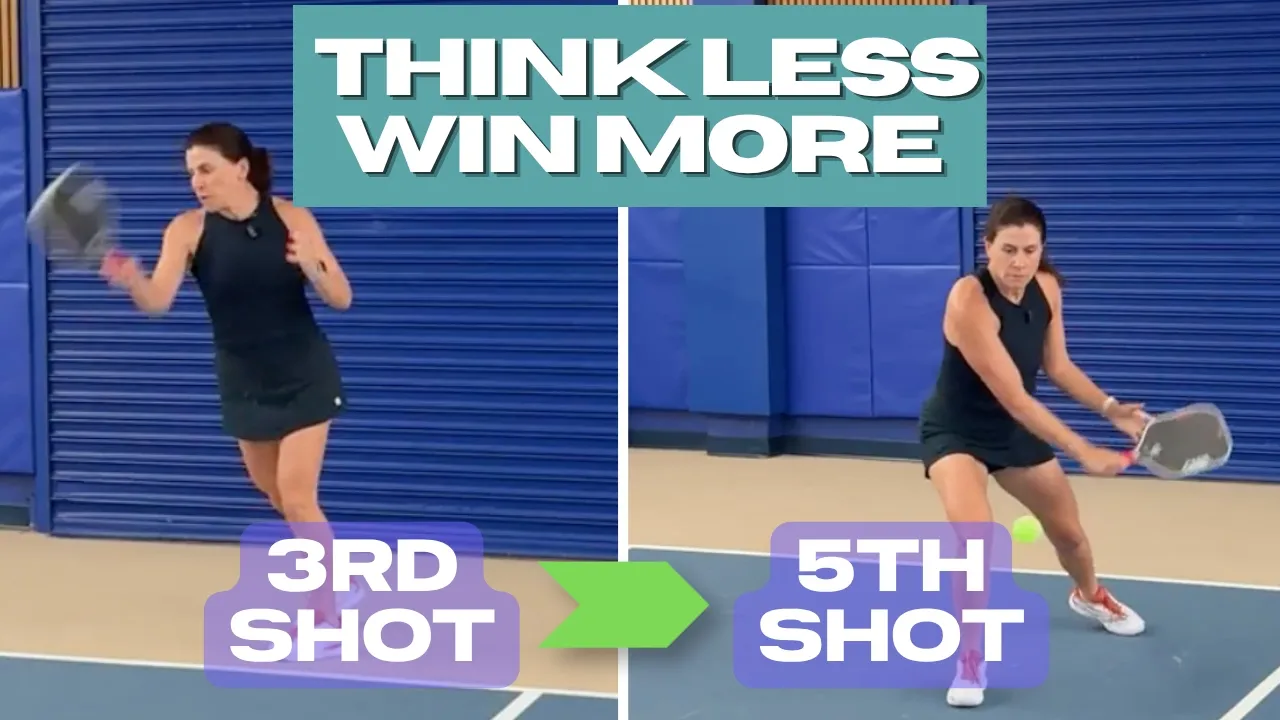
Drill 4: Serve, Return, Third Shot Drive Down the Middle
Middle solves the riddle. That phrase gets repeated constantly in pickleball coaching because it works.
The stronger player serves, the weaker player returns with a focus on depth, and the stronger player drives that third ball hard and low down the center.
After three shots, both players reset and start over.
This pickleball practice drill isolates the third shot drive as a low-net-clearance weapon aimed at the middle seam.
It doesn't matter whether the return comes back to the backhand or forehand side. The answer is always the same: drive it low down the middle.
The weaker player is working on return quality and depth, which is exactly what they need.
Shallow returns are one of the most punishing habits at every level below 4.5, and fixing return of serve mistakes starts with recognizing which ones you make consistently.
When your return lands short, you hand the serving team an easy third shot.
When you push it deep, you force them to drive or drop from behind the baseline under pressure.
Targeting the right spots on your return turns a neutral shot into an offensive setup.
For the stronger player, the target on the drive is the net tape, not your opponent's body.
 Andrei Daescu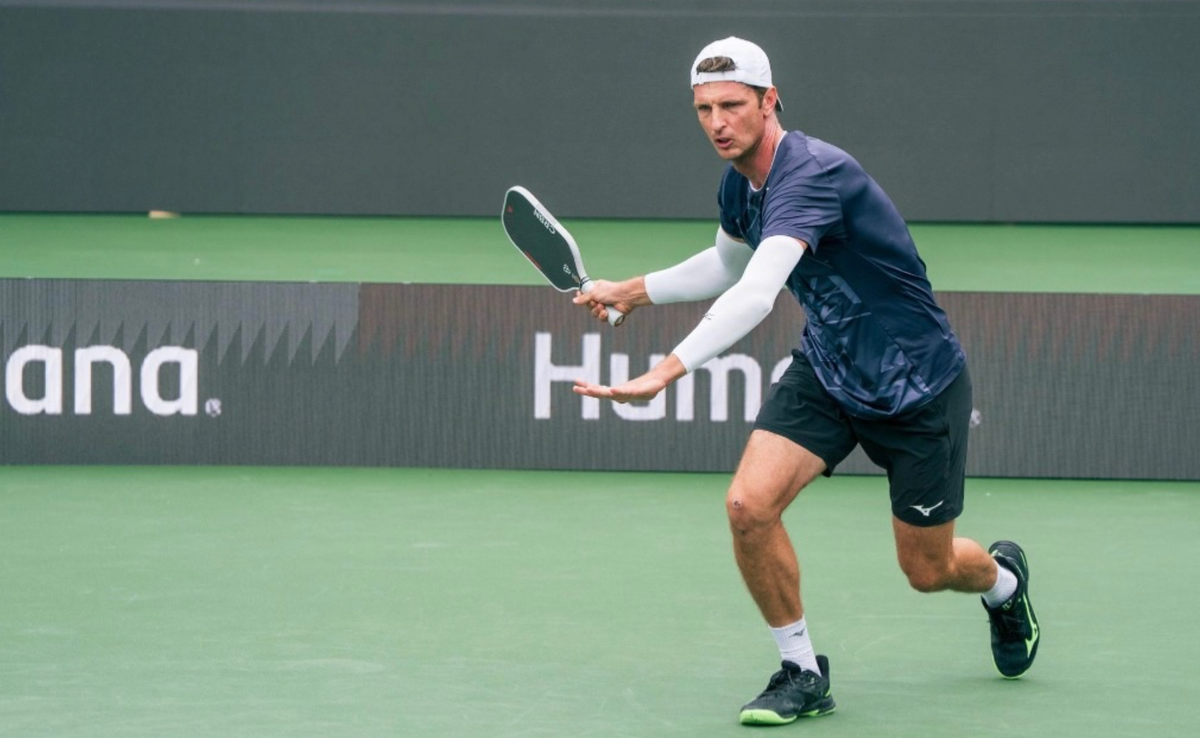
What About Return Depth Specifically?
Return depth is not complicated, but most players never train it in isolation.
- When your return lands short, you give the serving team an easy third shot from a comfortable position.
- When you push that return deep, you force them to drive or drop from behind the baseline under pressure.
A focused session on serve and return alone will do more for your win rate than most players expect.
Targeting the right spots on your return turns a neutral shot into an offensive setup.
 The Dink Media Team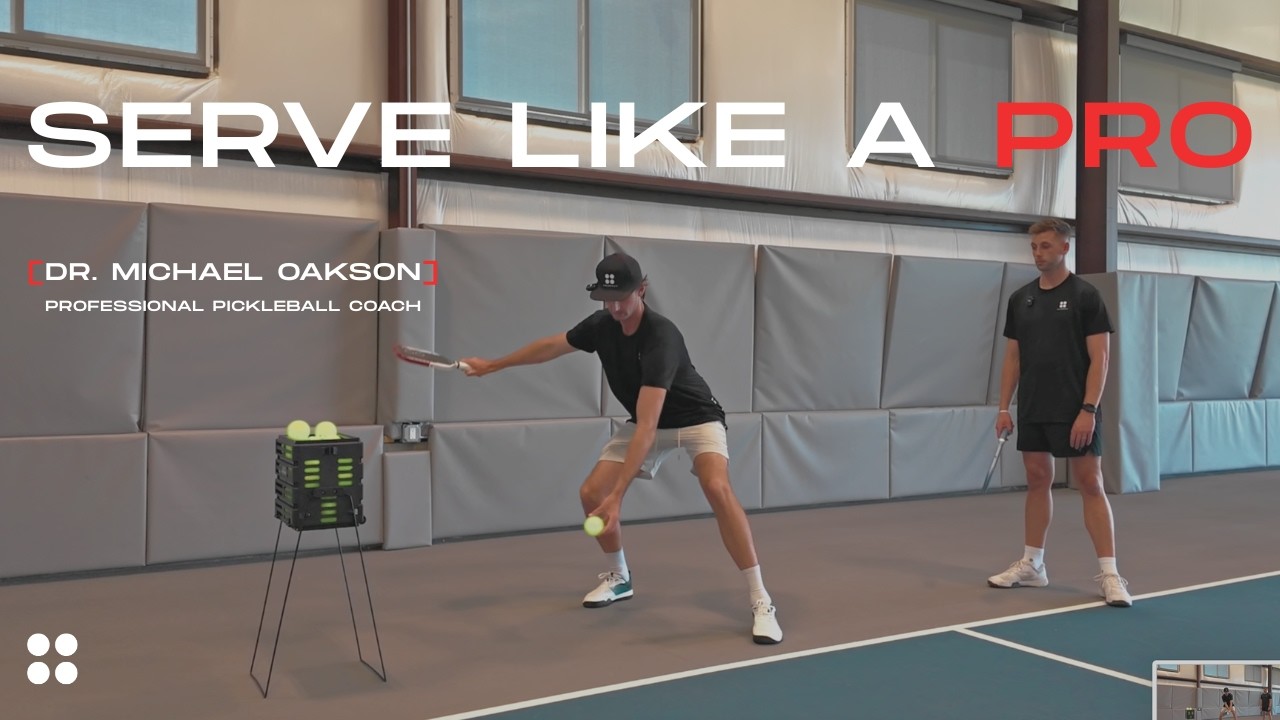
Drill 5: Drop Feed Speed-Up Hands Battle
This is the most physically demanding pickleball practice drill on the list, and it's also the most fun.
The weaker player stands at the kitchen line, drops a ball, and rips it as hard as they can at the stronger player.
No spin requirements, no specific target, just maximum pace. The stronger player counters every ball back hot with controlled aggression.
For the stronger player, this builds hands speed, ready position, and the ability to handle pace faster than typical match play.
Absorb full-swing attacks in practice and a normal speed-up in a real match slows down visually.
The weaker player develops confidence attacking with pace, reads the counter coming back, and learns to stay in position for the second ball.
Hitting a proper speed-up is not just about swinging hard.
You rarely win on the first speed-up. You win on the second or third ball, after your opponent has been moved or flustered.
 The Dink Media Team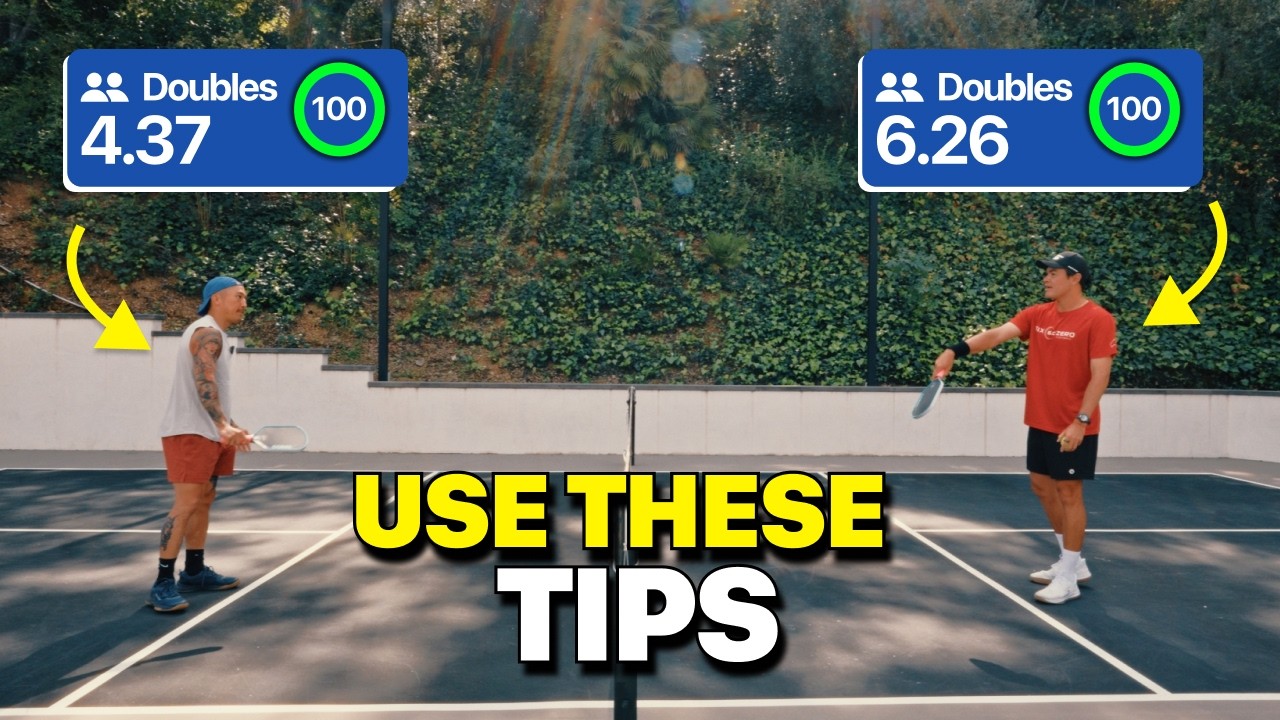
How to Structure a Full Session With These Drills
Running all five drills back to back in one session is a legitimate workout. Here is a clean structure that keeps both players focused:
- 100 dink challenge to start. Warm up the hands and get both players dialed into net clearance before anything else.
- Mandatory reset drill for 10 minutes. Switch roles halfway so both players attack and reset.
- Fifth shot recovery drill for 10 minutes. Alternate who gets put on defense first.
- Serve, return, and third shot drive for 10 minutes. Focus on depth from both ends.
- Drop feed speed-up battle to close the session. Run it until both players are visibly tired.
This format takes about 45 to 50 minutes and leaves almost no idle time.
If you're still weighing session volume against live play, a top pro did the math on drill versus play.
 The Dink Media Team
What Should the Weaker Player Focus On Most?
Across all five drills, the 3.5 player should track three specific things:
- Net clearance on dinks. Balls floating high get attacked. Lower is almost always better.
- Return depth. Short returns make life easy for the server. Push that ball back deep every time.
- Second-ball awareness during speed-ups. The first attack is just the opening. Stay ready for what comes next instead of watching where the first ball went.
These three habits will carry a 3.5 player toward 4.0 faster than any other single focus area.
And for the stronger player, breaking through the 4.0 ceiling requires exactly the kind of pressure-based consistency work that these drills create.
The skill gap between partners stops being a problem the moment you build the right drill around it.
Frequently Asked Questions
Can I really improve by drilling with someone two levels below me?
Yes, and the reset drill and hands battle drills prove it. The weaker player applies pressure in a controlled setting, which lets the stronger player build specific skills like resets, counters, and handling pace without the chaos of a real match.
How many dinks in a row should a 3.5 player aim for before trying 100?
Start with a target of 20 in a row and build from there. Once you can hit 20 consistently with low net clearance, push to 40, then 60. The jump from 60 to 100 is where the real pressure management kicks in.
What does a mandatory reset drill actually teach?
A mandatory reset drill forces you to build a soft, reliable block shot under pressure instead of defaulting to a counter-attack. The drill removes the option of hitting back hard, which isolates the exact mechanics of absorbing pace and dropping the ball softly into the kitchen.
How do I keep my practice partner engaged if they feel outmatched?
Give them an offensive role in every drill where possible. In the reset drill they attack. In the hands battle they are the one firing at pace.
Having a clear job that challenges them keeps the session useful for both players instead of feeling like a lesson.
Is the third shot drive always aimed down the middle?
Not in every match situation, but as a drill target the middle is the best default. It reduces angle exposure, creates confusion between opponents in doubles, and forces you to keep the ball low through the highest part of the net. Understanding the middle ball decision in doubles will sharpen your drive placement beyond just the third shot.

Love Pickleball? Join 100k+ readers for free weekly tips, news & gear deals.
Subscribe to The Dink