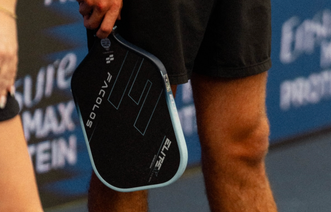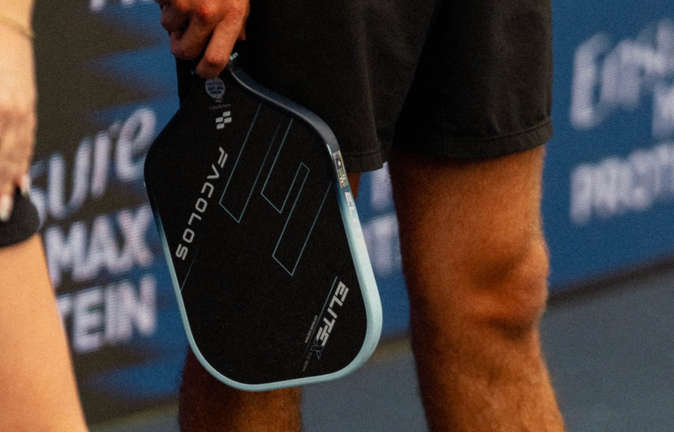
When Every Pickleball Paddle Is Good, What Actually Matters?
The skateboarding industry offers a blueprint for what comes after the paddle technology arms race: better brands, better testing, and better execution
I think the skateboard industry is a pretty good preview of where pickleball is headed.
As manufacturing gets better and more accessible, having a good product becomes less of an advantage. Eventually, everyone can make something pretty good.
The harder things to copy are: brand, distribution, manufacturing know-how, and the knowledge you build from actually developing products.
Skateboarding already went through this
Skateboard decks basically settled on 7-ply maple.
There are obviously ways to make one deck different from another. Different maple, glue, pressing, concave, shape, wheelbase, graphics, etc.
But at the most basic level, you're still talking about seven pieces of wood pressed into a skateboard shape.
That sounds a lot like pickleball right now:
- Carbon fiber composite
- Polymer core
- Thermoforming
And yet most don’t think a Baker deck and an Element deck are interchangeable.
That's what I find interesting about it. The underlying product can become pretty standardized without the brands becoming interchangeable.
 West Shaw
New technology still matters
That doesn't mean technology stops mattering though.
Skateboarding has had plenty of real construction breakthroughs. Lib Tech developed a reinforced construction designed to make decks lighter, stronger and more durable. Powell Peralta eventually developed FLIGHT construction, which took a much more advanced approach to the same basic problem.
Those technologies were meaningful. But eventually other companies adopt the idea, improve on it, or develop their own version.
That's just how technology tends to work. Somebody introduces something new, everyone else figures out how to do it, and eventually it becomes normal.
We've already seen that happen with pickleball a few times over.
Eventually, "thermoformed" just means that's how you make the paddle
"Our paddle is thermoformed" isn't much of a selling point anymore.
It's be like saying: "Our skateboard is made from 7-ply maple."
Okay, cool. So is everyone else's.
The more interesting question is what your version does better.
A new construction can give a company a real advantage for a while.
But once enough companies have their own version, the technology stops being the thing that separates them. It just becomes part of how paddles are made.
That's why I think companies need to think about technology as a pipeline rather than an identity. You don't want to be the thermoformed paddle company. You want to be the company that keeps figuring out what's next.
A good brand can survive changes in technology
This might be the biggest lesson from skateboarding.
People aren't loyal to a skateboard company because of the plywood. They're buying some combination of performance, shape, graphics, athletes, culture, history, trust and familiarity.
The technology underneath the deck can change without changing why someone wants that particular brand.


I think there are basically three types of paddle companies
The marketing company
They buy an existing construction, pick a shape and weight, put some graphics on it, add a logo and sell it.
Their moat is brand, marketing and distribution.
That can be a perfectly viable business. It's just not a particularly strong position once everyone has access to similar manufacturing.
The product company
They actually develop the paddle. They test different cores, layups, shapes, balances and stiffnesses. They build prototypes and learn what works and what doesn't.
Their moat is product knowledge, testing, design and brand.
That's a much stronger position because the company is building knowledge that isn't sitting in an OEM catalog.
The technology company
They're developing materials, core structures, manufacturing processes, tooling and testing systems that other companies don't have.
Their moat is technology, manufacturing, IP and brand.
That's obviously harder to copy.
 Alex E. Weaver
Durability has become part of the performance story
Skateboarding also shows that making something last longer can be a real selling point.
For paddles, I think the more interesting version is performance retention.
- Instead of: "Our paddle has great spin."
- It has become: "Our paddle still has great spin after 200 hours of play."
As we get better at measuring paddle degradation, durability has become more than a warranty issue. It is part of the performance.
You don't need a completely different product to charge more
Skateboard companies have been selling very different products at very different prices despite using essentially the same basic construction.
The difference comes from brand, athletes, graphics, shape, culture, distribution, scarcity, trust and a bunch of other things that have nothing to do with the number of layers of wood under your feet.
Pickleball already works the same way.
Two paddles can cost roughly the same to manufacture and still be worth very different amounts to the customer.
Manufacturing cost and perceived value are two different things.
Not every good idea wins
We're going to see a lot of new materials, cores, geometries and surface technologies.
Some will be great. Some will be gimmicks. Some will perform incredibly well but cost too much to make. Others might be technically better but simply feel worse to play.
The best engineering solution isn't always the best product.
It still has to be affordable, manufacturable, durable, feel good, and give the customer a reason to want it.
Small brands can still matter
Skateboarding also shows that you don't have to be the biggest company to have a place in the market.
There are huge brands, technical brands, boutique brands, lifestyle brands and everything in between.
People don't care "Who sells the most skateboards?" It comes down to, "Which one do I want?"
The bigger point
I think "carbon fiber + thermoformed + foam core" is the pickleball equivalent of "7-ply maple."
It tells you what the product is made from. It doesn’t tell you why you should buy one brand over another.
The companies that will do well long term are the ones that can answer a pretty simple question:
What does our version do better? And ideally, they can prove it.
It may sound boring or disappointing for the product engineer to tell you that innovation isn't the most important thing, but I don't think the next big market advantage is going to come from finding some exotic new material. It is far more likely to come from better testing, better manufacturing, and building a brand that can survive whatever the next big technology is.

Love Pickleball? Join 100k+ readers for free weekly tips, news & gear deals.
Subscribe to The Dink