
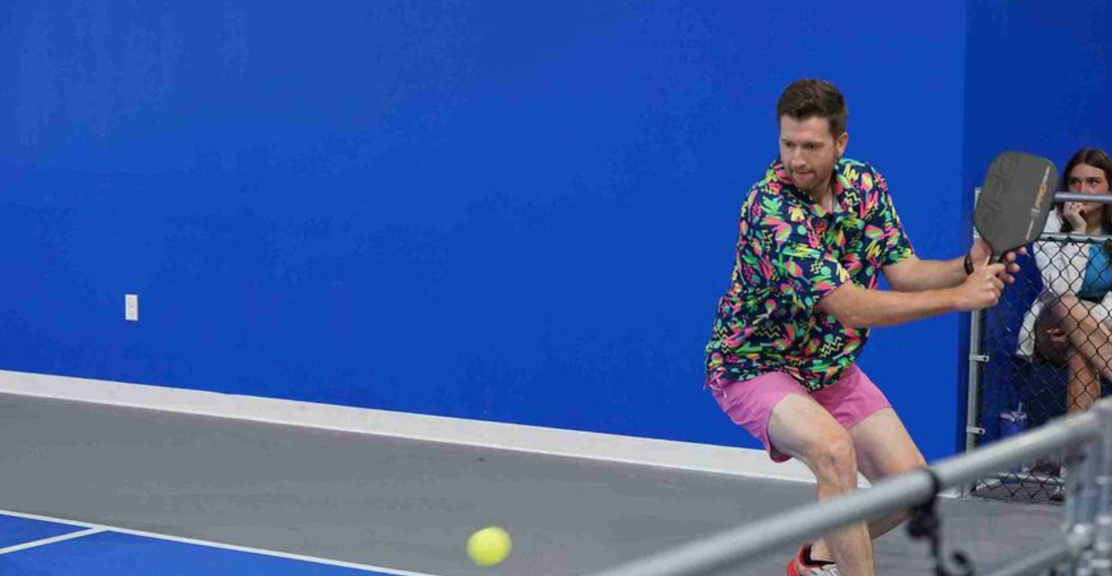
How to Add Disguise to Your Pickleball Dinks: Same Setup, Different Shot
Disguise dinks pickleball players rely on comes down to one principle: same body setup, different shot direction. Master this skill and your opponents will stop reading your dinks before you even hit them.
Learning to disguise dinks in pickleball is the single fastest way to go from predictable to dangerous at the kitchen line.
Your opponents aren't reading your paddle. They're reading your body.
The moment you give them a different look every time you prepare to dink, the jig is up.
But hit that same setup whether you're going crosscourt, down-the-line, or into the middle? Now they're guessing. And guessing in pickleball is losing.
Love pickleball? Then you'll love our free newsletter. We send the latest news, tips, and highlights for free each week.
What It Means to Disguise Dinks in Pickleball
Disguised dinking means presenting an identical pre-contact picture to your opponent regardless of where you intend to place the ball.
Same stance, same backswing, same paddle face angle at eye level, and then making the directional decision at or just before contact.
Most intermediate players telegraph every shot without knowing it.
They open their shoulders early for the crosscourt, drop their elbow for the line shot, or rotate their hips toward the target before the ball even arrives.
Opponents at the kitchen are trained to pick up exactly these cues, and once they can, your dinks become hittable.
Disguise is about removing those cues. The goal isn't to trick anyone, it's to give them nothing to read until it's too late to react.
Why Your Dinks Are More Readable Than You Think
Here's the thing: most players think their dinks are unpredictable because they vary the placement.
They're not wrong, different targets are good. But if the body language is different for each target, the placement variation means nothing.
The opponent sees the shoulder turn, steps left, and you've already handed them the point.
Research on anticipatory cue use in racket sports consistently shows that elite players make shot-direction decisions based on body kinematics, not ball flight.
A 2025 study in the Journal of Sports Sciences confirmed that advanced athletes in net-based sports pick up directional cues from opponent hip and shoulder orientation an average of 180ms before contact.
That's nearly two full tenths of a second of reaction time you're giving away if your setup isn't neutral.
Pickleball deception tips start with understanding this: your body tells the story before your paddle does.
The Same-Setup System: How to Build a Neutral Dinking Platform
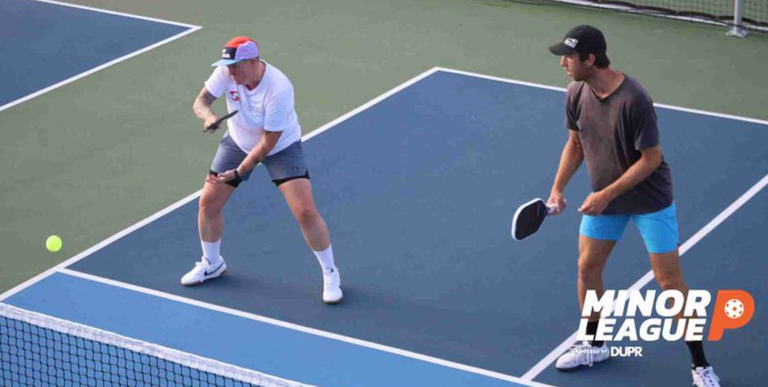
The foundation of disguised dinking is a neutral platform, a ready position that doesn't commit to any direction. Here's what it looks like:
- Feet parallel to the net, shoulder-width apart. Not angled toward one side. This is the base everything else builds on.
- Paddle out in front at mid-body height. Not loaded to one side. Not dropped. Centered.
- Eyes on the ball, not your target. The moment your eyes drift to your intended landing spot, your shoulder follows.
- Contact point directly in front of the body. The direction change happens through subtle wrist and forearm adjustments at contact, not through body rotation.
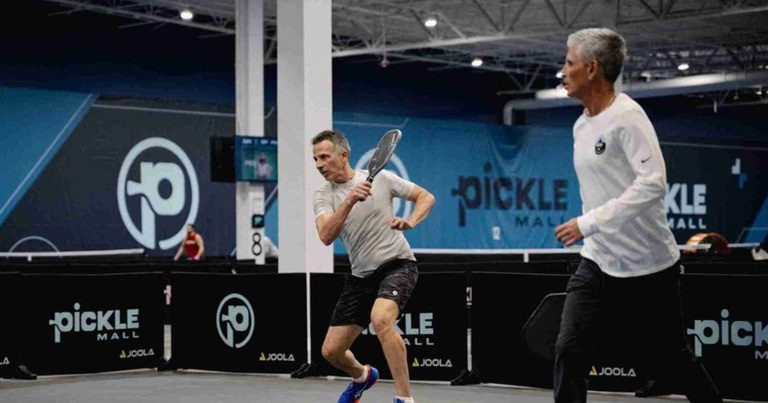
This is exactly the system JW Johnson uses with his unusual dinking technique. His setup looks the same on virtually every dink.
You don't know if he's going crosscourt or down the line until the ball is already moving. That's not a gift, that's trained repetition.
 The Dink Media Team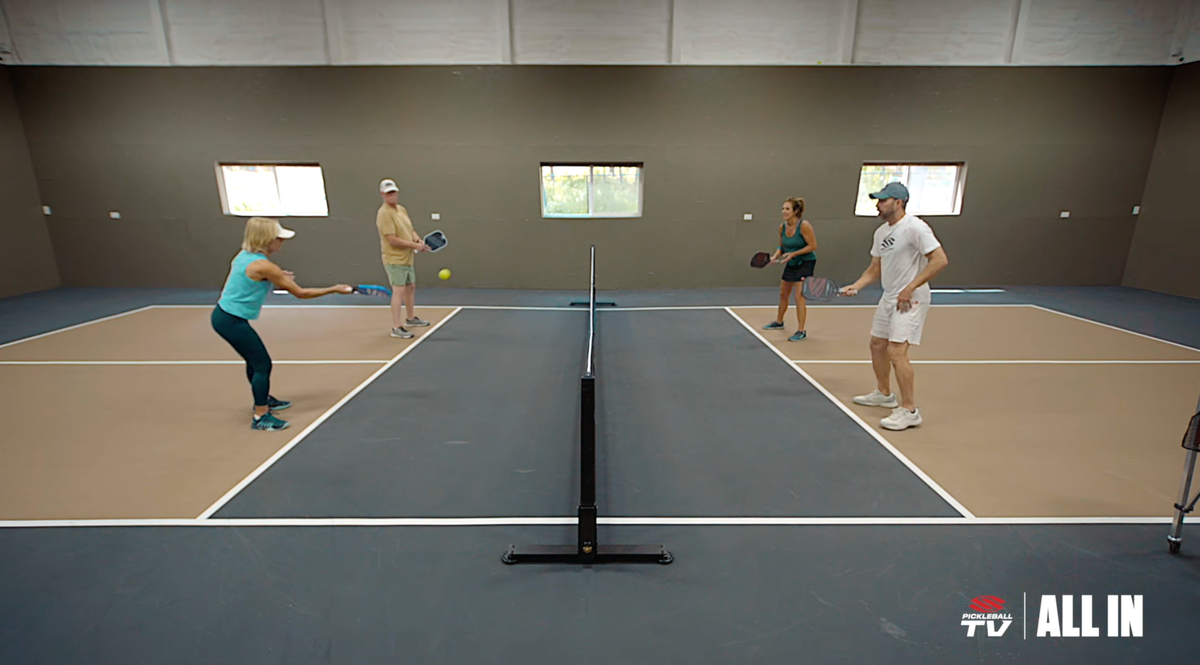
How to Actually Change Direction Without Changing Your Setup
This is where most guides stop short. They tell you to keep a neutral setup but don't explain how to redirect the ball without tipping your hand. Here's the breakdown:
- Wrist angle at contact is your primary direction tool. A slightly open face (wrist rolled back) sends the ball crosscourt. A flatter, closed face pushes it down the line. The adjustment is measured in degrees, not in arm movement. Turn those mediocre dinks into winners by practicing contact-point adjustments with no other setup change.
- Contact timing is your secondary tool. Taking the ball slightly early (out in front of your lead foot) tends to redirect crosscourt. Taking it slightly later, closer to your hip, favors the line. Both contacts can come from the same paddle preparation.
- Swing speed creates misdirection. A deceptively slow approach with a quick contact pop freezes opponents who are already leaning. This is especially effective when dinking into patterns, you establish a tempo, then break it right when they've committed.
 The Dink Media Team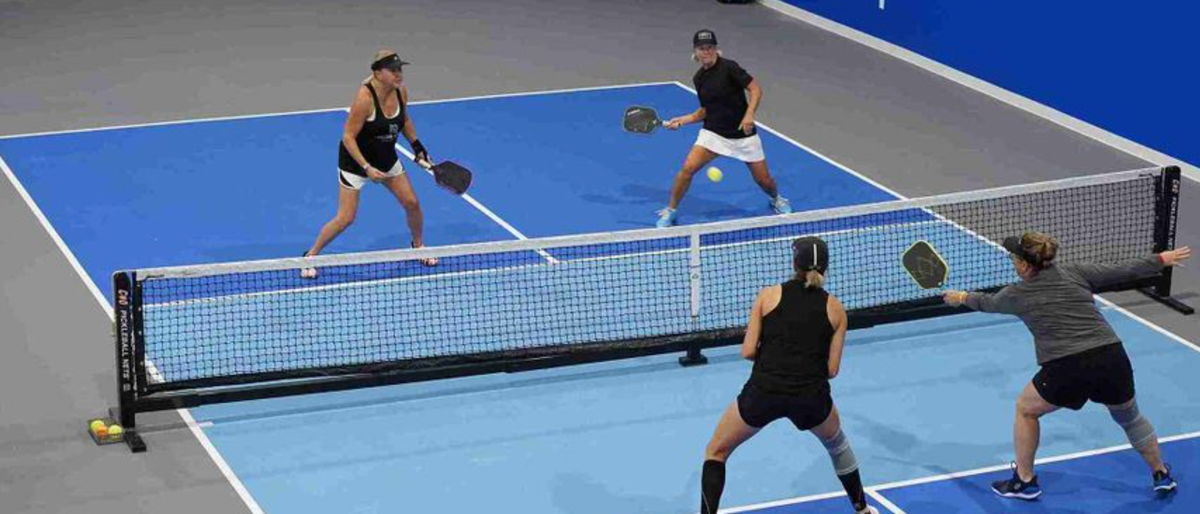
Does Disguise Dinking Work the Same on Both Sides?
Yes, but the mechanics are slightly different for backhand vs. forehand, and most players are weaker on one side.
The forehand disguise relies on wrist pronation at contact.
The backhand version requires a more deliberate suppression of the elbow flare that naturally telegraphs direction.
The backhand volley and the backhand dink share a common leak: the elbow.
When players go down-the-line on the backhand side, the elbow often pulls back and away from the body.
Train yourself to keep that elbow tucked, regardless of direction, and you've closed a major read for your opponent.
Spend extra drill time on whichever side breaks your neutral setup first. For most players, that's the backhand.
The Dink Media Team
How Pros Use Pattern Setup to Make Disguise Even Harder to Read
Here's something the high-level players understand that intermediate players don't: disguise is more powerful when it lives inside a recognizable pattern.
You don't need to hit a random spot every time. You need your opponent to think they've identified your pattern, and then hit somewhere else.
The shot selection and creation process at the pro level looks like this: establish a crosscourt dink sequence for three or four exchanges, let your opponent start leaning, then redirect down the line with the exact same setup.
They move the wrong direction. You win the exchange.
This is how doubles positioning gets exploited by disguised dinks. A
well-placed line dink against an opponent who's overplaying crosscourt coverage creates a wide open lane. But it only works if they can't see it coming.
The Dink Media Team
Why Does Disguise Matter More at Higher Levels?
At 3.5 and below, most dinks are won or lost on consistency and placement. Players aren't reading your body yet.
But above 4.0, every opponent at the kitchen is scanning you for cues. At 4.5 and above, your body language is being read in real time.
The transition game is where disguise starts to matter even before you reach the kitchen.
Players who can't establish neutral setups earlier in a rally get caught exposing their intent before the dinking exchange even begins.
If your goal is to become unattackable at the kitchen, disguise is part of the formula.
The harder you are to read, the more your opponent has to react instead of anticipate. And a reacting opponent makes more errors.
The Dink Media Team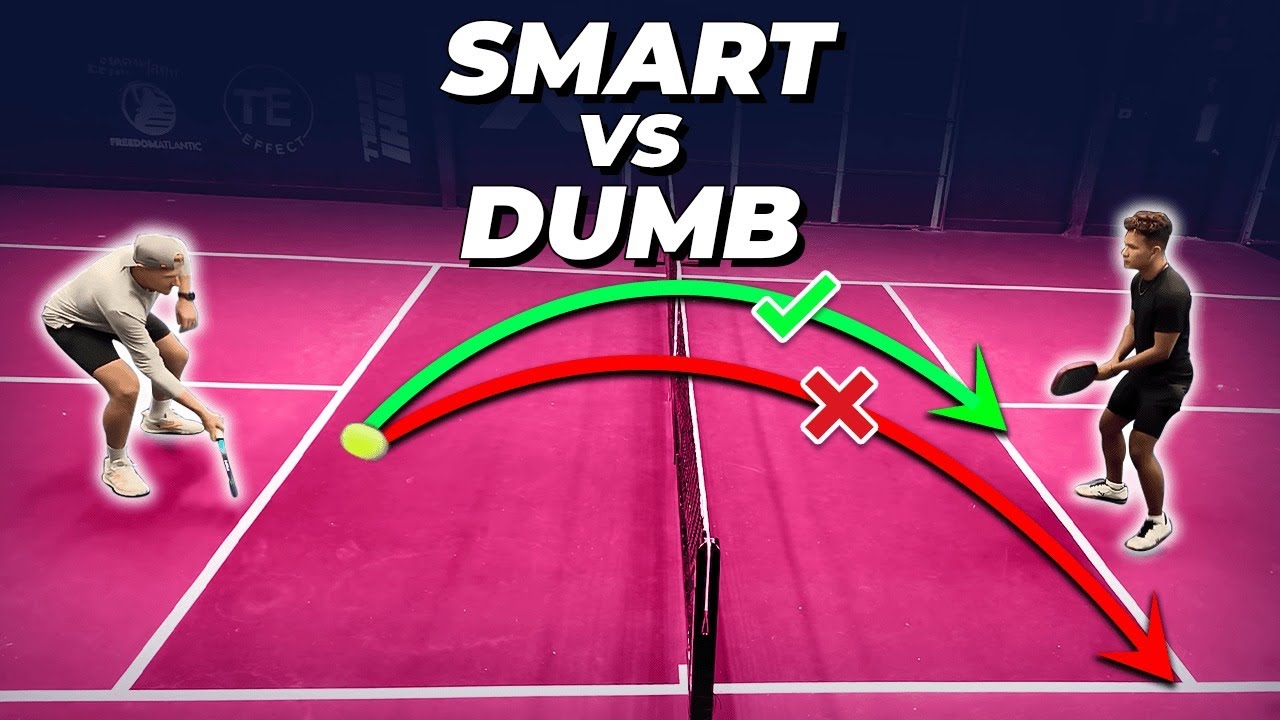
How Can You Practice Disguised Dinking?
The most effective drill is the "same setup, call the direction" exercise. Here's how to run it:
- Rally crosscourt dinks with a partner in a neutral setup
- Your partner calls "line" or "cross" randomly as you're about to contact the ball
- You redirect to the called target without changing your pre-contact position
- Do 10 minutes per side, then switch
This forces you to make the directional decision at the last moment, which is exactly what disguise requires.
A different kind of reset drill works well paired with this because it trains you to recover neutral after an aggressive exchange.
Pair it with backspin dinking practice. Heavy topspin locks you into a swing path that telegraphs direction.
A flatter or backspin dink gives you more wrist freedom to redirect late.
The Dink Media Team
Key Takeaways
- Disguise dinks pickleball strategy centers on one principle: identical setup, last-second redirection.
- Opponents read your body kinematics, shoulder angle, hip rotation, elbow position, not your paddle face.
- A neutral platform (parallel feet, centered paddle, contact in front) is the foundation of every disguised dink.
- Direction is controlled through wrist angle and contact timing, not body rotation.
- Pattern manipulation amplifies disguise: establish a trend, then break it with the same setup.
- Both forehand and backhand disguise are trainable. The backhand elbow is the most common tell.
- Disguise matters most above the 4.0 level, where opponents actively read pre-contact cues.
Frequently Asked Questions
What does it mean to disguise dinks in pickleball?
To disguise dinks in pickleball means presenting the same body setup and paddle preparation for multiple shot directions so your opponent can't anticipate where the ball is going. The redirection happens through subtle wrist and forearm adjustments at or just before contact, not through visible body movement. It's one of the most effective ways to win kitchen rallies without hitting harder.
How do I stop telegraphing my dink direction?
Start by recording yourself during a dink rally and look for the moment your body changes before contact. Common tells include shoulder rotation, elbow flare, and early eye movement toward the target. Build a neutral stance and practice making contact-point adjustments from that same setup. The third shot drop foundation applies here too, neutrality in setup translates across multiple shots.
Is disguised dinking harder on the backhand side?
For most players, yes. The backhand naturally creates an elbow flare when redirecting down the line, which is a readable cue. Keeping that elbow tucked through contact, regardless of where you're sending the ball, takes deliberate repetition. Drill the backhand dink specifically with the "called direction" exercise to close that gap faster.
Can beginners learn to disguise their dinks?
Beginners can start building the habits, but disguised dinking is most valuable once your basic dink is consistent and controlled. If you're focused on just clearing the net, adding directional disguise too early can disrupt your mechanics. Get your kitchen positioning and dink consistency solid first, then layer in the disguise work.
How does disguise work differently in doubles versus singles?
In doubles, disguised dinks are especially effective because they force both opponents into uncertainty. A well-hidden line dink to the odd corner while your opponents are leaning crosscourt can pull one of them completely out of position. In singles, the geometry is simpler, but the opponent has more court awareness. Changing how you think about doubles includes understanding how shared coverage gaps get exploited by disguise.

Love Pickleball? Join 100k+ readers for free weekly tips, news & gear deals.
Subscribe to The Dink