6 Essential Pickleball Skills to Become Unattackable at the Kitchen Line
Tanner Tomassi breaks down how six simple adjustments in positioning and awareness at the pickleball kitchen line can make you nearly impossible to attack at the kitchen line
If you've ever felt like your opponents are just firing every ball at you at the kitchen line without mercy, you're not alone. That's the reality for most recreational players who haven't figured out how to defend the kitchen line effectively.
But what if there was a roadmap to becoming genuinely difficult to attack?
Tanner Tomassi just dropped a comprehensive breakdown of the six skills that separate unattackable players from everyone else.
And honestly, these aren't complicated techniques that require years of training. They're practical adjustments you can implement the next time you step on the court.
Love pickleball? Then you'll love our free newsletter. We send the latest news, tips, and highlights for free each week.
1. How to Handle Hard Drives at the Kitchen Line
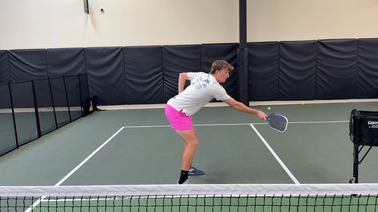
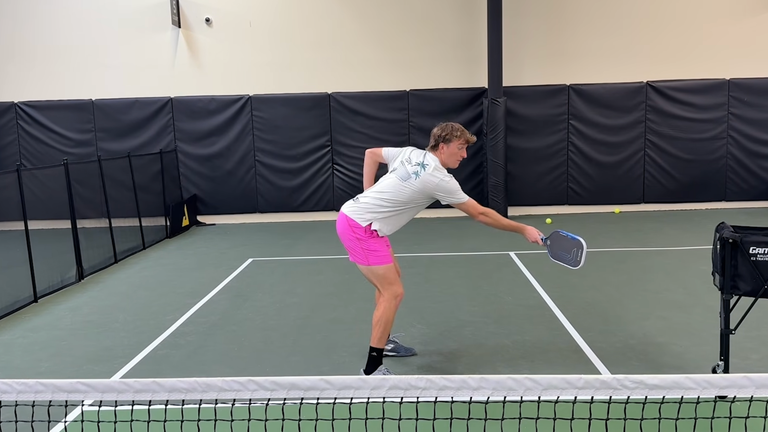
Let's start with the most common mistake Tanner sees in clinics: players standing too close to their body when preparing for a hard drive from the baseline. When you're bunched up like that, you're forced to reach out to the ball, which inevitably leads to mistiming and sending it into the net.
The fix is straightforward. The moment you see your opponent is about to drive, shift your ready position from close to your body to extended out in front.
This way, you're already positioned to track the ball and bat it down, rather than making a desperate reach. It's the difference between reacting and being proactive.
2. Preventing Bangers by Hitting an Elite Return of Serve
Here's where things get interesting. The best way to stop opponents from slamming the ball at you is to prevent them from getting the chance in the first place.
That means hitting a return of serve that's so solid they can't attack it.
Tanner breaks this down into two key steps.
- First, execute a split step the moment your opponent makes contact with the serve. This resets your body weight and prepares you to move in any direction.
- Second, use your first step into your momentum to propel yourself through the court. Too many players either run through the ball (losing power) or arrive late to the kitchen line (losing positioning).
By timing your first step correctly, you launch yourself forward while generating power from your whole body, not just your arm.
There's also a bonus tip here: if you do hit a weak return and find yourself late in the midcourt, use two hands to handle the ball.
Why? Because your opponent is trying to dip it to your knees. One hand will pop it up or send it into the net. Two hands let you push through and keep it low and deep.
 The Dink Media Team
3. Stepping Back When You Hit a Dead Dink
This one's subtle but game-changing. When you or your partner hits a dead dink (a ball that's obviously going to get attacked), most players stand there and try to guess where the attack is coming. That's a losing strategy.
Instead, take a step back in preparation.
This gives you so much more time to react and read the attack. You can reset, counter-attack, or defend with confidence. It's almost like you're dancing with the kitchen line rather than standing frozen.
The extra space transforms you from a sitting duck into a dangerous player.
 The Dink Media Team
4. Reading Deceptive Speed-Ups with Two-Handed Dinks
When your opponent dinks with two hands, their speed-up becomes nearly impossible to read. They can go down the line or straight at you, and the angle makes it next to impossible to predict.
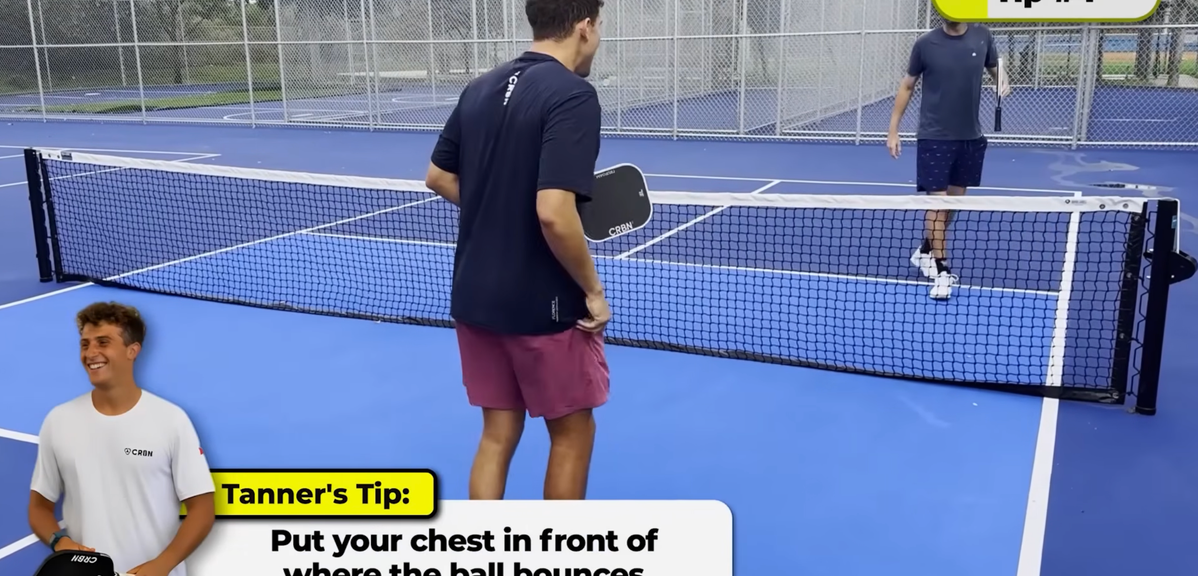
The solution? Position your chest in front of the ball before they hit it.
Since the most likely shot is always down the line, blocking off that angle with your body eliminates the biggest threat. If they try to speed it up, the geometry doesn't work for them to hit it anywhere else.
It's a simple positioning adjustment that neutralizes one of the most deceptive shots in pickleball.
Heads up: hundreds of thousands of pickleballers read our free newsletter. Subscribe here for cutting edge strategy, insider news, pro analysis, the latest product innovations and more.
5. The Secret Pros Use in the Midcourt
This is where 4.0 players and below really struggle, and it's also where pros look effortless.
After hitting your drop shot, approach the kitchen line in a low, crab-like position in anticipation of the next ball.
Most recreational players hit their drop, then stand upright and have to jump down quickly when the ball comes back. That transition from upright to low is exactly why the ball pops up.
Pros stay low the entire time, which is why they can hit resets so consistently. This one adjustment is the difference between struggling to level up and actually making progress.
 Eric Roddy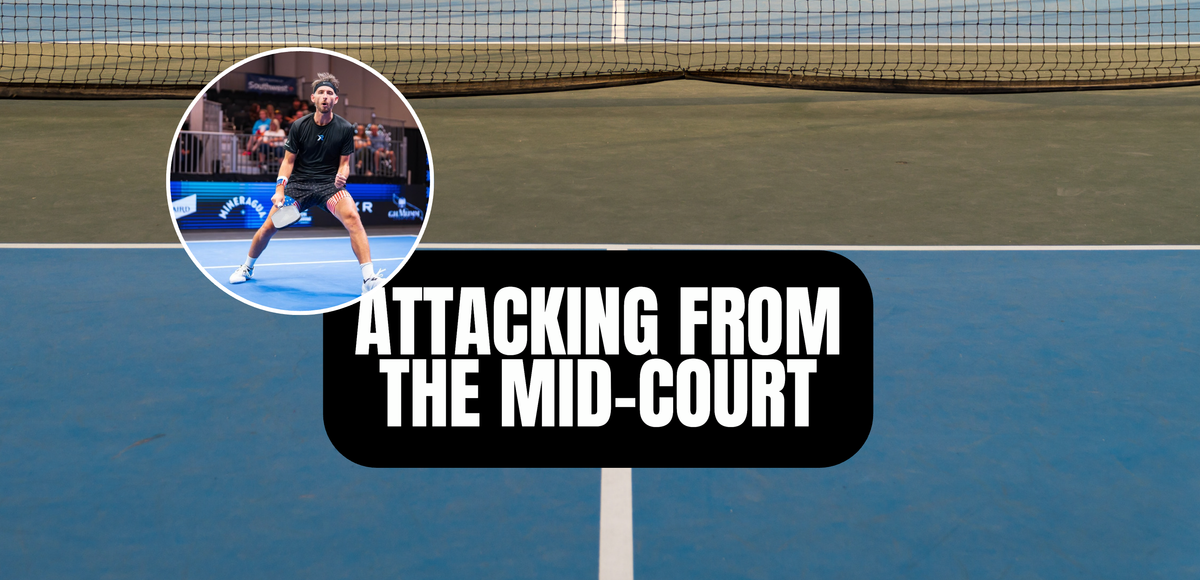
6. Respect the X: The Most Important Tip
Tanner saves the best for last. This tip is arguably the most important in the entire video, and it completely changes how you and your partner defend the middle.
Here's how it works: when the ball is diagonal from you, it's your job to cover the middle. Your partner covers their body and their line. The key insight? Ignore the center line. Most players treat it like a force field, but it's not. If the ball is diagonal and gets sped up through the middle, it's your responsibility to cover it, even if it crosses the center line.
This creates clear boundaries with zero gray area. You know exactly what you're responsible for, and your partner knows exactly what they're responsible for. No more confusion, no more balls getting through the middle untouched. It's a simple framework that transforms team defense.
The Bigger Picture
What ties all six of these skills together is a shift in mindset.
Being unattackable isn't about having lightning-fast reflexes or hitting harder than your opponents.
It's about positioning, anticipation, and understanding the geometry of the court.
Tanner's approach mirrors what you see in other sports coaching. Think about how basketball coaches emphasize positioning over athleticism, or how tennis coaches focus on court sense before power. Pickleball is no different. The players who climb the ranks fastest aren't necessarily the most talented. They're the ones who understand the fundamentals and execute them consistently.
Frequently Asked Questions
What is the pickleball kitchen line?
The pickleball kitchen line is the non-volley zone line near the net. Players cannot volley the ball while standing inside this area.
How do I become unattackable at the kitchen line?
Focus on positioning, balance, and anticipation. Small adjustments like staying low and stepping back on weak shots make a big difference.
Why do opponents keep attacking me at the net?
You are likely giving them attackable balls. Weak dinks and poor positioning make you an easy target.
Should I step back from the kitchen line?
Yes, but only when necessary. Stepping back after a weak shot gives you more time to defend effectively.
What is the most important kitchen line skill?
Understanding coverage, especially “Respect the X,” is critical. It removes confusion and strengthens team defense.

Love Pickleball? Join 100k+ readers for free weekly tips, news & gear deals.
Subscribe to The DinkGet 15% off pickleball gear at Midwest Racquet Sports