

3 Patterns That Separate Good Pickleball Players From Great Ones
The gap between good and great pickleball players comes down to three repeatable patterns that create pressure instead of reacting to it
Kyle Koszuta, the coach behind the popular YouTube channel @thatpickleballguy, just broke down a 4.5-level match in a way that'll make you rethink how you approach every point.
If you're serious about improving your game, this is the kind of film study that actually moves the needle.
Love pickleball? Then you'll love our free newsletter. We send the latest news, tips, and highlights for free each week.
Pattern 1: The Triangle Effect (It's Everywhere)
Most people think the game is random. Shots go back and forth, someone makes a mistake, and the point ends.
But Koszuta argues that's not how it actually works. Instead, he introduces the "triangle effect," which happens when a shot you hit gets redirected by your opponent at an angle, creating a predictable triangle pattern.
Why does this matter? Because once you understand where the ball is likely to go next, you can position yourself before your opponent even hits it.
If your partner speeds up down the line, you can sit on your forehand waiting for that triangle to complete. It sounds simple, but Koszuta shows clip after clip where this pattern repeats over and over. In one point alone, it happens at least four or five times.
But there's a next-level move too. Instead of just waiting for the triangle to complete in the expected direction, advanced players counter the ball back to where it came from. Koszuta shows a clip where his partner does exactly this, hitting the ball back to Isaac's chest when Isaac was expecting it to come from a different angle. It's a hard thing to execute, but once you start practicing it, you'll get it to happen more often.
 The Dink Media Team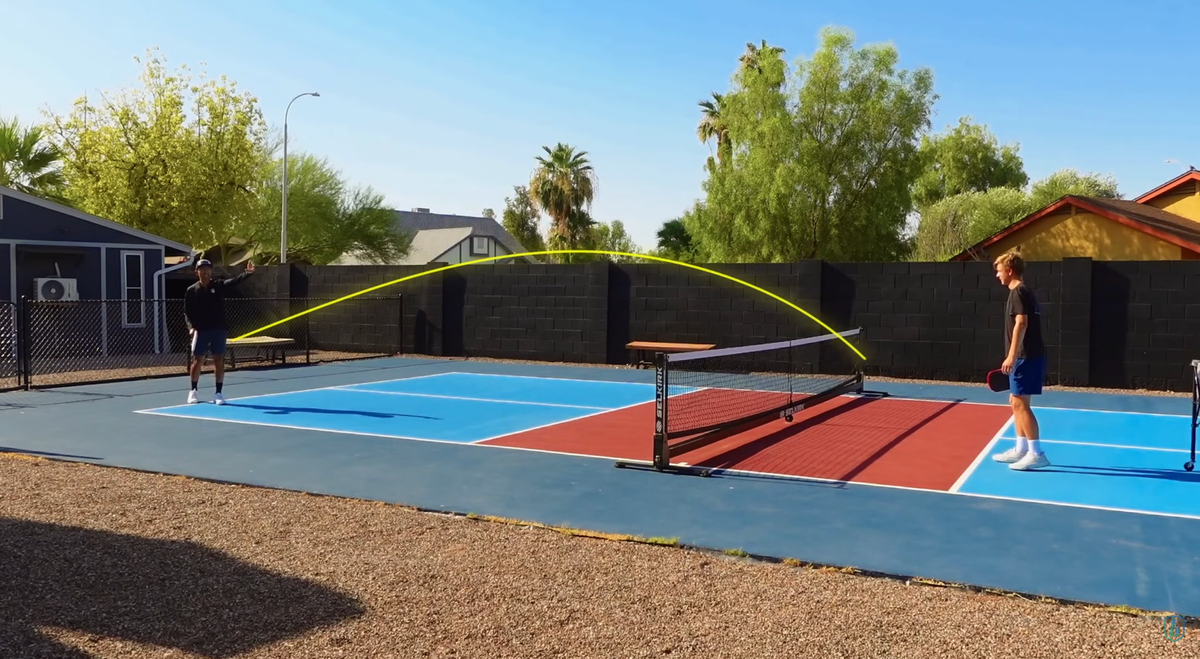
Pattern 2: The Pressure Pattern (Timing Is Everything)
The second pattern Koszuta identifies is about finding the highest contact point you can hit the ball from to apply maximum pressure on your opponent. Here's where it gets tricky: sometimes that highest contact point comes from taking the ball out of the air, and sometimes it comes from letting it bounce first.
This is where a lot of players get confused.
- When you get a lofty ball landing shallow in the kitchen, your instinct is to reach in and smash it out of the air.
- But Koszuta shows that the highest contact point might actually come after the ball bounces.
- Conversely, a higher and deeper ball is usually best taken out of the air.
The lesson here is accepting when your opponent hit a really good drop. Sometimes the best move is to take a step back, hit a more aggressive forehand roll dink, and reset the point. Your opponents will probably pause, giving you a chance to get back in it. It's counterintuitive because we're taught to always be aggressive, but knowing when to back off is what separates 4.5 players from 5.0s.
 The Dink Media Team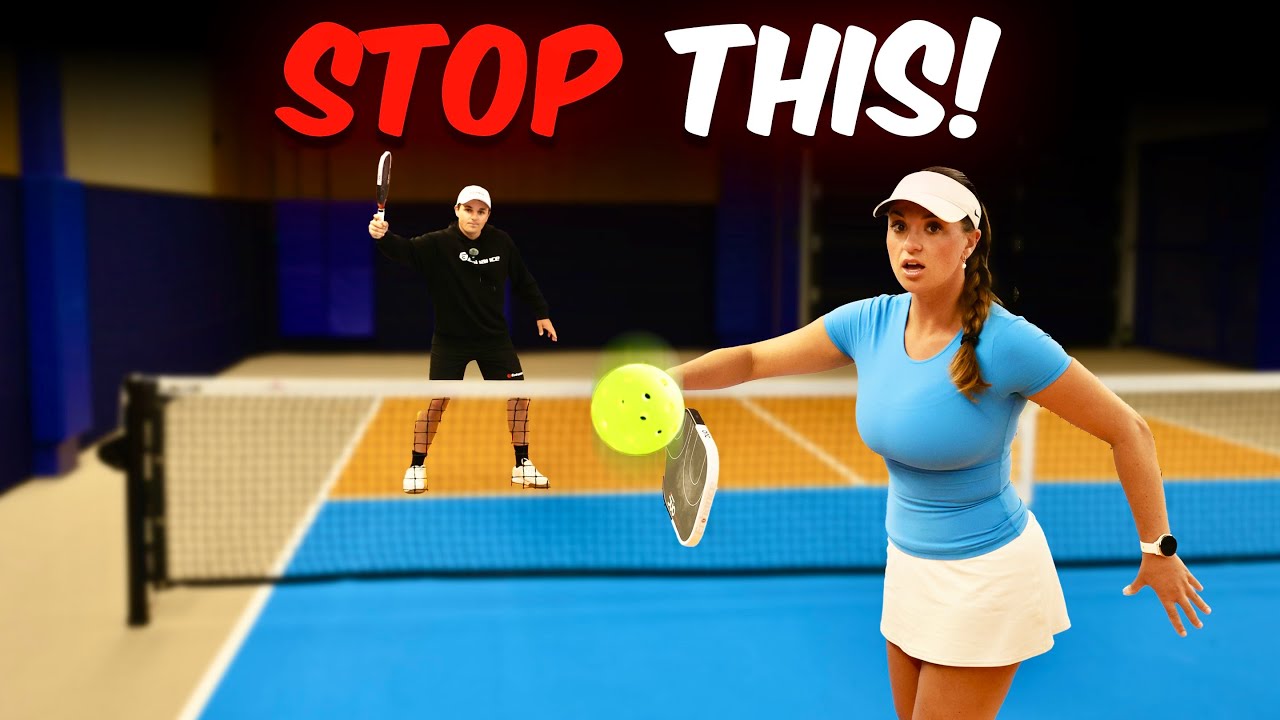
Pattern 3: The Short and Out Pattern (Discipline Over Aggression)
The third pattern is called the "short and out" pattern, and it's about what happens when you hit a short return.
If you've played pickleball at any level, you know the feeling: you hit a short return, your opponent's eyes light up, and suddenly they're running in to crush it. Most of the time, they hit it out. But here's the thing that keeps players up at night: sometimes they don't.
Koszuta shows multiple clips where Jake runs in after hitting a short return and just watches as his opponent drives it hard. The ball goes out more often than not, but when it doesn't, it's a winner. The mental game here is brutal. You're supposed to let it go, but your brain is screaming at you to hit it because you just watched a video about letting short returns go.
 The Dink Media Team
What's interesting is that Koszuta and Jake discuss a strategy where they intentionally returned short on purpose and just kept their paddles up, ready to duck. Their opponents hit so many of them out that they eventually adjusted by hitting softer drives or just dropping the ball in. It's a psychological game as much as it is a tactical one.
The key insight is that hitting a short return puts you in a vulnerable position. You're off balance, your opponent knows what you just did, and they're hunting for that ball. Sometimes the smartest play is to not go for the winner at all. Just keep your paddle up, stay ready, and let them make the mistake.
Heads up: hundreds of thousands of pickleballers read our free newsletter. Subscribe here for cutting edge strategy, insider news, pro analysis, the latest product innovations and more.
The Bigger Picture
What makes Koszuta's breakdown so valuable is that he's not just showing you what players do wrong. He's showing you patterns that repeat at every level of play.
Whether you're a 3.5 or a 5.0, these three concepts apply. The triangle effect happens constantly. The pressure pattern determines who controls the kitchen. And the short and out pattern separates players who understand positioning from those who just react.

Love Pickleball? Join 100k+ readers for free weekly tips, news & gear deals.
Subscribe to The DinkGet 15% off pickleball gear at Midwest Racquet Sports