
Stop Popping the Ball Up: Modern Pickleball Hand Speed and Paddle Positioning
Winning the kitchen today isn’t about swinging harder—it’s about creating space with your coil and controlling contact with smarter paddle positioning
The game of pickleball has fundamentally shifted. What worked three years ago, that comfortable, methodical pace, doesn't cut it anymore. The sport has accelerated, and if you're still playing like it's 2023, you're going to find yourself on the losing end of rallies you should be winning.
That's the core message from a recent YouTube Short by @buildingpickleball, a channel dedicated to breaking down the technical side of modern pickleball.
In just over two minutes, the creator walks through why so many players pop the ball up during quick-hands exchanges and, more importantly, what to do about it.
Love pickleball? Then you'll love our free newsletter. We send the latest news, tips, and highlights for free each week.
The Speed Problem Nobody Talks About
Here's the thing: if you have quick hands, you can defend bad dinks. You can recover from poor drops. You can attack with confidence. But most players don't have quick hands because they're not training for the modern game. They're still stuck in the old rhythm.
The Building Pickleball creator emphasizes that quick hands aren't just about reflexes. They're about body mechanics. And that's where most recreational players go wrong. They isolate their movements, keeping their left arm locked by their pocket while their paddle does all the work. It looks stiff. It feels stiff. And it doesn't work when the ball's coming at you at tournament speed.
The Coil: Your Secret Weapon in the Kitchen
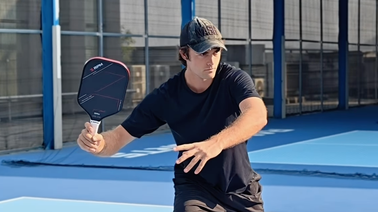
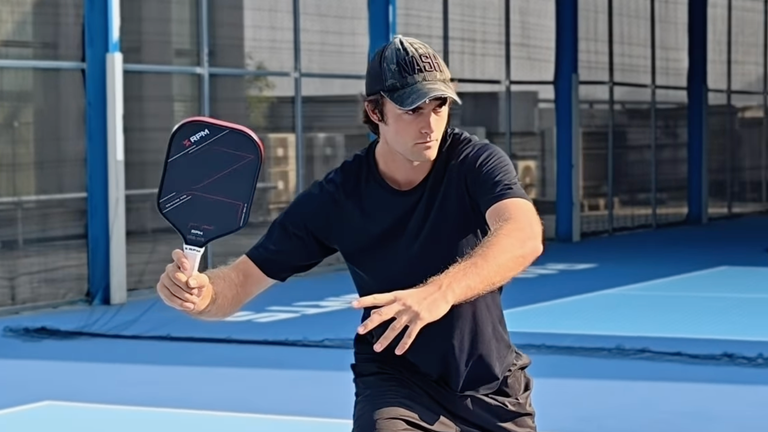
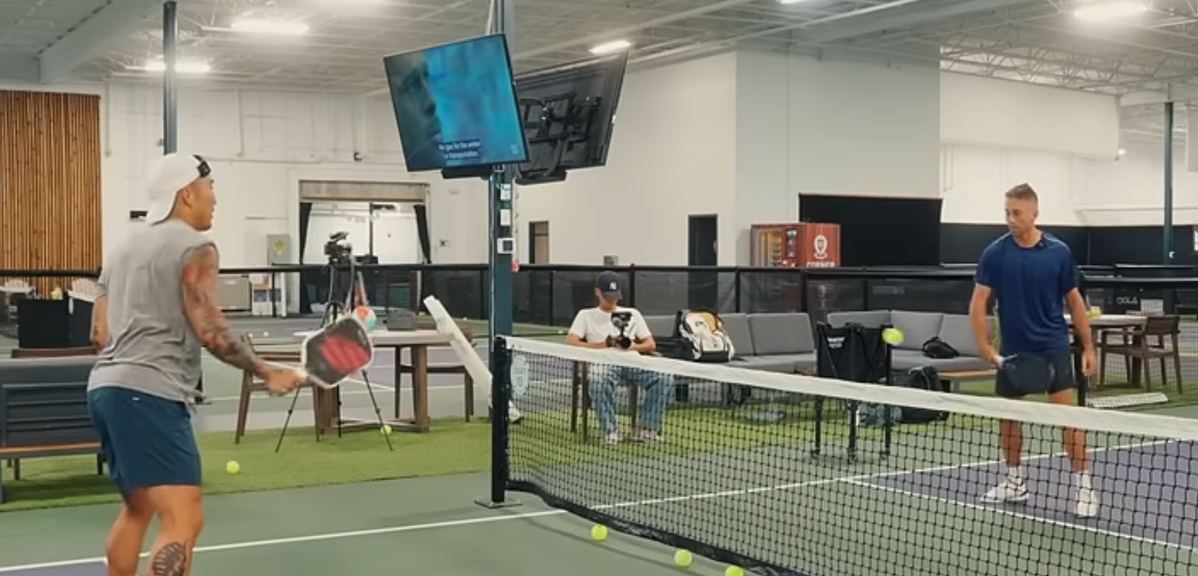
One of the most practical takeaways from the video is the concept of the coil. When you're engaged in quick-hands exchanges, your upper body should have a slight coil to it, almost like a spring ready to release. This isn't some exotic technique reserved for pros. It's a fundamental adjustment that immediately gives you more paddle movement and more space to work with.
Think about it this way: if your paddle stays in one fixed position, you're limited by geometry. But if you coil slightly, you can take the paddle back just a few more inches. In quick-hands situations, those few inches are the difference between popping the ball up and keeping it down. It's the difference between winning the firefight and losing it.
The creator demonstrates this by showing how a slight coil allows the paddle to move through a larger range of motion. When the ball comes at you fast, that extra space becomes critical. You're not scrambling to catch up with your paddle; you're already positioned to respond.
 The Dink Media Team
Left Hand Flow: It's Not About Holding the Paddle
Here's a subtle but important distinction: your left hand doesn't need to be on the paddle during quick-hands exchanges. It just needs to flow with it. Think of your left hand as a guide, hanging out nearby, moving naturally with your upper body as you coil and uncoil.
This is where the "natural movement" philosophy comes in. If one part of your body is stuck or isolated, the rest of your body doesn't move naturally. You get jerky, inefficient movements. But when everything flows together, you're more responsive, more fluid, and honestly, more effective.
It sounds simple because it is. But execution is another story. Most players have spent years training their bodies to isolate movements. Retraining that muscle memory takes intention and repetition.
 The Dink Media Team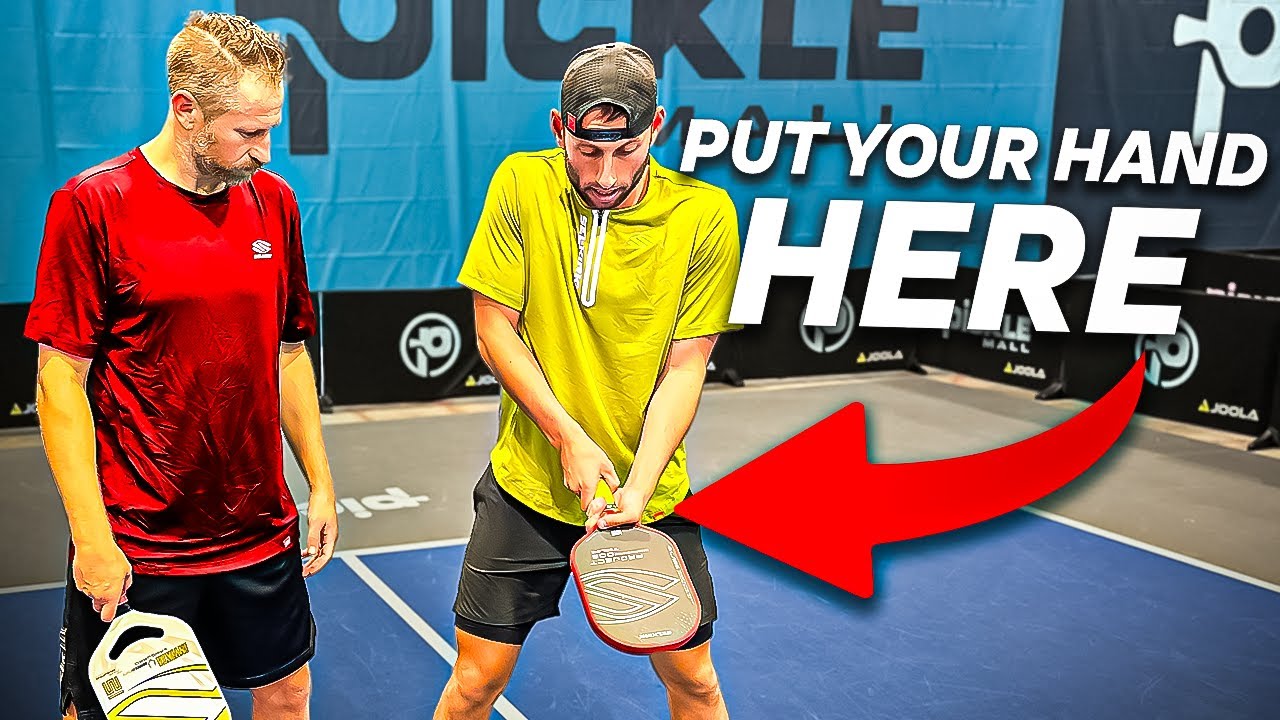
Paddle Angle: The Geometry That Changes Everything
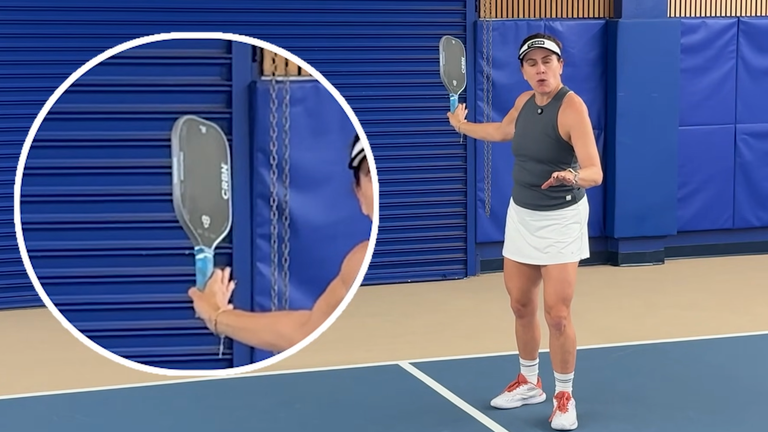
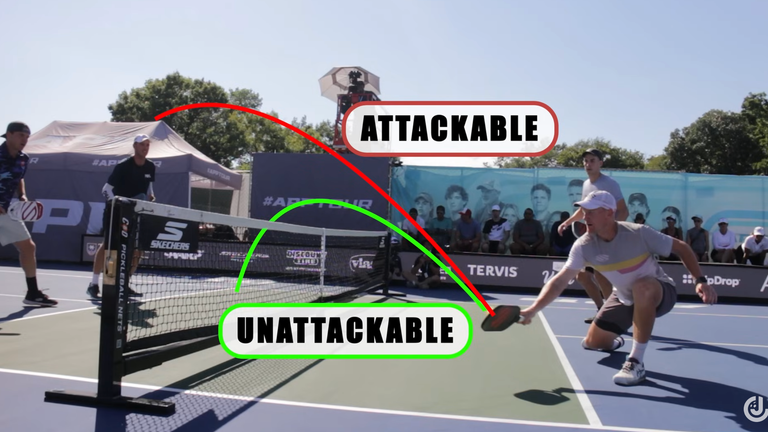
The final piece of the puzzle is paddle positioning. During rallies, your paddle should sit relatively low, parallel to the ground. But here's where players get tripped up: when the ball comes up higher, they try to keep the paddle parallel by moving their entire arm upward. That's exhausting and inefficient.
Instead, angle your paddle slightly compared to the ground. This small adjustment makes defending higher balls significantly easier. You're not fighting gravity; you're working with it. The creator shows this in action, demonstrating how an angled paddle allows for quicker, more natural responses to balls that pop up.
It's a geometry lesson disguised as a pickleball tip. And once you see it, you can't unsee it.
Heads up: hundreds of thousands of pickleballers read our free newsletter. Subscribe here for cutting edge strategy, insider news, pro analysis, the latest product innovations and more.
The Two-Minute Drill That Changes Everything
The video wraps up with a practical drill recommendation: if you only have two minutes to warm up before a match, spend those two minutes on hands. Not serves. Not volleys. Hands. Quick-hands exchanges that force you to practice coiling, left-hand flow, and paddle positioning all at once.
This is the kind of advice that separates players who are serious about improvement from those who just show up and play. It's not flashy. It's not complicated. But it's effective because it targets the exact mechanics that matter in modern pickleball.
Why This Matters Right Now
The pickleball landscape has changed dramatically in the last few years. The sport has professionalized. The pace has increased. The players at the top are faster, smarter, and more technical than ever before. If you're not adapting your game to match that evolution, you're falling behind.
For recreational players looking to compete at higher levels, this kind of technical breakdown is essential. You can't just copy what the pros do. You need to understand why they do it, and then you need to practice it until it becomes second nature.
The modernization of pickleball isn't slowing down. If anything, it's accelerating. The question is whether you're going to keep up or get left behind.
Love Pickleball? Join 100k+ readers for free weekly tips, news & gear deals.
Subscribe to The DinkGet 15% off pickleball gear at Midwest Racquet Sports