
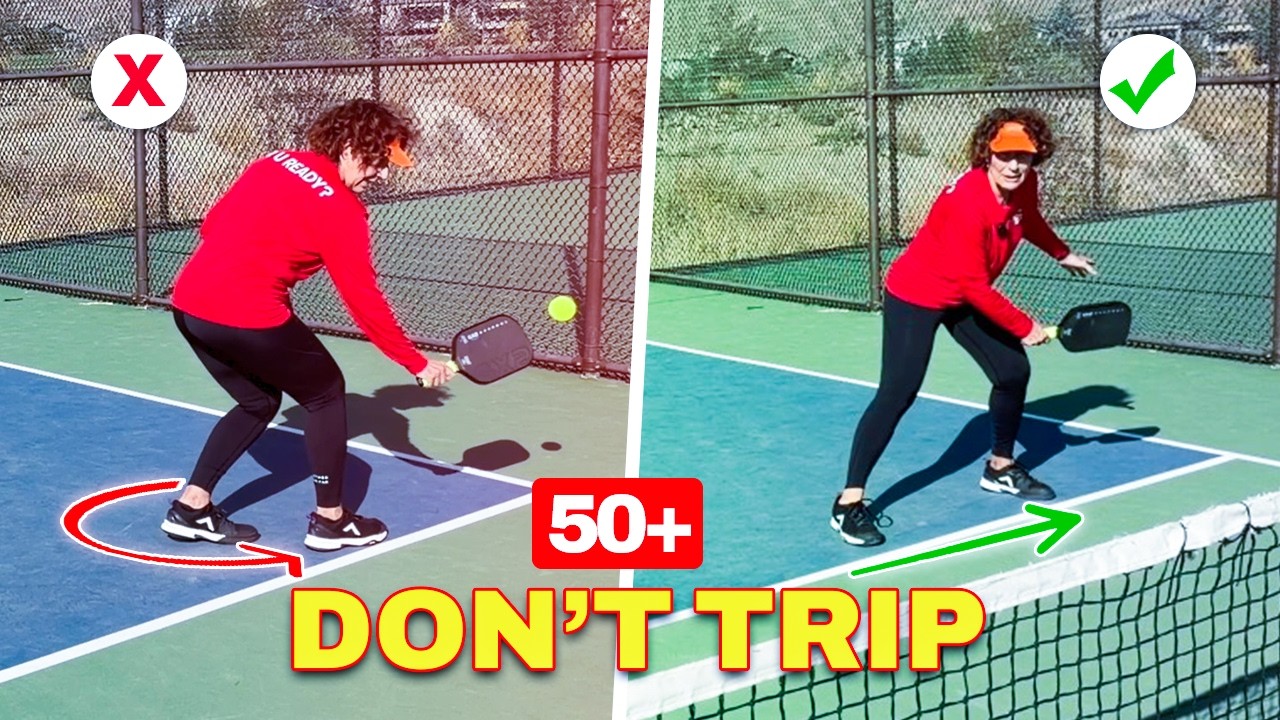
Why Your Backhand Footwork Is Wrong (And the Drill That Fixes It)
The cross step is one of the most common pickleball footwork habits, and it's quietly costing you points. Here's what to do instead and a simple drill to rewire the pattern.
Your pickleball footwork on the backhand side is probably holding you back more than your swing ever could.
Most players feel completely comfortable crossing their paddle foot over their body to reach a backhand. It feels natural. It gives you a little extra reach.
And it is, for most people, the very first instinct they develop on the backhand side.
The problem is that this move, called the cross step, comes with real tactical and safety costs.
This breakdown comes from Better Pickleball on YouTube, where coach CJ Johnson walks through exactly why the cross step hurts you and the specific drill to replace it with smarter lateral movement.
Love pickleball? Then you'll love our free newsletter. We send the latest news, tips, and highlights for free each week.
What Is the Cross Step in Pickleball?
The cross step happens when you take your paddle hand foot and cross it over your body to move toward your backhand side.
For a right-handed player, that means stepping your right foot across your left to reach a ball on the left side of your body.
It feels like a natural way to cover ground quickly, and for many players it's completely automatic.
The reason it feels comfortable is simple: most players are dominant on their paddle hand side.
Crossing that dominant foot forward gives a sense of control and reach.
But just because a movement feels natural does not mean it belongs in your pickleball footwork.
Why Does the Cross Step Create Problems?
There are three distinct problems with the cross step, and each one compounds the others.
- First, it is a fall risk. When you cross your feet, your legs end up close together with almost no base of support. One bad bounce or a slightly off-balance swing and you are on the ground. This matters for every player, but it is especially critical for anyone thinking about court positioning and injury prevention as they age.
- Second, it opens up your court. When you cross over to your left to chase a backhand, you leave the right side of your body's coverage area completely exposed. A smart opponent who sees that pattern will redirect right back behind you the moment you commit to the cross step.
- Third, recovery time is brutal. Getting back to your ready position from a crossed stance takes significantly longer than recovering from a lateral step. You are essentially unwinding your own body before you can move again.
If you want to understand how footwork errors like this create bigger tactical holes in your game, check out this look at drills that fix lateral movement fast.
What Should You Do Instead?
The answer is lateral movement.
Instead of crossing your right foot over your left, you step your left foot out to the left and follow with your right to stay balanced and square.
For a right-handed player, moving laterally to the left means your feet stay roughly parallel and your base stays wide.
You arrive at the ball in a position where you can actually push back and recover quickly. You also keep the rest of the court covered.
This is not a small adjustment. It changes your entire relationship to the backhand side, and balance is what makes every shot after it repeatable.
And the good news is there is a specific drill that rewires this pattern without needing a partner.
 The Dink Media Team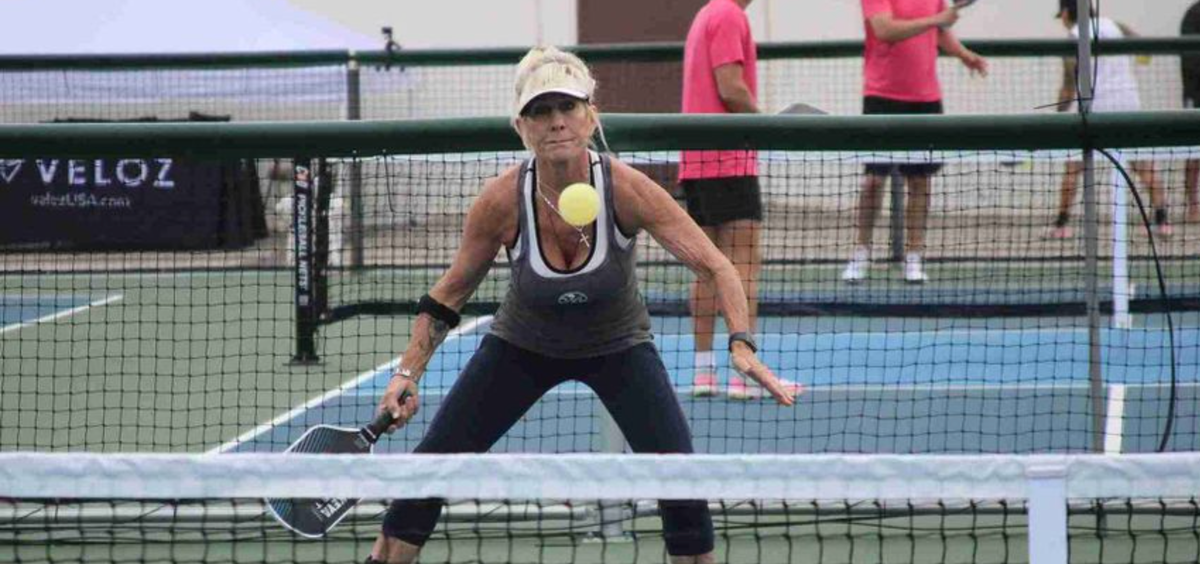
The Drill That Takes the Cross Step Out of Your Game
This drill is built around one simple rule: do not move your right foot.
Here is how to run it, whether you use a ball machine or a practice partner:
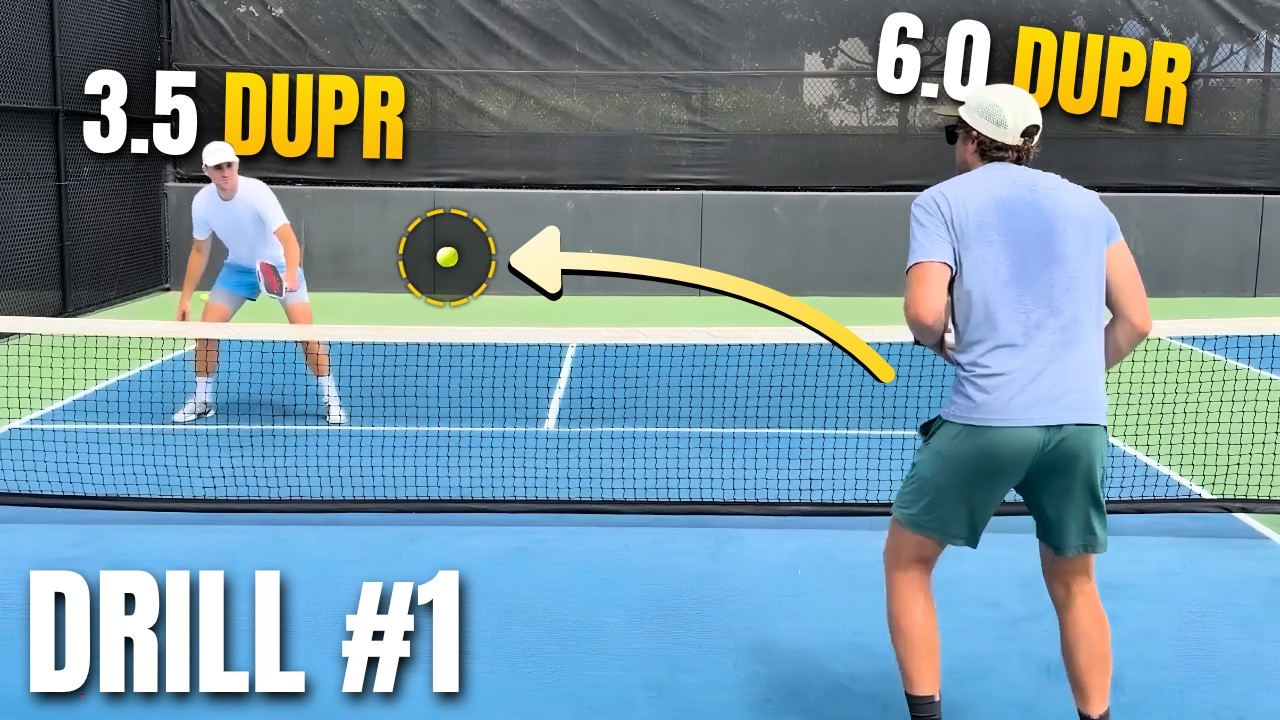
- Set your starting position at the kitchen line as if you are in a dinking rally. For a right-handed player, you are working on the left (backhand) side of the court.
- Have your partner or ball machine target your left foot. The feed should land close enough that you only need a single step, not a lunge. This keeps the cross step temptation low and trains your body to feel what correct lateral movement is like.
- Step your left foot toward the ball. Your right foot stays planted on the ground the entire time. You are getting used to extending toward the ball without crossing over your body.
- Return the ball crosscourt to your partner's left foot. That is your target on every ball. You are building a pattern, not just hitting shots.
- Step back to your ready position after each shot. The recovery is part of the drill. Get back, reset, and do it again.
The key detail here is that the feed should not go wide at first. Wide feeds are exactly when the cross step feels most necessary.
Starting tight trains your muscle memory with correct pickleball footwork before you gradually add distance.
 The Dink Media Team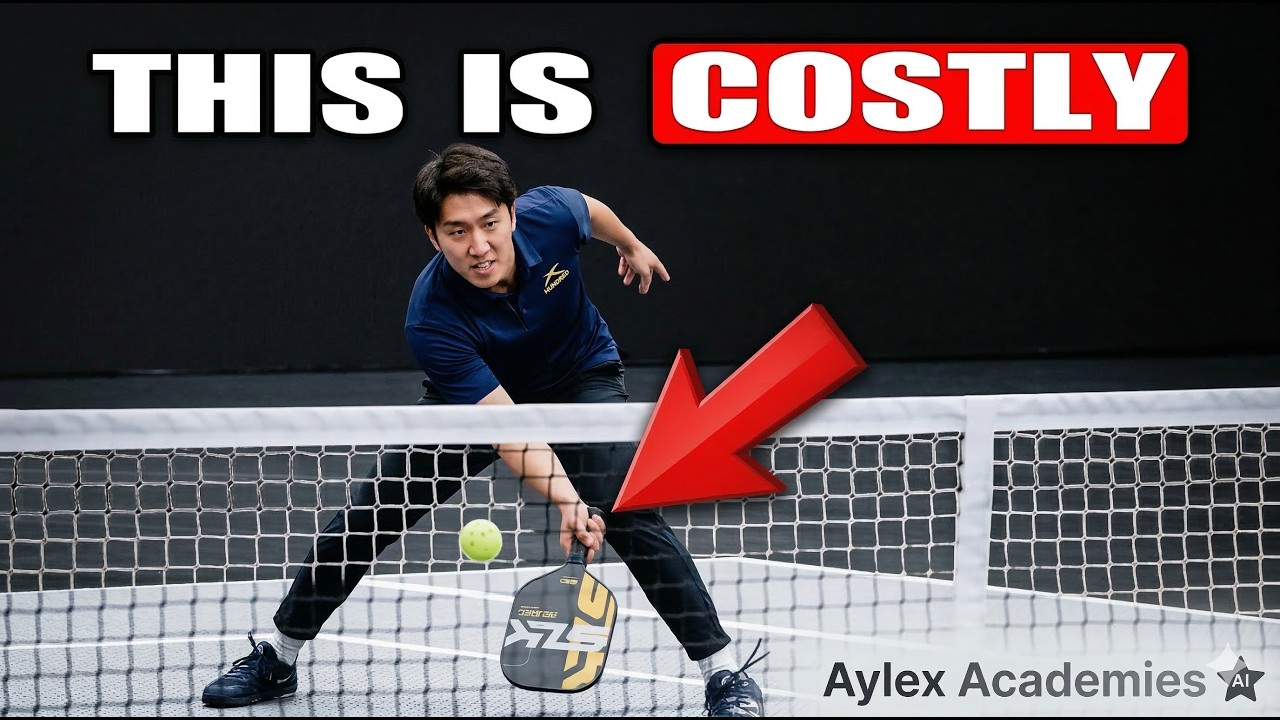
Can You Use This Drill for the Forehand Side Too?
Yes, and you should if you cross step on your forehand as well.
Simply switch to the right side of the court. This time you plant your left foot and step toward the ball with your right.
The target for your partner becomes your right foot, and you send the ball back crosscourt just like before.
The mechanics mirror exactly. The principle is the same: one foot plants, the other steps to the ball, and you recover back to center.
Breaking bad footwork habits at any level starts with drilling the correct pattern in a controlled environment before expecting it to show up in a live game.
 The Dink Media Team
How Does This Connect to Your Dinking Strategy?
Better footwork does not just keep you safer. It makes your dinks more effective.
When you arrive at the ball balanced and square, you have actual control over where it goes.
When you arrive tangled in a cross step, you are just trying to make contact. There is a big difference between those two outcomes at the kitchen line.
Targeting your partner's left foot as part of this drill is not accidental. It trains you to dink with intention rather than just returning the ball.
If you want to build on that concept, dinking with intention is exactly the kind of habit that separates reactive players from proactive ones at the net.
Your footwork and your shot selection are connected. Fix the movement and the placement gets easier.
Winning a crosscourt dink battle depends on arriving at the ball correctly every single time.
It also pays to think about what happens after each dink.
Poor footwork means slow recovery. Slow recovery means you are out of position for the next ball. That is how rallies fall apart.
Court positioning fixes that improve every shot start with exactly this kind of foundational work.
 The Dink Media Team
Why Do So Many Players Default to the Cross Step?
The short answer is that the cross step delivers quick reach without asking you to think about your base.
In the middle of a fast rally, your brain picks the fastest path to the ball.
Crossing over feels direct. What your brain does not calculate in real time is the cost you pay afterward in recovery position and court coverage.
This is exactly why drilling matters more than just playing more games.
Getting better at pickleball faster means isolating bad habits in a drill environment before the game pressure can reinforce them.
If your footwork is breaking down specifically on third shot transitions, there is also a direct connection between foot mechanics and why footwork failures show up on the third shot drop.
 The Dink Media Team
What to Focus On in Your Next Practice Session
Keep it simple when you first run this drill. Here is the short checklist:
- Start feeds close, not wide. Give yourself easy balls at first.
- Keep your right foot planted the entire time. If it lifts, you are cross stepping.
- Step left to the ball, make contact, return to ready position.
- Target your partner's left foot on every ball you send back.
- Add width to the feeds gradually as the lateral step starts to feel automatic.
The goal is not to hit flashy backhand winners.
The goal is to build a movement pattern that keeps you balanced, keeps you covered, and gets you back to ready position quickly after every ball.
Once this feels natural in a drill, you will notice it cleaning up your game in live play.
Court coverage improves when your individual movement is solid. Everything builds from there.
And if you are working on other bad habits alongside footwork, the mistakes coaches fix over and over covers many of the patterns that show up repeatedly at every level.
Frequently Asked Questions
What is a cross step in pickleball?
A cross step is when a player moves their paddle hand foot across their body to reach a ball on the backhand side. For right-handed players, this means stepping the right foot over the left to cover the left side of the court. It is common but creates balance, recovery, and court coverage problems.
Is the cross step ever okay to use?
In rare situations where a ball is hit very wide and you have no other option, a cross step can help you reach a shot you would otherwise miss entirely. That said, it should be a last resort, not your default movement pattern. Building strong lateral footwork means you will need to rely on the cross step far less often.
How long does it take to break the cross step habit?
Most players start feeling the lateral movement naturally after consistent drilling over a few sessions. The key is repetition in a low-pressure environment before expecting the new pattern to show up in games. Drilling it a few times per week will speed up the process significantly.
Does this drill work if I do not have a ball machine?
Yes, it works just as well with a practice partner. Your partner feeds to your left foot and you return to their left foot, creating a consistent pattern to drill. The ball machine just allows you to practice solo and control the feed location precisely.
Why does my cross step keep coming back in live games even after I drill lateral movement?
Game speed triggers your old default patterns because your brain reverts to what feels fastest under pressure. The fix is to drill the lateral step until it becomes faster and more automatic than the cross step, which takes more repetition than most players expect. Gradual exposure to wider feeds in practice helps bridge the gap between drills and real play.
Love Pickleball? Join 100k+ readers for free weekly tips, news & gear deals.
Subscribe to The Dink