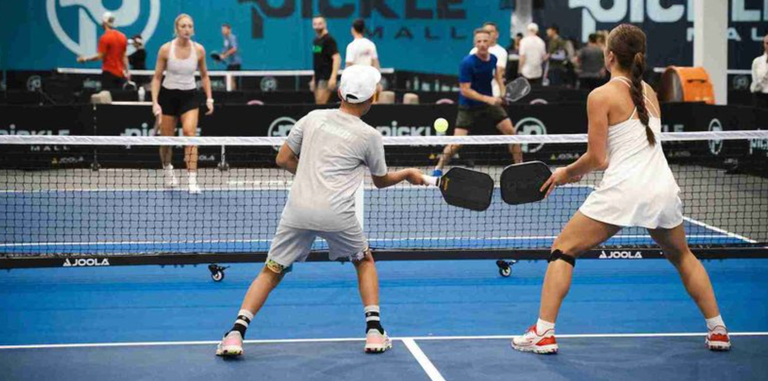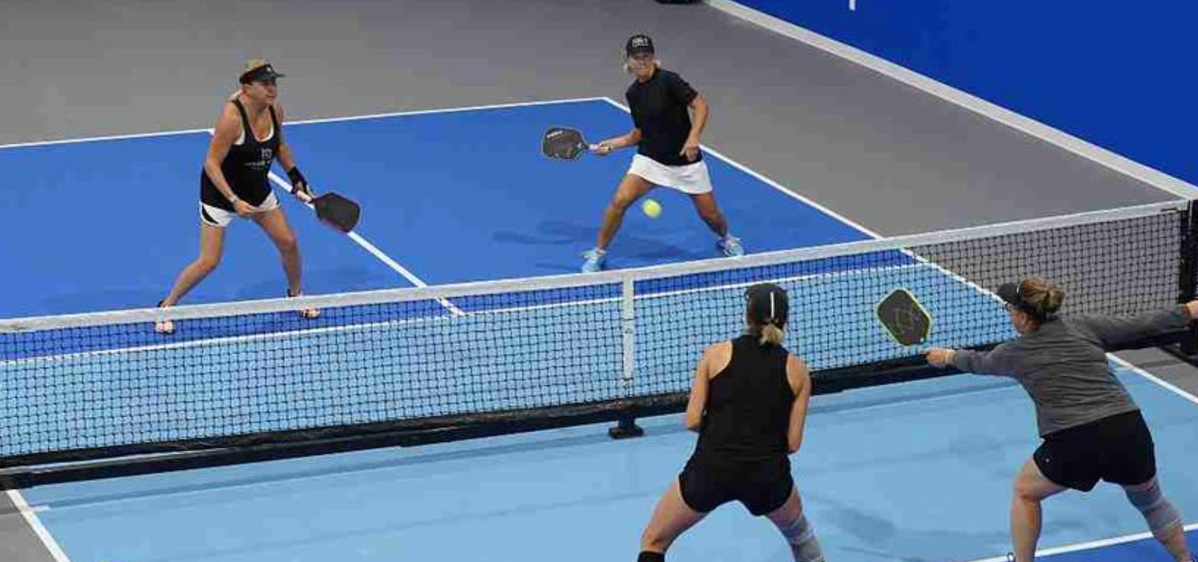
A pickleball cross court dink battle is a diagonal soft-game war that rewards the player with better geometry and more patience, not more power. This guide breaks down the net math, the grip, the target zone, and the moment to break the pattern.
The pickleball cross court dink battle is the most underrated fight in doubles, and most players lose it before the third ball.
They get bored. They get greedy. They try to end a rally that was never theirs to end.
Meanwhile the opponent who understands why the diagonal is safer keeps sliding balls over the lowest part of the net until someone hands over a free pop-up.
Here's the thing: a pickleball cross court dink battle is not a stalling contest.
It's a positioning war disguised as one, and the winner is usually whoever understands the court's geometry better.
Power does nothing here. Shot selection does everything.
Love pickleball? Then you'll love our free newsletter. We send the latest news, tips, and highlights for free each week.
So What Counts as a Pickleball Cross Court Dink?
A pickleball cross court dink is a soft, unattackable shot hit diagonally from your side of the non-volley zone to your opponent's opposite kitchen corner, landing low enough that they can't attack it out of the air.
Straight-ahead dinks travel down the line. This one travels across it.
That diagonal is doing real work.
 David Johnson
Every pickleball cross court dink you hit forces your opponent to move sideways, and lateral movement is where bad positioning starts.
Pull one player wide and the middle seam opens up behind them.
Worth clearing up one myth first. You're allowed to stand in the kitchen.
Under USA Pickleball Rule 9, the only thing banned inside that 7-foot by 20-foot zone is volleying the ball out of the air.
A ball that has already bounced is fair game, which is exactly why the soft game lives there.
Why Does the Pickleball Cross Court Dink Beat the Down-the-Line Dink?
The pickleball cross court dink wins because it crosses a lower net over a longer distance.
That's it. That's the whole edge, and it's baked into the court itself, not into your technique.
The Net Is Two Inches Shorter Where You're Aiming
Per the USA Pickleball rulebook, the net sits at 36 inches at the sidelines and 34 inches at the center. Your cross court ball passes over that center dip. Your down-the-line ball does not. Two inches of clearance sounds like nothing until you've watched a pickleball cross court dink clip the tape and feed an easy put-away volley to the other team.
You Buy Yourself Seven Extra Feet
Run the geometry across the non-volley zones and the diagonal path measures roughly 21.4 feet compared to about 14 feet straight ahead. That's a 50% longer runway. More runway means a bigger margin for error, more hang time to recover your ready position, and more room to add shape without sailing the ball. It's the same logic that makes mid-court resets work.
Here's the catch. That margin only exists if you keep the ball soft. Add pace or lift and the extra distance turns into extra room to hit it long. Geometry helps the patient player, not the impatient one. A pickleball cross court dink hit at 80% of your normal dink pace is almost always the right ball.
How Do You Hit It Without Popping It Up?
Pop-ups come from the wrist, almost every time. Fix the wrist and you fix the pickleball cross court dink.
Everything else, footwork included, gets easier once your contact point stops drifting.
Lift From the Shoulder, Not the Snap
Coaching research from UTR Sports points to the same conclusion good players reach on their own: high-level dinking comes from knee extension and shoulder rotation, not a wrist flick. Keep the paddle face open around 10 to 15 degrees, make the motion short, and let your legs supply the lift. Wrist snapping changes your face angle at contact, and an unstable face angle is how a routine dink becomes a floater. JW Johnson's unusual dinking technique looks strange precisely because his contact point never wanders.
Definition worth knowing: the Continental grip. Sometimes called Grip #2, it's the neutral hammer-style hold where the paddle face stays roughly perpendicular to the ground. It matters here because it lets you switch from forehand to backhand mid-rally without re-gripping. Olaben's technique breakdown makes the case plainly: one grip, zero hesitation, faster reaction in fast hands exchanges.
Where Should Your Pickleball Cross Court Dink Land?
Aim for the outside third of your opponent's kitchen, roughly two feet inside the sideline and a foot or two off the net. That spot pulls them off the court without giving them an angle back. Land it in the middle instead and you've handed them a free cross court reply with better geometry than yours.
A little slice or backspin keeps the bounce low. A little topspin drops it faster and shortens their reaction window. Both beat a flat, floaty dink. And if your opponent starts backing up to handle the angle, that's your cue to threaten the lob.
 The Dink Media Team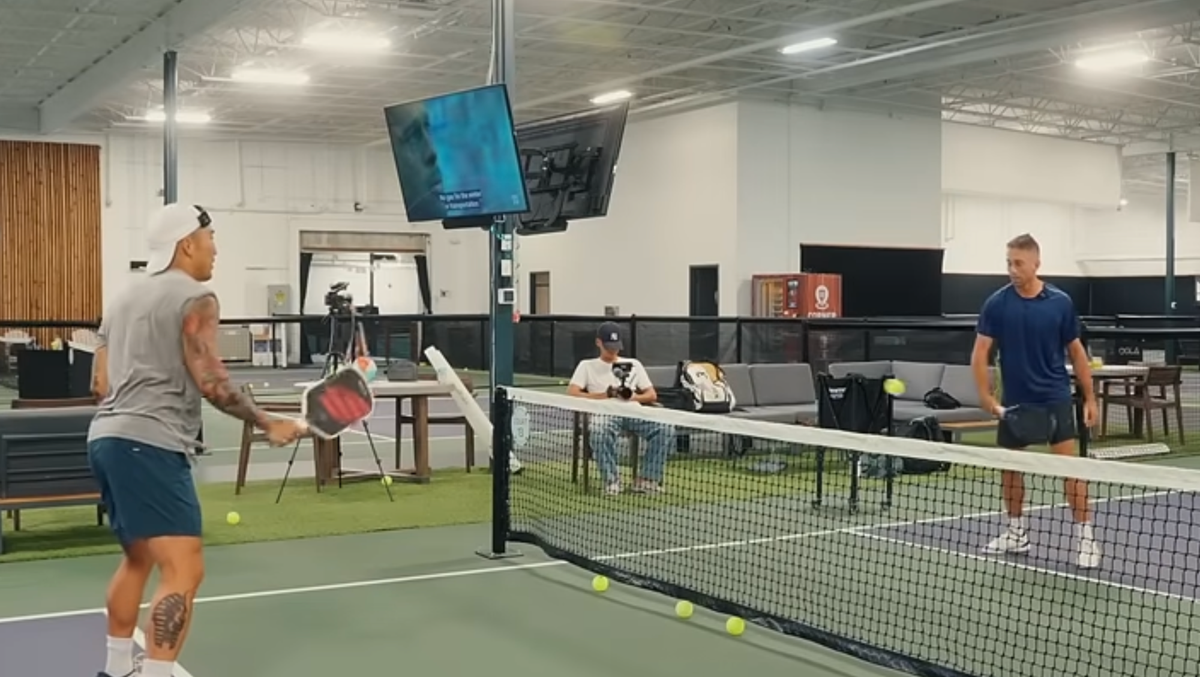
When Should You Break the Pickleball Cross Court Dink Pattern?
Break it the moment your opponent starts leaning. Cross court dinking is a pattern, and every pattern eventually becomes a tell.
Advanced players who see three or four diagonals in a row will step around and rip a down-the-line speed-up at your partner's hip.
So treat the pickleball cross court dink as your default, not your religion. Sprinkle in a straight-ahead dink to reset their feet. Use a deception look to freeze them.
Then go back to the pattern that's actually working.
The best cross court dinking I've watched at the pro level isn't relentless, it's rhythmic: three quiet balls, one that changes direction, then back to quiet.
And when they finally float one? That's your ball. Step in, take it at the top of the bounce, and put it at their feet or into the seam your partner is already covering.
 The Dink Media Team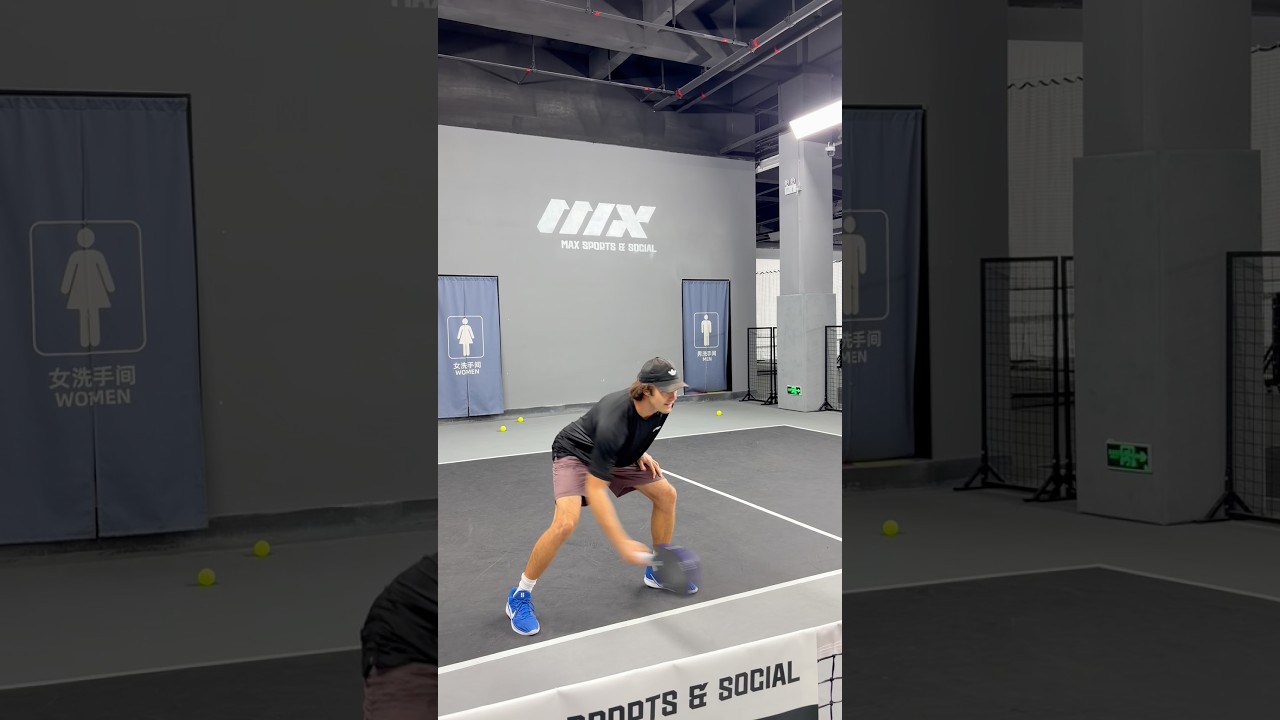
Drills That Sharpen Your Pickleball Cross Court Dink
You don't need a partner for most of this. You need reps and a target.
- Cross court only, ten minutes. No straight dinks allowed. Both players diagonal, count consecutive balls, restart at zero on any error. Twenty in a row is a real benchmark for a 3.5 player.
- The figure-8. Run the figure-8 dinking pattern so you're alternating cross court and down-the-line without changing grip. This is where Continental earns its keep.
- Cone in the corner. Drop a cone two feet inside the sideline in the kitchen. Ten forehand cross court dinks, ten backhand. The hardest dinking drill on the site is a nastier version of this if you want the advanced rep.
- Wall work. Solo drills against a wall build face-angle control faster than anything else you can do alone.
Pair those with broader shot-selection work and the diagonal stops feeling like a chore and starts feeling like a weapon.
 Jason Flamm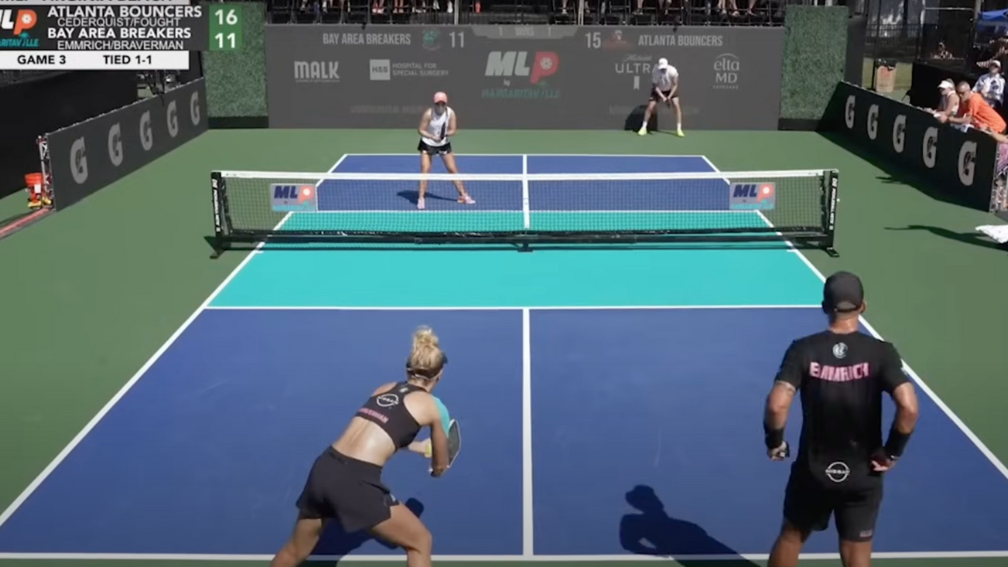
Key Takeaways
- The net is 34 inches at center versus 36 inches at the sidelines, so a pickleball cross court dink crosses a lower barrier than a down-the-line dink.
- The diagonal path runs roughly 21.4 feet versus about 14 feet straight ahead, giving you a larger margin for error and more recovery time.
- Lift from the shoulder and legs, not the wrist, and keep the paddle face open around 10 to 15 degrees, the same mechanics that produce a clean reset.
- A Continental grip removes the need to re-grip between forehand and backhand dinks.
- Aim for the outside third of the opponent's kitchen, not the middle, to stretch them without handing back an angle.
- Cross court dinking is an offensive setup, not a stall, but it becomes predictable if you never change direction.
- The reward for winning the exchange is the pop-up. Step in, take it at the top of the bounce, and finish at their feet.
Frequently Asked Questions
Is a pickleball cross court dink better than a down-the-line dink?
In most neutral rallies, yes. It crosses the lower center of the net and travels a longer path, which gives you more margin for error. Down-the-line dinks are still useful as pattern breakers and when your opponent has drifted wide. Think of the pickleball cross court dink as the shot you hit until you have a reason not to.
Can you step into the kitchen to hit a cross court dink?
Yes. USA Pickleball Rule 9 only prohibits volleying the ball out of the air while touching the non-volley zone or its line. If the ball has bounced, you can hit it from anywhere inside the kitchen legally, which is why kitchen line positioning matters more than kitchen avoidance.
Why do my cross court dinks keep going long?
You're probably adding pace or lifting with your wrist. The diagonal gives you extra distance, which also means extra room to overhit, the same trap that ruins a fifth-shot drive. Shorten the swing, open the face slightly, and let your legs do the lifting. A stable stance fixes this faster than any paddle change.
How many dinks should be cross court in a rally?
Most coaching frameworks treat the diagonal as the default and the straight dink as the change-up. A rough working ratio is three or four cross court balls for every direction change, adjusted for how your opponent is moving and how well they cover the middle.
What grip is best for a cross court dink battle?
The Continental grip, sometimes called Grip #2, is the standard choice because it handles forehand and backhand dinks without a grip change. Some players prefer an Eastern forehand, but it requires a micro-adjustment on the backhand side under pressure. In a long pickleball cross court dink exchange, that half-beat of hesitation is the difference between a reset and a floating backhand.

Love Pickleball? Join 100k+ readers for free weekly tips, news & gear deals.
Subscribe to The Dink