The Pickleball Warm-Up Routine That Actually Prepares You to Compete
Most players treat warming up as dinking cross-court until someone says "first to 11." A real pickleball warm up routine takes about eight minutes and has you ready to compete on point one.
A real pickleball warm up routine takes about eight minutes, and almost nobody does one.
What most players call warming up is four minutes of cross-court dinks while someone hunts for a ball, then a quick "first to 11?"
Point one arrives and your feet are still asleep.
You shank a return, you lose 11-6 to a team you beat last week, and you tell yourself you just needed a few games to find it.
You didn't need a few games. You needed a warm up. Here's the thing about starting cold: it's not only a scoreboard problem.
A national survey of 1,758 American players found 68.5% reported at least one injury in the previous 12 months, with the knee the most commonly affected area.
Our pickleball injury statistics breakdown has more on where those numbers come from.
Love pickleball? Then you'll love our free newsletter. We send the latest news, tips, and highlights for free each week.
Why Does Your Pickleball Warm Up Routine Keep Failing You?
Because it's built out of stretching, and stretching isn't preparation. It's maintenance.
The survey data backs up how common the mistake is.
Around 60% of players say they warm up regularly, but roughly a third are using static stretching to do it, and older players lean on it more than anyone.
Meanwhile, a 2026 review on stretching duration found that long static holds improve range of motion but can slightly blunt performance, while dynamic work delivers small flexibility gains and small performance gains.
For the ten minutes before a competitive game, that trade matters. And if you're the person who says there isn't time, we've already argued that one.
The other failure is the dink-only warm up. Dinking is a fine first touch, but it rehearses one speed and one body position.
Nothing in a cross-court dink exchange tells your legs that in ninety seconds you'll be lunging for a drop and backing up for a lob.
If you want the full stretching conversation, our quick essential stretching routine for pickleball players covers where static work still earns its place (hint: after you play, not before).
What a Dynamic Warm Up Actually Means
A dynamic warm up is movement through a full range of motion, not a held position.
Leg swings instead of a hamstring stretch. Walking lunges instead of a quad pull. Arm circles instead of hanging off the fence pulling your elbow behind your head.
The mechanism is simple: you're raising tissue temperature and rehearsing the exact movement patterns the game will ask for, rather than asking a cold muscle to sit in a long stretch.
We broke the term down further in our dynamic pickleball warm up definition, and Anna Bright's roll, lunge, jump method is about as clean a template as you'll find from a touring pro.
The Eight-Minute Pickleball Warm Up Routine
Three phases: move, load, play. Each one builds on the last, and the whole thing fits in the time it takes the group ahead of you to finish their game.
Why eight minutes?
Because when researchers asked players what they wanted from an ideal warm-up, the top-ranked attributes were that it be evidence-based, take under five minutes, and contribute to performance.
Players will not do a twenty-minute protocol. Eight is the honest compromise between what works and what you'll actually repeat.
- Move (2 minutes). Walk or jog the baseline for 60 seconds. Then arm circles forward and back, 10 each. Leg swings front-to-back and side-to-side, 10 each leg. You're looking for warm, not winded. Our full guide to warming up your body and mind before you take the court covers the mental half.
- Load (3 minutes). Ten walking lunges. Ten lateral shuffles each direction, touching the sideline. Ten split-step hops in place. Then thirty seconds balancing on one leg per side, which is the part everyone skips and the part your ankles care about most. Balance on the pickleball court explains why that single-leg second matters once you're reaching wide.
- Play (3 minutes). Now pick up the paddle. Dinks for 45 seconds, then drives, then drops, then a short volley exchange at speed. Finish with five serves and five returns.
Notice what's missing: a long hold anywhere. Save those for the car ride home.
If you want to add strength on your non-court days, eight lower-body exercises for explosive pickleball legs requires no gym, and pickleball strength training basics is the primer.
 The Dink Media Team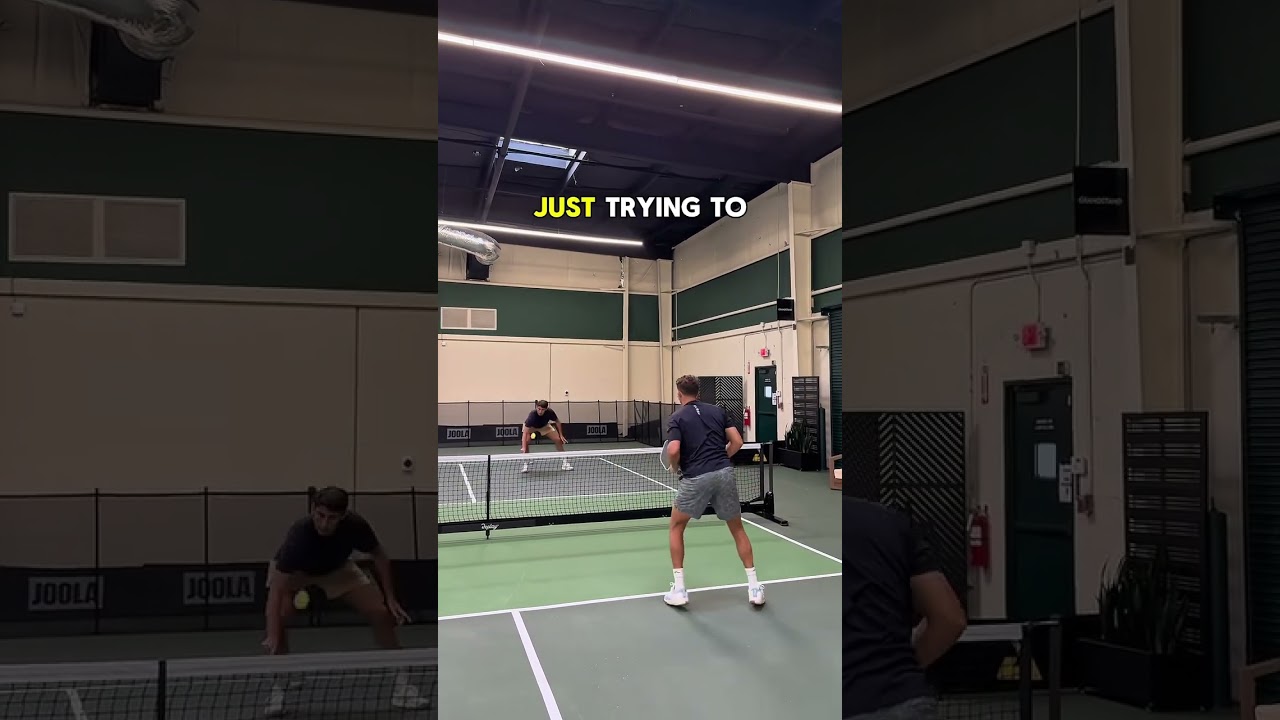
Where Most Players Let Their Pickleball Warm Up Routine Fall Apart
Phase three. People warm their bodies and never warm their hands.
A hands battle at 4-4 is not a movement your lunges prepared you for. Neither is an overhead.
Neither is the first return you have to take at shoulder height, which is the most awkward contact point in the sport and the one our piece on shoulder-height impact digs into.
Spend the last ninety seconds hitting the shots the game will actually demand: fast hands at the net, two overheads, five serves you actually aim.
Two drills do this better than freelancing.
The Slinky moves you forward and back through the transition zone, so your feet rehearse the hardest real estate on the court.
The figure-8 drill gets your paddle moving through both wings without a partner who needs to be a saint about feeding.
If your hands are the weak link, easy pickleball drills to get faster hands is a ten-minute fix.
 The Dink Media Team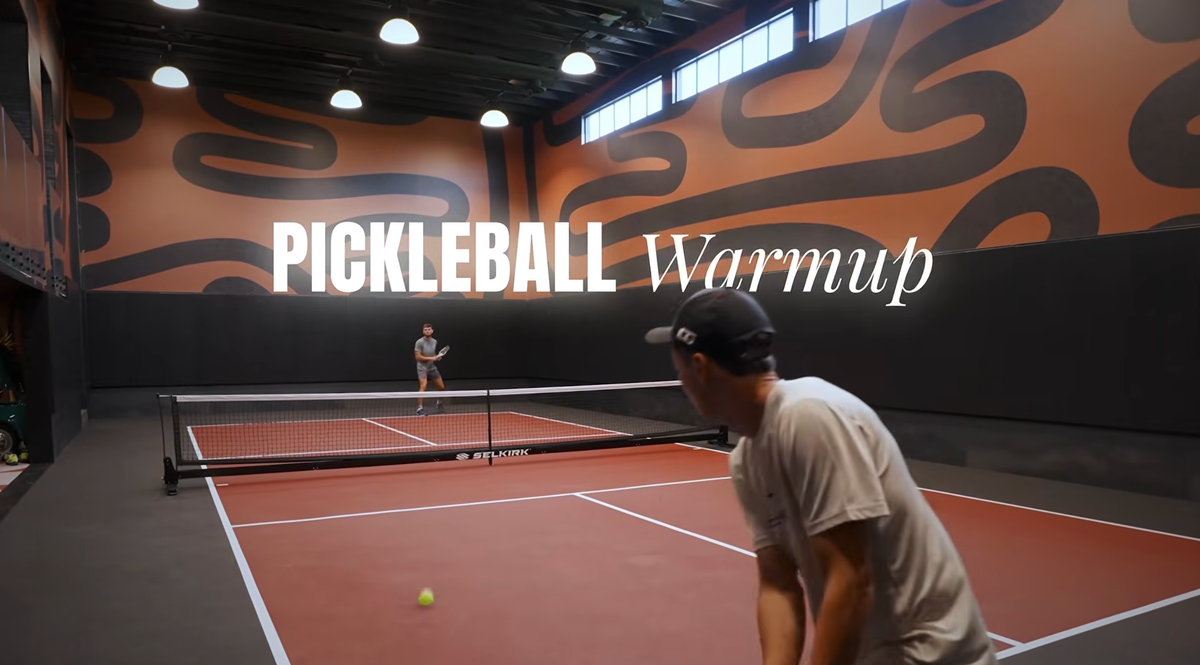
Your Shoes and Your First Step Matter More Than Your Stretches
No pickleball warm up routine survives bad footwear.
A systematic review of lower-extremity pickleball injuries found falls were the leading mechanism, followed by running or lunging forward and foot-and-ankle inversion, with the authors recommending dynamic warm-ups, balance work, and footwear guidance together as a package.
Read that mechanism list again. Falls, forward lunges, rolled ankles. Those are lateral-movement problems, and running shoes are built for one direction.
If you're still playing in trainers, our guide to choosing the right shoes for pickleball is the ten-minute read that may do more for you than any stretch.
The first step is the other half.
Warming up your split-step is what lets you move on the ball instead of after it, and speed training for your first step is where to start.
Honestly, if you fixed only two things this season, make it your shoes and your split-step. For the broader prevention picture, see what the most common pickleball injury is and how to prevent it.
 Alex E. Weaver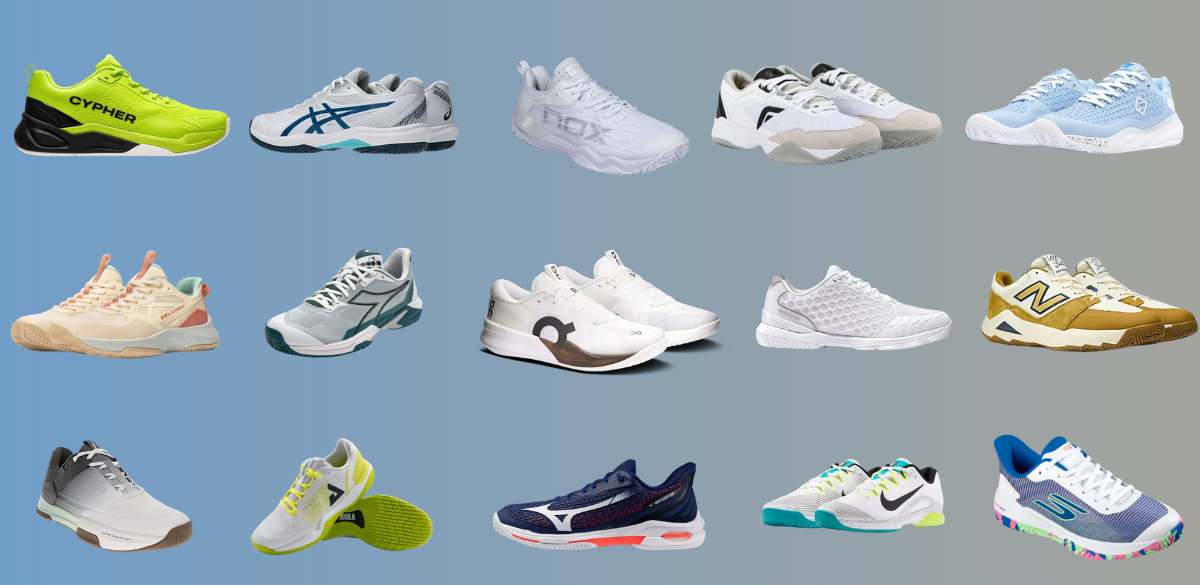
Does Your Pickleball Warm Up Routine Change for a Tournament?
Yes, in one specific way: you have to do it twice. Three times, usually.
Tournament days are stacked matches with ugly gaps between them. You warm up at 8:10, play at 8:30, then sit for two hours before round two.
That second warm up is the one everyone skips, and it's the one that decides your day. Give it four minutes: shuffles, lunges, hands, serves.
Our five-minute pickleball warm-ups for competition is built exactly for that gap, and the training plan for competitive players handles the weeks before.
One more piece of the puzzle: the same national survey found that players with fewer than five years of experience had 50% higher odds of reporting an injury, and players who rated prevention as low importance had roughly double the odds.
Experience and mindset, not talent. Both are fixable this week, and cleaning up your footwork is a good place to spend the time.
 The Dink Media Team
Key Takeaways
- A complete pickleball warm up routine runs about eight minutes: two minutes moving, three loading, three playing. Pros do a version of this every day.
- Dynamic movement before play, static stretching after. Research suggests long static holds can slightly reduce performance.
- Most players stop before the part that matters: hands, overheads, serves, and returns at game speed.
- Falls and lateral movement drive most lower-body injuries, which is why footwear and balance work belong in the same conversation as your warm up.
- On tournament days, re-warm before every match, not just the first.
Frequently Asked Questions
How long should a pickleball warm up routine take?
About eight minutes is the sweet spot for rec play. When players were surveyed about an ideal warm-up, one top-ranked attribute was that it take under five minutes, so anything longer tends to get abandoned. On tournament days, add a four-minute version before every match after the first.
Should I stretch before playing pickleball?
Not with long static holds. A 2026 review found that static stretching of 60 seconds or more improves range of motion but can slightly reduce performance, while dynamic stretching offers small gains in both areas. Leg swings, lunges, and arm circles before you play. Save the held stretches for afterward, and pair them with our seven critical recovery methods.
Is dinking a good warm up?
It's a good first touch and a bad full warm up. Dinking rehearses one speed and one body position, so nothing in it prepares you for a lunge, an overhead, or a hands battle. Use it as the opening 45 seconds of phase three, then move to drives, drops, volleys, and serves.
What's the most common pickleball injury?
In a survey of 1,758 American players, the knee was the most commonly injured area at 29.1%, followed by the thigh, leg, and foot group at 26.9% and the shoulder at 22.2%. Overuse and chronic conditions were cited most often as the single most serious injury type. We also covered why 90% of pickleball injuries affect players over 50.
Does a pickleball warm up routine actually help older players?
Research hasn't tested a pickleball-specific protocol head to head, so nobody can promise you a number. What the data does show is that a review of lower-extremity pickleball injuries flagged age 50 and up as a consistent risk factor and recommended dynamic warm-ups, balance work, and footwear guidance as core prevention elements. Our pickleball fitness for seniors guide goes deeper.

Love Pickleball? Join 100k+ readers for free weekly tips, news & gear deals.
Subscribe to The Dink