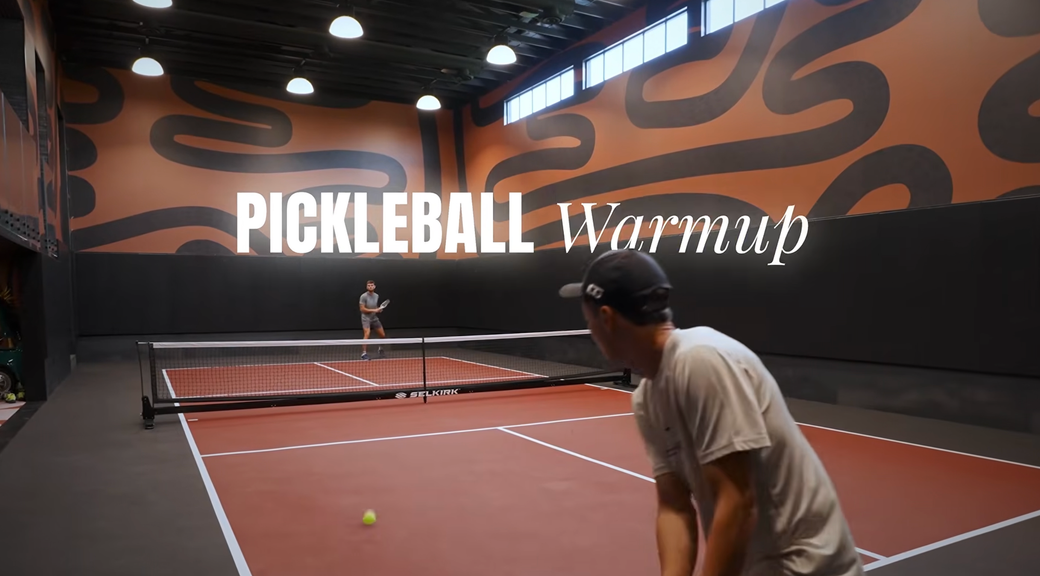
Most players treat the warm up like a formality and then wonder why they start matches cold. This pickleball warm up routine from a top 10 pro fixes that in 15 minutes flat.
Most players show up to the court, hit a few soft balls back and forth, and call it a pickleball warm up.
Then the match starts and they spend the first three games figuring out their contact point, their footwork, and why nothing feels quite right. Sound familiar?
This routine fixes that.
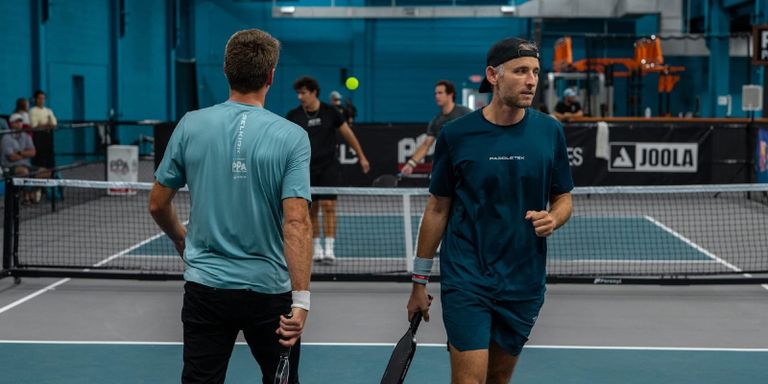
These six steps come from Connor Garnett, built from years of competing as one of the top 10 ranked players in the world, and they take 15 minutes flat.
Love pickleball? Then you'll love our free newsletter. We send the latest news, tips, and highlights for free each week.
Why a Proper Warm Up Actually Matters
Pickleball does not look physically demanding from the outside. But your hips, shoulders, and core all need to be loose before you start rotating at full speed.
More importantly, your mind needs reps before a match starts.
If you spend the first five points figuring out where your contact point is, you've already given away free points.
The goal of this pickleball warm up is to get your shots consistent before the scoreboard turns on. That is it.
Step 1: Get the Body Loose First
Every good pickleball warm up starts before you touch a paddle. Do a few laps around the court, then move into active stretching, not static holds.
You want your torso rotating freely, because almost all your power in pickleball comes from body rotation. Tight hips and a stiff core mean weak shots and potential injury.
This takes about two minutes. Do not skip it because you feel fine. You probably feel fine right up until you go for a wide ball and pull something.
Step 2: Straight Ahead Dinks (2 Minutes)
Start hitting dinks directly across the net. Not crosscourt yet. Just straight ahead.
The point of this phase is not to warm up your arm. It is to get your feet moving and your legs low the way they need to be in a match.
Most players warm up standing straight up, then wonder why the match feels different the moment they have to move.
As you dink, focus on these things:
- Line the ball up with your back leg before contact
- Stay low and get behind the ball, not reaching for it
- Keep the contact point consistent, not variable from shot to shot
- Avoid getting overextended on either side
If you want to fix your pickleball dink before a match, this straight-ahead phase is where you do it.
Two focused minutes here builds more confidence than ten minutes of mindless hitting.
 The Dink Media Team
Where Your Contact Point Needs to Be in a Pickleball Warm Up
Your contact point should sit in front of your body, inside your bubble, never off to the side or behind you.
When your contact point is consistent, your shots become predictable in the best way. When it wanders, everything falls apart.
The entire routine is built around finding that contact point before you need it under pressure.
 The Dink Media Team
Step 3: Crosscourt Dinks (2 Minutes Per Side)
Now you shift to crosscourt dinking, which is far more realistic to actual match play.
Start safe. Find your target. Then start mixing in wide dinks that pull your partner off the court and tighter dinks that land near the T.
You're building your full range here.
Work on two things specifically:
- Pace consistency: Keep the speed of the ball similar from shot to shot so your partner can predict it and you can dial in your own feel
- Distance control: Mix in some shallow dinks and some deeper ones, finding where your limit is before a point is on the line
Switch sides. If you play the left, focus on giving your partner good cooperative dinks they can work with. If you play the right, practice handling both the easy sitter and the dink that moves you around.
You can go deeper on why your dink fails in games to understand what patterns to rehearse here.
 The Dink Media Team
Step 4: Drops and Drives From the Baseline
This is where most rec players waste their pickleball warm up.
They either bang drives as hard as they can or chase the perfect textbook drop. Neither one prepares you for anything.
Start with third shot drops at a controlled pace and watch what your partner has to do with the ball.
If they have to hit up on it, that drop was effective and you could follow it in.
If they can hit down on it, that drop was too high and you stay back.
That read is the real skill you're building: knowing whether your drop gives you an offensive opportunity on the next shot.
Once you have a feel for the drop, mix in drives at 60 to 70 percent of your full power.
You're not here to rip winners. You're here to feel the arc of the ball and understand where it peaks.
A ball that is dropping when it crosses the net forces your opponent to hit up. That is when you have the advantage.
Placement beats power here. Always. Check out more on third shot drop situations to see exactly when to use each version.
 The Dink Media Team
Is There a Specific Number of Drops You Should Hit?
No fixed number. Hit drops until you find your range and start feeling what "good" looks like.
If you miss a few in a row, stay on them longer.
If you nail three or four in a row, move on. The warm up should respond to how you're actually hitting, not a rigid script.
Same logic applies to the drives. If you keep missing your third shot drop, that is information.
Spend more time on it today rather than hoping it magically clicks once the match starts.
 The Dink Media Team
Step 5: Reflex Volleys at the Kitchen Line (2 Minutes)
This is the part most players skip entirely. It is probably the most important part.
Stand at the kitchen line with your partner and volley back and forth at a moderate pace, keeping the ball at chest height.
The goal is to build a consistent contact point on volleys and start training your reflexes for the speed of real hands battles.
Two mechanics to drill here:
- Keep your elbows in: When your elbows flare out, your contact point gets inconsistent and you lose power and control at the same time
- Stay grounded: Do a small split step right as your partner contacts the ball. When you rise up on your toes or stand tall, your shots get weak and your paddle angle wanders
You're not trying to go fast right away. You're trying to string together three, four, five clean shots in a row at a pace that stays controlled.
Speed is a byproduct of good mechanics, not something you force. For a deeper look at how to win hands battles, that reflex training is where it starts.
When you do ramp up the pace, you'll notice that players who skip this step start swinging wild the moment the ball speeds up.
That is what you're training out of yourself here.
 The Dink Media Team
Step 6: Serve and Return (5 to 10 Each Side)
Finish the pickleball warm up with serves and returns. Straightforward, but do not rush it on autopilot.
On the serve, start with two or three slower ones to find your feel.
Then begin targeting the three spots: wide, body, and T, with a landing zone about two steps inside the baseline.
That gives you a high-margin target without sacrificing depth.
Once you're warm, throw in your spin serve or a loopier delivery if those are part of your game.
The point is to get comfortable with your full range before a point matters.
On the return, focus on depth. The deeper your return lands, the less comfortable your opponent will be on their third shot.
You're also training your kinetic chain here, the sequential transfer of energy from your legs through your core and out through the paddle.
Work on that transfer being smooth, not just muscling the ball back.
Knowing how to fix return of serve errors starts with reps that actually simulate match conditions.
 The Dink Media Team
Bonus: Overhead Warmup on Windy or Sunny Days
If conditions are tough, spend one extra minute warming up overheads.
Have your partner feed you a few balls above your head. Focus on the torso twist and letting your body rotate through the ball.
This is especially valuable when the sun is in your eyes or wind is affecting the ball flight, because you want to know where those variables are before a lob catches you off guard in a real point.
It also helps you and your partner coordinate lob coverage before the match begins.
 The Dink Media Team
Put the Routine Together
Here is the full 15-minute pickleball warm up so you can run it every time:
- Active warm up and laps: 2 minutes
- Straight ahead dinks: 2 minutes
- Crosscourt dinks, both sides: 4 minutes total
- Drops and drives from the baseline: 4 minutes
- Reflex volleys at the kitchen: 2 minutes
- Serve and return: 1 to 2 minutes
The whole thing builds intentionally. You start slow, get your feet moving, find your contact point, then layer in the shots you'll actually use once the match starts.
If you want to build real skills on top of this foundation, these two-person drills pair well with the routine.
The players who start matches fast are the ones who warmed up like the match already mattered.
That is the standard Connor sets, and it is one you can hit every single time you step on the court.
Frequently Asked Questions
How long should a pickleball warm up be?
Fifteen minutes is the target for a complete pickleball warm up that covers body loosening, dinks, drops, drives, volleys, and serves. You can compress it to ten minutes if you are short on time, but prioritize the dinking and reflex volley phases over everything else.
Should I stretch before pickleball?
Yes, but focus on active stretching rather than static holds before you play. Active stretching keeps the muscles warm and mobile while static stretching can temporarily reduce power output. A few laps combined with dynamic hip and shoulder rotations is the right approach.
What is the best way to warm up my dinks before a match?
Start with straight-ahead dinks for two minutes, focusing on staying low, getting behind the ball, and finding a consistent contact point. Then shift to crosscourt dinks and practice both shallow and deep placement. The goal is to build muscle memory, not to hit perfect shots.
Why do I play worse at the start of matches than later on?
You are still finding your contact point and footwork during the first few games instead of before them. A structured warm up that mimics real match patterns, including movement, crosscourt dinks, and speed-up volleys, fixes this by getting your body ready before the score matters.
Do I need to warm up overheads in pickleball?
Not every session, but it is worth doing when it is sunny or windy. A few fed overheads help you find the timing on high balls and identify where the sun sits before an opponent lobs you mid-match. It only takes about a minute and can prevent a major breakdown late in the first game.


Love Pickleball? Join 100k+ readers for free weekly tips, news & gear deals.
Subscribe to The Dink