
How to 'Predict' the Next Shot in Every Pickleball Hands Battle
Most players think losing a pickleball hands battle means their hands are too slow. The real problem is anticipation, and there is a simple method that fixes it fast.
You get into a pickleball hands battle and suddenly everything falls apart.
The ball is moving fast, you are reacting late, and you keep popping it up or shanking it wide.
Here is what most players get wrong: they think the solution is faster hands. It is not. The real solution is knowing where the next ball is going before it gets there.
This breakdown comes from BK Pickleball on YouTube, covering exactly how to anticipate counters, time your speed ups, and walk away from kitchen battles with more points.
Here is what you need to know.
Love pickleball? Then you'll love our free newsletter. We send the latest news, tips, and highlights for free each week.
Anticipation Is the Real Fast-Hand Secret
Players like JW Johnson are not winning a pickleball hands battle because their reflexes are superhuman.
They are winning because they can read the next ball better than almost anyone on the planet.
That is not a small distinction. It changes how you train, how you think at the kitchen, and how you position your paddle between shots.
When you chase the ball reactively, you are always a half-step behind. When you anticipate where it is going, you are already there.
That is the gap between players who feel slow and players who look effortless.
If you want to go deeper, this breakdown on why you lose hands battles covers the core mechanics behind reaction time at the kitchen line.
What Has to Happen Before the Hands Battle Even Starts?
You cannot get into a productive exchange without a proper speed up. And most players are speeding up at the wrong time.
Before you attack, you need three things in place:
- Time to load and swing without rushing
- Feet set so you can generate controlled power
- Ball in front of your body so you can see it and swing through it
If any one of those three is missing, your speed up becomes a low-percentage gamble. You are essentially handing your opponent an easy counter.
The trigger to look for is a high bounce. When a dink floats up and gives you a ball above the net, that is your green light.
Below the tape, keep dinking. Above it, attack.
One more thing: the speed up is a setup shot, not a winner. Its only job is to force a tough counter so you can finish with the next ball.
The Wall Method: How to Predict the Counter Every Time
This is the core concept, and it works about 80 to 90 percent of the time.
Think of your opponent as a wall. When you throw a ball at a wall, it comes back in the direction it hit. The same physics applies to your speed up in a hands battle.
Here is how it breaks down:
- Speed up down the line: The counter will come back down the same line. Prepare for the ball to return to the side you attacked from.
- Speed up across your body: The counter will come back to your opposite side. Use your follow-through to shift your weight and paddle to the other side immediately.
This is not a guarantee. But 80 to 90 percent is an enormous edge in a fast-moving exchange where guessing wrong usually costs you the point.
The moment you finish your speed up, your job is not to watch where it went. Your job is to move your paddle to where the counter is most likely to arrive.
Fast hands mechanics from a top-10 pro backs this idea up fully: positioning between shots is where hand speed is actually built.
 The Dink Media Team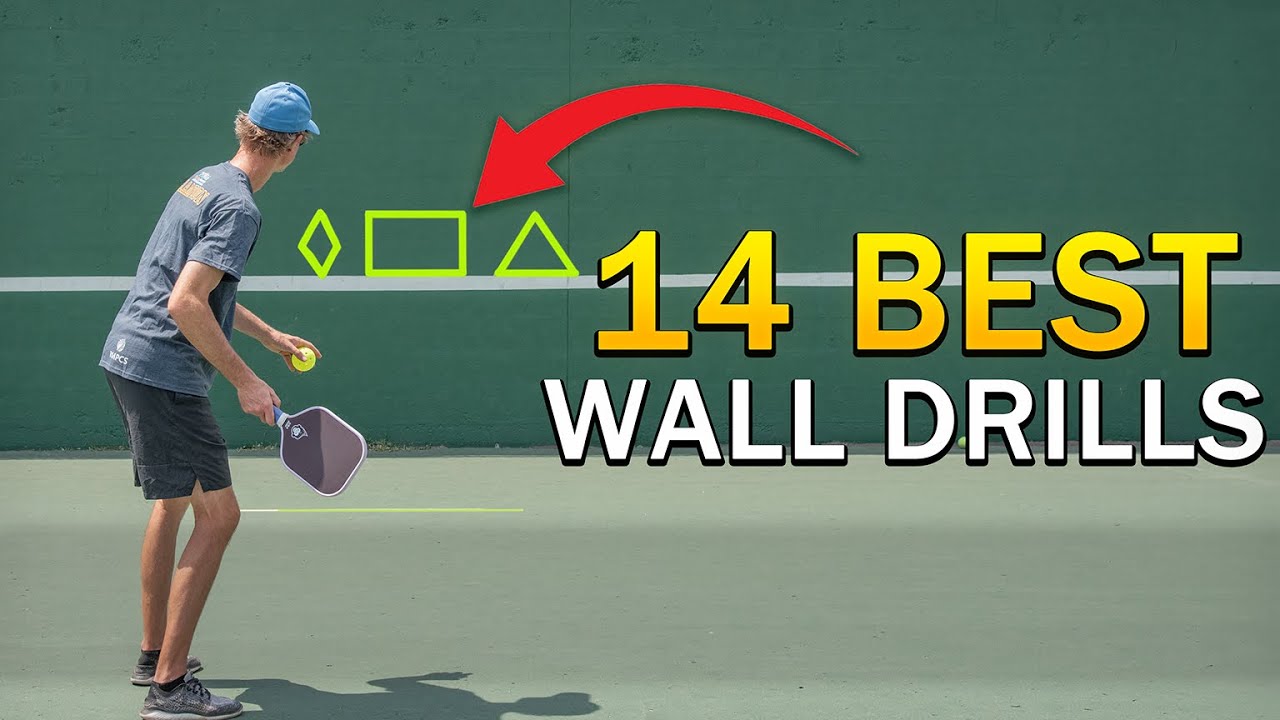
How Do You Apply the Wall Method Mid-Rally?
In practice, it looks like this. You are in a dink exchange and you see the high ball. You attack it down the line on your backhand side.
Before the ball even reaches your opponent, you are already sliding your paddle back to the backhand position.
You are not waiting to see what they do. You already know where the counter is going 80 to 90 percent of the time.
Now try it from the other side. You take your backhand and drive it across your body into your opponent's backhand.
As soon as you finish that motion, your follow-through naturally pulls your paddle toward your forehand side.
That is not an accident. Use it.
Sit on your forehand side immediately after an across-the-body speed up. You will be there waiting when the ball arrives, instead of scrambling to catch up.
This is exactly how Kyle Koszuta describes building faster hands: the secret is not reaction speed, it is reducing the distance your paddle has to travel.
 The Dink Media Team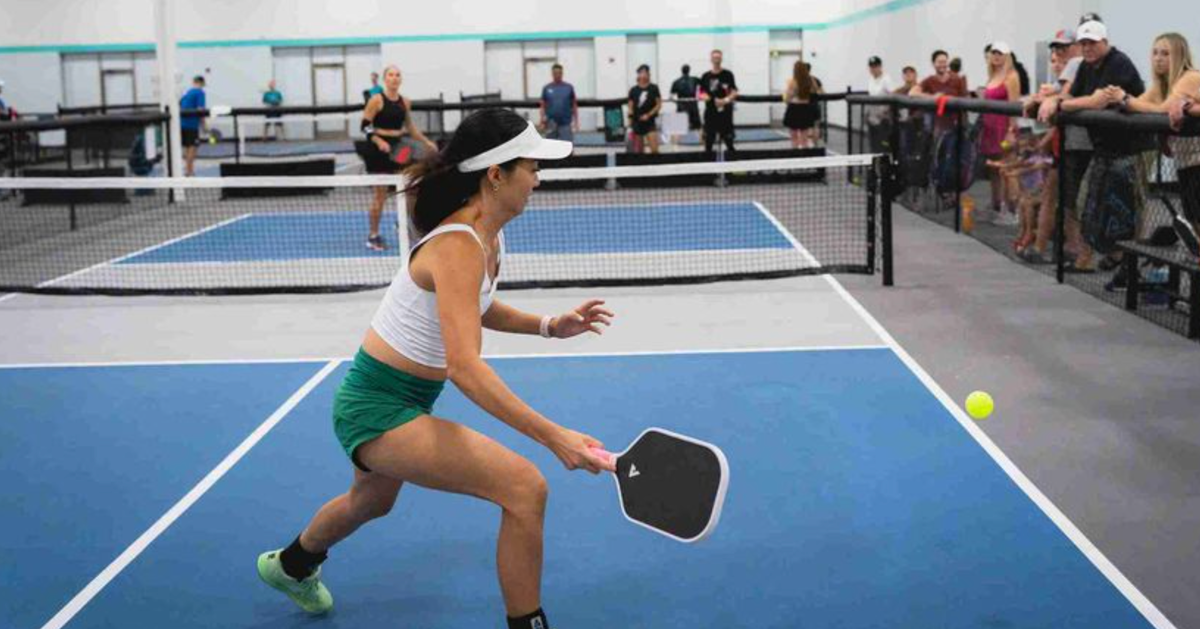
What About Paddle Position During a Hands Battle?
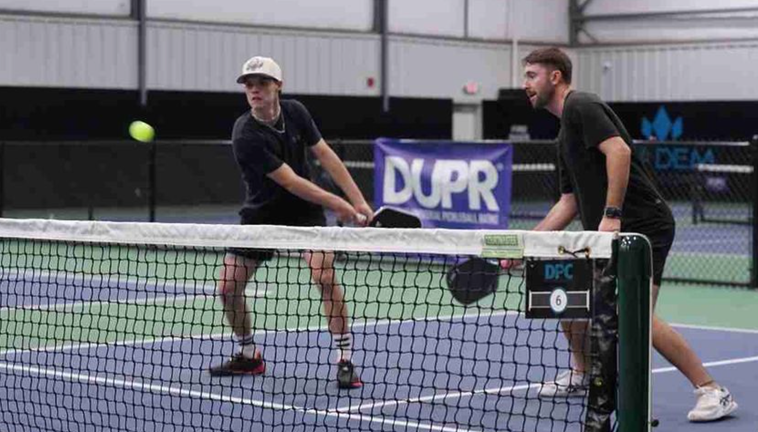
The most common breakdown in a hands battle is not the swing. It is the backswing.
When things speed up, players instinctively take a big swing. They pull the paddle back behind their body trying to generate more power. That backswing kills you every time.
Keep your paddle out in front of your body at all times. Your swing is compact, almost a punch. You are not generating power from a backswing.
You are transferring pace from the incoming ball.
A paddle behind your body cannot get to the next ball in time. A paddle out front can reach both sides without a full reset.
This is why kitchen line volley fixes always emphasize compact technique over power. Power at this range is an afterthought.
 The Dink Media Team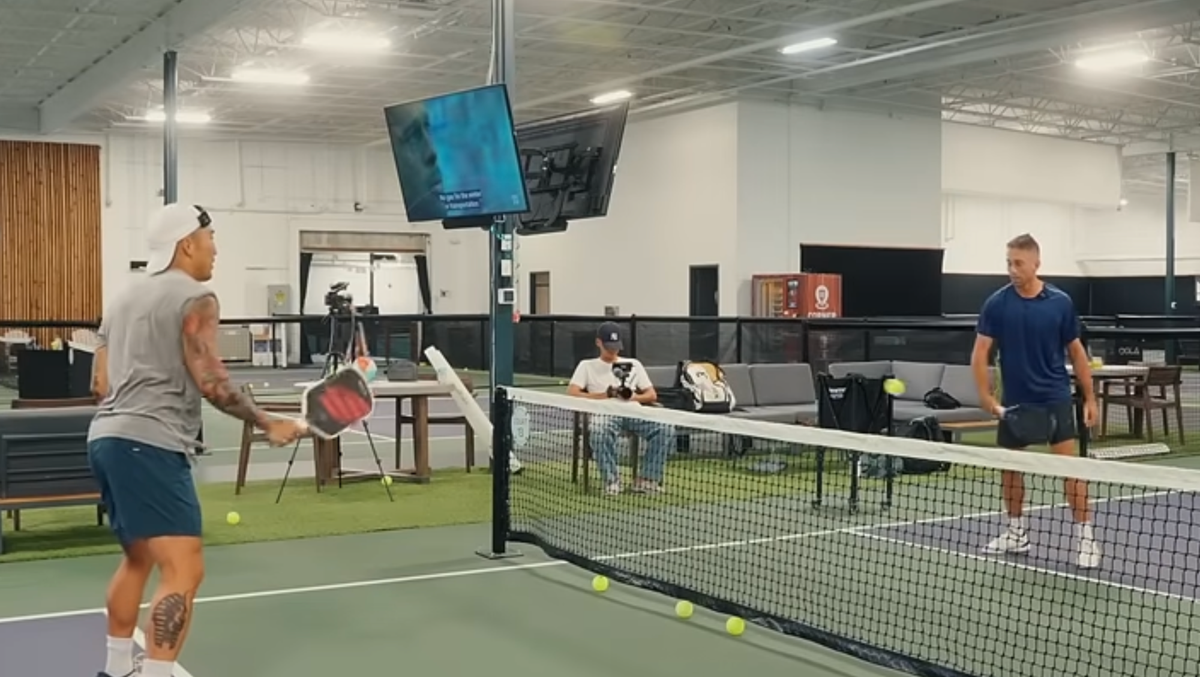
The Figure Eight Drill: Build Both Skills at Once
You can train anticipation and hand speed together with one drill called the figure eight drill.
Stand across from a partner at the kitchen line. One player goes crosscourt on every volley, the other goes down the line.
You alternate forehand and backhand volleys, creating a continuous figure eight pattern with the ball.
Here is how to run it properly:
- Start slow and focus on keeping the paddle in front at all times
- Move from forehand to backhand without letting the paddle drift behind your hip
- Increase pace gradually as the pattern becomes automatic
- Switch roles after several minutes so both players practice both angles
This drill does two things simultaneously.
It builds the muscle memory to move forehand to backhand without a big reset, and it trains your eye to track the ball through alternating directions.
After a few sessions with this drill, the wall method starts to feel instinctive rather than something you have to consciously calculate.
For more drills you can run with just one partner, these two-person pickleball drills are worth bookmarking.
You can also pair this with these attack combos to start turning your speed ups into consistent point finishers.
 The Dink Media Team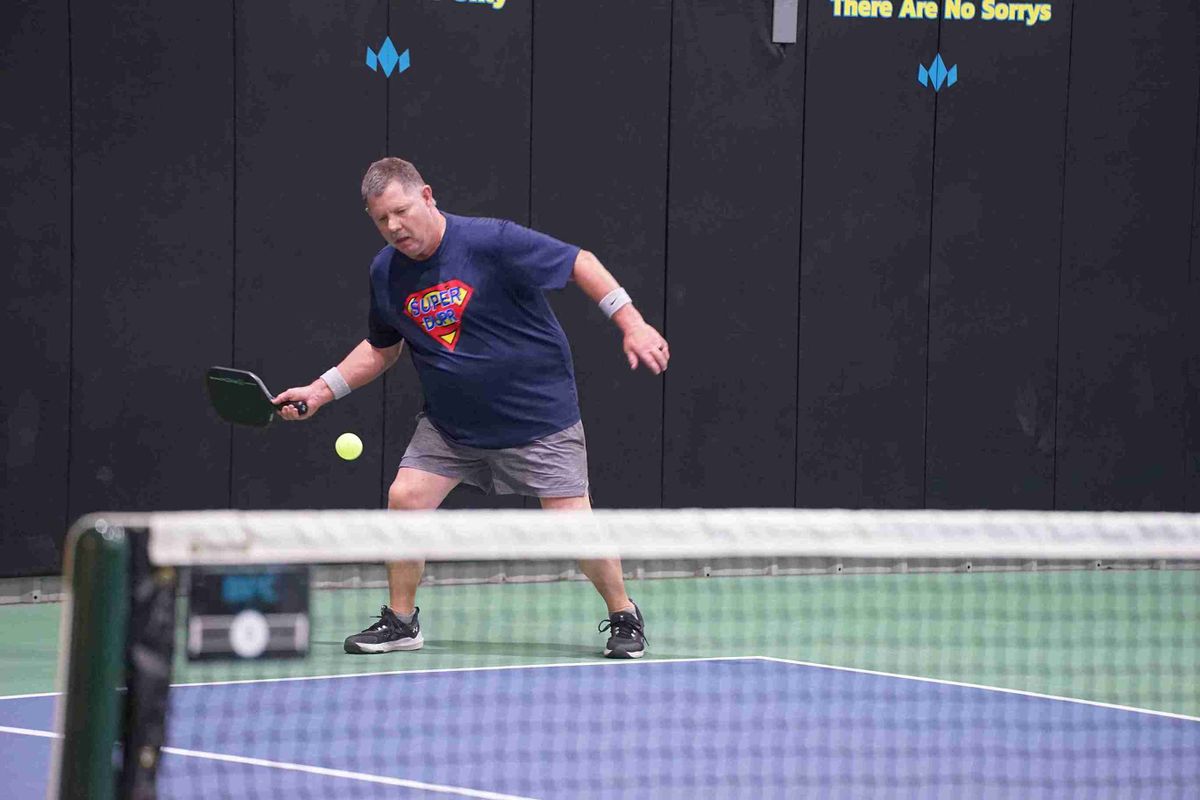
Why Does the Speed Up Still Fail Even When Timed Right?
Timing the speed up correctly is only half the equation. The other half is where you aim it.
A speed up down the middle gives your opponent the most options. They can redirect it anywhere.
A speed up that goes down the line or directly at the body forces a more predictable counter, which makes the wall method even more reliable in a pickleball hands battle.
Aim your speed ups with intention. You want to control not just whether you attack, but where the counter is going to come from before you even swing.
This kind of layered thinking is what separates recreational players from competitive players at every level.
If you want to see how this plays out at the top, these tactics that beat Ben Johns show exactly how elite players force predictable counters through shot placement.
Understanding right side speed up techniques will also help you add angles and make your attacks harder to read.
And these three fixes to reset every speed up show the defensive side of this exchange, which helps you understand both roles.
If your positioning is still shaky, using the kitchen line as a target rather than a rule is a mindset shift that supports everything covered here.
 The Dink Media Team
Putting It All Together at the Kitchen
Here is the complete sequence to run every time you get into a pickleball hands battle:
- Wait for a high bounce before you speed up
- Set your feet and take the ball in front of your body
- Attack with direction, down the line or across your body
- Apply the wall method immediately, moving your paddle toward where the counter will come
- Keep the paddle out front and stay compact through the exchange
The speed up starts the sequence. The anticipation wins it.
When you stop thinking about hand speed and start thinking about positioning between shots, the whole pickleball hands battle slows down.
Not because the ball moves slower, but because you already know where you need to be.
That is not luck. That is the wall method in action.
Frequently Asked Questions
What is a hands battle in pickleball?
A hands battle is a fast exchange at the kitchen line where both players are volleying rapidly at close range. It typically starts when one player speeds up the ball to force a reaction, and both players begin trading volleys at pace. The player who can anticipate the next counter usually wins the exchange.
How do you get faster hands in pickleball?
Faster hands in pickleball come primarily from anticipation, not raw reaction speed. When you know where the next ball is going before it gets there, your paddle is already in position and your hands appear faster. The wall method gives you a reliable framework for predicting counters about 80 to 90 percent of the time.
When should you speed up the ball in a dink rally?
Speed up the ball when you have time to set your feet, the ball is high enough above the net to attack, and you can make contact in front of your body. A ball that bounces high during a dink rally is your green light. If the bounce is low or you are off balance, keep dinking and wait for a better ball.
What is the wall method for anticipating counters?
The wall method says that when you speed up in a certain direction, the counter will return in the same general direction, just like a ball bouncing off a wall. Speed up down the line and the counter comes back down the line. Speed up across your body and the counter comes back to your opposite side.
This holds true roughly 80 to 90 percent of the time.
How do you practice hands battles in pickleball?
The figure eight drill is one of the best ways to practice hands battles. Stand at the kitchen line with a partner, alternate crosscourt and down-the-line volleys, and work from forehand to backhand continuously while keeping your paddle out front. Increase the pace gradually as the pattern becomes comfortable, and switch roles so both players train both angles.
Love Pickleball? Join 100k+ readers for free weekly tips, news & gear deals.
Subscribe to The Dink