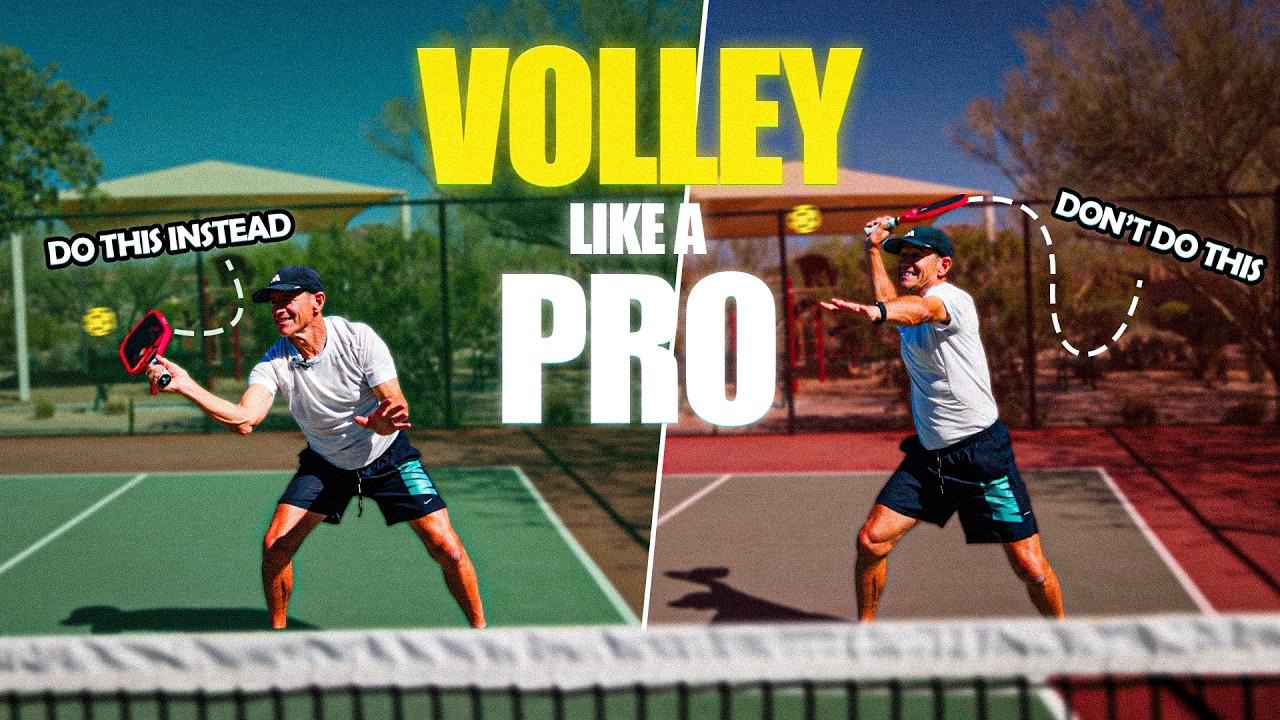
Most pickleball points are decided at the kitchen line, and your volley is why you keep losing them. These five fixes will change that fast.
Your pickleball volley is probably the biggest gap between where you are now and where you want to be on the court.
Most players think they need a better serve or a cleaner third shot drop. But 80% of points are actually decided right at the kitchen line.
If your volleys are inconsistent, too slow, or flying long, this article will tell you exactly why.
These fixes come straight from Obsessed Pickleballers on YouTube, a channel built around serious, practical pickleball improvement.
Here is what we are covering: the compact swing, the ready position, where to aim, and how to put it all together under pressure.
Love pickleball? Then you'll love our free newsletter. We send the latest news, tips, and highlights for free each week.
Why Volleys Decide More Points Than You Think
A volley is simply hitting the ball before it bounces. No bounce, ball in the air, paddle makes contact.
Here is why it matters so much.
The overwhelming majority of pickleball points are settled at the non-volley zone line, not from the baseline and not in the transition zone.
That means the player who is more comfortable at the net wins more often. Age, speed, and athleticism matter a lot less when you can control a volley exchange.
Older players beat younger players at the kitchen line every single day because of this.
If your volleys are breaking down, you are giving away points that have nothing to do with fitness.
Those are purely technical problems, and technical problems have technical fixes.
Here are the five you need.
Fix 1: Stop Swinging at Volleys
This is the most common mistake on the court, and it causes the most errors. The big swing is your enemy at the kitchen line.
In tennis, you swing. In golf, you swing. The pickleball volley is different.
The moment you take a big backswing, you introduce timing variance. If you are even slightly early or late, the ball goes anywhere.
The fix is a short, compact punch forward. Think of it less like swinging and more like redirecting.
You are catching the energy of the ball and sending it back with purpose, not generating power from a big arm motion.
Watch what happens when you shorten that swing: your contact point becomes predictable and your control goes up immediately.
Less swing equals more consistency, and that is the whole game at the net.
If you want to understand the difference between shot types at the net, this breakdown of the punch volley will help you choose the right one for each situation.
The same principle applies when you need a harder backhand volley without adding swing length.
Fix 2: Get Your Ready Position Right Before the Ball Arrives
The ready position is where everything starts. If you are out of position before the ball comes, no amount of technique fixes what happens next.
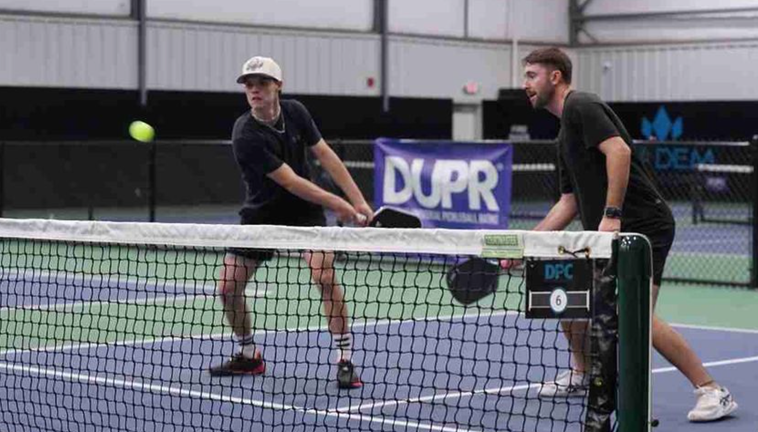
Here is what a proper ready position looks like at the kitchen line:
- Paddle out in front of your body, not tucked to your side
- Knees bent, weight on the balls of your feet
- Paddle covering roughly a foot to a foot and a half of the kitchen
- Eyes forward, tracking the ball and your opponent
What most players do instead is stand tall and flat-footed with the paddle dropped low. That is not a ready position. That is a waiting position.
Being in a true athletic stance means you can react in any direction without a wasted setup step.
You are already loaded, and your only job is to execute the punch.
This connects directly to the critical kitchen line skill most rec players are missing: timing your split step to your opponent's contact.
It also ties into modern hand speed and paddle positioning, which is what stops you from popping balls up in the first place.
 The Dink Media Team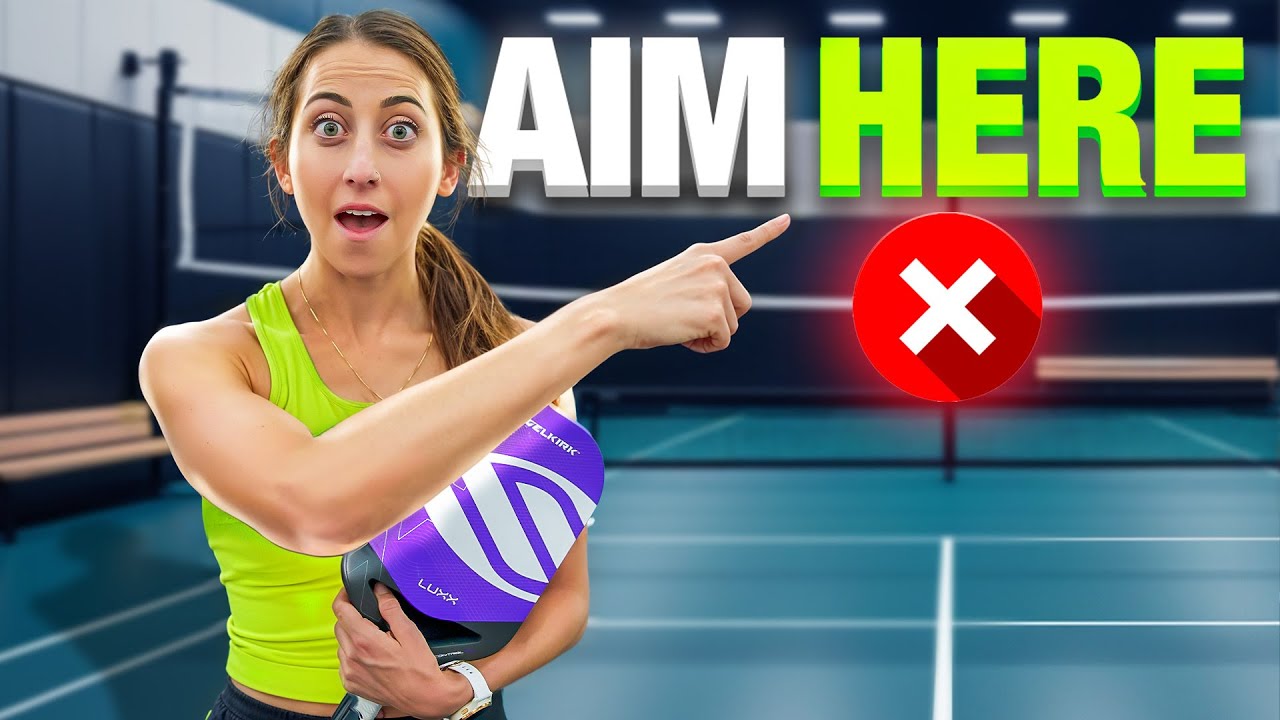
What Does a Good Punch Volley Actually Feel Like?
A good punch volley is shorter than you think it needs to be.
The backswing barely exists. The paddle is already out front, and the motion is a controlled forward push with a slight elbow and wrist finish.
Here is a simple sequence to practice:
- Paddle out front in ready position
- Ball comes toward you
- Small forward punch, no big arm swing
- Slight elbow bend drives the motion, wrist finishes
- Hold the finish position briefly to confirm control
Low volleys need more knee bend. When the ball drops below the net, get your body down rather than dropping your paddle head.
Keep the paddle face stable and use your legs to adjust height.
For balls that come at you fast, the four pillars of fast hands will help you survive quick exchanges at the net.
 The Dink Media Team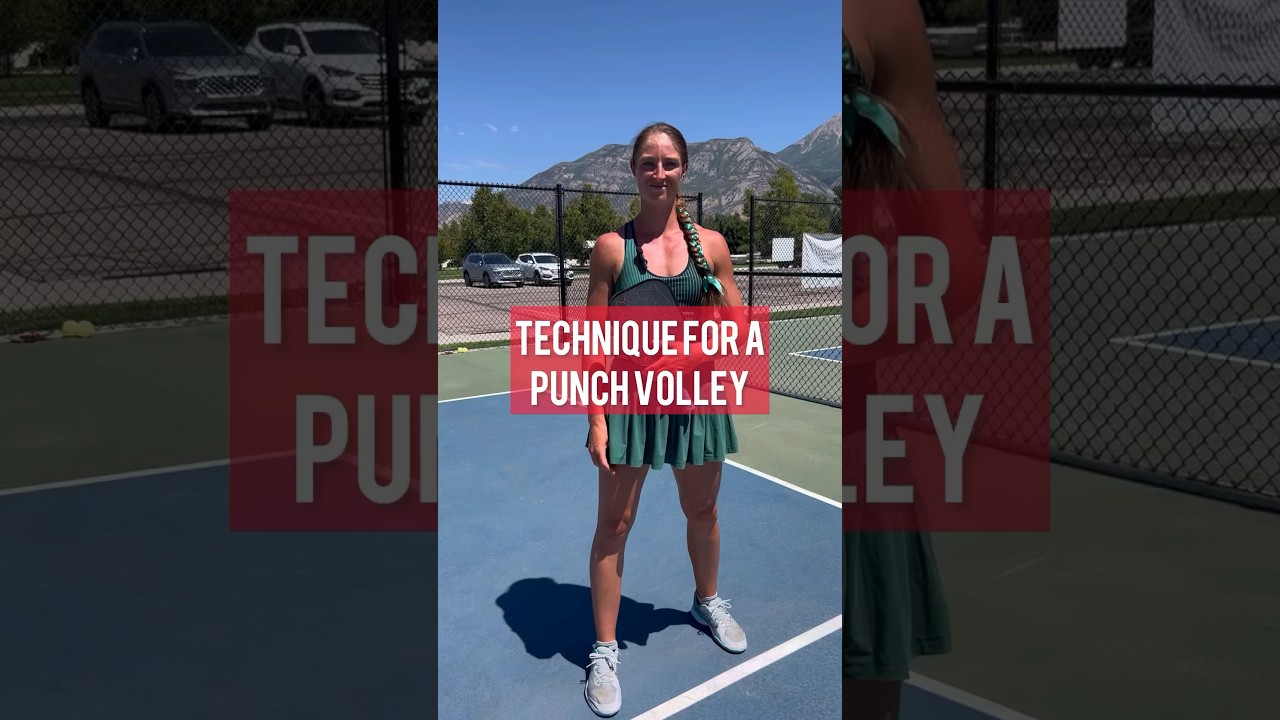
Fix 3: Know Where to Aim Your Volleys
New players always ask about targeting.
The answer is simpler than most expect: stop trying to hit winners and start hitting shots that force weak returns.
There are three targets that work every time:
- At their feet. A ball aimed at an opponent's feet forces a difficult low contact, and weak returns follow almost every time. This is the highest percentage volley target in the game.
- Down the middle. In doubles, the middle creates confusion because neither player is sure who takes it. Communication breaks down and errors follow.
- Back to whoever just hit it. Redirecting to the same player keeps pressure on them before they can reset or reposition. It punishes players who hit and stand.
Notice that none of these targets involve ripping the ball past someone at full speed.
Low and controlled beats hard and risky at the kitchen line the vast majority of the time.
Running your shot selection through a ball height and court position checklist helps you decide when to be aggressive and when to aim safe.
If you want to add offense from these positions, these modern kitchen strategy tactics are the next layer.
 The Dink Media Team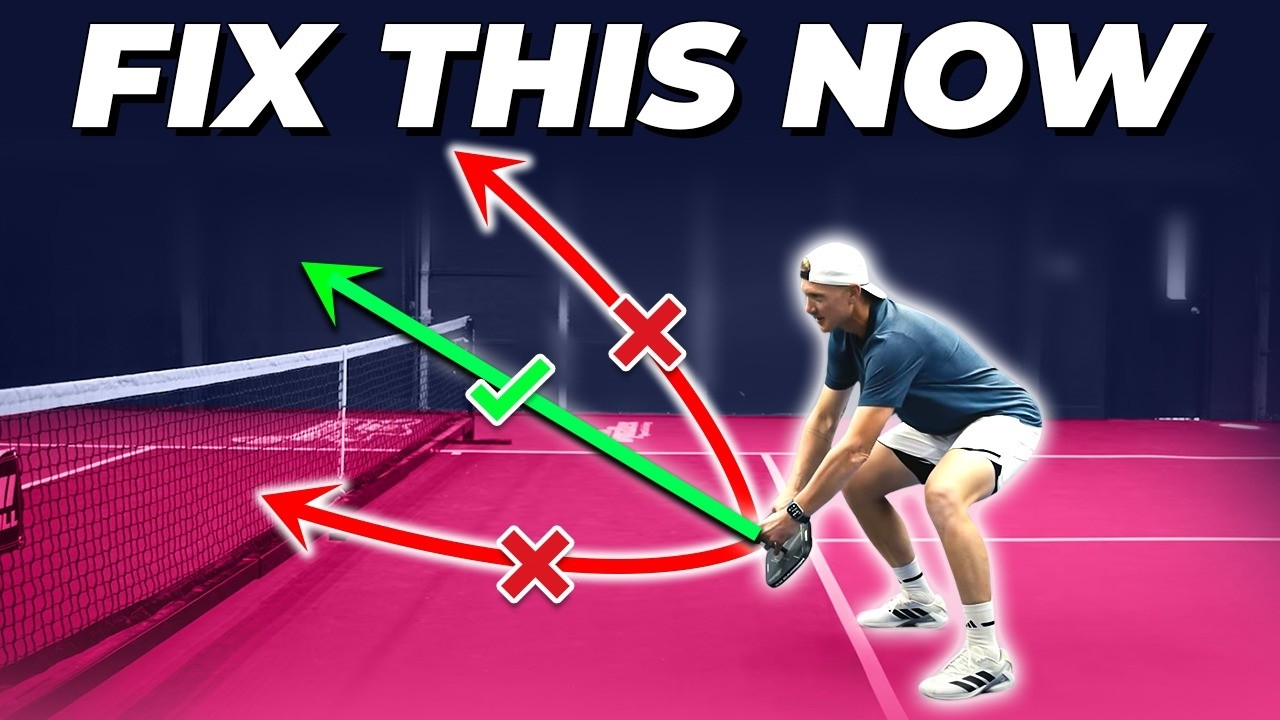
Why Are So Many Players Still Swinging Too Big?
The honest answer is habit. If you came from tennis, golf, or even racquetball, you are wired to generate power with a big swing. That instinct is hard to override.
The problem is that pickleball volleys do not reward that instinct. The ball already has energy when it arrives.
Your job is to redirect it, not add massive force to it. A shorter, controlled motion gives you far more precision.
This is one of the seven tennis habits that consistently hurt pickleball players. The swing volley is near the top of that list for almost everyone making the transition.
Breaking the habit takes repetition with intention. Slow practice first, then speed.
Every time you catch yourself pulling back for a big swing, stop and reset with a compact motion instead.
 The Dink Media Team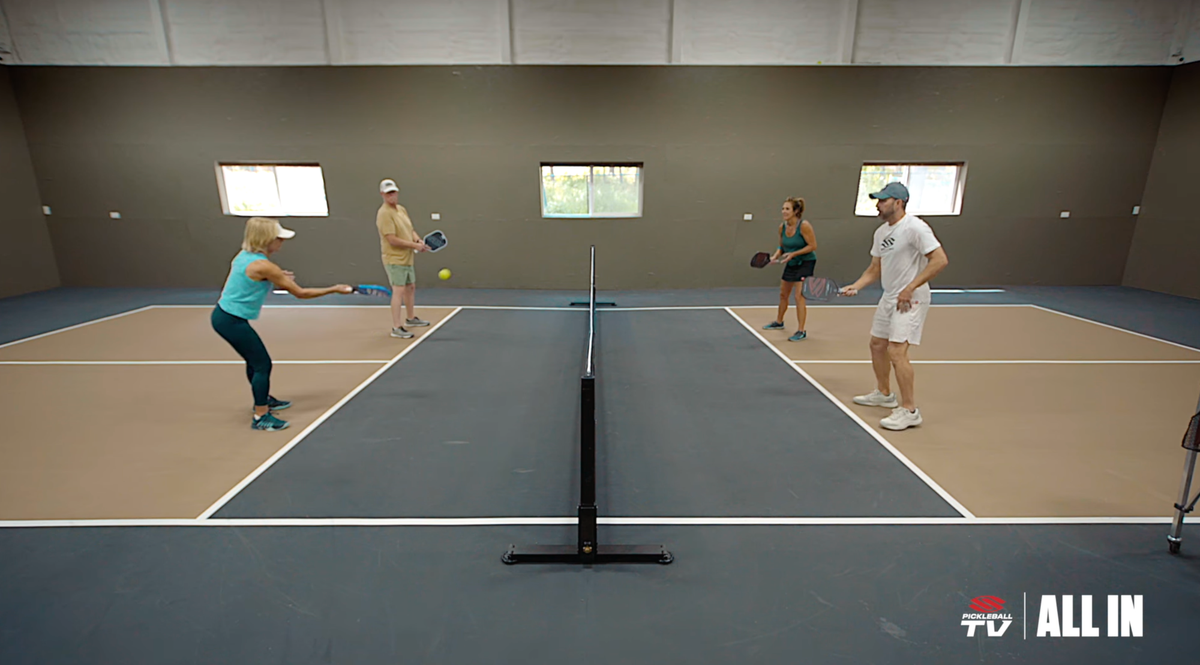
Fix 4: Use Your Body, Not Just Your Arm
One thing players miss when they shorten their swing is that the power still has to come from somewhere.
It comes from your body weight moving forward, not from your arm alone.
A slight forward lean into the ball at contact adds pace and control without a bigger swing. Think of pressing into the shot rather than swinging at it.
Your core engages, your weight transfers, and the ball responds.
This is also why the ready position matters so much. If your weight is back on your heels, you cannot transfer forward into the ball.
You are stuck using only your arm, which leads to inconsistency and arm fatigue over time.
Senior players in particular benefit from cleaning up grip, footwork, and net play mechanics before adding any pace.
 The Dink Media Team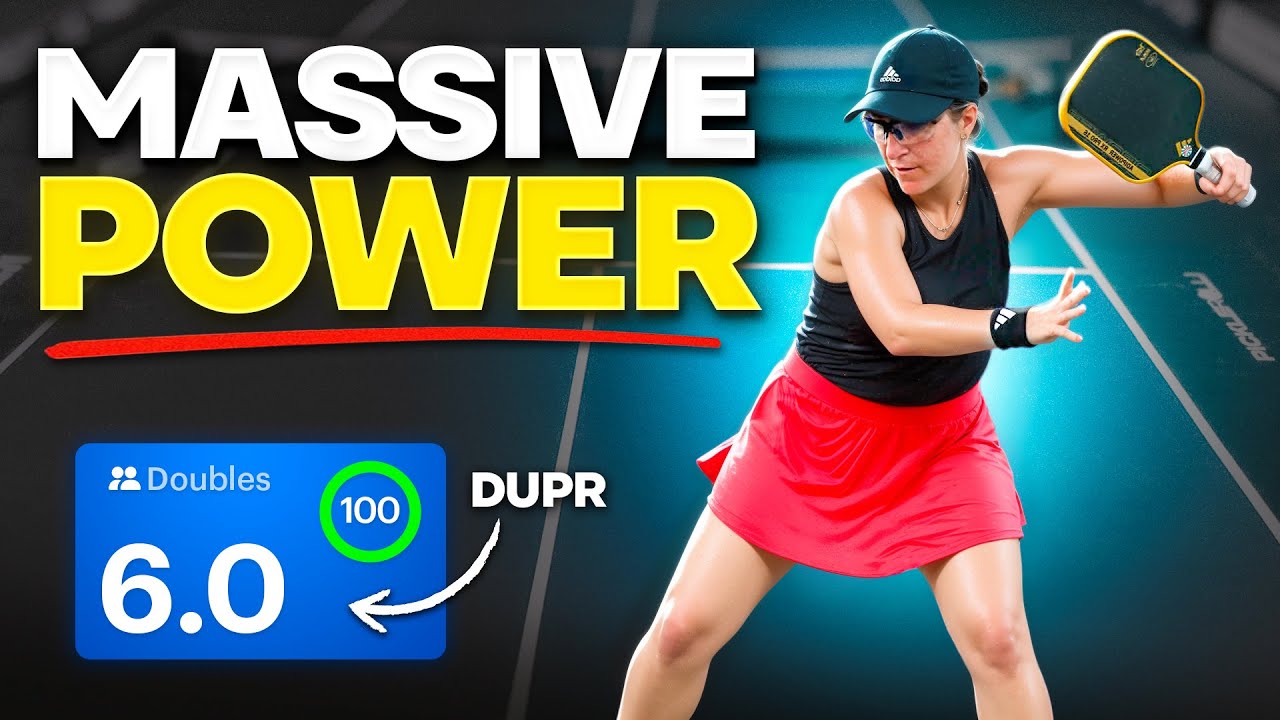
Fix 5: Stay Compact When the Exchange Gets Fast
The kitchen line gets intense quickly.
Hands speed up, balls come fast, and the first player who panics and reverts to a big swing usually loses the exchange.
Your job when things speed up is to get smaller, not bigger. Shorter motion. Tighter position.
The players who hold together during fast hands battles are the ones with the tightest mechanics under pressure.
This is where your ready position becomes critical again.
If your paddle is already out front and your knees are already bent, you do not need to adjust when a fast ball arrives.
You just punch. These technical tips for winning kitchen line hands battles break down exactly what changes as the pace climbs.
For anyone who wants to handle drives coming right at them, knowing when to block versus counter against bangers changes how opponents attack you.
And if errors are piling up during fast exchanges, these six critical mistakes hurting your volley will show you where the breakdown is happening.
 The Dink Media Team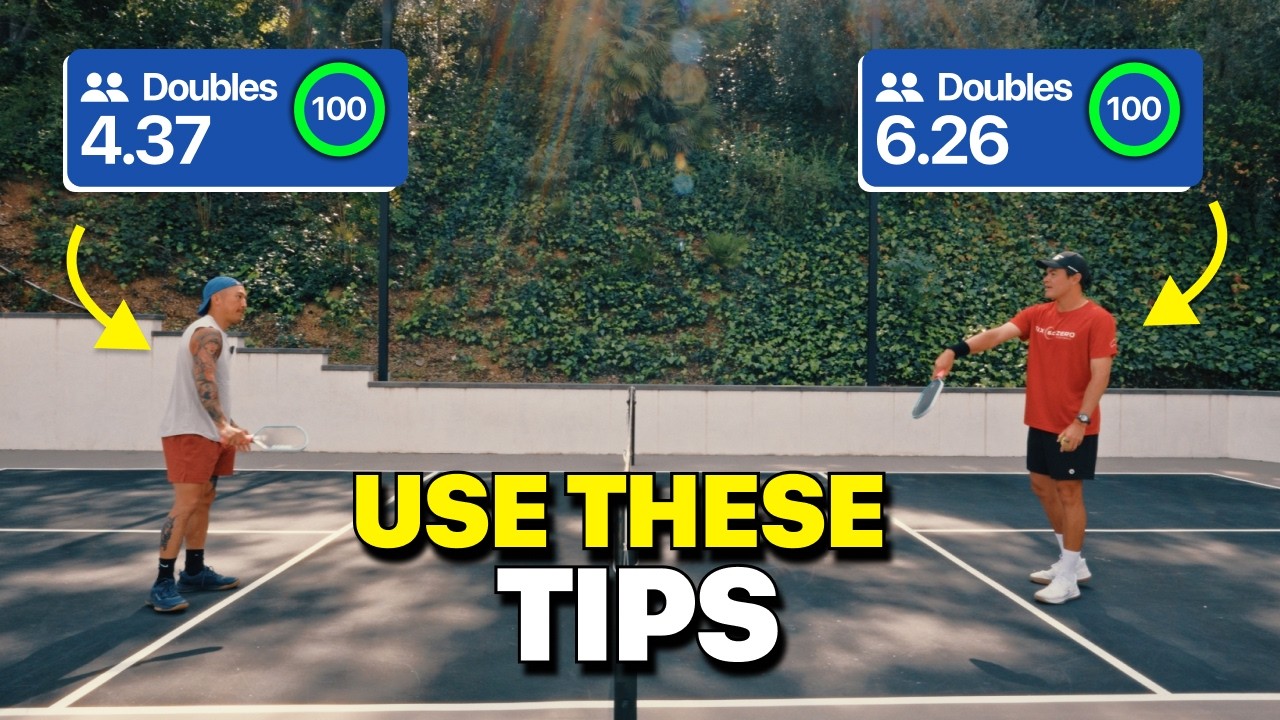
How to Put It All Together in a Real Game
Knowing the five fixes is one thing. Applying them when someone is ripping a ball at your hip is another.
The bridge between the two is drilling with intention.
Start slow. Set up at the kitchen line with a partner and practice compact punch volleys at half speed, no winners, just control.
Get comfortable with the short motion and the forward weight transfer before you add pace.
Then bring the targets in. Aim at feet, aim at the middle, aim back at whoever just hit.
Good targeting at game speed starts with repetitive drilling at practice speed.
These 12 drills covering drives, drops, and volleys give you a complete practice framework, and if you are unsure how much court time to allocate, one pro did the math on drilling versus playing.
For players who struggle with kitchen habits more broadly, these stubborn habits losing you points are worth reading before your next session.
Senior players who feel outgunned at the net should also run through these essential strategies for senior players.
A tight volley game neutralizes athleticism faster than almost anything else on the court.
Volleys are not about being the fastest or strongest player. They are about being the most controlled.
Short swing, proper stance, smart targeting. Get those three things right and the kitchen line becomes your advantage instead of your problem.
Frequently Asked Questions
What is a pickleball volley?
A pickleball volley is any shot hit before the ball bounces, directly out of the air. It is most commonly used at the kitchen line during exchanges. Volleys are legal anywhere on the court as long as you are not standing inside the non-volley zone when you hit them.
Why do my volleys keep going long?
The most common cause is too much swing. A big backswing adds pace you cannot control at close range. Shorten your motion to a compact punch forward and most of those long errors disappear immediately.
Where should I aim my volleys in doubles?
Aim at your opponents' feet first, the middle of the court second, and back at whoever just hit the ball third. All three targets force weak returns rather than trying to hit outright winners, which is where most errors come from.
How do I get better at fast hand exchanges at the net?
Keep your paddle out front in a compact ready position and shorten your motion as the pace increases. The players who survive fast exchanges are the ones who get smaller and tighter, not bigger and more aggressive. Drilling at half speed first builds the muscle memory you need for real game pace.
Does the ready position really make that much of a difference?
Yes, and it is one of the most overlooked parts of kitchen line play. If your paddle is down at your side and your weight is on your heels, you are starting every volley behind. A proper athletic stance with the paddle out front removes the setup step entirely and lets you react to anything.

Love Pickleball? Join 100k+ readers for free weekly tips, news & gear deals.
Subscribe to The Dink