The 6 Best Two-Person Pickleball Drills to Sharpen Every Part of Your Game
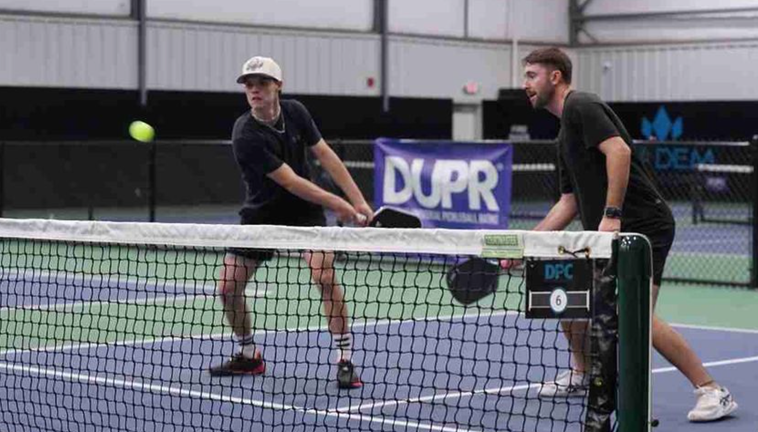
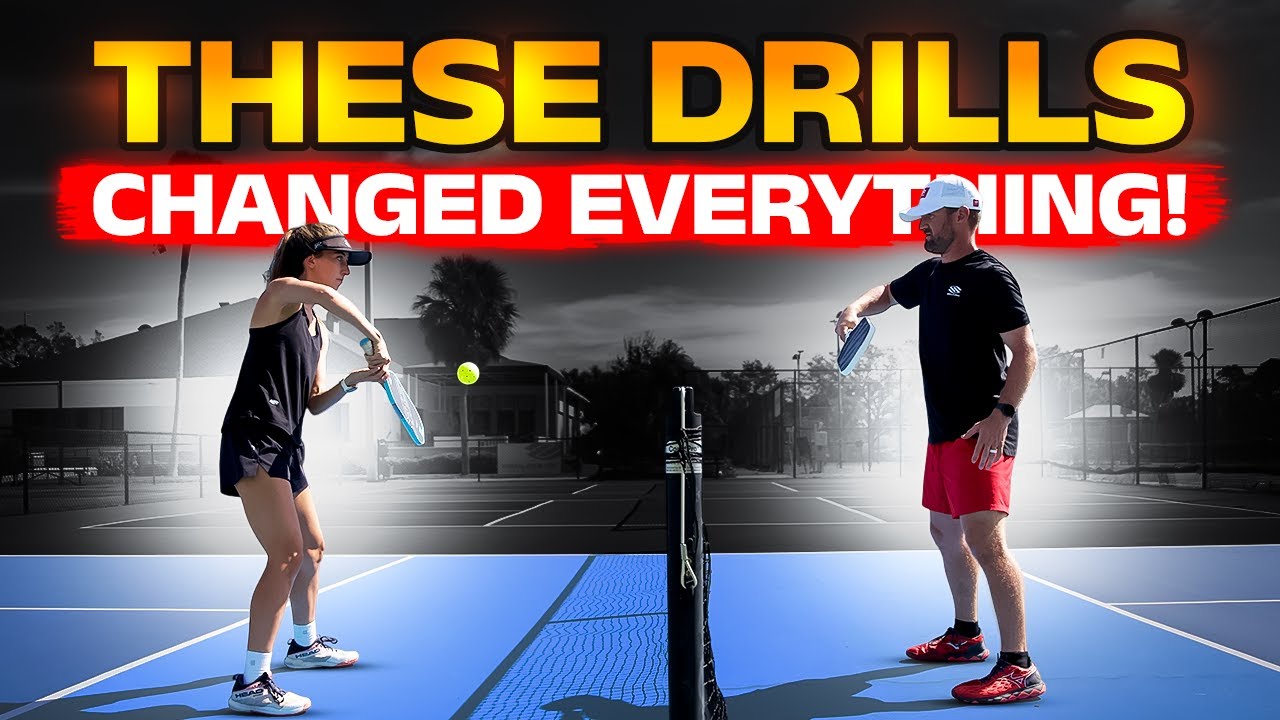
If you want to get better faster, two-person pickleball drills beat casual play every time. These six structured drills target the exact skills that decide who wins and who loses.
If you keep playing games and wondering why your rating is stuck, the answer is probably that you are not drilling enough.
Two-person pickleball drills give you more touches, more reps on specific shots, and more pressure in a controlled setting than any casual game ever will.
Most players warm up by standing in one spot and feeding to the same spot.
That is comfortable, but it does not prepare you for anything that happens in a real match.
These six drills come from PlayPickleball.com on YouTube, and each one is built to simulate real game situations while forcing you to think, move, and compete.
Work through all six and you will feel the difference in your very next match.
Love pickleball? Then you'll love our free newsletter. We send the latest news, tips, and highlights for free each week.
Why Drilling Beats Playing More Games
Playing games is fun, but it is an inefficient way to fix specific weaknesses.
In a typical game, you might hit 10 dinks before someone makes an error or speeds up. In a focused drilling session, you can hit 100 dinks in the same amount of time.
Drilling gives you reps on the shots that actually decide points.
It also lets you practice under pressure without the stakes of a real match clouding your mechanics.
A drill works when it has a target, a score, and a consequence.
If you want to know what actually wins points in pickleball, it is the shots you repeat the most in practice. Every drill below is built so those reps count.
Drill 1: Battleships
Battleships is the best replacement for mindless dinking warm-ups.
Instead of hitting back and forth to no target, each player sets up four cones in their kitchen zone. Those cones are the battleships.
Here is how the scoring works:
- Win a rally: 1 point
- Hit a cone and sink a ship: 3 points automatically
- First to 10 points wins
- Sunk ships are removed from the court
You can play this crosscourt or straight on.
The point is that you are always aiming at something specific, which is exactly what you should be doing in real games.
This drill forces you to move your opponent around while placing your dinks with intention.
Using the kitchen line as a target, not just a rule, carries over directly from Battleships into live play.
Drill 2: Tug of War
Tug of War adds a pressure element to dinking that you simply do not get from casual rallies. Both players start at five points.
When you win a rally, you gain a point and your opponent loses one. The goal is to push the score to 10 while your opponent drops to zero.
This scoring format creates a kind of momentum swing that mirrors real match pressure.
If you go on a three-rally run, the score shifts six points total. That swing feels real.
Once you have the basic version down, add one rule: you can only initiate a speed up out of the air.
Knowing when to speed up off the bounce versus out of the air is one of the key decisions that separates 3.5 from 4.5 players.
 The Dink Media Team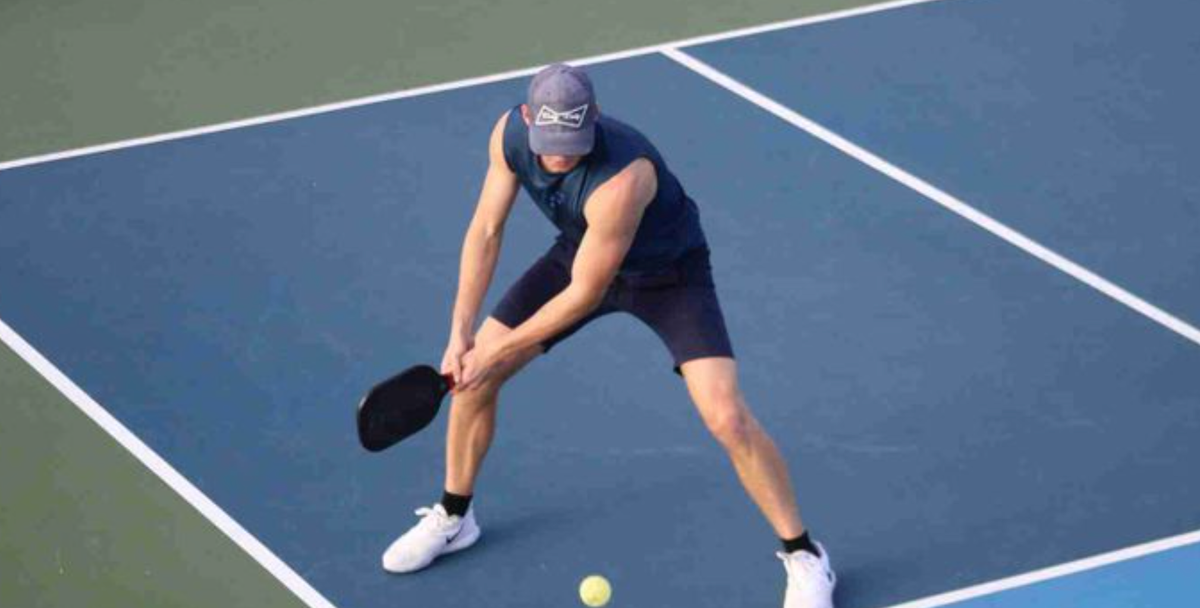
Drill 3: Winner
This drill solves one of the most common mistakes in recreational pickleball: attacking the wrong ball.
Winner teaches you to identify the actual putaway before you hit it, not after.
Here is the setup:
- Both players start at the kitchen line
- Feed cooperatively and play the point out
- You must call "winner" before you hit the winning shot
- Call it and win the rally: you get a point
- Call it and lose the rally: you get negative one point
- Win the rally without calling it: nobody gets a point
- First to seven wins
The negative point rule is what makes this drill so effective.
It punishes impatience, and you will quickly learn that most balls you think are putaways are not.
This is one of the best drills to go from 3.0 to pro-level decision-making because it trains your brain to evaluate the shot before you commit.
 The Dink Media Team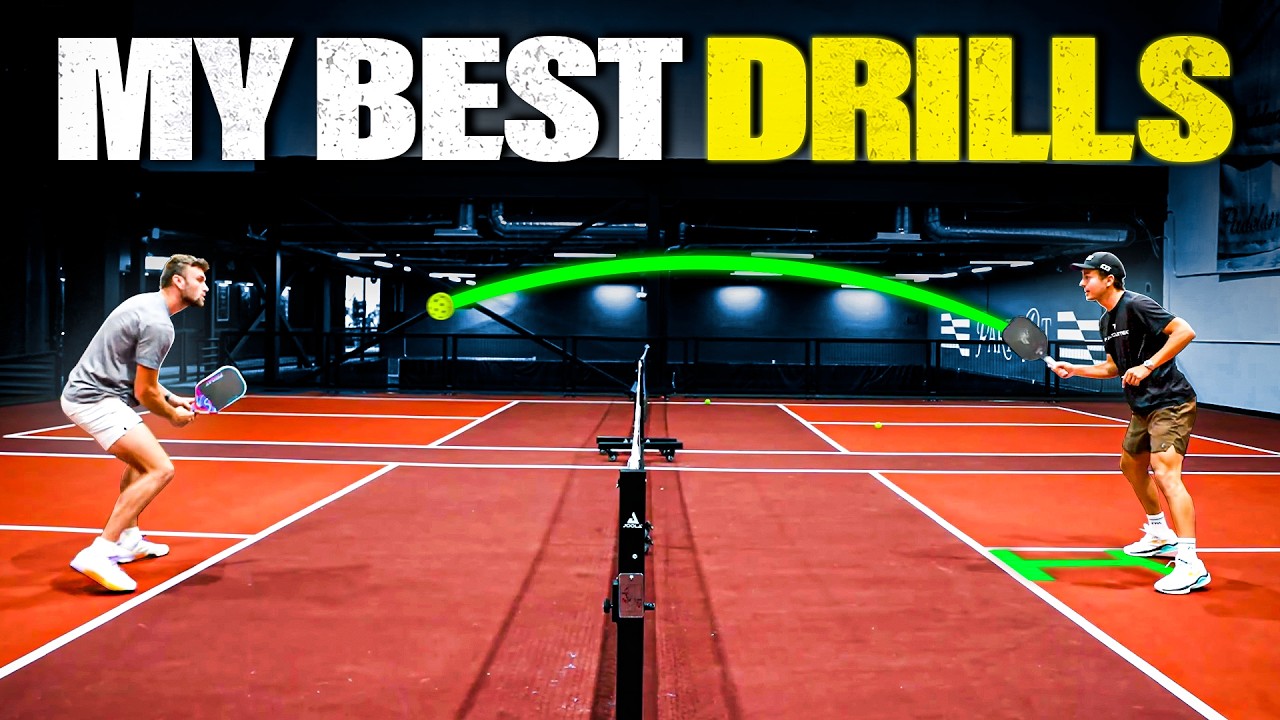
Does Calling Your Shot Really Help?
Yes, because it forces you to pre-process information before acting on it.
Elite players read the situation several shots ahead, and the Winner drill builds that habit under light pressure until it becomes automatic.
If you are calling winner too early or too often, you are attacking balls still in a neutral position. That is a shot selection signal telling you to reset and wait.
 The Dink Media Team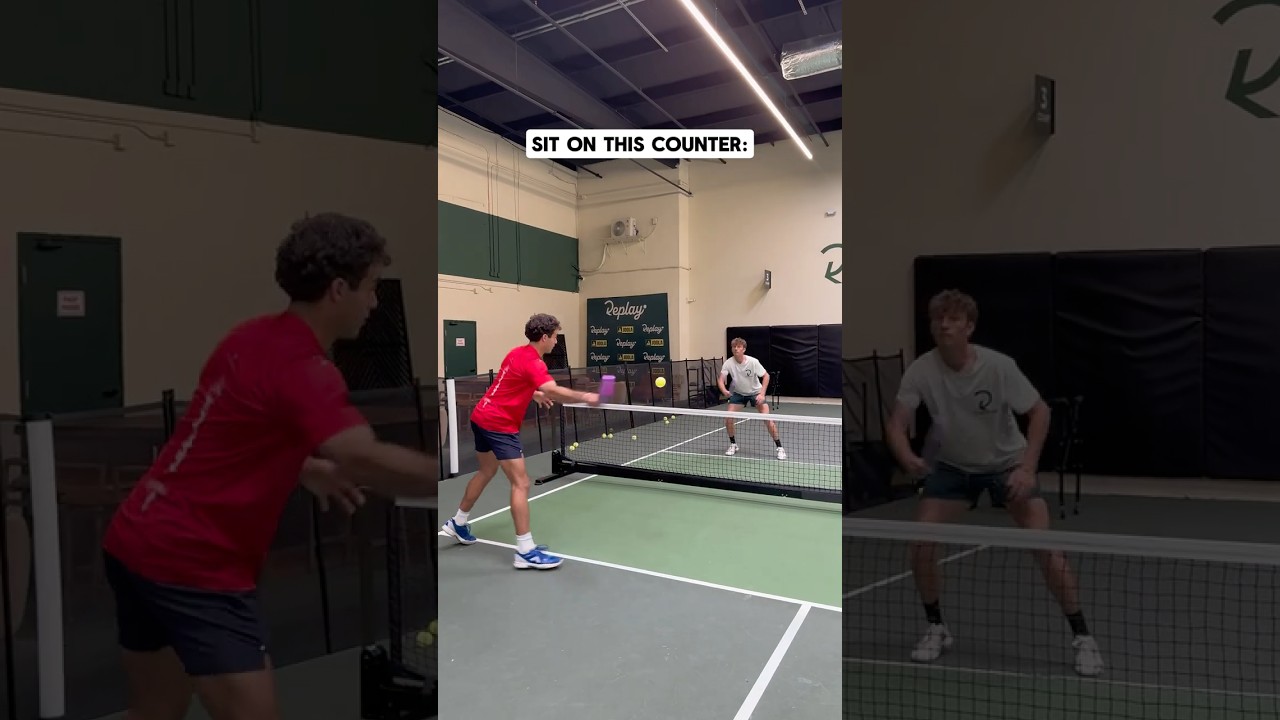
Drill 4: Trouble
Trouble is built for players who struggle to work their way back into points from the baseline.
One player starts at the kitchen, the other at the baseline.
The kitchen player throws the ball up and hits a big overhead, forcing the baseline player deep.
The baseline player's job is to get the ball safely over the net and advance when the opportunity is right. That trains two critical decisions:
- When to just get the ball over the net safely
- When to get it over and move forward to take space
Once the baseline player works their way up, the roles switch.
The drill becomes continuous, with each player taking turns being in trouble.
The transition zone is where most points are decided. Trouble drills that zone specifically so you stop panicking every time you get pushed back.
 The Dink Media Team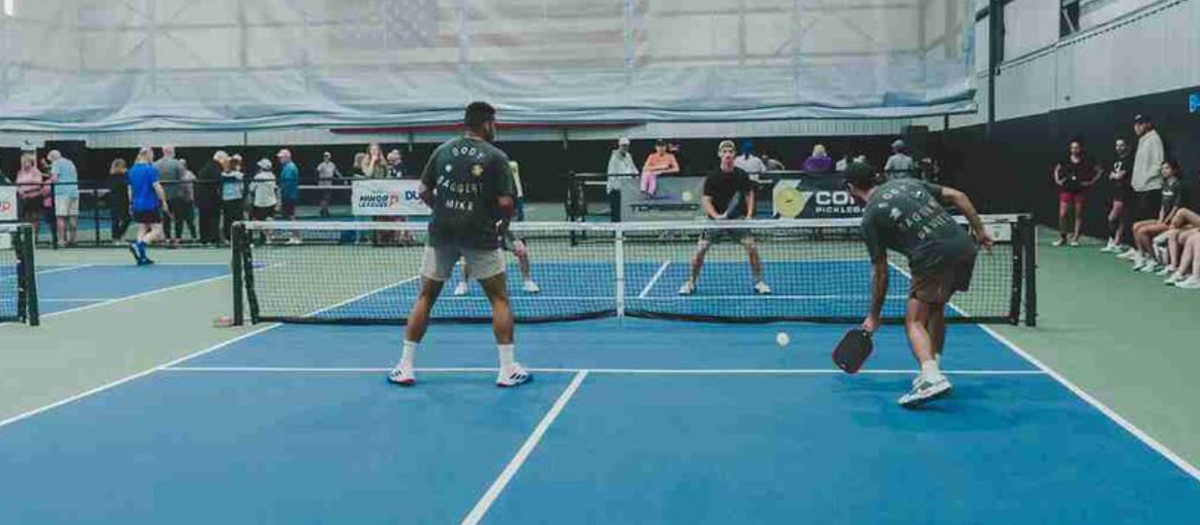
Drill 5: Seven Eleven (7-11)
7-11 might be the most complete competitive drill on this list.
One player starts at the baseline and tries to work up to the kitchen. The other player starts at the kitchen and tries to keep their opponent back.
The scoring is asymmetrical on purpose. The baseline player needs seven points to win. The kitchen player needs eleven.
This reflects the real advantage that comes with being at the net first.
This drill rewards dropping the third shot to the right landing spot because quality drops are the only safe way to advance.
Anything attackable and you stay stuck at the baseline.
The scoring gap also means you can win from the baseline even after losing rallies.
You just have to make smart decisions about when to rush forward and when to reset from the back.
 The Dink Media Team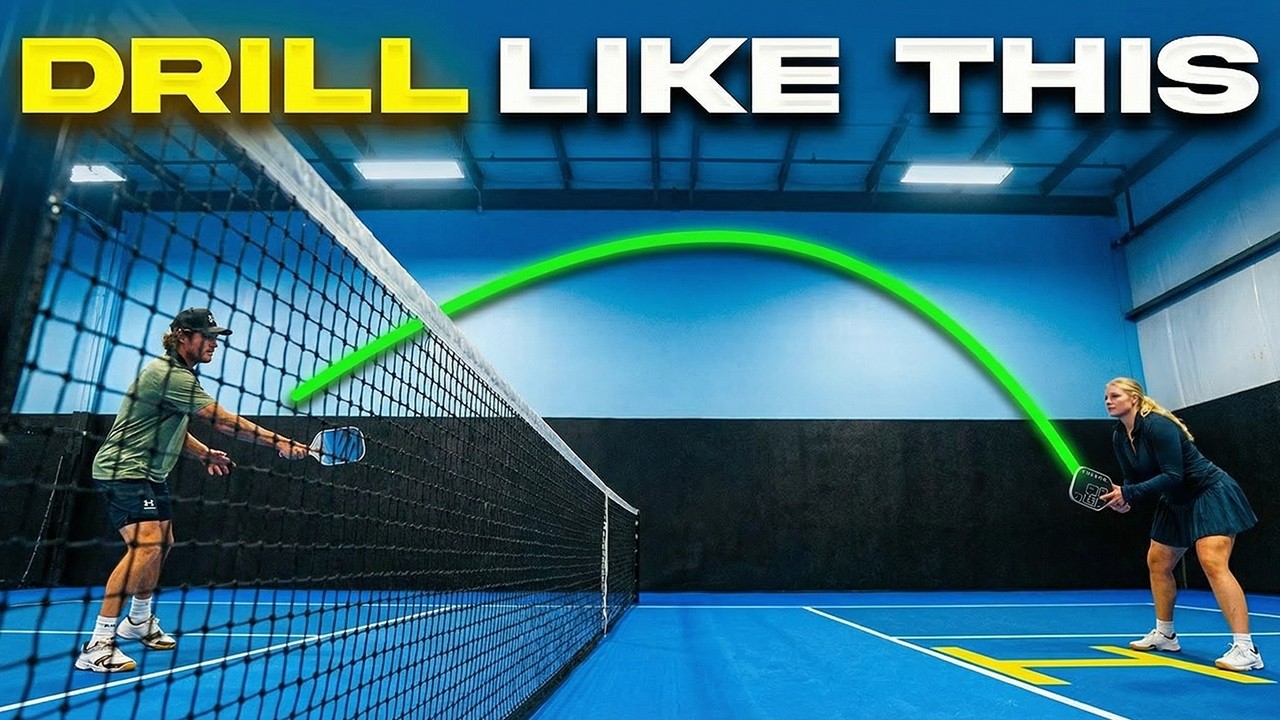
What Is Skinny Singles and Why Does It Matter?
Skinny singles is a format where two players use half the court, either crosscourt or straight up, instead of the full width.
It mimics the angles and shot selections of doubles play with only two people.
It is the most efficient way to drill real game patterns without a full four-person group.
The final drill is built entirely around this format, and it lines up with how USA Pickleball's official rules define serve and return positioning.
 The Dink Media Team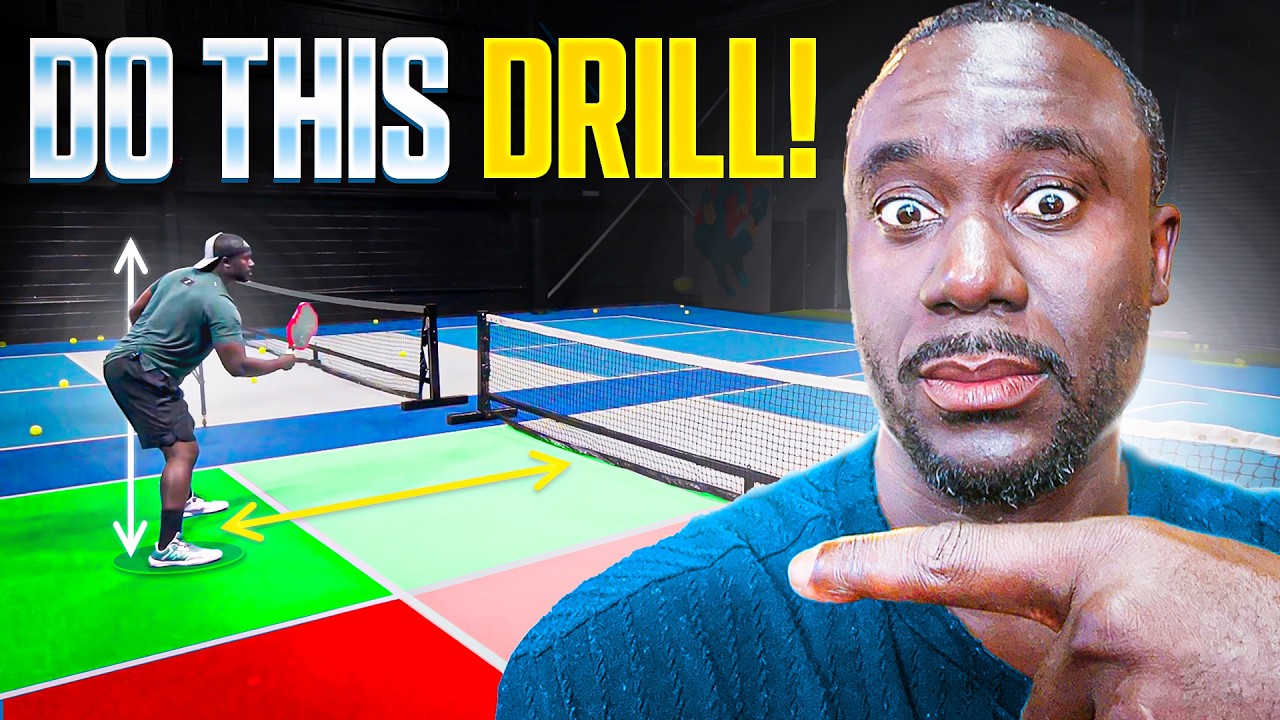
Drill 6: Serve, Return, Slide
Serve, Return, Slide simulates a full point from serve to finish inside a skinny singles structure.
The server hits crosscourt like they would in a normal game, then immediately slides over to play straight up.
The returner has to return in front of them because the server is already moving into position.
Once both players reach the kitchen, the entire half-court is fair game and the point plays out normally.
Scoring works like this: you only earn a point on your serve. Winning a rally as the returner earns nothing, it just prevents your opponent from scoring.
First to eleven wins.
This drill forces you to practice your third shot drop decisions in real situations, not just as isolated feeds.
It also builds the habit of moving after you serve, which many recreational players forget to do entirely.
The serve, return, and transition sequence is the skeleton of every doubles point. Pro players drill this sequence constantly because it is never fully mastered.
Every time you think you have it locked in, someone finds a new angle to exploit.
 The Dink Media Team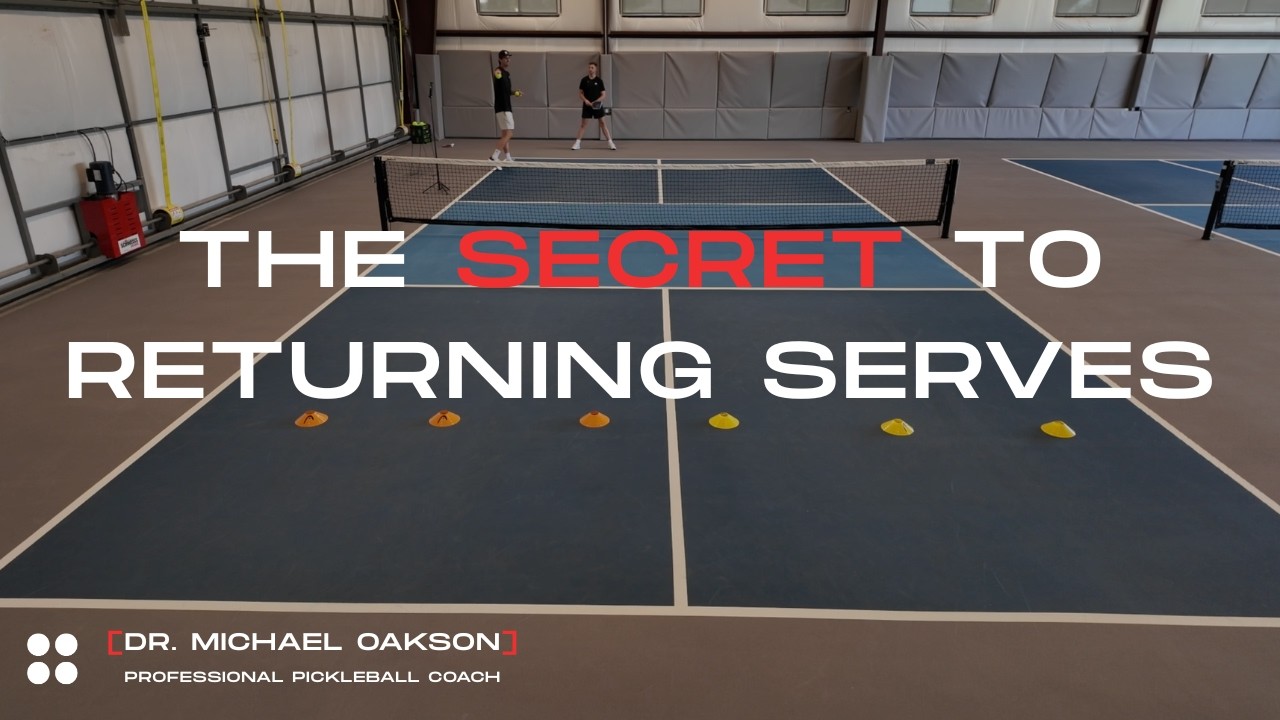
How to Put These Drills Together
You do not have to run all six every session.
A smart 60-minute session might look like this: start with Battleships to warm up your dinking with intention, run Tug of War with the speed-up variation to add some heat, then finish with 7-11 or Serve, Return, Slide to work the full court transition.
The Winner drill works best as a focused standalone block when you want to specifically work on shot selection decisions you keep getting wrong.
Use Trouble any time your baseline game feels shaky or you are struggling to advance after getting pushed back.
The key is intentionality. If your drilling is not working, it is usually because you are going through the motions without a clear goal for each drill.
Every drill here has a built-in scoring system for a reason. Use it.
Good drilling is not about grinding for grinding's sake.
It is about building the specific skills that transfer to real rallies, so the next time you are in trouble at the baseline or staring down a ball you want to speed up, your body and brain already know what to do.
Frequently Asked Questions
What is the best two-person pickleball drill for beginners?
Battleships is the best starting point for beginners because it builds dinking accuracy with a simple scoring system that keeps it competitive. Set up four cones in your kitchen zone and play to 10 points, awarding three points for hitting a cone. It gives you a clear target on every single shot instead of just hitting to an open court.
How long should a two-person pickleball drilling session last?
A focused two-person session between 45 and 90 minutes is enough to see real improvement. Any shorter and you are not getting enough reps; any longer and your focus drops off. Pick two or three drills per session and run them with full concentration rather than rushing through all six.
What does skinny singles mean in pickleball?
Skinny singles is when two players compete on half the court, either the crosscourt diagonal or straight up the line, instead of using the full width. It replicates the angles and positioning of doubles without needing four players. The Serve, Return, Slide drill uses this format to simulate real doubles point structure with just two people.
How do I get better at knowing which ball to attack in pickleball?
The Winner drill is specifically designed to fix this problem by making you call your shot before you hit it. If you call winner and the ball is not actually a winner, you get a negative point, which quickly trains you to stop attacking neutral or low-percentage balls. Most recreational players attack far too early, and this drill corrects that habit fast.
Can two-person drills replace playing games for improvement?
Two-person drills do not fully replace game play, but they accelerate improvement much faster than games alone. Games give you competitive experience and pattern recognition, while drills give you high-rep practice on specific skills in a controlled environment. The best approach is to drill consistently and then bring those skills into game situations where the pressure is real.
Love Pickleball? Join 100k+ readers for free weekly tips, news & gear deals.
Subscribe to The Dink