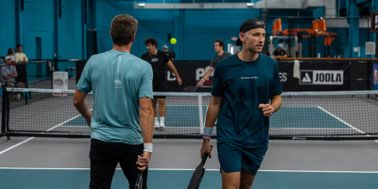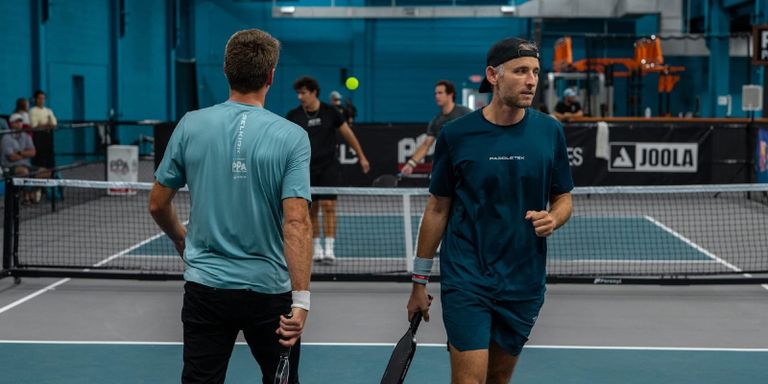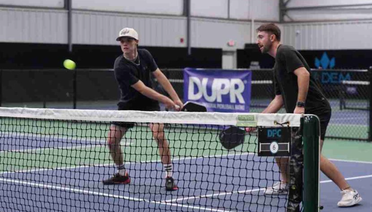

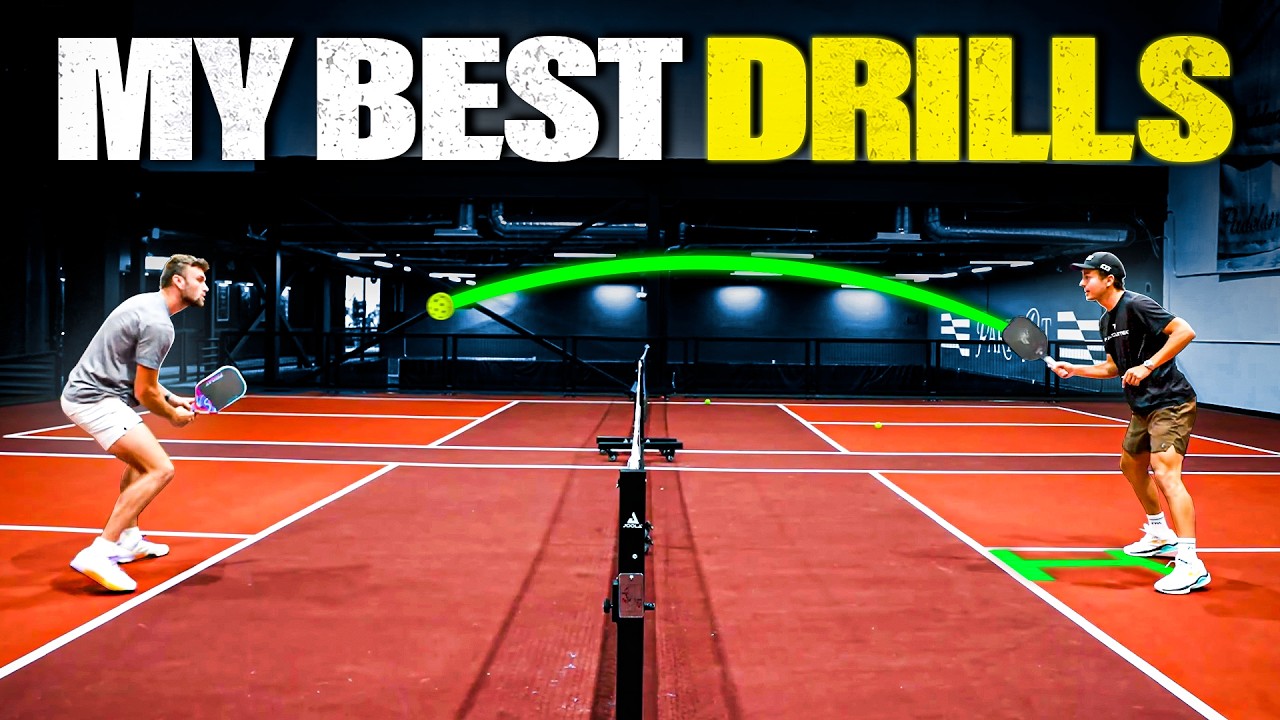
These five pickleball drills cover every part of your game, from footwork to fast hands. Top 10 pro Connor Garnett breaks down exactly how to practice smarter and improve faster.
Most pickleball drills are not built around the five things that actually decide how good you get.
Players spend hours hitting groundstrokes and ignore footwork, contact point, and fast hands, then wonder why their rating stays flat.
They cover the parts of the game that separate a 3.0 from a 5.0, and they work because they isolate each skill before building into full game situations.
This breakdown comes straight from Connor Garnett Pickleball on YouTube, where top 10 pro Connor Garnett walks through the exact drills he still uses in his own development.
Love pickleball? Then you'll love our free newsletter. We send the latest news, tips, and highlights for free each week.
Drill 1: The Shuffle Step That Controls the Kitchen
Good footwork at the kitchen line is not about speed.
It is about covering ground with as little wasted motion as possible, and the shuffle step is the foundation of that.
Think of it like a basketball defensive slide. One foot stays planted, and you hop the other foot to match it.
You are not crossing your feet, not lunging past the ball, and not letting your elevation change as you move.
A useful cue: have a partner press lightly on your hip as you shuffle. This keeps you from pushing down into the ground and forces you to stay linear.
The goal is a glide, not a bounce.
Your target contact point on every shot at the kitchen is lined up with your outside leg.
The shuffle step gets you there in one clean motion instead of two or three frantic ones.
Once you are confident with the basic shuffle, move into the butterfly drill. One player hits straight ahead every time while the other hits crosscourt.
Both players are moving, recovering to center, and hitting continuously.
Go for 20 total shots, 10 per player, before you call it a successful set.
If you are not recovering to the middle after each shot, you will see it immediately.
The next ball will be just out of reach. Good kitchen positioning depends on this recovery habit more than almost anything else.
Drill 2: Building a Consistent Contact Point
Contact point is the single most overlooked factor in why players miss shots.
If you're not making contact in the same spot relative to your body every time, your consistency will always be capped.
The target zone is in front of your chest, roughly between your chest and your hip.
Not jammed into your body, not stretched so far out that you can't finish your swing.
Start with a catching drill. Have your partner feed balls and instead of hitting, catch each one with your paddle hand.
Catch it too far out front and you can't turn through the shot.
Catch it too far behind you and your elbow can't extend. The catch shows you exactly where your contact should be.
Progress to a drop feed, then to a partner rally where the ball distance varies. Your job in the rally is to adjust your timing, not your contact zone.
Here's the adjustment most players miss. When the ball is shorter, wait a half second longer. When it's deeper, swing a little sooner.
The contact zone stays fixed. Your timing moves around it, and this applies equally to drives, drops, dinks, and resets.
Understanding how power and contact work together on the forehand drive will help you apply this across every shot type.
Drill 3: How Do You Actually Generate Power the Right Way?
Most players who swing too hard are generating power from the wrong place. They use their arm. The arm is a weak lever.
Your hips and core are not.
Start with this partner drill: stand facing each other, palms pressed together at chest height, elbows straight. Now rotate through your hips and push.
That twisting force from your core is the same energy that should be driving your groundstrokes.
Notice what happens when contact is too far inside or outside that zone. When your hands are jammed close to your body, there is no force.
When they are too far out, your partner can push you off balance easily.
The power only exists at that middle range, which is exactly your correct contact point from drill two.
Apply this to your shots through a torso twist drop feed.
Drop the ball, keep your arms relaxed, and let your hip rotation pull the paddle through contact. Your arms are not swinging fast.
Your hips are moving fast, and your arms are following.
Once you feel the hip rotation doing the work, you can add a small amount of hand acceleration at contact.
Think of it as a slight lift through the shoulders and a wrist snap right at the moment of impact.
That is the extra 10 percent the pros add, but it only works if the hip rotation is already there underneath it.
On the backhand, the same principle applies in reverse. Push through with your left hip if you are right-handed.
The back hip drives the shot forward, and the arm stays connected to that rotation.
Connor Garnett's approach to the two-handed backhand builds directly on this same kinetic chain concept.
 The Dink Media Team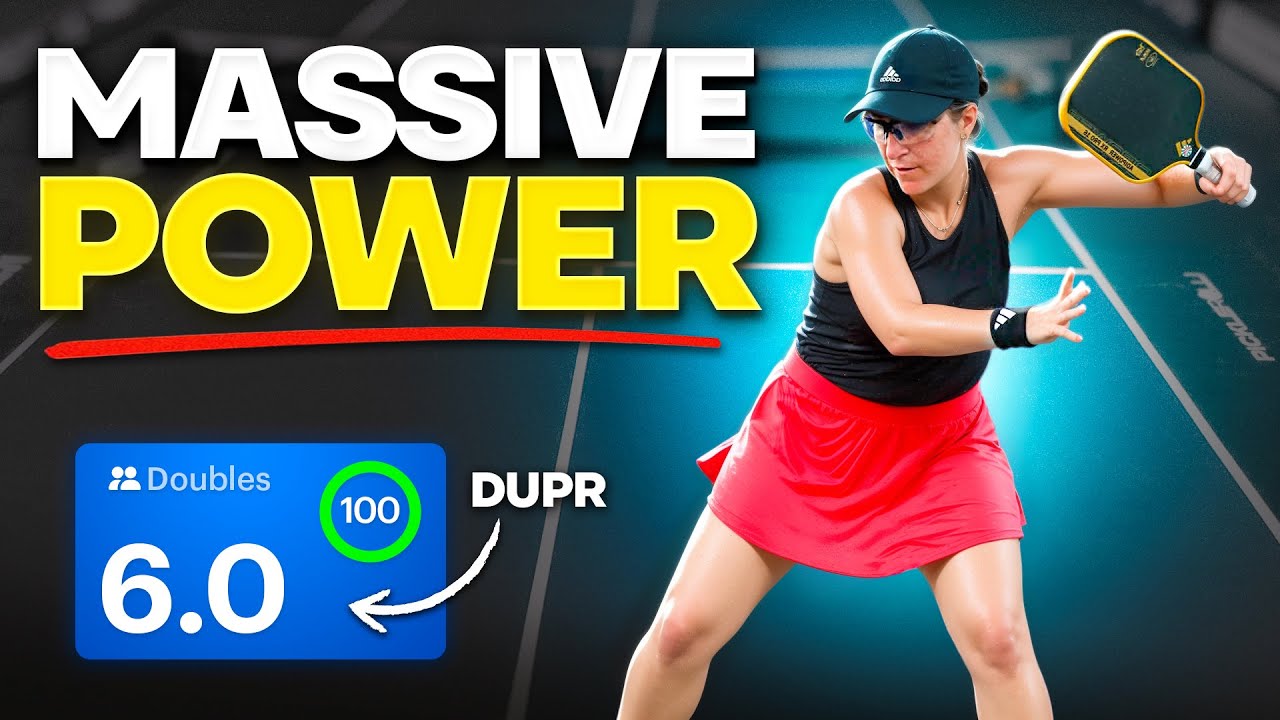
Drill 4: How Do You Build Real Feel on Soft Shots?
Feel is your ability to place the ball precisely without swinging hard. It is not a talent. It is a skill built through repetition at the right swing speed.
Here is the drill: take three steps back from the kitchen line and toss the ball underhand into the kitchen, trying to land it in a specific spot.
Think cornhole. You are looking for that smooth, extended follow-through where you hold the release just a beat longer than feels natural.
Now replicate that exact swing tempo when you pick up your paddle.
The swing speed that controls a toss from three steps back is exactly the speed you want on a drop or a soft reset. It is slow, smooth, and deliberate.
The expression "slow is smooth, smooth is fast" applies directly here. A poky, jabby swing kills your feel.
A smooth, consistent swing gives you the precision to place the ball exactly where you want it.
You can make this competitive. Set a paddle on the court as a target and have your partner try to hit it from three steps back. Put a few push-ups on the line.
The moment you add a consequence, your focus sharpens and the drill transfers faster to real points.
Players who struggle with drops are often swinging at the wrong tempo.
Understanding why the third shot drop fails comes down to this same issue more often than technique.
 The Dink Media Team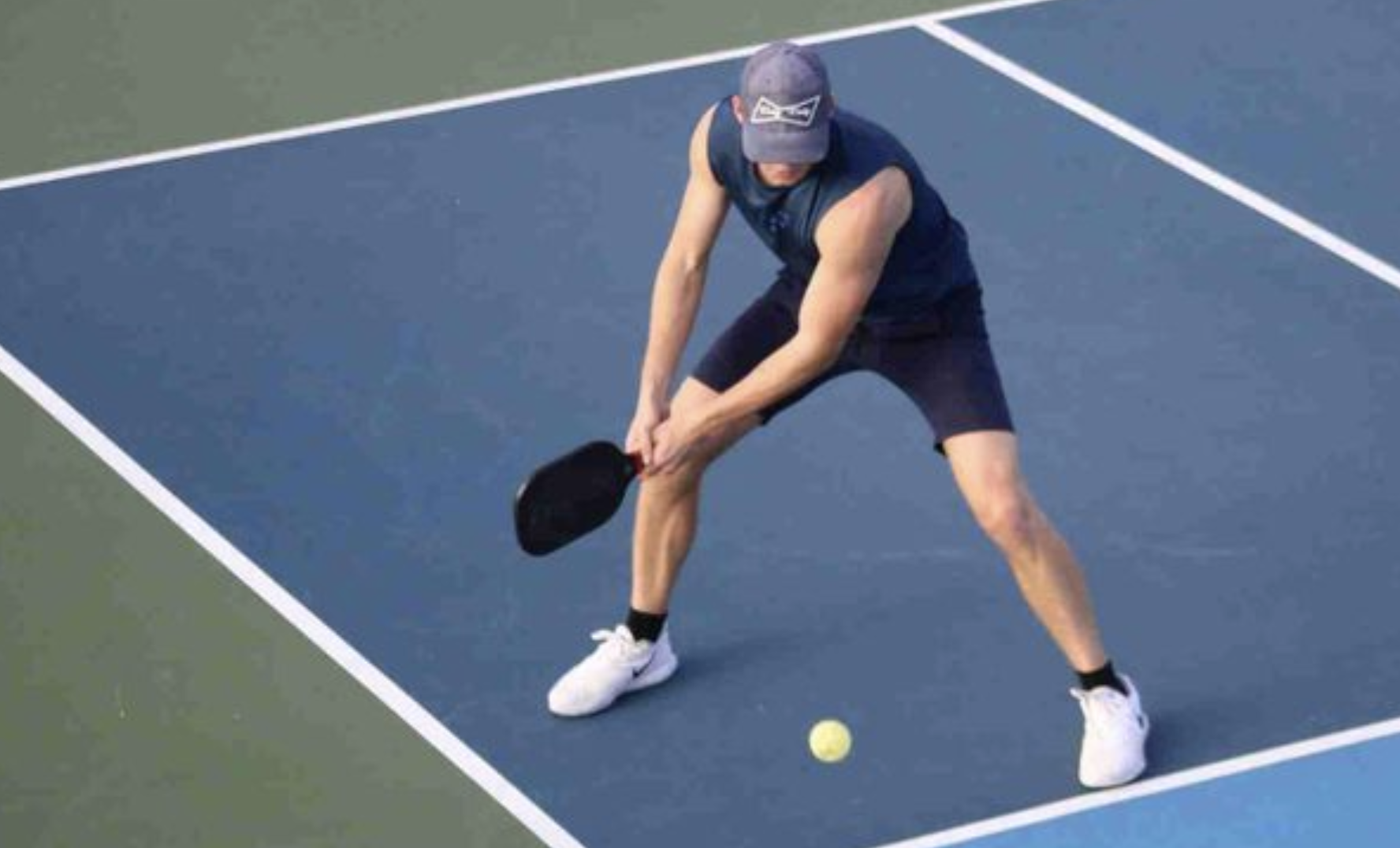
Drill 5: Fast Hands Start With Compact Swings
Fast hands is not about swinging faster. It is about anticipating earlier and keeping your backswing short enough to redirect the ball before it gets past you.
The wall drill builds this foundation.
Stand close to a wall and alternate forehand and backhand volleys, keeping the ball bouncing at chest height.
Your goal is 20 consecutive contacts with a controlled rhythm.
No big swings, no wrist flicking, just small pushing motions.
If the ball is bouncing up high or dropping low, your tempo is off. Chest height means your swing mechanics are right.
Wall practice is one of the most efficient ways to build this skill because the ball comes back immediately and forces you to be ready.
Here are the three things to avoid during this drill:
- Too big a backswing (your elbow pulls behind your body)
- Wristy contact (the paddle face rotates at impact instead of staying stable)
- Body movement (shifting your weight side to side instead of staying centered)
Once you can hold 20 in a row cleanly, move into the three-shot speed-up drill with a partner.
One player dinks, the other speeds up, the first player resets. Then switch.
The sequence is: dink, speed up, reset, repeat.
The key to making this work is that the speed-up shot is still compact. You are pushing through the ball, not winding up.
If you take a big backswing on the attack, the whole drill breaks down and your partner cannot reset consistently.
The mechanics behind fast hands have everything to do with what you do before you swing, not during.
A useful training aid: loop an elastic band around your elbows while doing the speed-up drill.
It physically prevents you from pulling your elbows wide or taking a big backswing. Your swings become shorter, more controlled, and more consistent by default.
 The Dink Media Team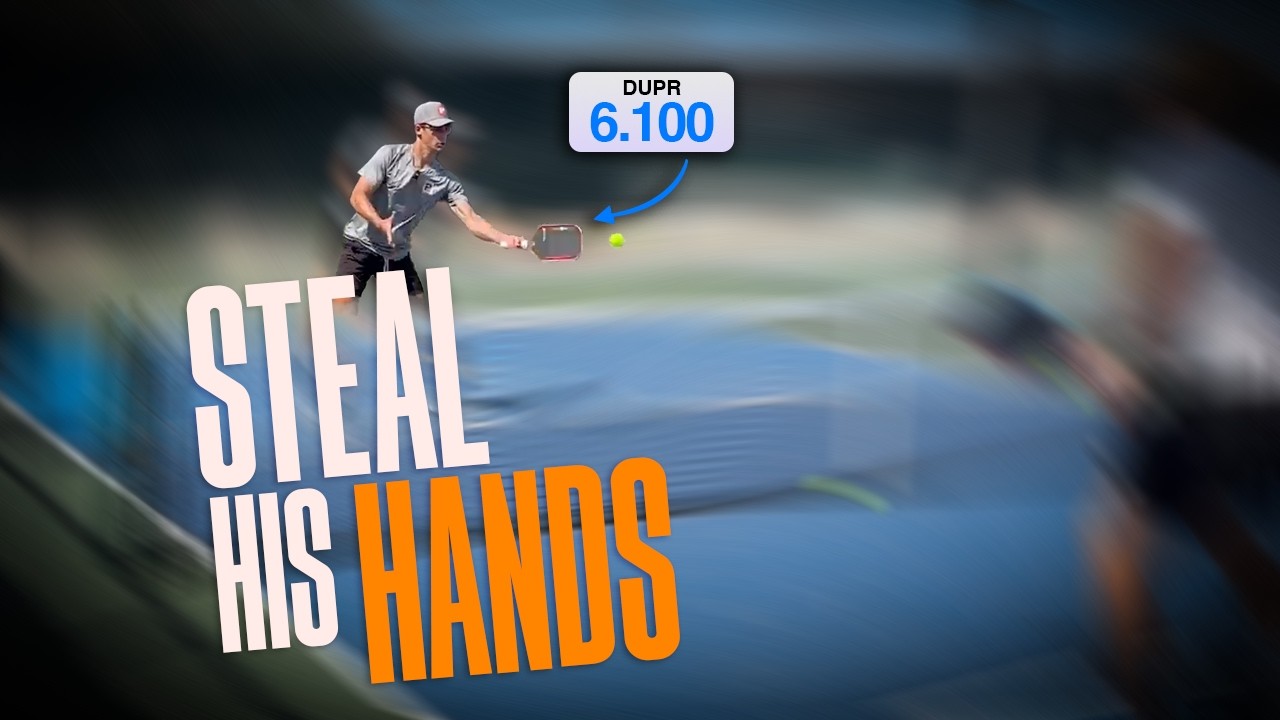
Putting All Five Drills Together
These five drills are a system, not a checklist.
You build footwork, then contact point, then power, then feel, then fast hands, until all five are happening at once inside a real rally.
That layering is why the sequence matters more than the volume.
When something breaks down in a match, trace it back to one of these five areas and run the specific pickleball drill that targets it.
The players who improve fastest are the ones who can name what's failing and have a pickleball drill they can run immediately to fix it.
If you want one place to start, start with footwork. Everything else depends on being in the right position when the ball arrives.
A structured progression from 3.0 to 5.0 relies on exactly this kind of targeted practice. Even PPA pros build their practice around fundamentals like these.
Use these drills with a practice partner when you can, but several of them work solo with a basket or a wall.
A structured drilling session built around this framework will produce more results than two hours of open play where the same mistakes keep repeating.
Track your reps. Aim for 20 clean shots per drill before moving up to the next progression.
When you can hit those numbers consistently with a partner, you are ready to take it into points. That is when it becomes real.
If your drilling is not translating to matches, the fix is usually in how you are connecting drills to game situations, not in the drills themselves.
Frequently Asked Questions
What is the most important pickleball drill for beginners?
The shuffle step footwork drill is the most important starting point because position controls everything else in the game. If you are out of position when the ball arrives, your contact point, power, and feel all fall apart. Get the footwork right before working on anything else.
How do I build fast hands in pickleball?
Fast hands in pickleball come from compact swings and early anticipation, not from swinging faster. The wall drill, where you alternate forehand and backhand volleys at chest height, trains the short swing path that makes quick exchanges manageable. Aim for 20 consecutive controlled contacts before moving into point play.
Why do I keep missing my third shot drop?
The most common reason is swing tempo that is too fast or too jabby. The feel drill, where you toss the ball underhand from three steps back with a cornhole-style follow-through, shows you exactly how slow and smooth the swing needs to be. Replicate that tempo with your paddle and your drop consistency will improve immediately.
How do I generate more power without swinging harder?
Hip rotation is the answer. The kinetic chain drill, where you and a partner press palms together and rotate through your hips, shows you that your core produces more force than your arm ever will. Keep your arm relaxed, lead with your back hip, and let the rotation bring the paddle through contact.
How many shots should I hit per drill before moving to the next progression?
Connor Garnett recommends hitting 20 clean shots in a row, or 10 per player in a partner drill, before calling a set successful. If you lose control before 20, reset and start again. This number is high enough to build muscle memory but specific enough to give you a real target to hit.

Love Pickleball? Join 100k+ readers for free weekly tips, news & gear deals.
Subscribe to The Dink